Explore Sentoria

Category: Strategy

Understanding strategy is essential for any business, project, or organisation that wants to move forward with purpose.

A good strategy helps you make better decisions, focus your resources, understand your market, respond to change, and turn ideas into practical action.

This section brings together a range of strategic tools, frameworks, and modes designed to help you think more clearly about where you are, where you want to go, and how best to get there.

Strategy

Pricing Analysis

·25 min read

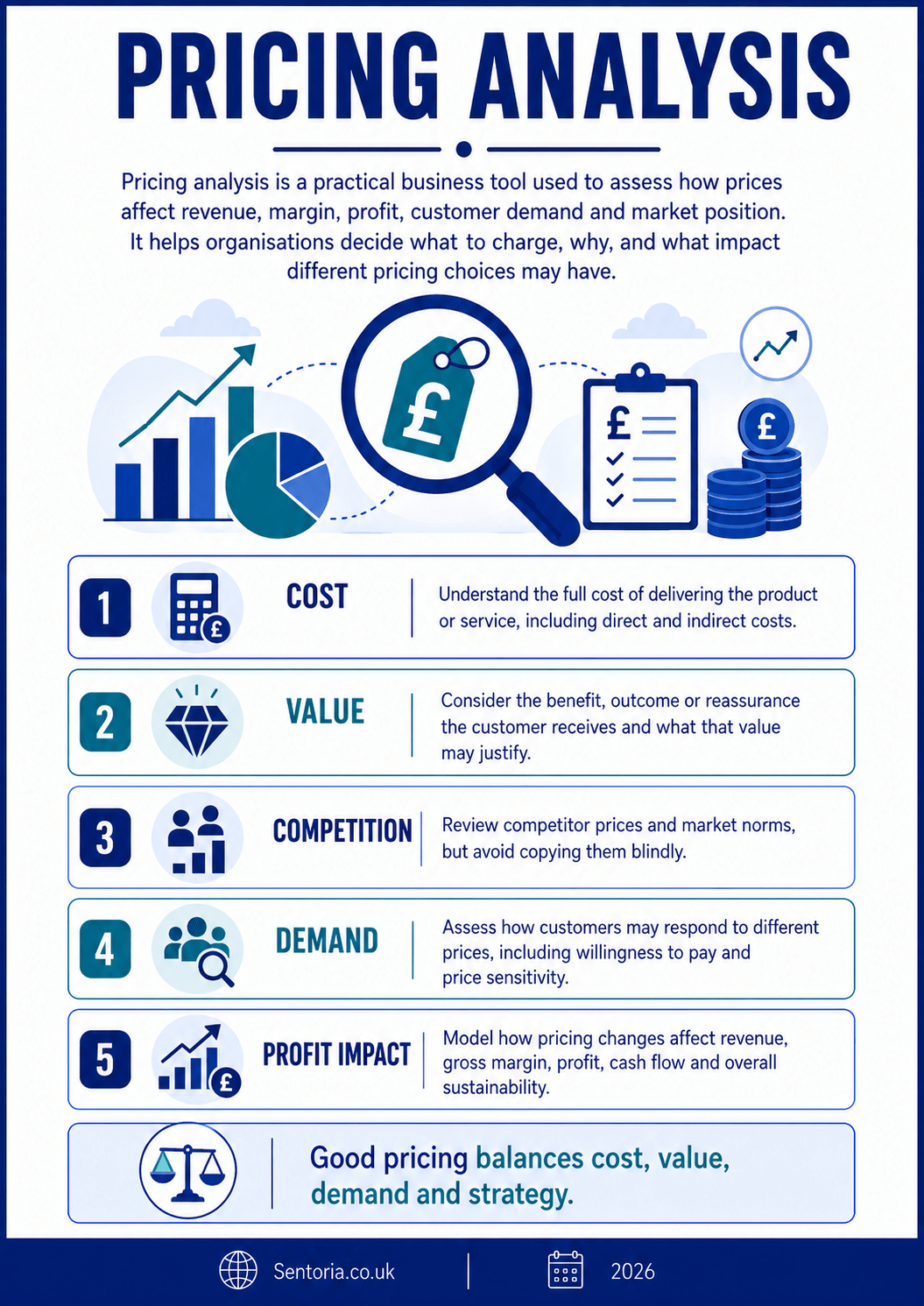
Pricing analysis is a practical business and strategy tool used to examine how prices are set, how customers respond, how competitors price, and how pricing affects revenue, margin, profit, cash flow and market position. At its simplest, pricing analysis asks: What should we charge, why should we charge it, how will customers respond, and what will it mean for profit and strategy? That makes it useful for business planning, sales, marketing, product development, service design, customer research, market research, competitor analysis, forecasting, budgeting, investment appraisal, ecommerce, professional services, manufacturing, property, charities, public sector services, technology, healthcare and education.
Strategy

Benchmarking

·23 min read

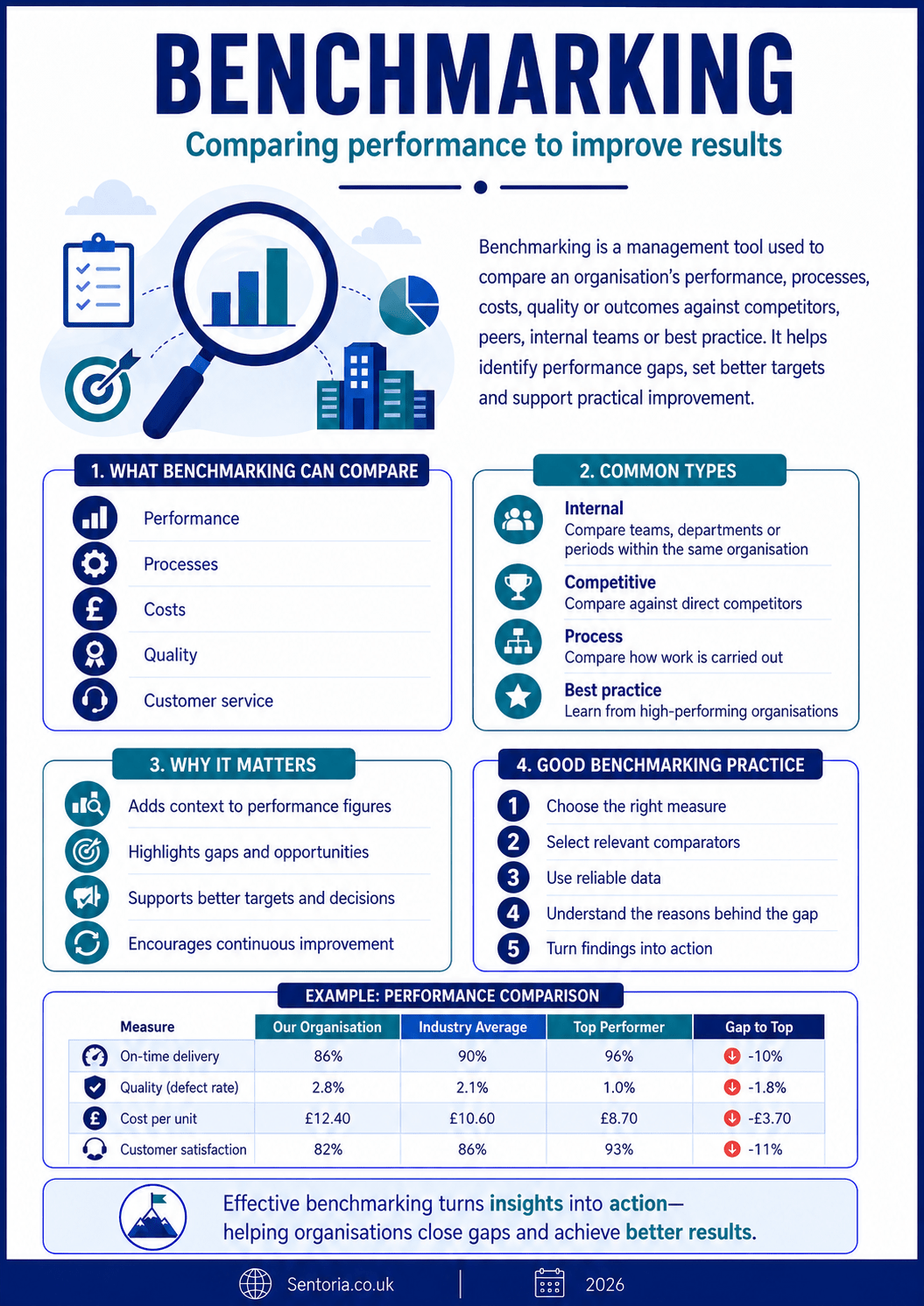
Benchmarking is a practical management and improvement tool used to compare an organisation’s performance, processes, costs, quality, service or outcomes against relevant standards, competitors, peers or best practice. At its simplest, benchmarking asks: How do we compare, who performs better, what can we learn, and what should we improve? That makes it useful for strategy, operational improvement, financial management, customer service, productivity, quality, pricing, internal audit, risk management, charity governance, public sector performance, manufacturing, retail, professional services, property, technology, healthcare and education.
Strategy

Positioning Map

·26 min read

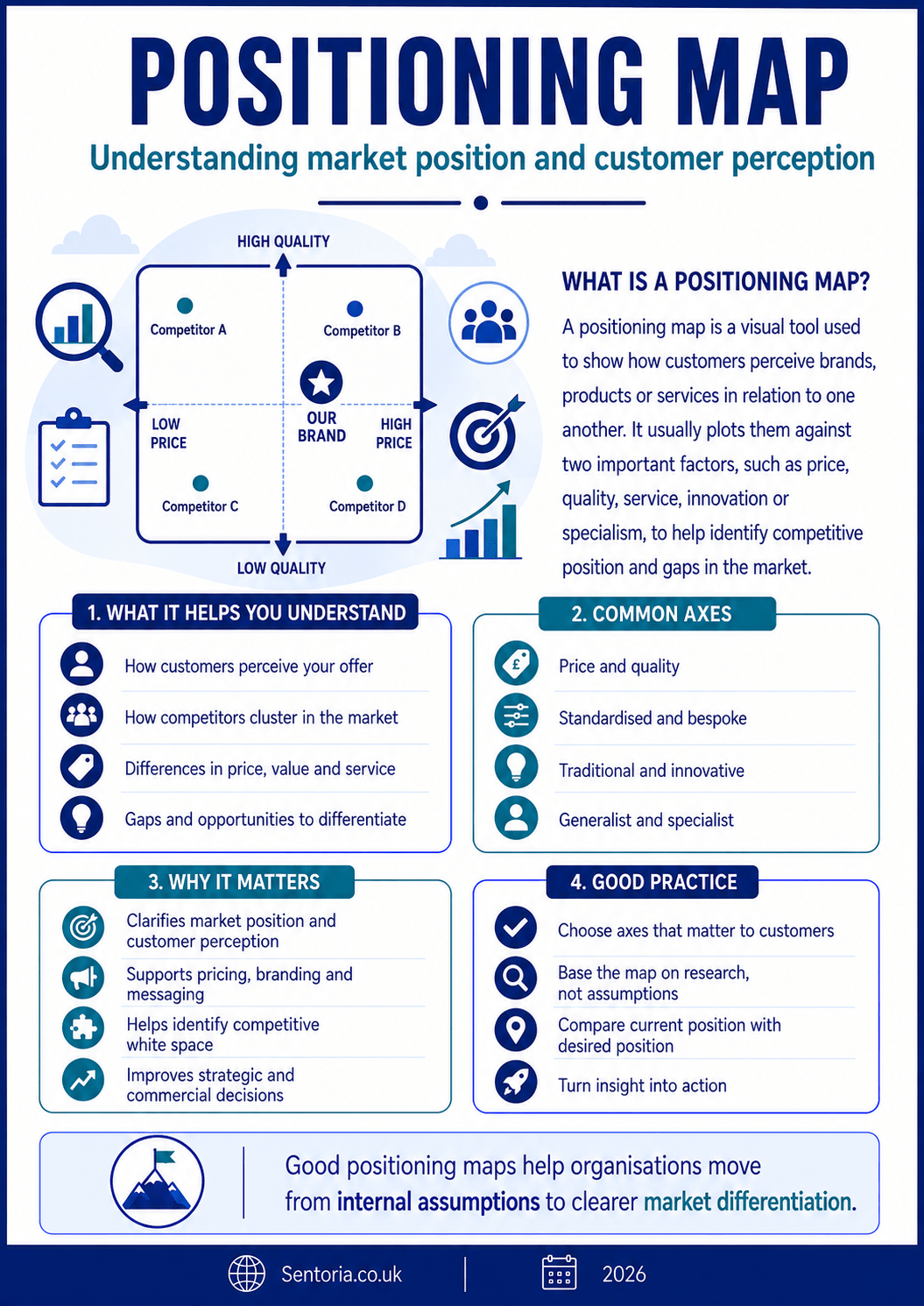
A positioning map, sometimes called a perceptual map, is a visual strategy and marketing tool used to show how customers perceive different brands, products, services or organisations in relation to each other. At its simplest, a positioning map asks: Where do customers think we sit in the market, how do we compare with alternatives, and where might there be space to compete more effectively? That makes it useful for strategy, market research, customer research, competitor analysis, brand positioning, pricing, product development, service design, professional services, retail, ecommerce, technology, property, charity services, public sector planning and board-level decision-making. Harvard Business Review describes perceptual mapping as a long-used method for understanding how consumers feel about brands relative to competitors and for identifying gaps in the marketplace.

Strategy

Market Research

·27 min read

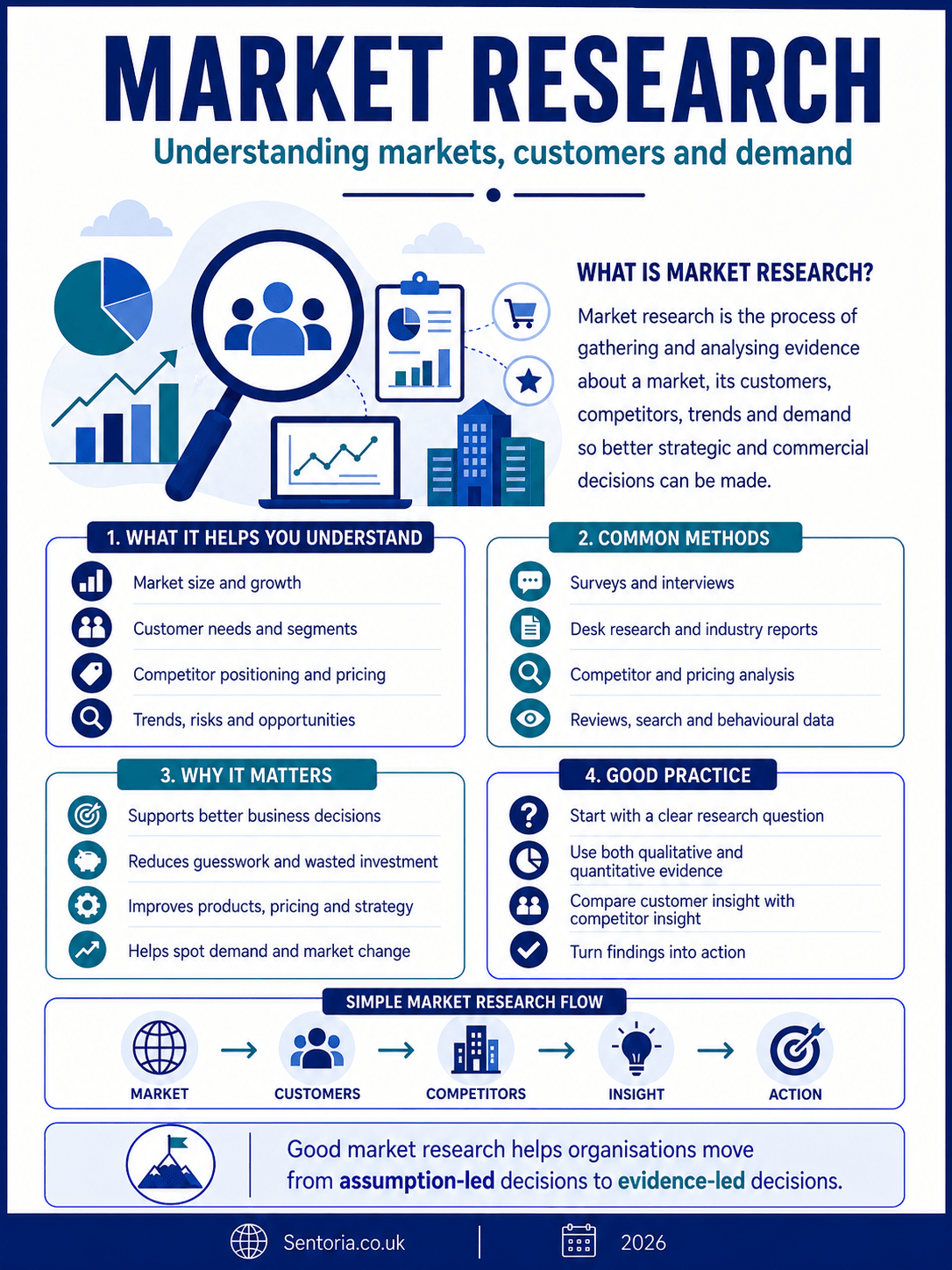
Market research is a practical business and strategy tool used to understand a market, its customers, competitors, trends, demand, pricing, risks and opportunities. At its simplest, market research asks: What is happening in the market, who are the customers, what do they need, who else is serving them, how is the market changing, and what should we do as a result? That makes it useful for strategy, business planning, marketing, product development, pricing, customer research, competitor analysis, investment appraisal, service design, property decisions, charity planning, public sector services, technology, education and healthcare.

Strategy

Customer Research

·24 min read

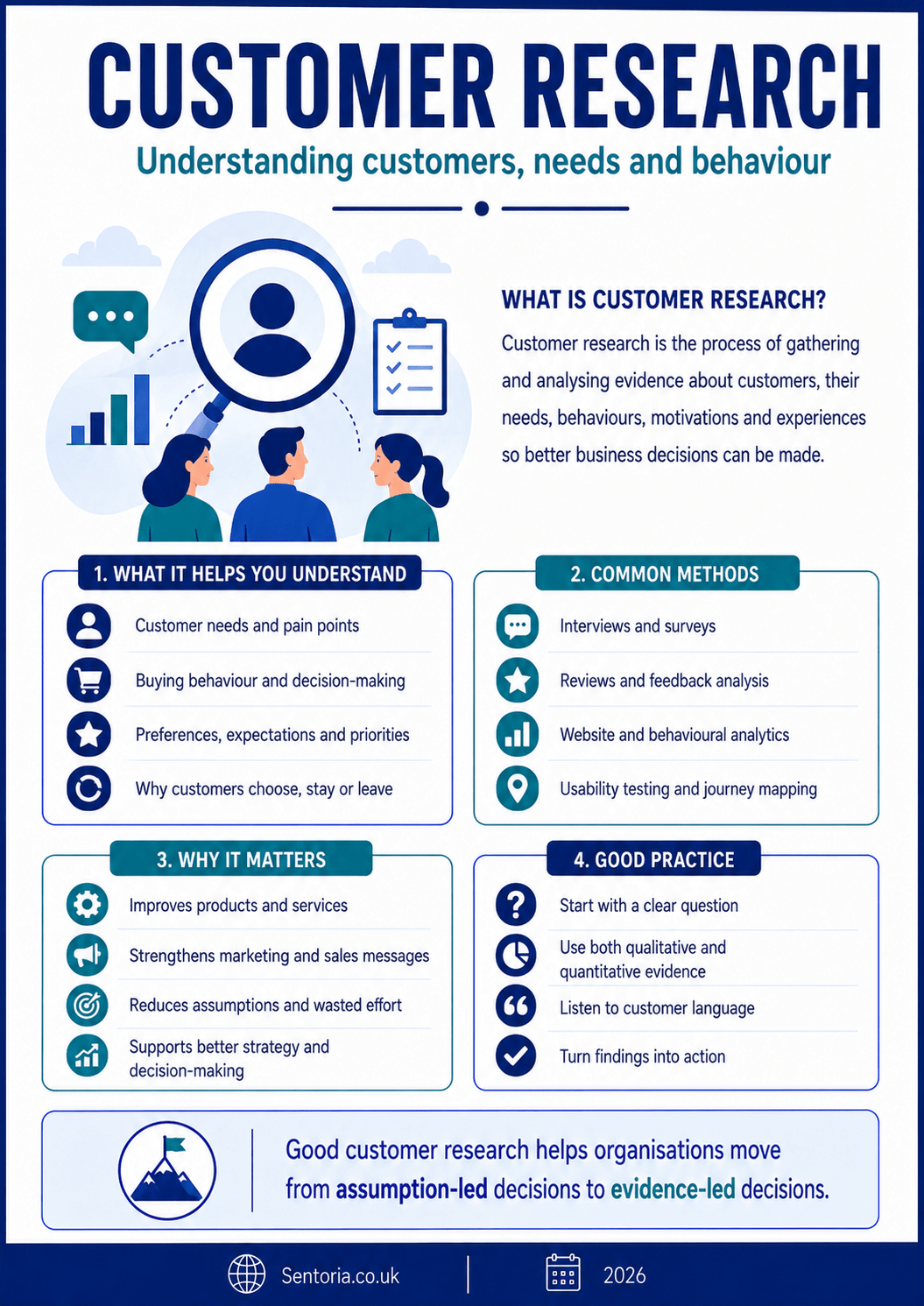
Customer research is a practical business and strategy tool used to understand customers, their needs, behaviours, expectations, problems, motivations and decision-making. At its simplest, customer research asks: Who are our customers, what do they need, what do they value, what problems are they trying to solve, and how can we serve them better? That makes it useful for strategy, marketing, product development, customer service, pricing, sales, innovation, service design, branding, ecommerce, professional services, charity delivery, public sector services, technology, education and healthcare.

Strategy

Appreciative Inquiry

·27 min read

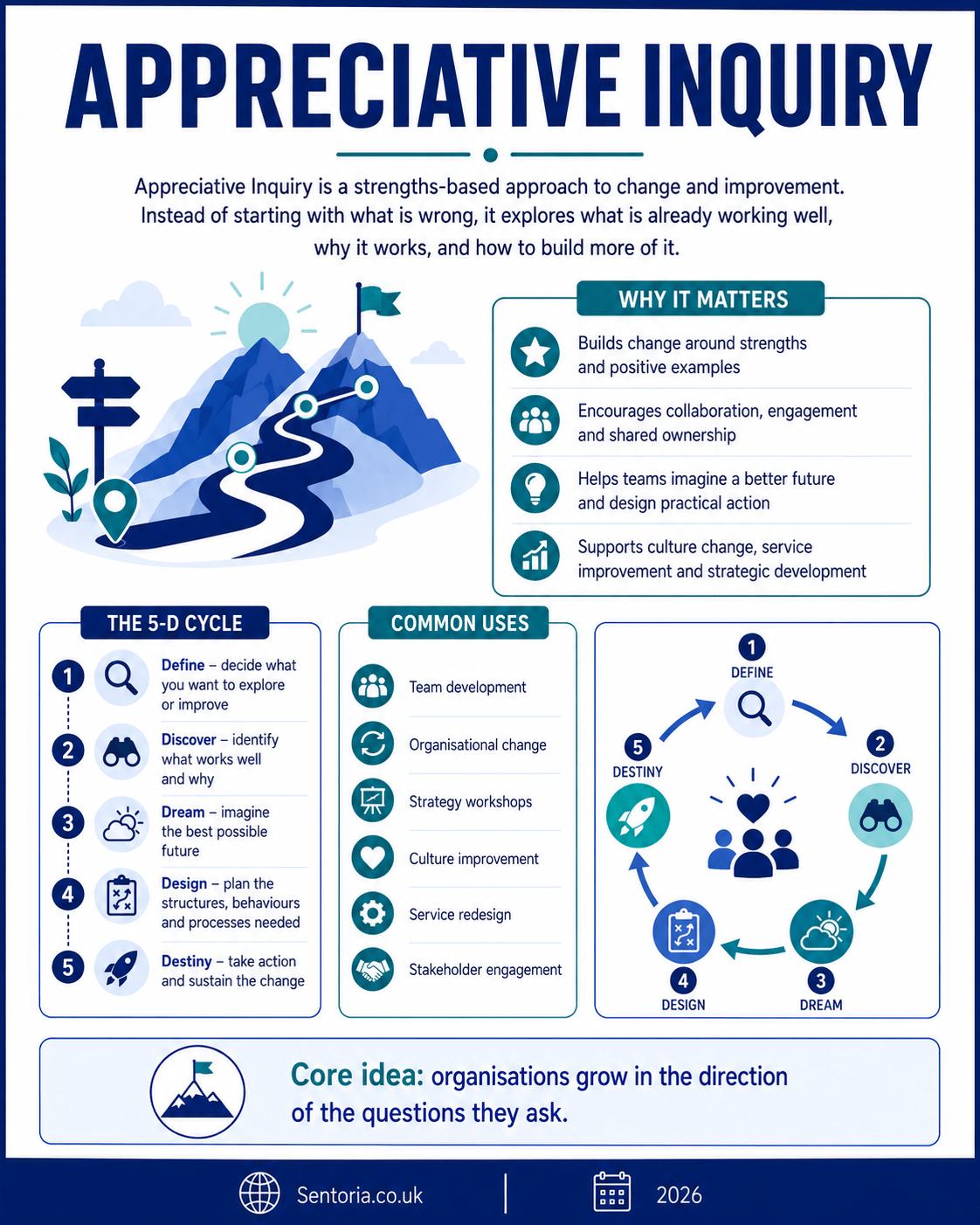
Appreciative Inquiry, often shortened to AI, is a strengths-based approach to organisational development, change and problem-solving. At its simplest, Appreciative Inquiry asks: What is already working well, why does it work, what future do we want to create, and how can we build more of it? That makes it useful for leadership, organisational change, team development, strategy, culture, service improvement, charity governance, public sector transformation, education, healthcare, community development, customer experience, staff engagement and board planning.

Strategy

Roadmapping

·22 min read

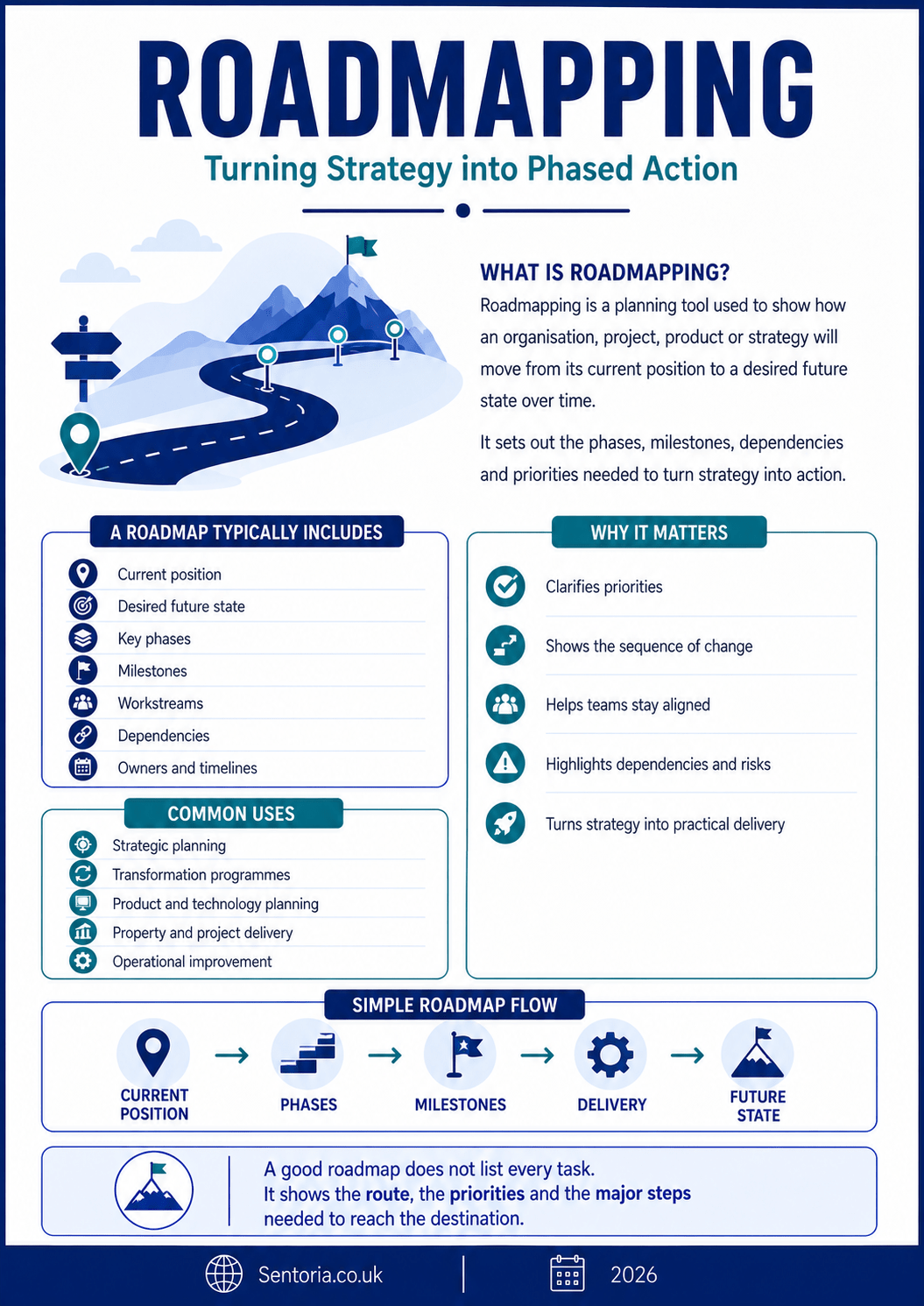
Roadmapping is a planning and management tool used to show how an organisation, project, product, service or strategy will move from its current position to a desired future state over time. At its simplest, roadmapping asks: Where are we going, what needs to happen, in what order, who is responsible, and how will we know we are making progress? That makes it useful for strategy, business planning, transformation, product development, technology adoption, project management, charity planning, public sector programmes, property development, operational improvement, innovation and board reporting.

Strategy

Backforecasting

·25 min read

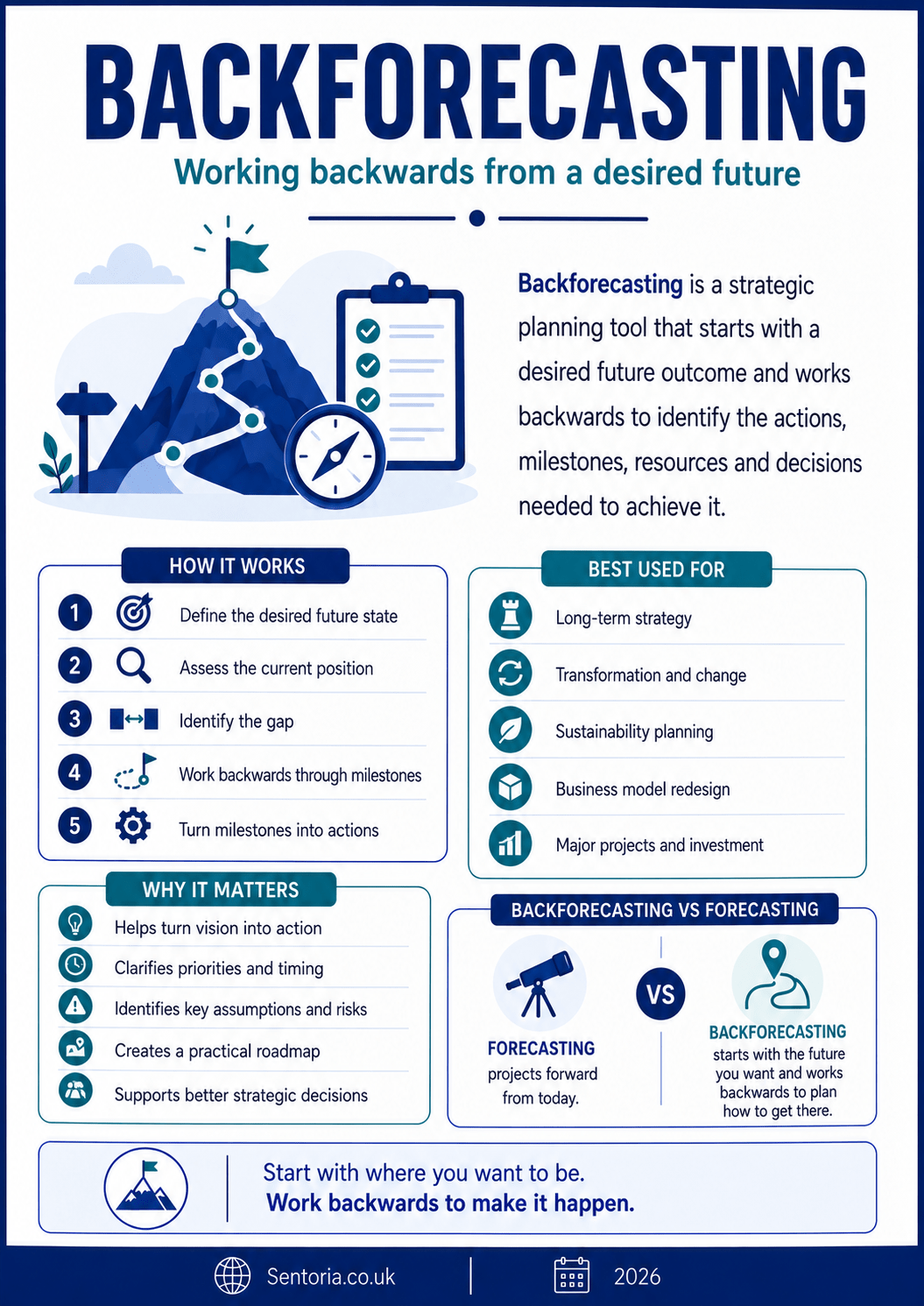
Backforecasting, more commonly known as backcasting, is a strategic planning and decision-making tool used to work backwards from a desired future outcome to identify the actions, decisions and milestones needed to get there. At its simplest, backforecasting asks: What future do we want, what would need to be true for that future to happen, and what must we do now to make it possible? That makes it useful for strategy, transformation, sustainability planning, business model redesign, public policy, charity planning, property development, technology adoption, workforce planning, innovation, long-term investment and major change programmes.

Strategy

Stress Testing

·25 min read

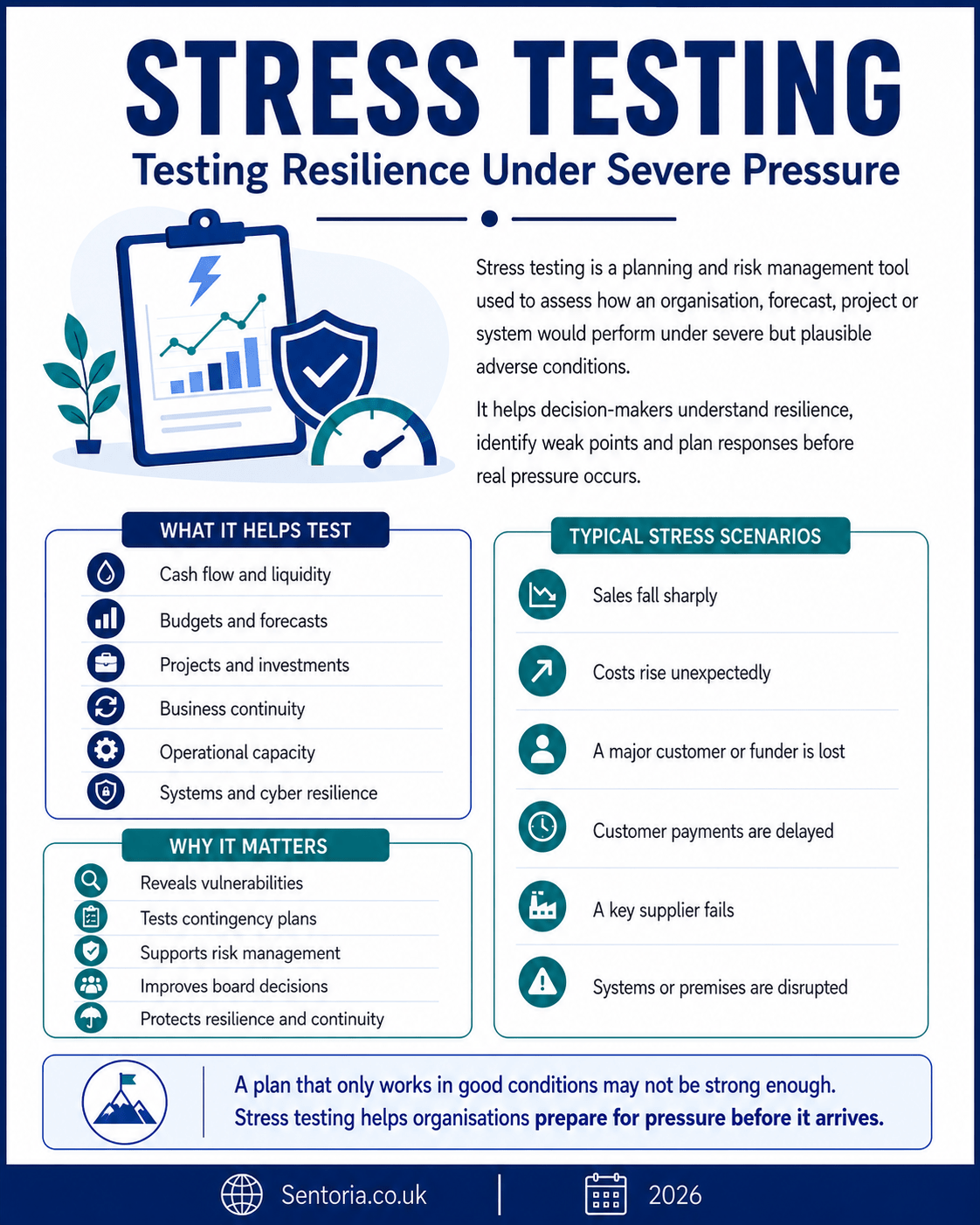
Stress testing is a planning, risk management and decision-making tool used to test how an organisation, project, forecast, system or strategy would perform under difficult, severe or adverse conditions. At its simplest, stress testing asks: What happens if things get significantly worse than expected, and could we still cope? That makes it useful for business planning, cash flow management, forecasting, risk management, charity governance, public sector planning, banking, property development, construction, manufacturing, cyber security, business continuity, project management and board reporting.

Strategy

Sensitivity Analysis

·22 min read

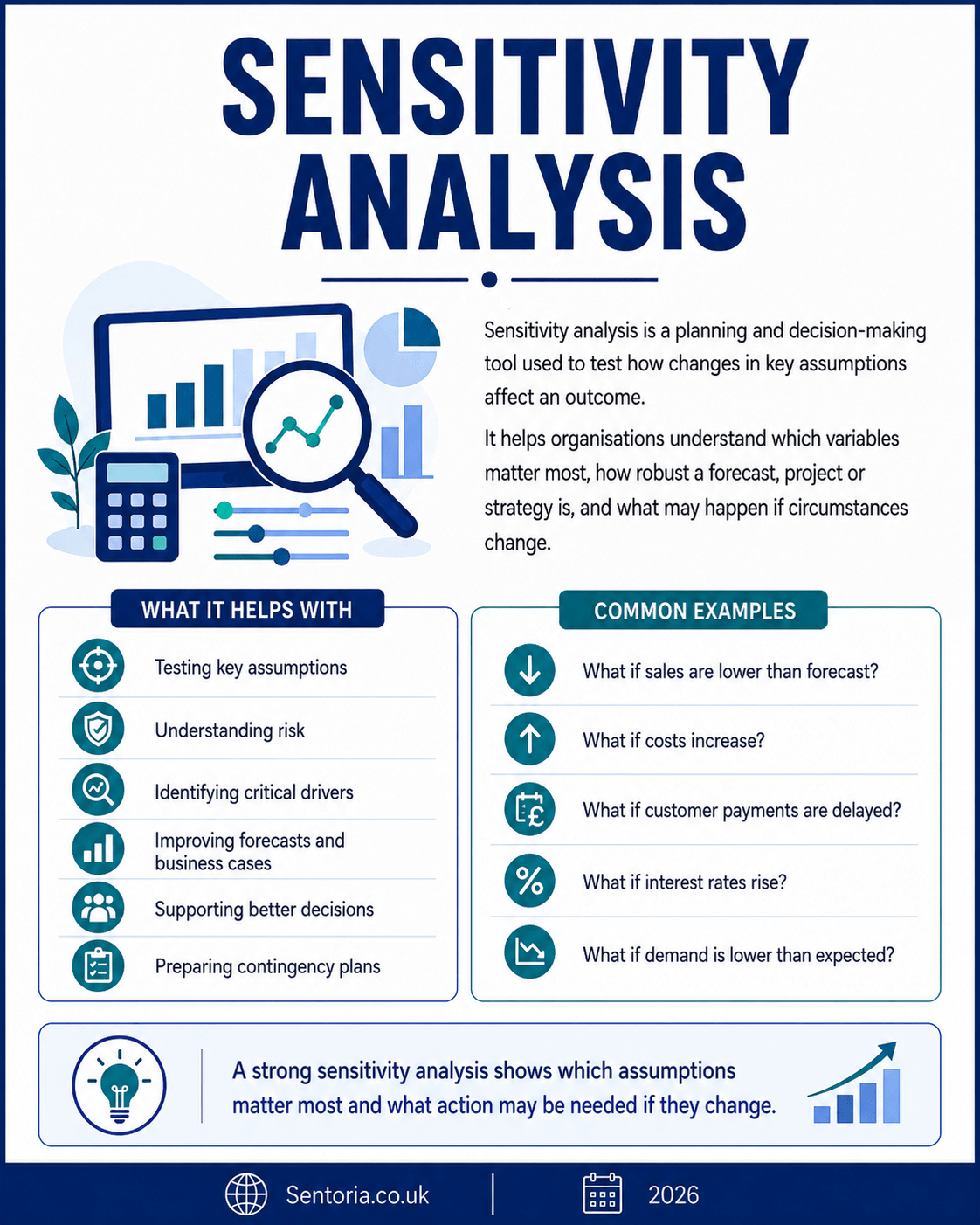
Sensitivity analysis is a planning and decision-making tool used to test how changes in key assumptions affect an outcome. At its simplest, sensitivity analysis asks: What happens if one of our assumptions changes? That makes it useful for forecasting, budgeting, cash flow planning, investment appraisal, property development, project management, charity governance, public sector planning, manufacturing, pricing, risk management and board reporting. Used properly, sensitivity analysis helps organisations understand which assumptions matter most, where a plan is vulnerable, and what could change the decision.