Explore Sentoria

Category: Strategy

Understanding strategy is essential for any business, project, or organisation that wants to move forward with purpose.

A good strategy helps you make better decisions, focus your resources, understand your market, respond to change, and turn ideas into practical action.

This section brings together a range of strategic tools, frameworks, and modes designed to help you think more clearly about where you are, where you want to go, and how best to get there.

Strategy

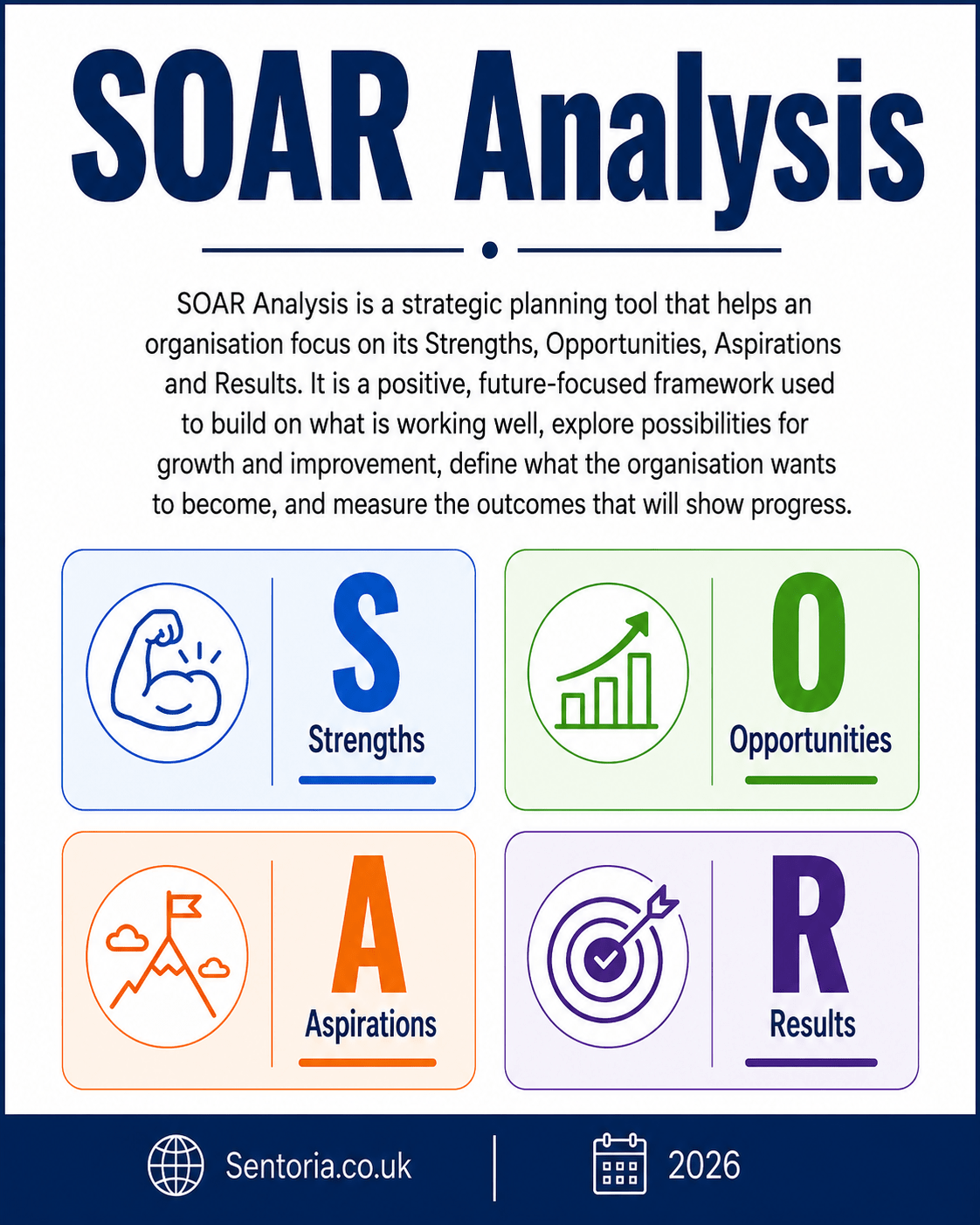
SOAR Analysis

·21 min read

A SOAR analysis is a strategic planning tool used to help an organisation focus on what it does well, identify future opportunities, define what it wants to become, and agree the results that will show progress. SOAR stands for: Strengths Opportunities Aspirations Results It is often seen as a more positive and future-focused alternative to SWOT analysis. Where SWOT considers strengths, weaknesses, opportunities and threats, SOAR keeps the focus on strengths and opportunities, then adds aspirations and measurable results.
Strategy

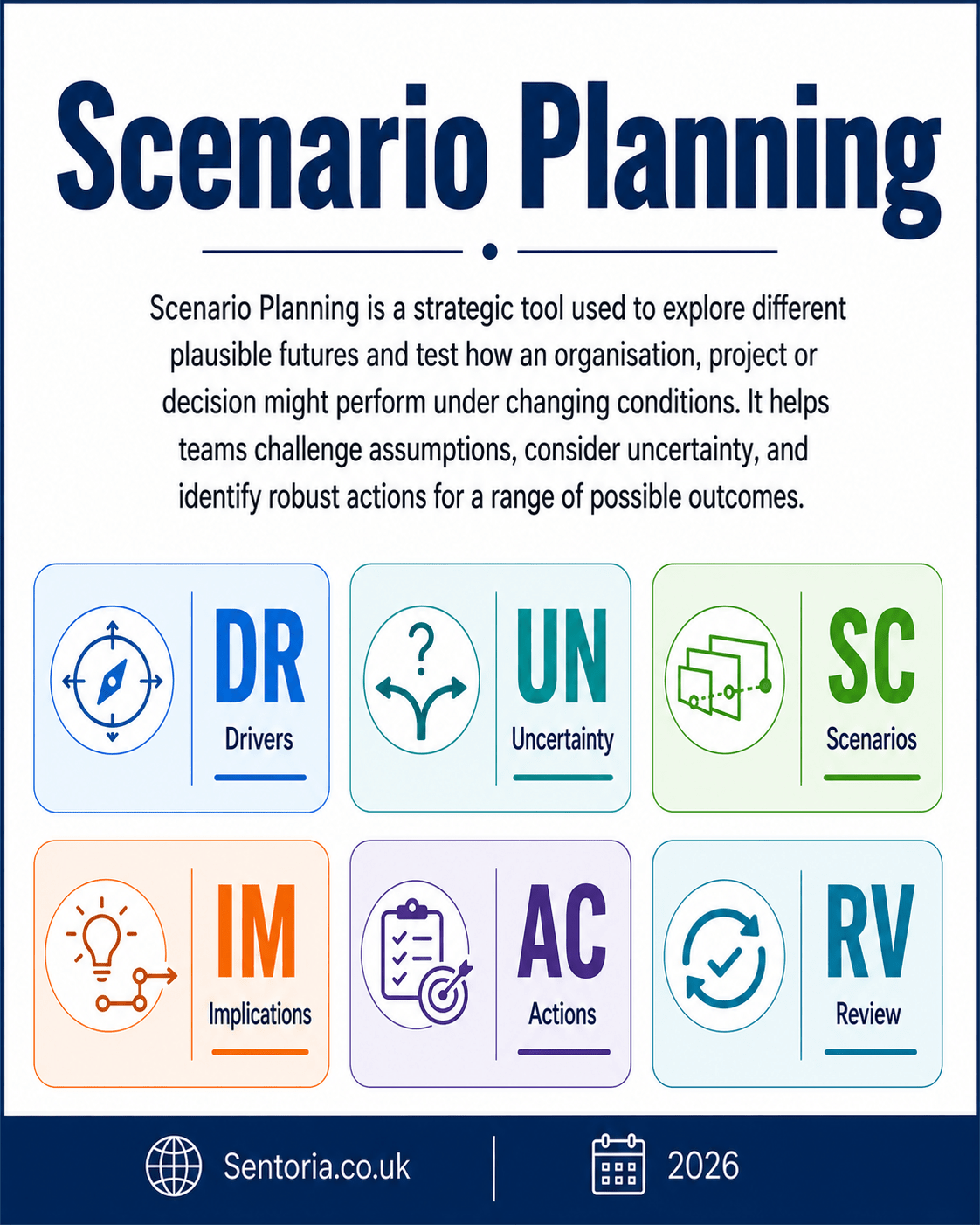
Scenario Planning

·21 min read

Scenario planning is a strategic planning tool used to explore different possible futures and test how an organisation, project, policy or business model might perform under changing conditions. It is not about predicting the future. It is about preparing for uncertainty. At its simplest, scenario planning asks: What could the future look like, what would that mean for us, and what should we do now?

Strategy

Risk Register

·19 min read

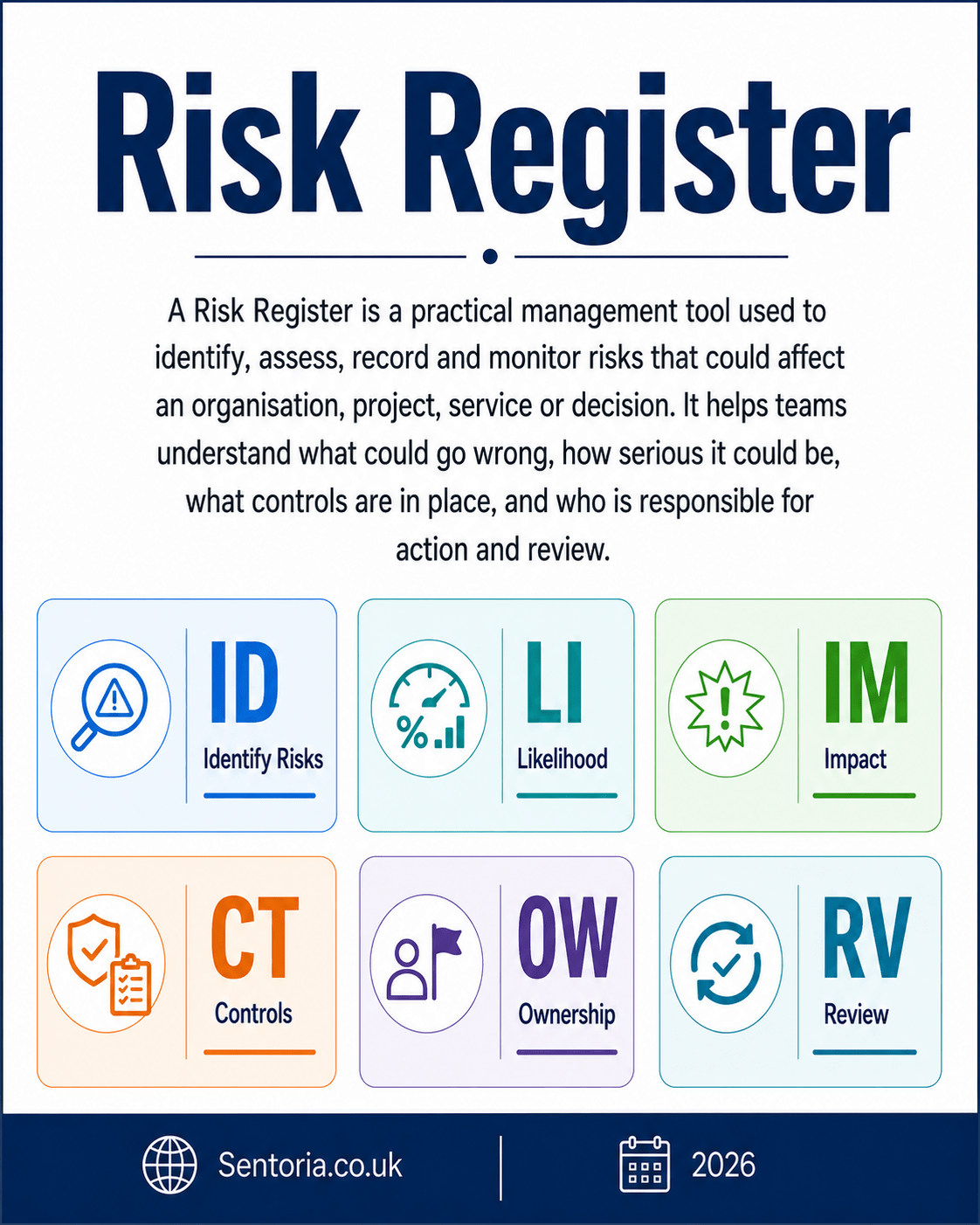
A risk register is a practical management tool used to record, assess, manage and monitor risks that could affect an organisation, project, service, programme or decision. At its simplest, a risk register answers five important questions: What could go wrong or happen unexpectedly? How serious would it be? How likely is it? What are we doing about it? Who owns the risk and the response?

Strategy

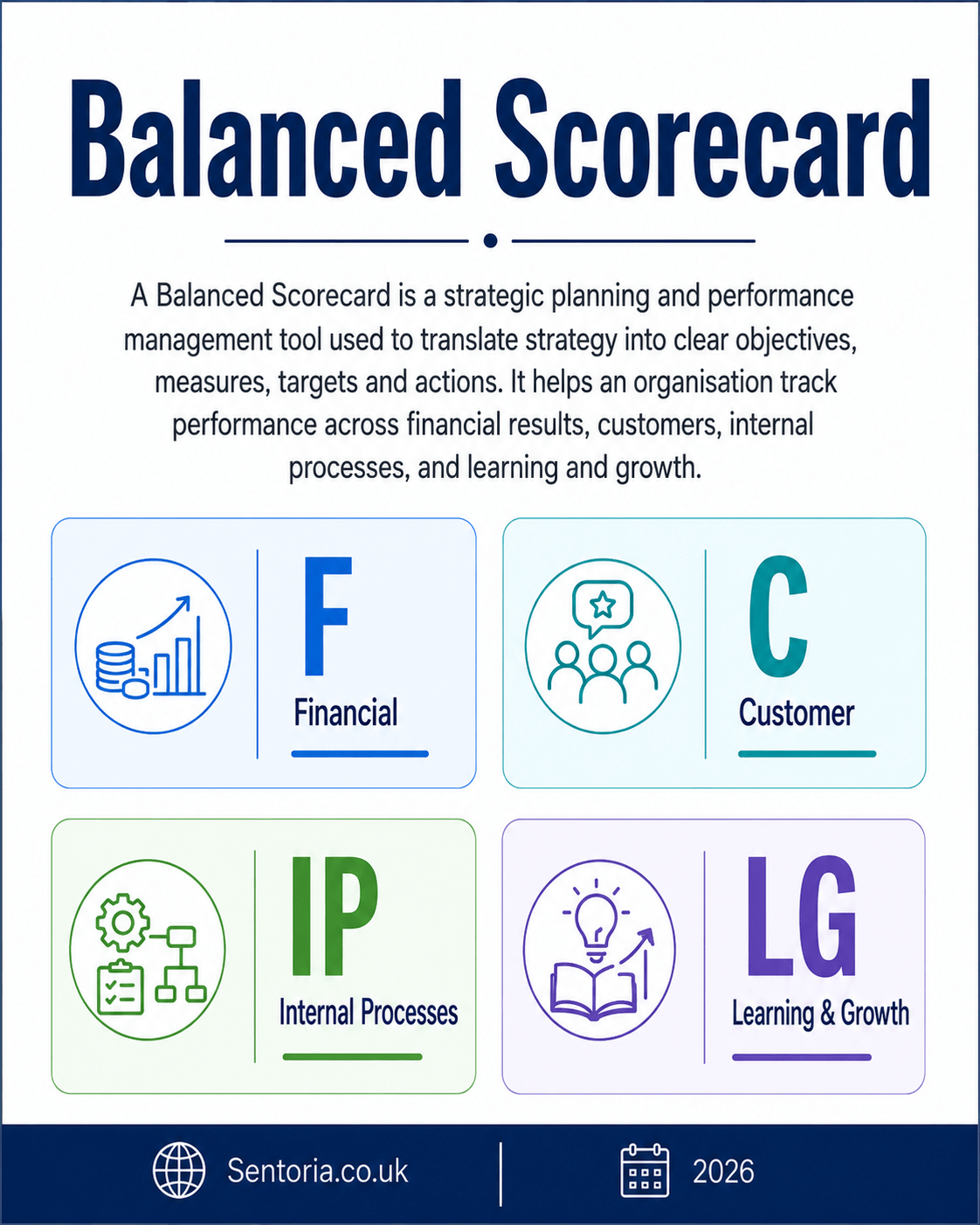
Balanced Scorecard

·23 min read

The Balanced Scorecard is a strategic planning and performance management tool used to translate an organisation’s strategy into clear objectives, measures, targets and actions. It was developed to solve a common management problem: organisations often measure what is easiest to count, rather than what is most important to long-term success. Traditional performance reporting tends to focus heavily on financial results. Profit, cash flow, revenue, costs and margins are all important, but they usually tell management what has already happened. They do not always explain whether the organisation is building the customer relationships, internal processes, skills, systems and capabilities needed for future performance.

Strategy

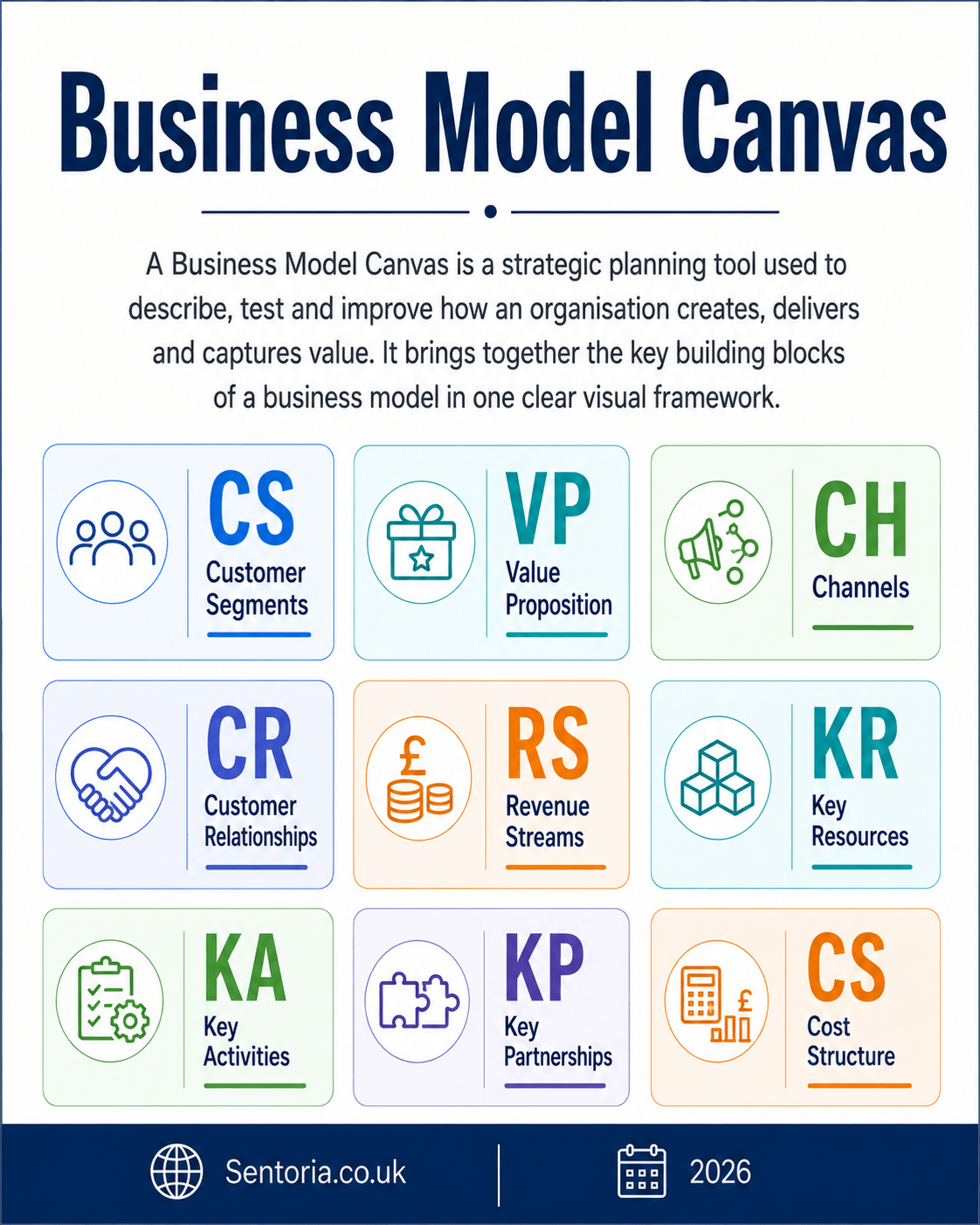
Business Model Canvas

·26 min read

The Business Model Canvas is a strategic planning tool used to describe, test and improve the way an organisation creates, delivers and captures value. It is most often presented as a single-page visual framework made up of nine building blocks. These blocks cover the customer, the offer, the method of delivery, the resources needed, the activities required, the partners involved, the income generated and the costs incurred. At its simplest, the Business Model Canvas helps answer one very important question: How does this organisation actually work as a business model?

Strategy

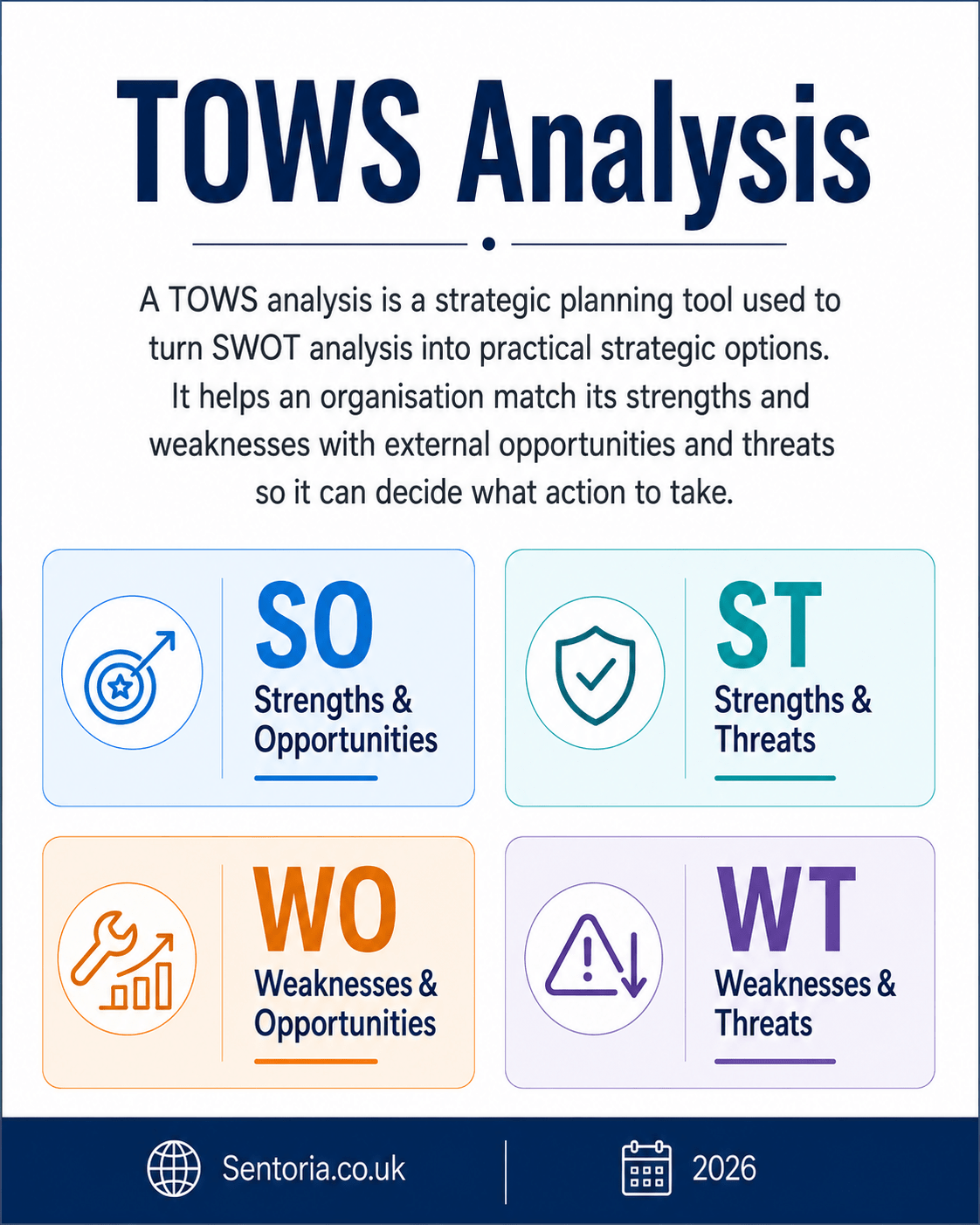
TOWS Analysis

·22 min read

A TOWS analysis is a strategic planning tool used to convert SWOT analysis into practical strategic options. Where SWOT identifies Strengths, Weaknesses, Opportunities and Threats, TOWS goes a step further. It asks how those factors interact with each other and what the organisation should do as a result. In simple terms: SWOT helps you understand the situation. TOWS helps you decide what to do about it.

Strategy

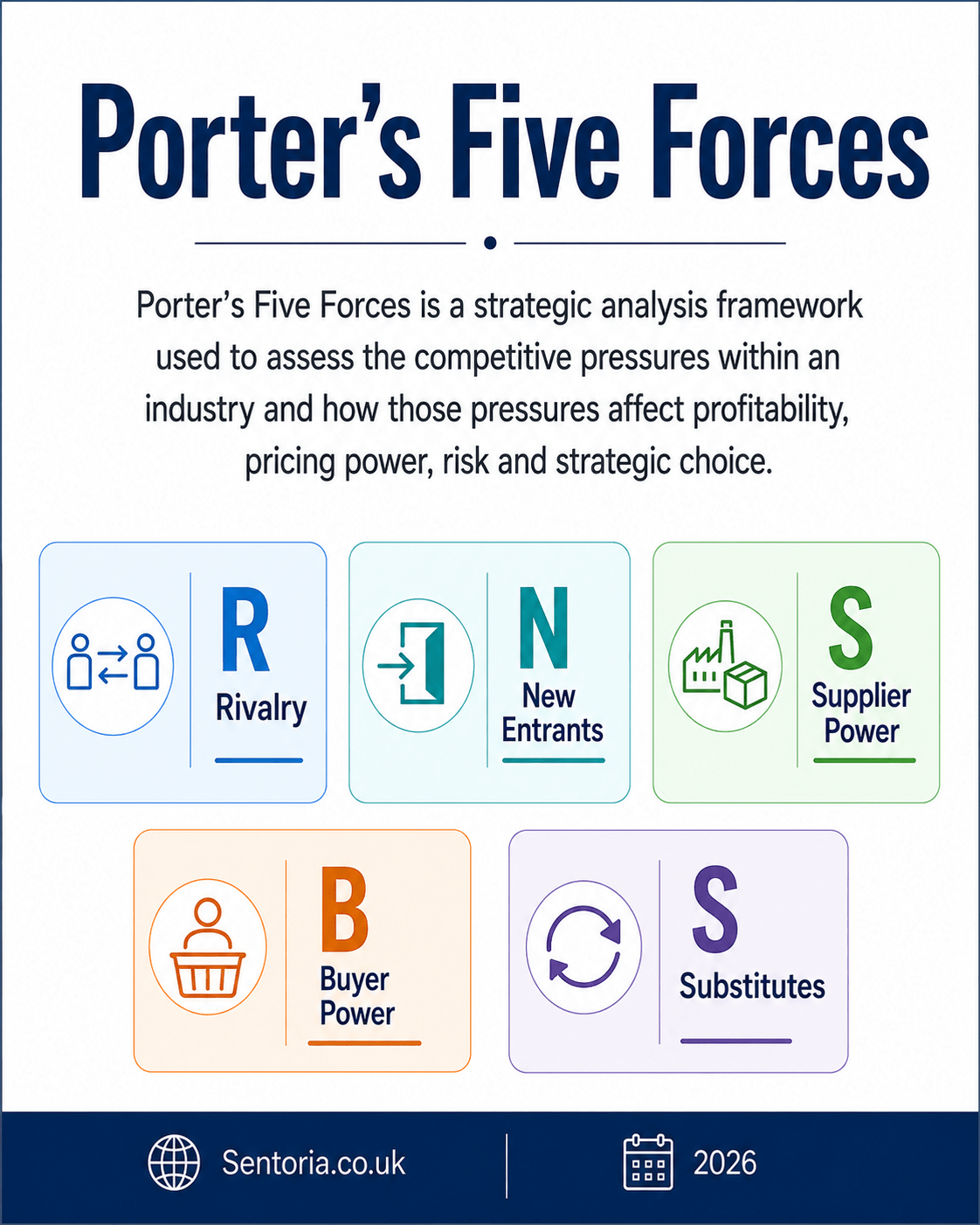
Porter’s Five Forces

·24 min read

Porter’s Five Forces is one of the most important strategy tools in modern business thinking. It helps organisations understand the competitive pressures within an industry and how those pressures affect profitability, pricing power, risk and strategic choice. At its simplest, Porter’s Five Forces asks a business to look beyond its immediate competitors and examine five wider forces that shape the market:

Strategy

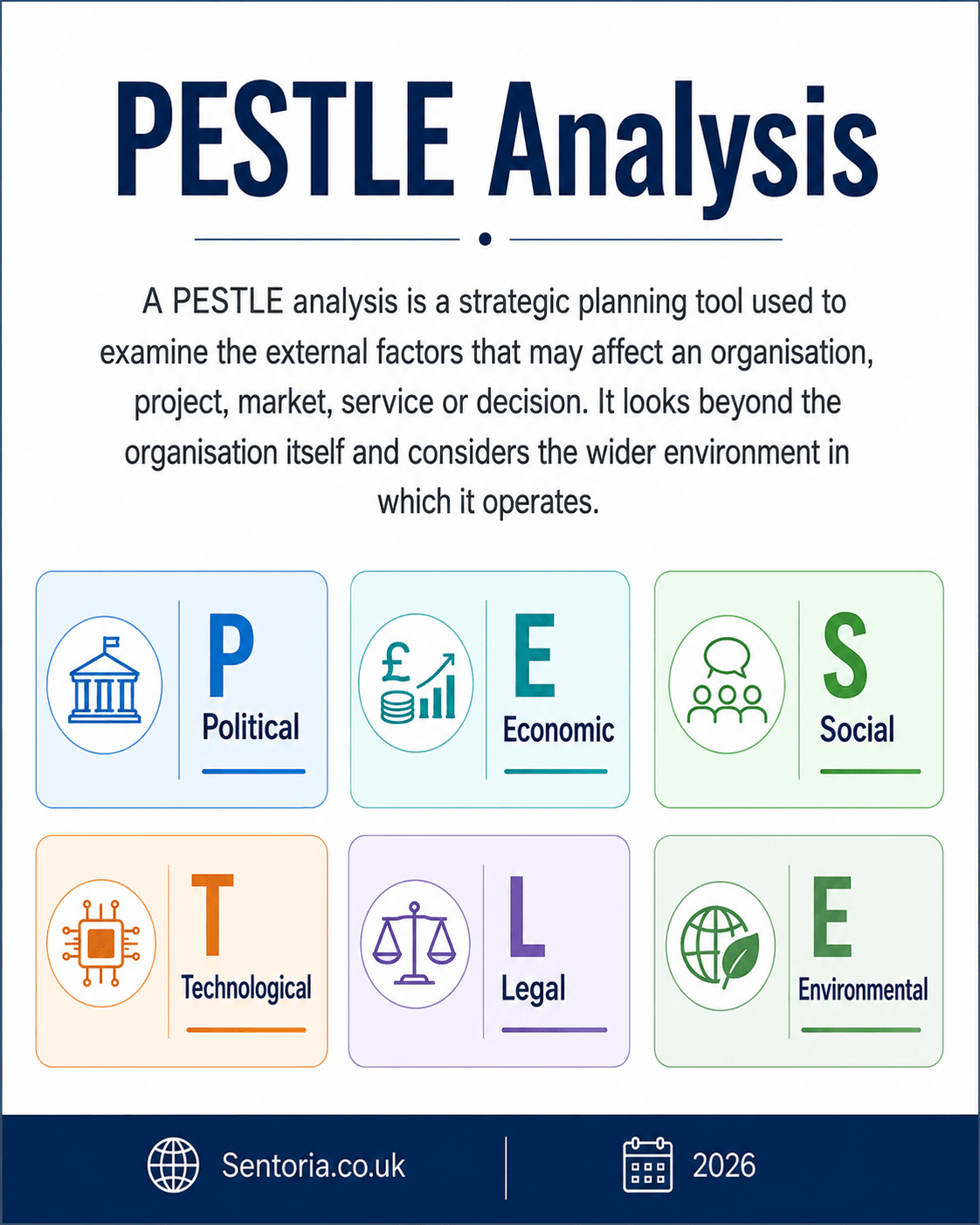
PESTLE analysis

·21 min read

A PESTLE analysis is a strategic planning tool used to examine the external factors that may affect an organisation, project, market, service or decision. It looks beyond the organisation itself and considers the wider environment in which it operates.

Strategy

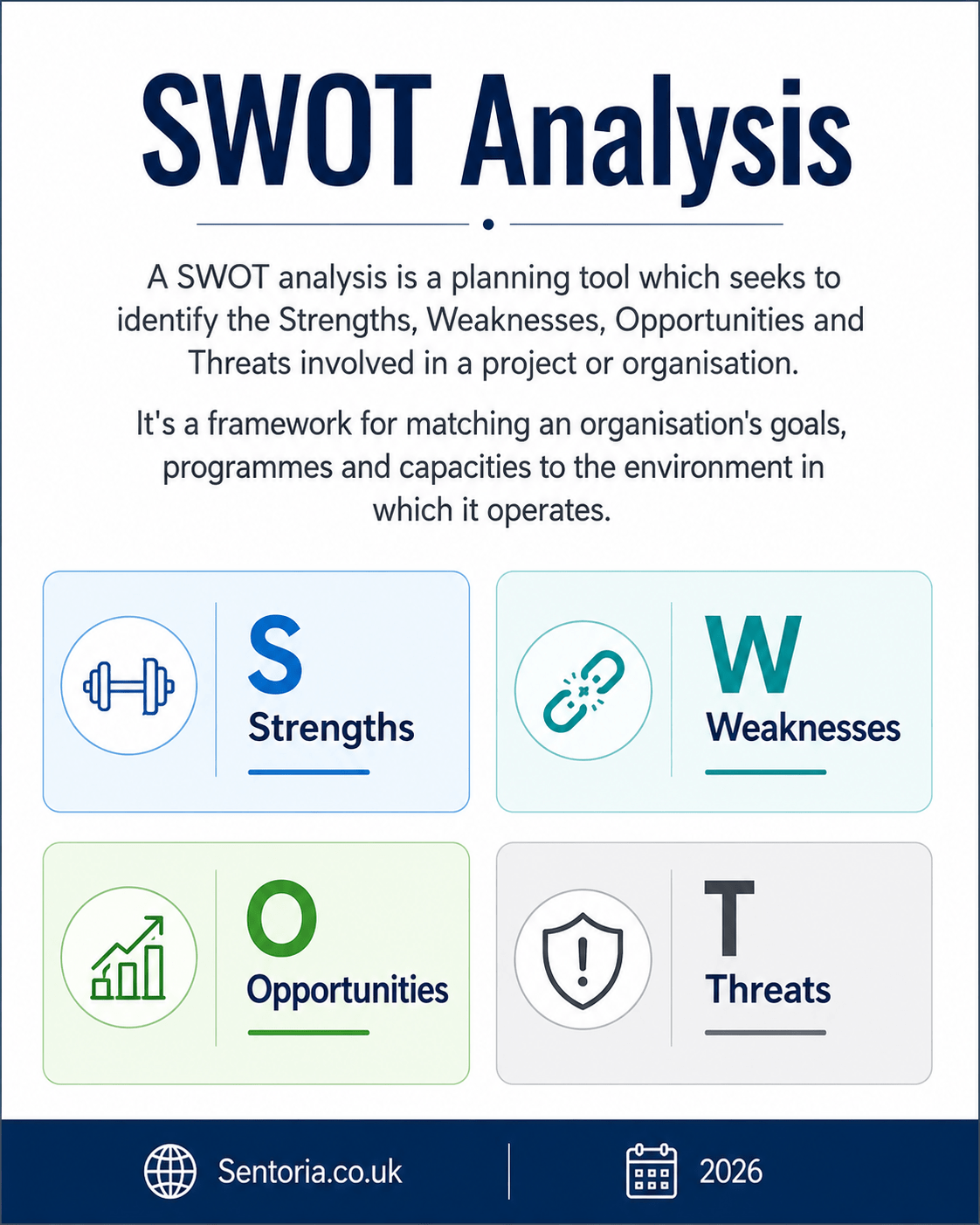
SWOT Analysis

·17 min read

A SWOT analysis is a practical planning method used to assess the internal and external factors that may affect an organisation, project or decision. It considers four key areas: Strengths, Weaknesses, Opportunities, and Threats. In simple terms, a SWOT analysis helps decision-makers understand what is working well, what needs improvement, where future potential lies, and what risks need to be managed.