Explore Sentoria

Month: May 2026

Strategy

Forecasting

·25 min read

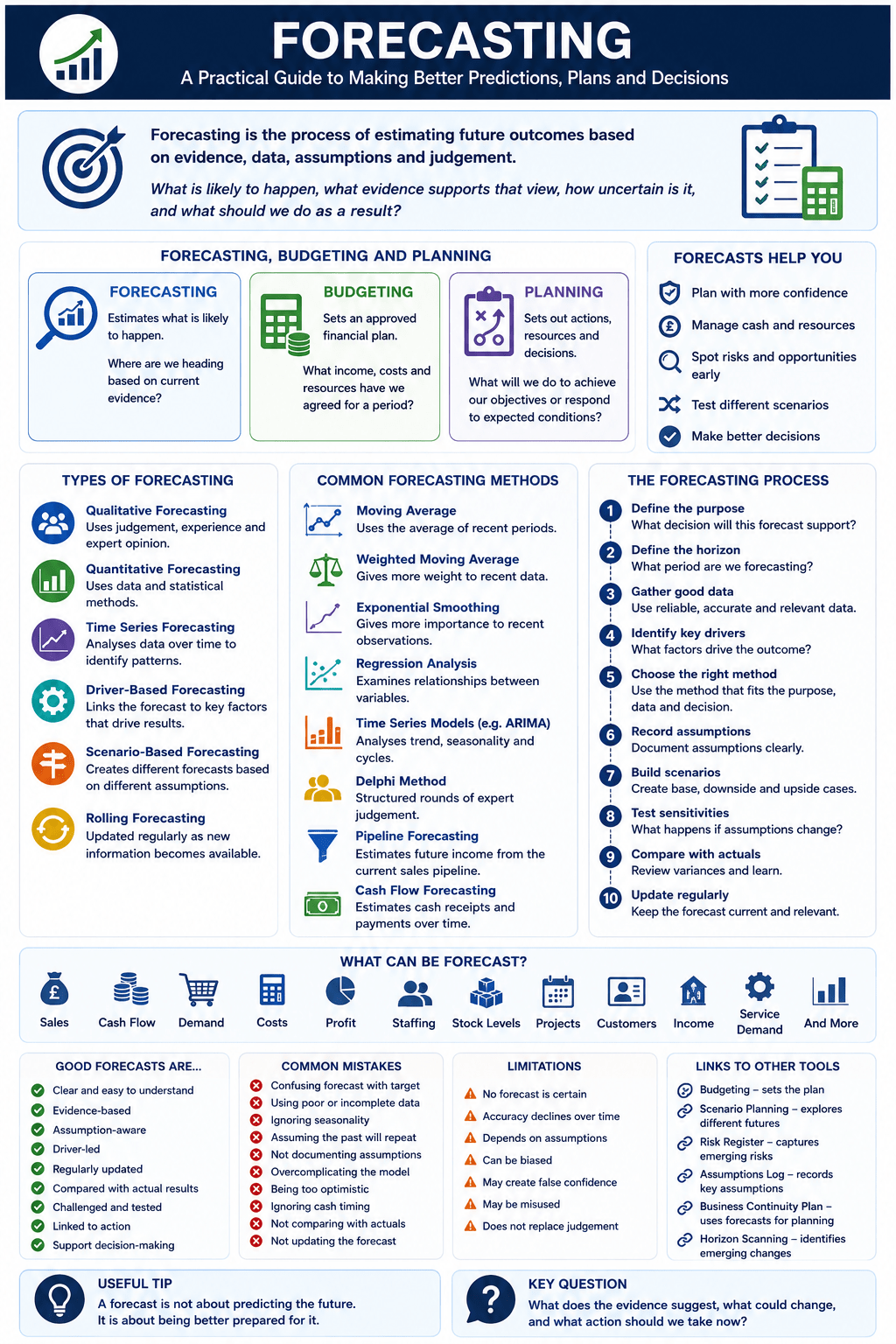
Forecasting is a planning tool used to estimate what may happen in the future based on evidence, data, assumptions, trends and judgement. At its simplest, forecasting asks: What is likely to happen, what evidence supports that view, how uncertain is it, and what should we do as a result? That makes it useful for business planning, cash flow management, sales planning, budgeting, project management, charity governance, public sector services, manufacturing, retail, technology, property, healthcare, education and strategic decision-making.
Strategy

Horizon Scanning

·22 min read

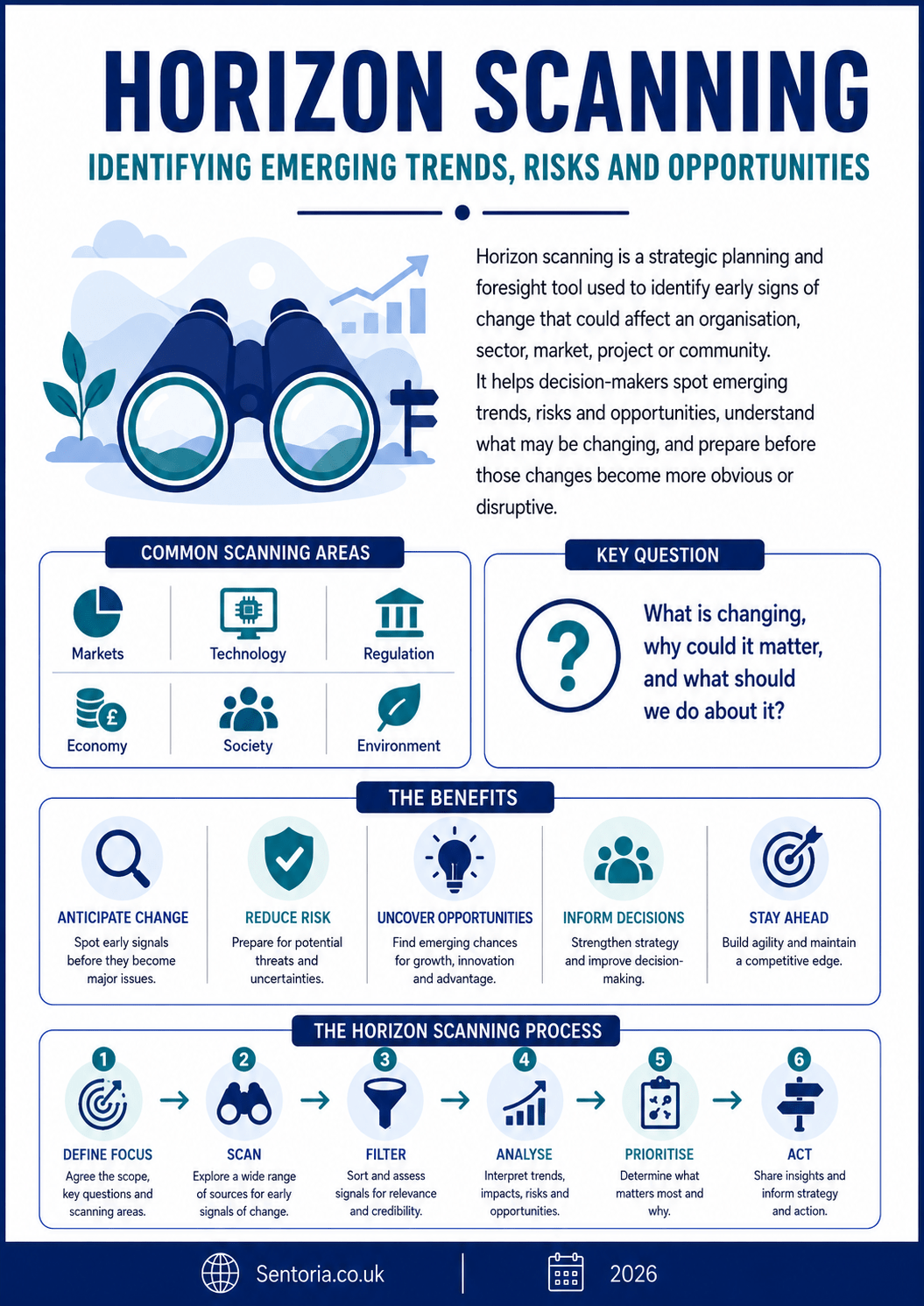
Horizon scanning is a strategic planning and foresight tool used to identify early signs of change that could affect an organisation, sector, market, project or community. At its simplest, horizon scanning asks: What is changing, what might change next, why could it matter, and what should we do about it? That makes it useful for business strategy, charity governance, public sector planning, risk management, policy development, technology planning, property and construction, professional services, healthcare, education, investment decisions and board reporting.

Strategy

Risk Appetite Statement

·28 min read

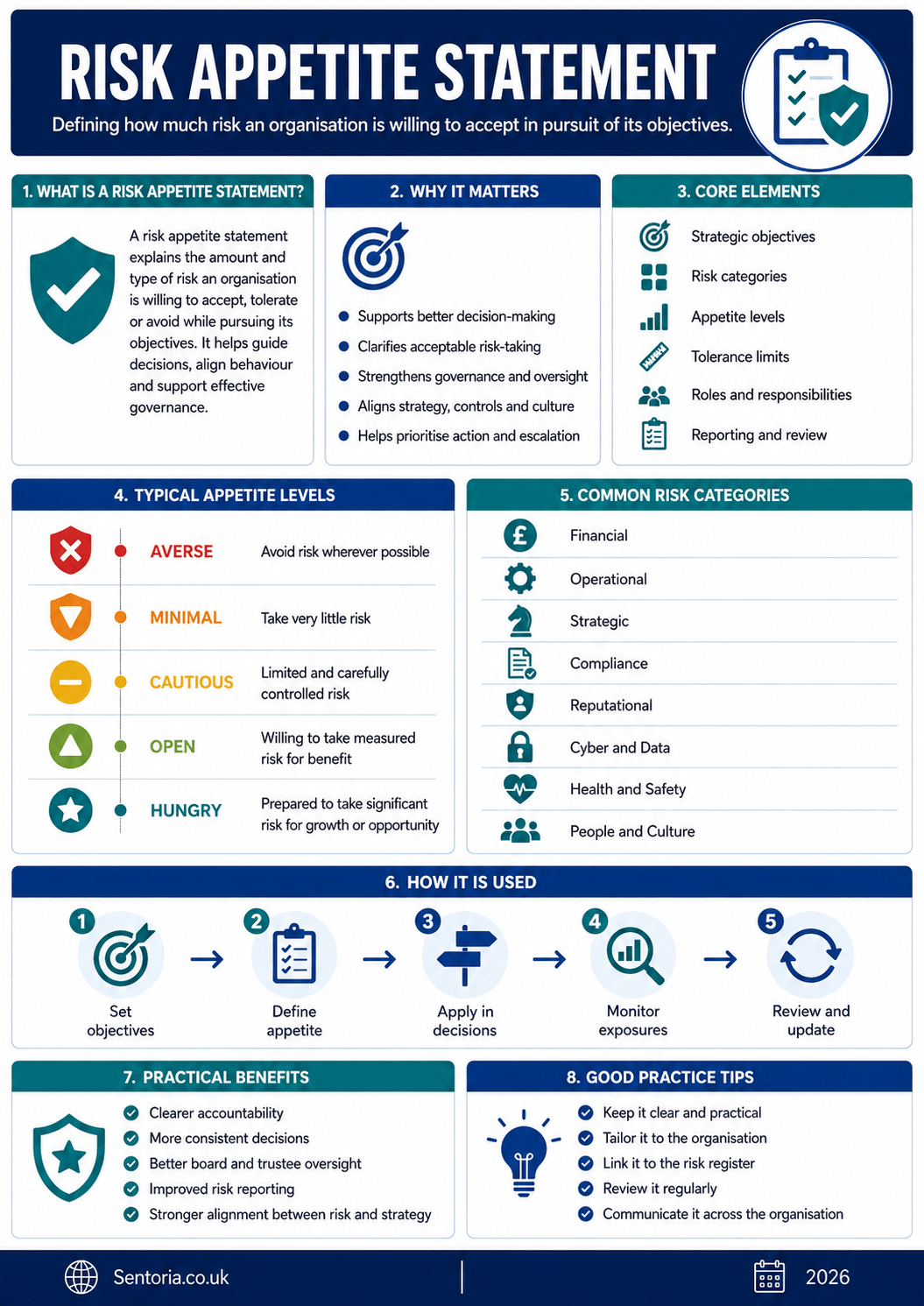
A risk appetite statement is a governance and risk management document that explains how much risk an organisation is willing to accept, tolerate or avoid in pursuit of its objectives. At its simplest, a risk appetite statement asks: How much risk are we prepared to take, in which areas, for what purpose, and where are the limits? That makes it useful for business planning, charity governance, public sector accountability, project management, financial control, property development, cyber security, health and safety, internal audit, board reporting and strategic decision-making.
Strategy

Internal Audit

·27 min read

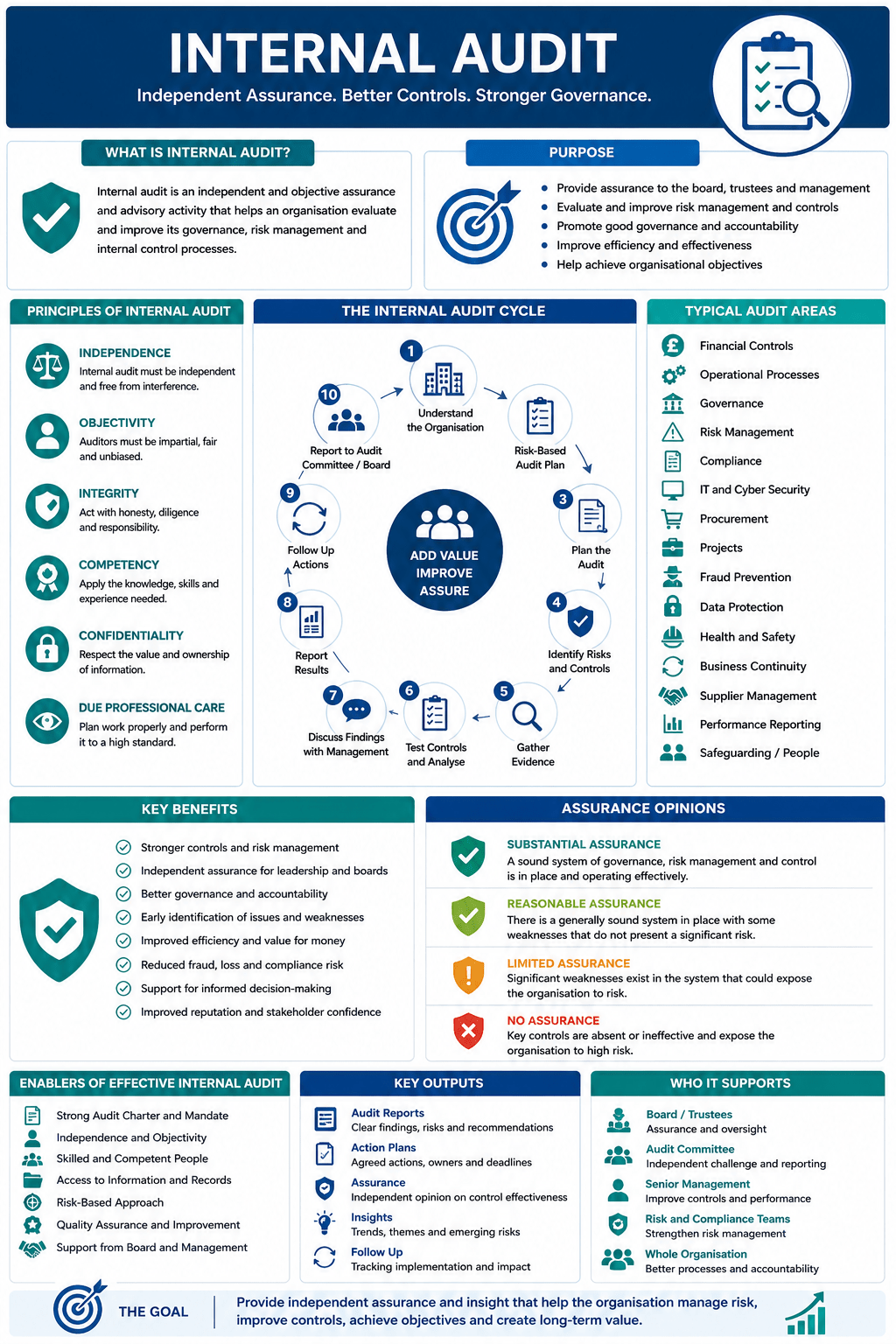
Internal audit is an independent and objective assurance and advisory activity used to help an organisation evaluate and improve its governance, risk management and internal control arrangements. At its simplest, internal audit asks: Are the organisation’s controls, processes, systems and governance arrangements working properly, and what needs to improve? That makes it useful for businesses, charities, public bodies, professional firms, property organisations, manufacturers, technology companies, healthcare providers, education organisations and any organisation that needs stronger oversight, better controls and clearer assurance.

Strategy

Business Continuity plan

·28 min read

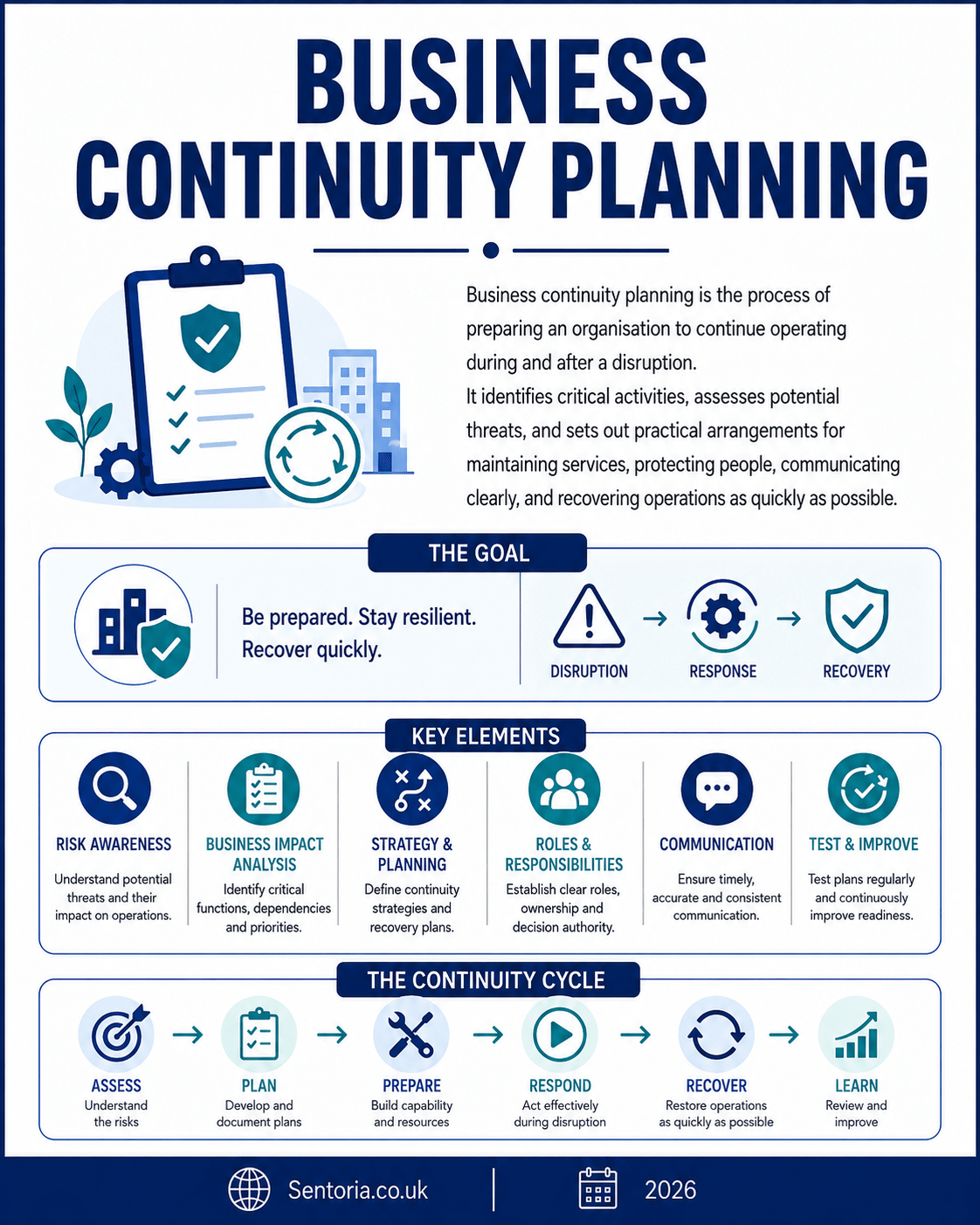
A business continuity plan, often shortened to BCP, is a practical management document that sets out how an organisation will continue operating, recover critical activities and communicate effectively during and after a serious disruption. At its simplest, a business continuity plan asks: What must keep running, what could disrupt it, how quickly must we recover, who does what, and how will we keep customers, staff, suppliers, service users and stakeholders informed? That makes it useful for business planning, charity governance, project management, public sector services, property management, manufacturing, professional services, cyber security, healthcare, education, retail, ecommerce, construction and board reporting.

Strategy

Bow-tie Analysis

·25 min read

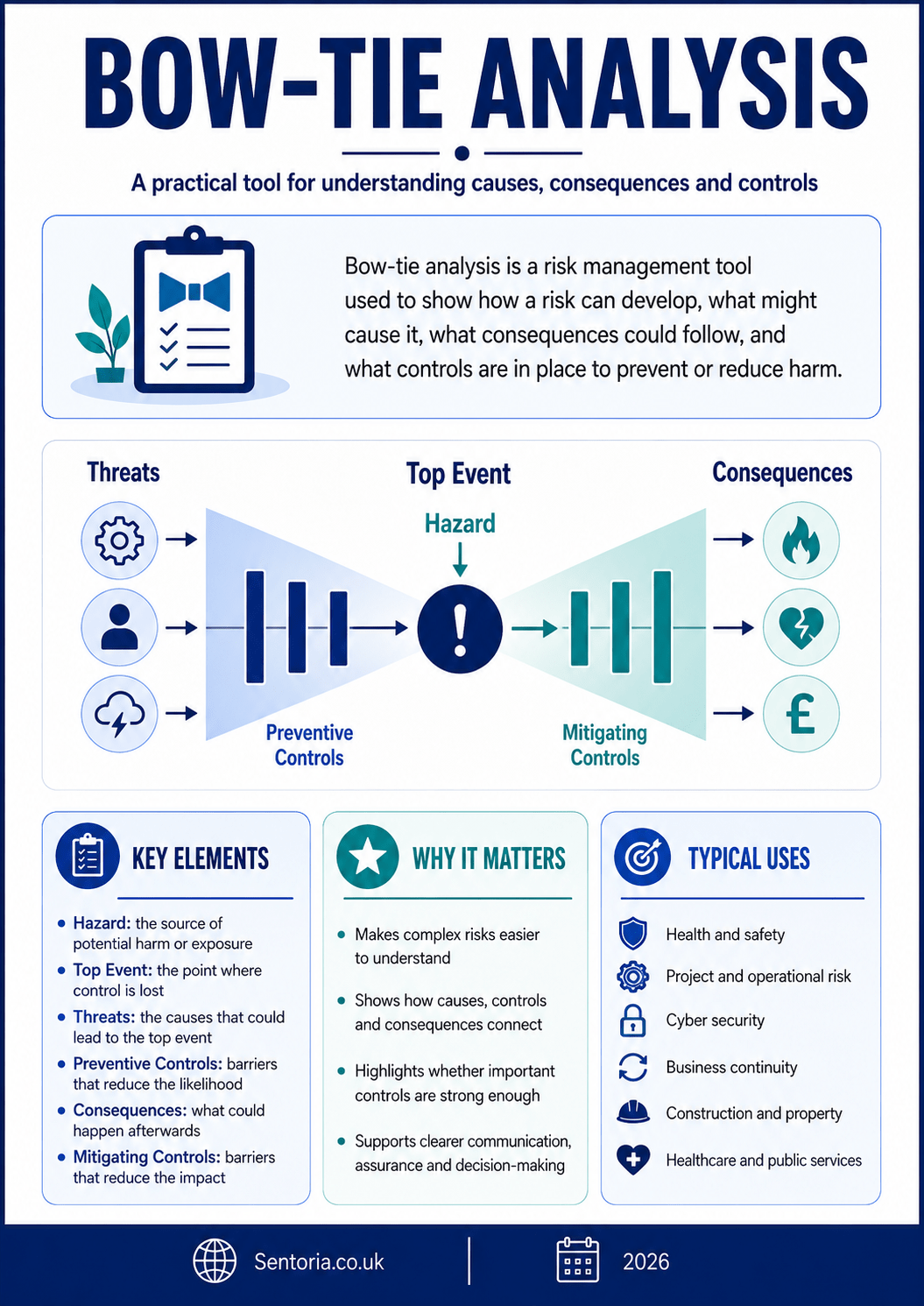
Bow-tie analysis is a risk management tool used to show how a risk can develop, what might cause it, what consequences could follow, and what controls are in place to prevent or reduce harm. At its simplest, bow-tie analysis asks: What could cause the unwanted event, what could happen afterwards, what controls stop it happening, and what controls reduce the impact if it does happen? That makes it useful for risk management, health and safety, project management, construction, property, manufacturing, healthcare, cyber security, business continuity, charity governance, public sector services and board reporting.

Strategy

Assumption Log

·23 min read

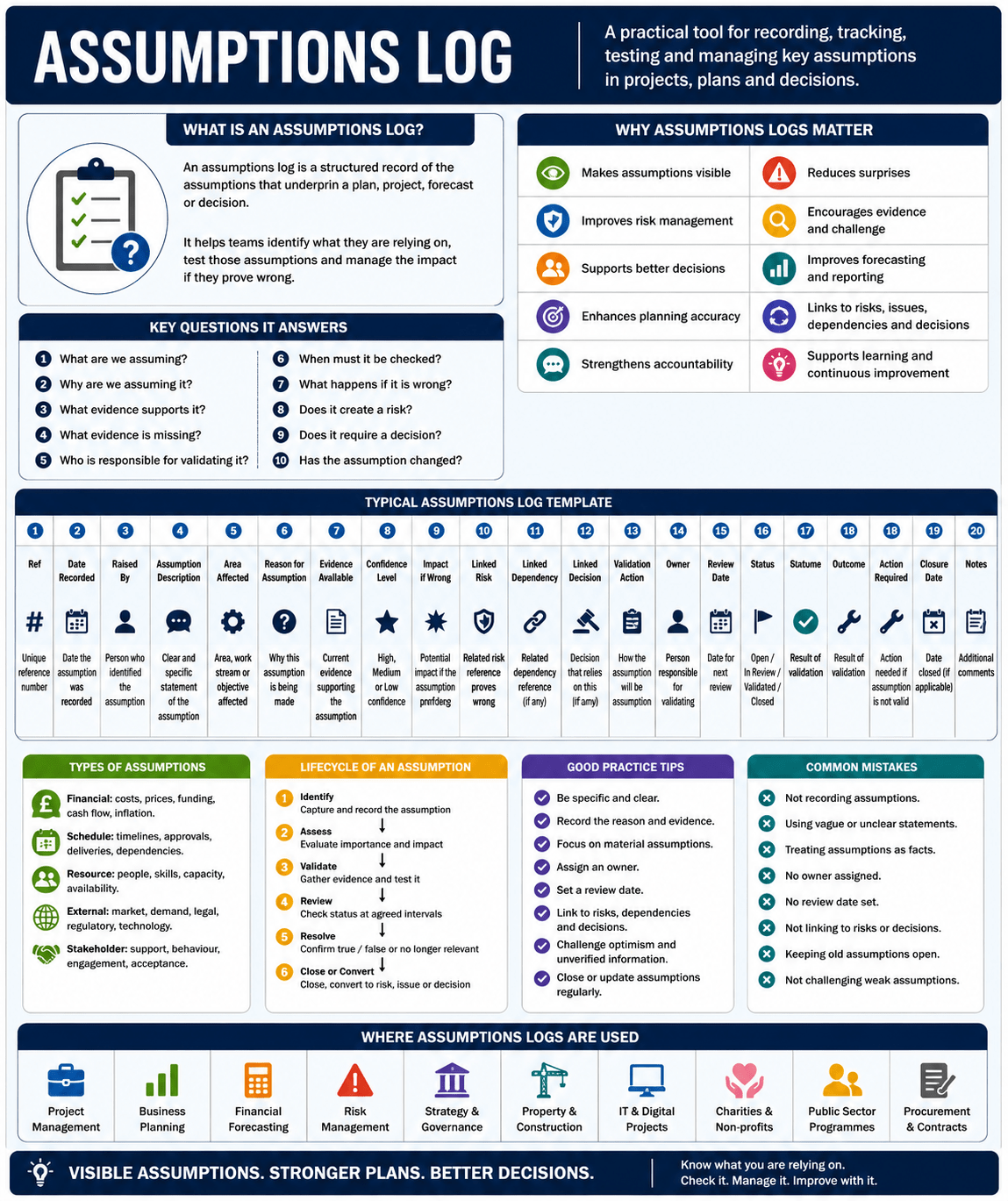
An assumptions log is a practical management tool used to record, track, test and review the assumptions that an organisation, project, service or decision relies upon. At its simplest, an assumptions log asks: What are we assuming to be true, why are we assuming it, what happens if we are wrong, and who is responsible for checking it? That makes it useful for project management, business planning, strategy, charity governance, public sector programmes, property development, construction, technology implementation, financial forecasting, risk management and board reporting.

Strategy

Issue Log

·22 min read

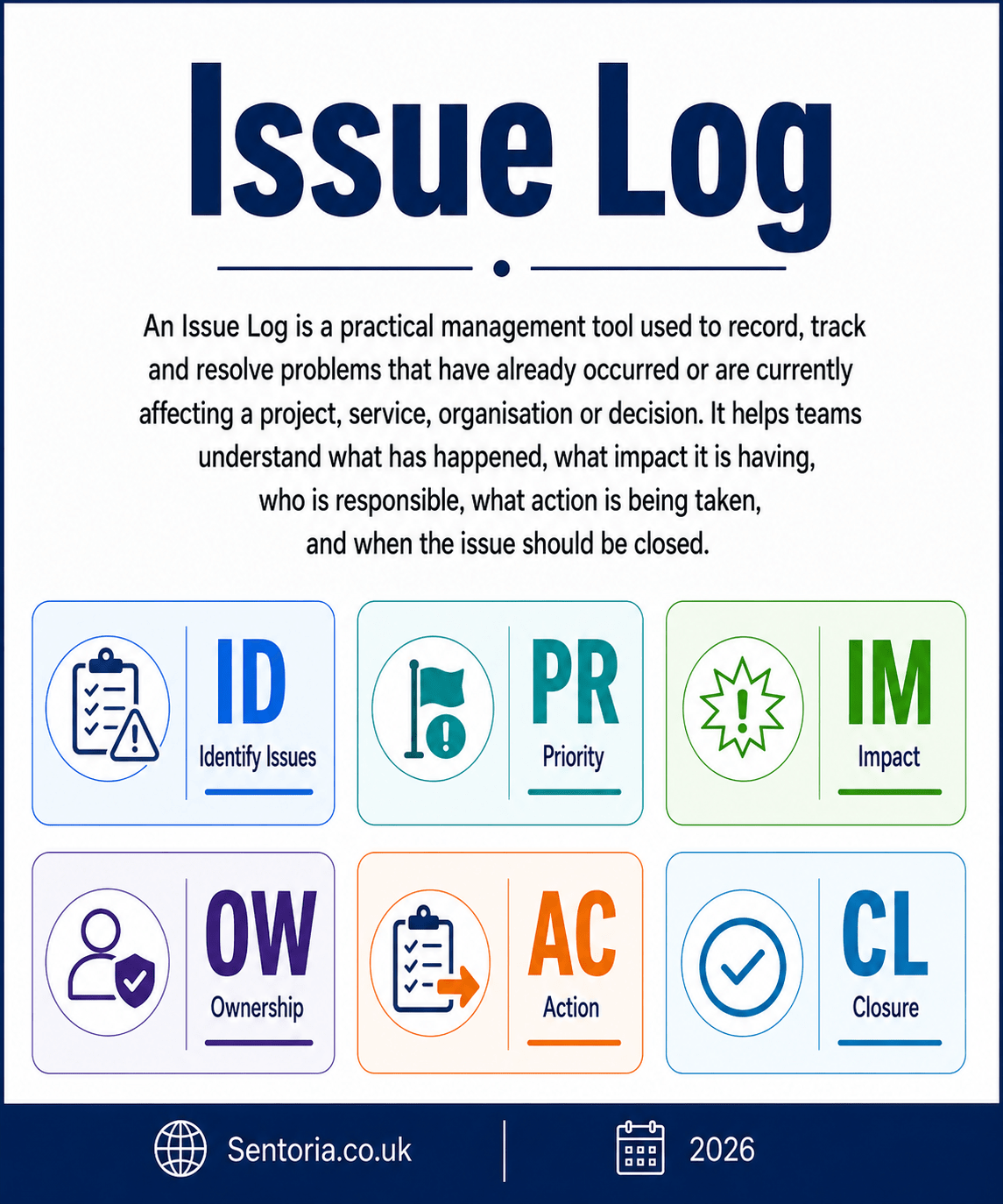
An issue log is a practical project and management tool used to record, track, manage and resolve problems that have already occurred or are currently affecting a project, service, organisation or decision. At its simplest, an issue log asks: What has happened, what impact is it having, who is responsible for resolving it, what action is being taken, and when will it be closed?

Strategy

Risk Matrix

·21 min read

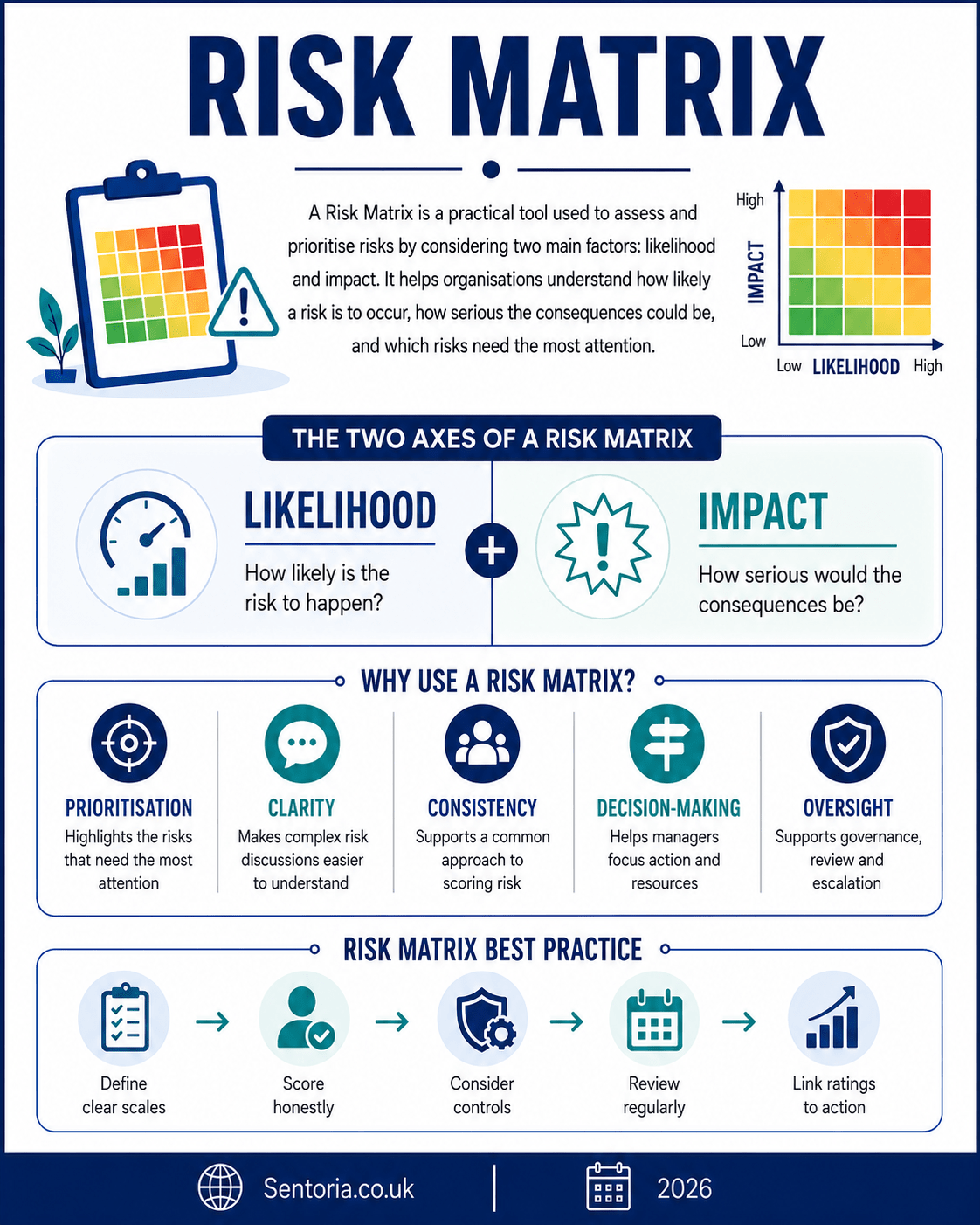
A risk matrix is a practical risk management tool used to assess and prioritise risks by considering two main factors: Likelihood Impact At its simplest, a risk matrix asks: How likely is this risk to happen, how serious would it be if it did happen, and how much attention does it need? That makes it useful for business planning, project management, charity governance, health and safety, cyber security, public sector reporting, property management, construction, service delivery, audit preparation and board oversight.

Strategy

Objectives and Key Results

·19 min read

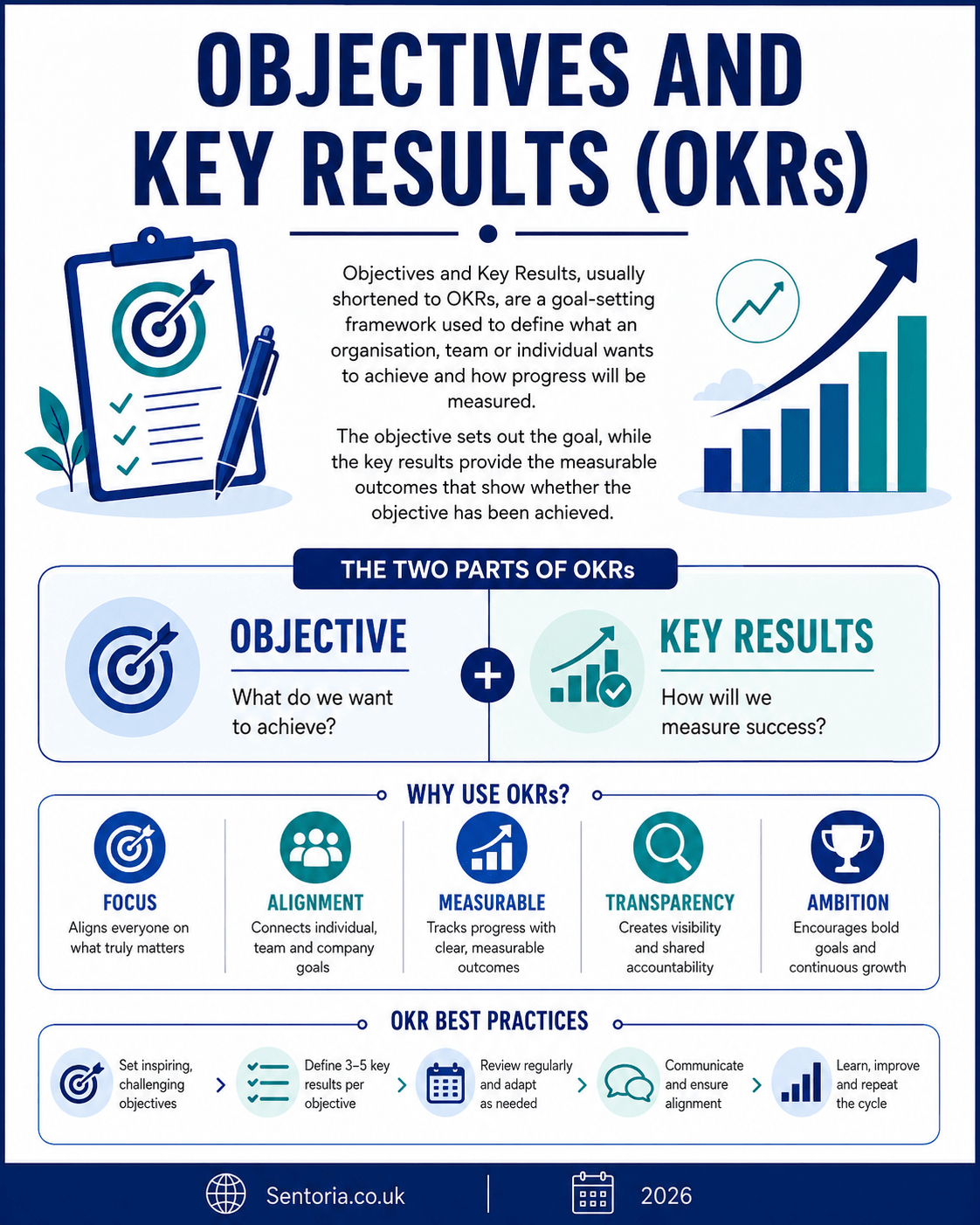
Objectives and Key Results, usually shortened to OKRs, are a goal-setting framework used to define what an organisation, team or individual wants to achieve and how progress will be measured. At their simplest, OKRs ask: What are we trying to achieve, and what measurable results will show whether we have achieved it? That makes OKRs useful for strategy delivery, team alignment, performance management, project planning, growth planning, transformation, product development and organisational focus.