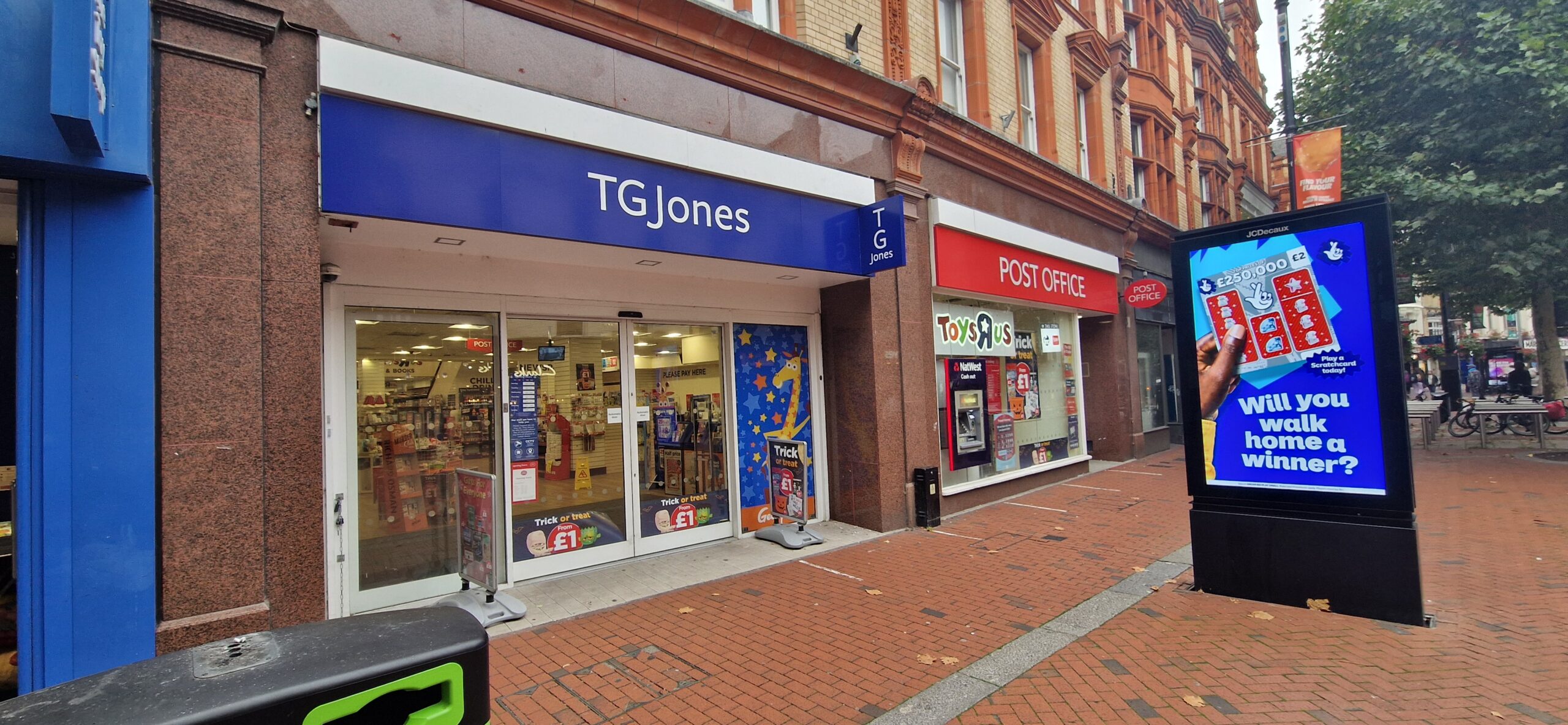
TG Jones, the former WH Smith high street business, is set to close up to 150 stores after the High Court approved a major restructuring plan designed to prevent the retailer falling into administration.
The decision gives the company breathing space. It allows the business to reduce rents, write off some debts, close loss-making stores and continue trading from a smaller core estate. For management and the company’s private equity owner Modella Capital, the ruling is a necessary step towards stabilising a business that had become financially distressed only a year after being separated from WH Smith.
However, the approval also raises wider questions about the modern high street rescue model. Landlords, suppliers, local authorities and employees are being asked to absorb pain so that the remaining business can survive. That may preserve thousands of jobs and keep a national retail chain alive. But it also means many smaller creditors, town centres and communities will pay part of the cost.
The result is a familiar pattern in British retail: a historic name is sold, rebranded, restructured and then reduced in size as trading pressures prove more difficult than expected.
From WH Smith to TG Jones
WH Smith’s high street stores were sold to Modella Capital in 2025 as the listed WH Smith group chose to focus on its more profitable and faster-growing travel retail business in airports, railway stations and hospitals.
That strategic logic was clear. WH Smith’s travel division had become the stronger part of the group, benefiting from passenger footfall, captive locations and international expansion. The high street business, by contrast, faced weaker consumer demand, online competition, high fixed costs and a store estate that required investment.
After the sale, the high street shops were rebranded as TG Jones. The new name was intended to separate the business from the WH Smith brand still used in travel locations.
The rebrand was always going to be difficult. WH Smith had more than two centuries of public recognition. TG Jones had none. A new name can work when it is supported by a clear customer proposition, investment and time. But where a business is already under financial pressure, rebranding can add cost and uncertainty before the benefits are established.
What the restructuring plan does
The approved restructuring plan allows TG Jones to close up to 150 stores and reduce rent on many others. It also involves writing off debts owed to suppliers and compromising payments to different classes of creditors.
The purpose is to avoid administration and preserve the viable part of the business. TG Jones had warned that without court approval it could run out of money, with rent, wages, tax and supplier payments creating an immediate cash shortfall.
The company’s chief executive has presented the plan as a way to protect the substantial core of the store estate and create a stronger, more sustainable business.
That argument has merit. If the alternative was administration, the restructuring may save more stores and jobs than a collapse would have done. A controlled restructuring can preserve value, protect customer access and give management time to rebuild.
But the trade-off is severe. Store closures will affect staff, landlords and high streets. Suppliers may lose significant sums. Local authorities may lose business rates. Post Office counters within some stores may also be affected, raising concerns about access to basic services in certain communities.
Why creditors were divided
The court approval was controversial because not all creditor groups supported the plan.
Large landlords controlling key stores were more supportive, partly because keeping those stores open may preserve long-term rental income. Other landlords, particularly those whose stores are likely to close or see rents cut sharply, had much less incentive to accept the proposals.
General creditors, including smaller suppliers, were also more exposed. For a national retailer, a supplier debt may be one part of a restructuring calculation. For a small card maker, publisher, toy supplier or local service provider, the same unpaid invoice can be a major financial hit.
This is one reason restructuring plans are sensitive. They can be commercially rational in aggregate, but painful and uneven in practice.
The High Court used a restructuring mechanism that can approve a plan even where some creditor groups oppose it, provided the legal tests are met. That gives distressed companies a powerful tool. It also means the courts are increasingly being asked to decide how financial pain should be allocated across the retail ecosystem.
The private equity question
Modella Capital’s ownership has attracted scrutiny because it has become an increasingly active player in distressed retail. It has acquired or controlled a number of well-known retail brands and has used restructuring tools to reduce costs and reshape store estates.
There is nothing inherently wrong with specialist turnaround investors buying distressed businesses. In some cases, they may be the only buyers willing to take on risk. Without them, some businesses may simply close sooner.
The difficulty is that private equity turnarounds often depend on rapid cost reduction, rent cuts, debt compromises and closures. That can save a business, but it can also shift losses onto landlords, suppliers and public bodies.
The central question is whether the new owner is using restructuring as a bridge to a genuine retail turnaround, or simply as a way to manage decline.
For TG Jones, that test is now beginning. The business has secured legal approval to cut costs. It still has to prove that the smaller chain can win customers, rebuild trust and trade profitably.
The pressure on high street retail
TG Jones is not struggling in isolation.
High street retailers continue to face a combination of high labour costs, business rates, rent pressure, energy costs, weak discretionary spending and online competition. Many town centre stores also face lower footfall as shopping habits shift towards retail parks, supermarkets, out-of-town destinations and digital channels.
Retailers selling stationery, cards, books, magazines, newspapers, toys and convenience goods face particular pressure because many of those products can be bought online, in supermarkets or from discount chains.
WH Smith’s old high street model was built around convenience, browsing, impulse purchases and local presence. That model still has value, but it is harder to defend when customers have more alternatives and expect sharper pricing, better stores and a clearer reason to visit.
The challenge for TG Jones is therefore not simply financial. It is strategic. Closing unprofitable stores may reduce losses, but the remaining shops still need a stronger proposition.
Post Offices and community services
One of the most sensitive aspects of the restructuring is the potential effect on Post Office counters located inside TG Jones stores.
Many former WH Smith branches became host locations for Post Office services. That gave customers access to postal services while also bringing footfall into the store.
If stores close, some Post Office counters may close with them unless replacement locations can be found. In larger towns, that may be inconvenient but manageable. In smaller communities, it could be more serious.
This illustrates a wider issue with high street restructuring. Some retailers are not just shops. They also provide services that communities depend on, including postal access, bill payments, parcel collection, banking services and local employment.
When those stores close, the impact goes beyond the retailer’s own profit and loss account.
What TG Jones must do next
The restructuring gives TG Jones a chance, but it does not guarantee a recovery.
The company now needs to answer several strategic questions. What is TG Jones for? Why should customers visit? How will it compete with supermarkets, Amazon, discount stores, online stationery sellers, The Works, Card Factory and local independents? What role should books, stationery, gifting, toys, cards, Post Office services and convenience products play in the future estate?
The old WH Smith high street model cannot simply be recreated under a new name. The business needs a sharper identity, better stores, clearer pricing and a customer offer that feels relevant.
There may still be a role for a national high street retailer focused on stationery, books, gifting and convenience. But it must be more than a legacy estate with a new sign above the door.
A business lesson in restructuring
The TG Jones case offers a useful lesson for businesses of all sizes: restructuring can buy time, but it is not the same as transformation.
A company can reduce rent, close branches, compromise debts and cut overheads. Those steps may be necessary. But they do not by themselves create demand, rebuild brand trust or improve the customer experience.
For a restructuring to work, it must be linked to a credible commercial plan. The business needs to know which customers it serves, what problem it solves, how it differentiates itself and how it will generate sustainable margins.
There is also a lesson in timing. By the time a business reaches court-supervised restructuring, many options have already narrowed. Suppliers may be nervous, employees may be uncertain, landlords may be resistant and customers may have drifted away. Earlier investment in store quality, digital capability, product range and brand proposition may be less dramatic, but often more effective.
The wider high street impact
For town centres, the possible loss of up to 150 TG Jones stores is another blow.
Many high streets have already lost banks, department stores, fashion chains, post offices, pharmacies and local newsagents. Each closure reduces footfall and makes the remaining retail environment more fragile.
However, empty units do not have to remain empty forever. Some former chain stores can be reused by independents, healthcare services, leisure operators, community uses, food outlets or mixed-use developments. The difficulty is that this depends on rent realism, local demand, planning flexibility and active town centre management.
The TG Jones closures may therefore become another test of whether high streets can adapt quickly enough when large legacy retailers shrink.
A rescue, but not yet a revival
The High Court’s approval of the TG Jones restructuring plan is a rescue measure, not a revival.
It prevents an immediate collapse and gives the business the opportunity to trade from a smaller, more sustainable estate. That is positive for employees, customers and suppliers who depend on the chain continuing.
But the approval also confirms how serious the problems are. A retailer acquired with ambitions to become a revived high street presence is now closing up to a third of its stores, cutting rents and asking creditors to accept losses.
The next stage will determine whether TG Jones becomes a leaner, better business or simply a smaller version of the same challenged model.
For the wider retail sector, the message is clear. The high street can still support national chains, but only where those chains have a clear purpose, disciplined costs and a customer proposition strong enough to survive in a much tougher market.