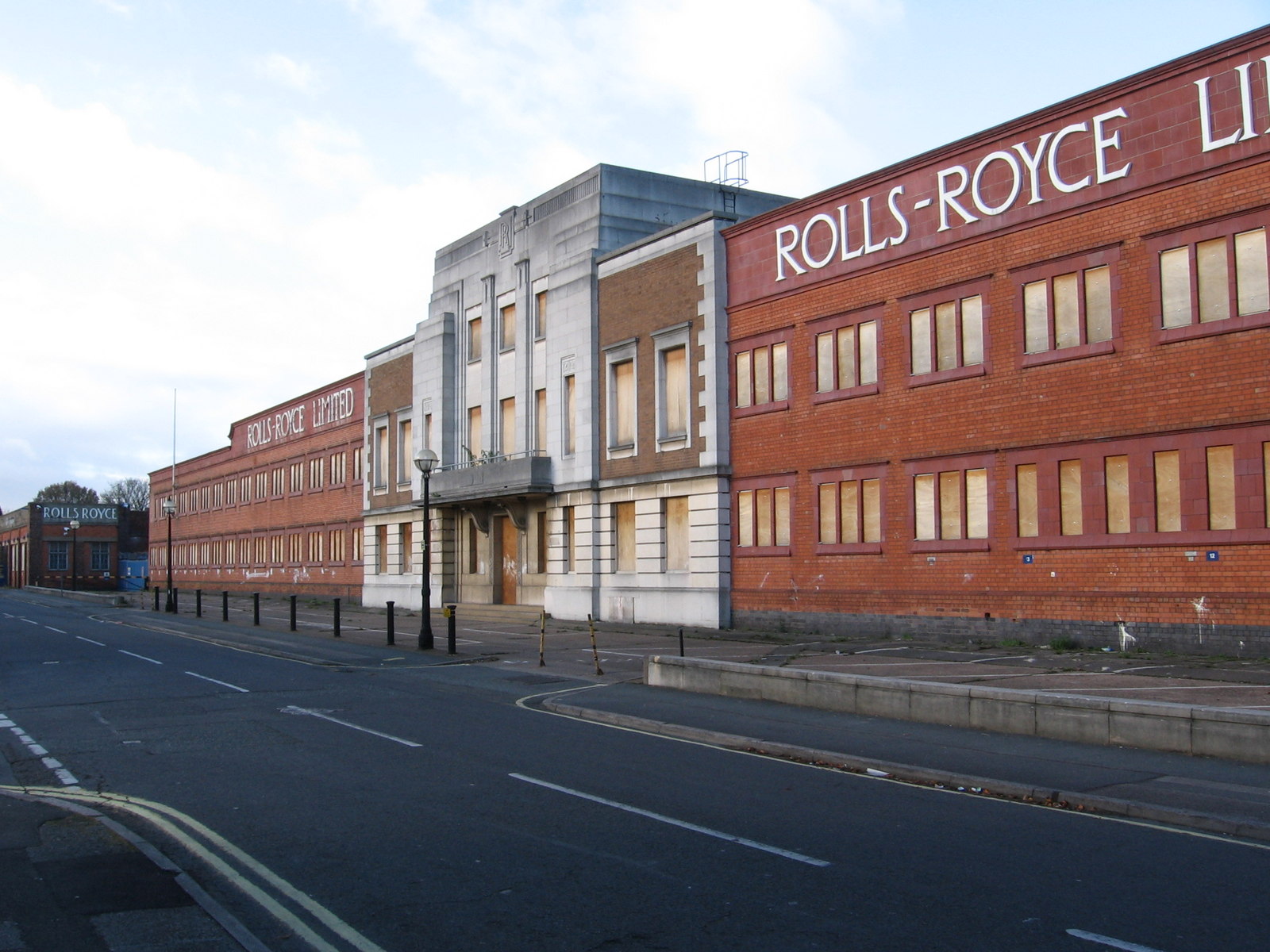
Rolls-Royce has begun foundational work on a major expansion of its Raynesway site in Derby, marking a significant milestone for one of the UK’s most strategically important defence manufacturing facilities.
The project will more than double the size of Rolls-Royce Submarines’ manufacturing capability in Derby and create 1,170 skilled roles across engineering, manufacturing and technical disciplines. More than 100,000 square metres of new manufacturing and office space will be added as the company increases capacity for current and future submarine programmes.
For Derby, this is a major local investment. For the UK, it is part of a much larger defence and industrial policy story. The Raynesway site designs, builds and supports the nuclear reactors that power Royal Navy submarines. It will also provide reactors for Australia’s future SSN-AUKUS submarines under the AUKUS security partnership between the UK, Australia and the United States.
The expansion therefore sits at the intersection of national security, advanced manufacturing, skills, regional growth and long-term industrial resilience.
Why Raynesway matters
Rolls-Royce’s Raynesway site is not an ordinary factory.
It is central to the UK’s submarine nuclear propulsion capability and supports the country’s continuous at-sea nuclear deterrent. Rolls-Royce has been involved in the UK naval nuclear programme since the 1950s and remains the design authority for the Royal Navy’s naval nuclear plant.
The site supports existing Royal Navy submarine programmes and will be critical to future boats, including the Dreadnought class ballistic missile submarines and the next-generation SSN-AUKUS attack submarines.
That makes Raynesway a nationally significant industrial asset. Its value is not only measured in jobs or construction spending. It is also measured in sovereign capability: the ability of the UK to design, build, maintain and support nuclear submarine propulsion without relying entirely on overseas suppliers.
In an era of growing geopolitical instability, that matters more than it did a decade ago.
AUKUS is driving demand
The expansion is closely linked to AUKUS, the trilateral defence partnership between Australia, the UK and the US.
Under the submarine element of AUKUS, Australia will acquire conventionally armed, nuclear-powered submarines. The UK will also build its own next-generation SSN-AUKUS boats, with the Government’s Defence Investment Plan referring to up to 12 new attack submarines.
Rolls-Royce is central to that programme because it will provide the nuclear reactor plants for the UK and Australian submarines. That creates a step-change in demand for manufacturing capacity, skilled labour and supply chain resilience.
The UK’s submarine industrial base was not designed for this scale of expansion. AUKUS requires more than political agreement. It requires factories, engineers, welders, nuclear specialists, project managers, suppliers, regulators and long-term funding.
The Raynesway expansion is one of the practical steps needed to turn the ambition into real capability.
The local economic opportunity
For Derby, the project is a major vote of confidence.
The expansion will create 1,170 skilled jobs directly at Rolls-Royce, with further employment expected across the local and national supply chain. Derby already has a deep engineering heritage, and Rolls-Royce remains one of the city’s most important employers.
Large manufacturing investments of this kind can have a powerful local multiplier effect. They support apprenticeships, graduate roles, specialist suppliers, construction work, professional services, logistics, training providers and local spending.
They also strengthen Derby’s position as a centre of advanced engineering. That matters because regional economies benefit when they have clusters of capability rather than isolated employers. A major employer such as Rolls-Royce can anchor an ecosystem of smaller firms, colleges, universities and specialist contractors.
However, the opportunity will only be fully realised if the local skills system can keep up. Nuclear engineering and submarine manufacturing require highly specialised capability. Derby will need a strong pipeline of apprentices, technicians, engineers and project professionals if the expansion is to deliver its full economic benefit.
Skills are now a strategic constraint
One of the most important issues in the project is not only physical capacity, but human capacity.
The UK defence and nuclear sectors face intense competition for skilled workers. Welders, nuclear engineers, systems specialists, project managers, safety experts and manufacturing technicians are all in high demand.
Rolls-Royce has invested in skills through its Nuclear Skills Academy in Derby, and the company has highlighted the success of its apprentices. That is encouraging. But the scale of future submarine demand means training cannot be an afterthought.
Skills shortages can delay projects, increase costs and reduce productivity. They can also weaken the UK’s ability to maintain sovereign capability over the long term.
The business lesson is clear. Capital investment and workforce development have to move together. New facilities only create value if the right people are available to operate them.
Defence spending is becoming economic policy
The expansion also reflects a wider change in government thinking.
Defence spending is increasingly being presented not only as national security expenditure, but as industrial strategy. The Government wants defence investment to support jobs, manufacturing capability, regional growth and supply chain development.
That approach has logic. Defence projects often require long-term contracts, high-value engineering, research, manufacturing and secure supply chains. They can support skills and industrial capacity in a way that short-term public spending cannot.
Rolls-Royce’s Derby expansion is a clear example. It is driven by national security requirements, but the economic benefits are visible in jobs, construction, local investment and supplier demand.
However, this approach also needs discipline. Defence procurement has a long history of delays, cost overruns and changing specifications. If defence is to be used as part of industrial strategy, projects must be delivered efficiently and transparently.
The strategic benefit depends on execution.
The funding question remains important
A balanced view should recognise that the submarine programme is expensive and long-term.
The UK Government has committed to major defence investment, including submarines, nuclear deterrence, drones, air defence, munitions and advanced technology. But defence budgets remain under pressure, and the wider public finances are constrained.
Submarine programmes are especially difficult because they extend over decades. Costs can change as technology develops, requirements evolve and supply chain pressures increase. Once the UK commits to a programme of this scale, it must sustain funding across multiple governments.
That creates political and fiscal risk. A factory expansion can begin now, but its success depends on stable demand and long-term defence planning.
For businesses in the supply chain, this matters. They may invest in equipment, staff and capacity on the assumption that programmes continue. If funding becomes uncertain, the risk is passed down the chain.
Regulation and safety will be central
Because Raynesway is part of the UK’s naval nuclear infrastructure, the expansion cannot be treated as a normal industrial development.
The site operates within a highly regulated nuclear environment. Safety, security, environmental controls, planning, emergency arrangements and community engagement all matter.
The Office for Nuclear Regulation identifies Rolls-Royce Submarines as operating two nuclear licensed sites at Raynesway: the Nuclear Fuel Production Plant site and the Neptune Reactor site. That regulatory context is important. Expansion must increase industrial capacity without compromising the standards expected of critical national infrastructure.
Derby City Council has also recognised the complexity of the project, moving towards a formal Planning Performance Agreement with Rolls-Royce to support the planning process and provide dedicated resource.
That is sensible. Projects of this scale need speed, but they also need proper scrutiny.
The supply chain challenge
The Raynesway expansion will not operate in isolation.
Submarine production depends on a wider network of suppliers across the UK, including precision engineering firms, materials specialists, electronics suppliers, safety systems providers, construction firms and professional advisers.
AUKUS increases the pressure on that network. The UK must support its own submarine programmes while also contributing to Australia’s future capability. That means the supply chain must be reliable, secure and scalable.
This may create opportunities for British manufacturers, especially those able to meet demanding nuclear and defence standards. But it may also expose weaknesses. Smaller suppliers may struggle with working capital, skills, certification, investment requirements or long lead times.
The success of the programme will therefore depend partly on how well prime contractors and government support the wider industrial base.
A business lesson in strategic capacity
For businesses, Rolls-Royce’s expansion offers a useful lesson in strategic capacity planning.
When demand is expected to increase structurally, companies cannot rely only on incremental improvements. They need to invest ahead of demand, build capability, secure skills and strengthen supply chains.
That is what Rolls-Royce is doing at Raynesway. The company is not simply adding more space. It is positioning itself for a long-term increase in submarine-related work driven by UK defence needs and AUKUS commitments.
The risk, of course, is that large capacity investments are expensive and difficult to reverse. They require confidence in demand, funding and policy stability.
That is why projects of this kind depend on close alignment between business strategy and government policy.
A major opportunity, but not a simple one
The Raynesway expansion is good news for Derby and an important step for the UK’s defence industrial base.
It should bring skilled jobs, support local suppliers and strengthen the UK’s sovereign nuclear propulsion capability. It also demonstrates how regional manufacturing can sit at the heart of national security strategy.
But the project also brings challenges. It will require sustained funding, disciplined delivery, skilled workers, strong regulation, local planning capacity and a resilient supply chain.
The expansion is therefore not just a construction project. It is a test of whether the UK can deliver major industrial programmes at speed while maintaining safety, value for money and long-term capability.
For Derby, Rolls-Royce’s investment reinforces the city’s role as one of Britain’s most important engineering centres. For the UK, it shows that defence strategy and industrial strategy are now increasingly inseparable.
The bigger question is whether the country can turn this type of investment into a durable national advantage, rather than a short-term response to rising defence demand.