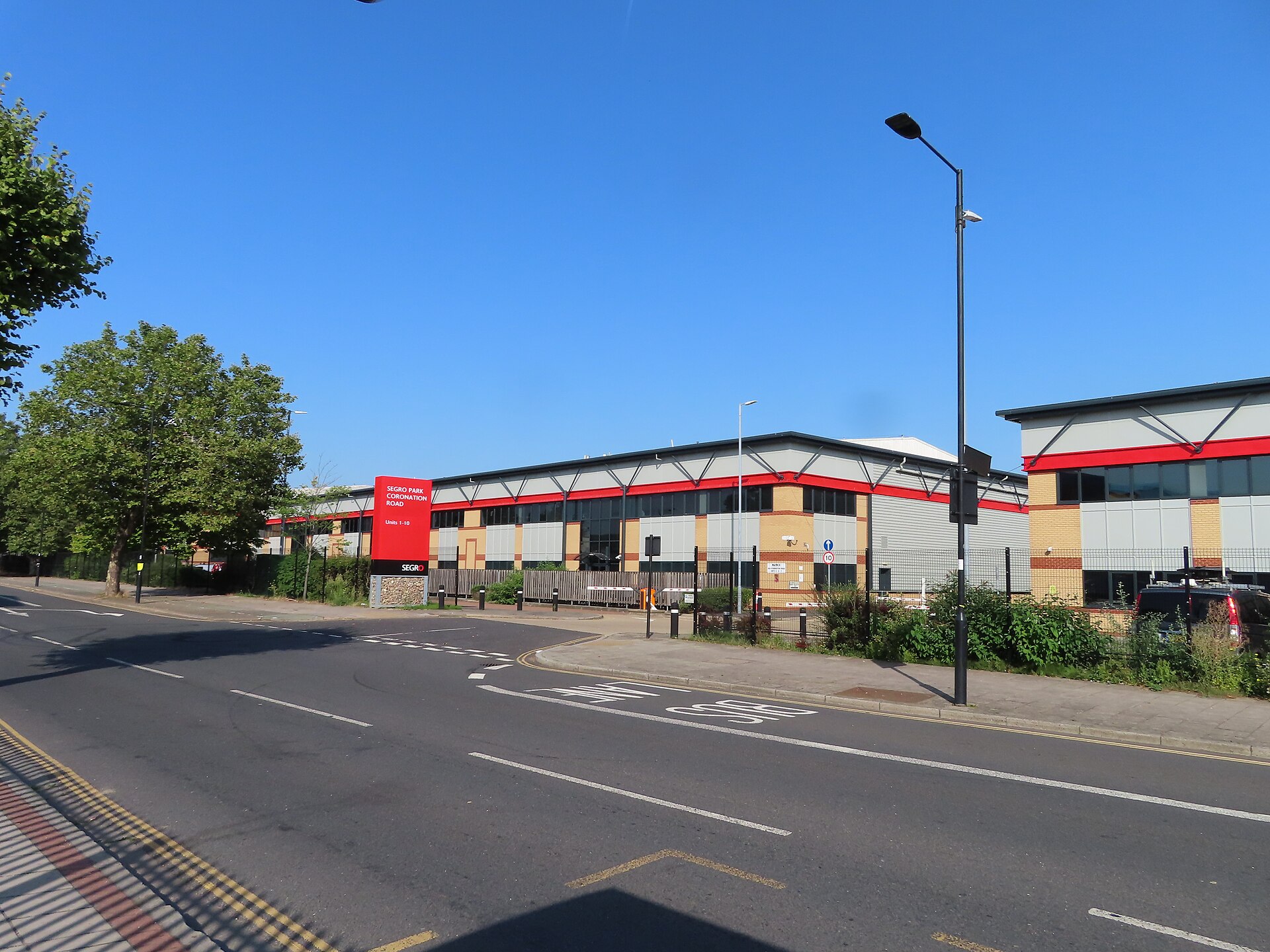
The battle for SEGRO has intensified after US logistics property group Prologis accused the British company of relying on overly optimistic forecasts to justify rejecting a proposed £13.5 billion takeover.
Prologis has made three approaches for SEGRO, Europe’s largest listed industrial and logistics property company. Its latest proposal values SEGRO at an indicated 993p a share and includes a combination of Prologis shares and a limited cash alternative.
SEGRO’s board has unanimously rejected the approach, arguing that it fails to reflect the scarcity of its warehouse portfolio, its development land and the potential value of its rapidly expanding data-centre business.
The two companies now have sharply different views of what SEGRO is worth. Prologis argues that its proposal offers shareholders an immediate premium and participation in a larger global property group. SEGRO believes shareholders would surrender valuable long-term growth just as demand for urban warehouses, electricity-connected land and data centres is strengthening.
The disagreement must soon reach a conclusion. Under the UK Takeover Code, Prologis has until 5pm on Wednesday 22 July to announce a firm offer or confirm that it does not intend to proceed, unless the Takeover Panel agrees to extend the deadline.
Prologis increases its proposal to £13.5 billion
Prologis’s third proposal comprises 0.0890 new Prologis shares for every SEGRO share.
It also introduces a partial cash alternative worth up to £2.7 billion, representing approximately 20% of the total consideration. Based on Prologis’s closing share price and the sterling-dollar exchange rate on 17 July, the proposal indicated a value of 993p for each SEGRO share.
The offer represented a premium of almost 34% to SEGRO’s closing share price of 742p on 23 June, immediately before Prologis’s interest became public.
However, the proposed valuation is not equivalent to a fixed cash offer. Most of the consideration would be paid in Prologis shares, meaning the amount ultimately received by SEGRO investors would change with Prologis’s share price and movements in the exchange rate.
SEGRO calculates that the proposal is worth 958p a share when Prologis’s average share price and exchange rate over the previous three months are used instead of a single day’s market values.
The difference illustrates why the headline £13.5 billion valuation should be treated with some caution. It is an indicated value rather than a guaranteed all-cash price.
SEGRO says the offer transfers future value
SEGRO argues that the proposal was timed to take advantage of a temporarily depressed share price.
The company says its valuation was affected by wider market uncertainty and the outbreak of conflict in the Middle East. Compared with SEGRO’s price immediately before that conflict began, the company calculates that the latest proposal offers a premium of only 18%, or 14% when the three-month average value of Prologis shares is used.
SEGRO chairman Andy Harrison said the board did not believe the offer reflected the quality, scarcity or long-term prospects of the company’s portfolio and operating platform.
The company owns urban warehouses, large logistics parks and development land across some of Europe’s most supply-constrained markets. Its properties are concentrated around major cities and transport networks, where planning restrictions and limited land availability make replacement difficult.
SEGRO also owns or controls sites with access to substantial electricity capacity. This has become increasingly valuable as technology companies seek locations for energy-intensive data centres.
The board believes that selling now would allow Prologis shareholders to capture the benefits of this future development before they are fully reflected in SEGRO’s earnings and share price.
Prologis questions SEGRO’s projections
Prologis chief executive Dan Letter has challenged the assumptions supporting SEGRO’s rejection.
The bidder argues that SEGRO’s board is relying on ambitious forecasts for rental income, property development and data-centre growth while asking shareholders to wait several years for those projections to be delivered.
SEGRO estimates that its industrial, logistics and allocated data-centre pipeline could generate approximately £900 million of future rental income and create as much as £4.1 billion of additional shareholder value. It expects adjusted earnings per share to increase from 36.6p in 2025 to around 50p by 2030.
Prologis argues that these forecasts involve considerable development, financing, planning and execution risk.
It notes that SEGRO’s adjusted net asset value declined from 925p to 905p a share during the first half of 2026. At 993p, Prologis says its proposal represents a 9.7% premium to that latest net asset value.
Prologis has also applied SEGRO’s existing earnings multiple to the company’s 2030 target of 50p a share. On that basis, it calculates an implied future share price of approximately 964p, below the indicated 993p available under the latest proposal.
This comparison supports Prologis’s argument that shareholders are being offered more immediately than SEGRO’s own earnings forecast might justify in four years.
SEGRO would dispute that analysis because it assumes the company’s valuation multiple remains unchanged and may not fully reflect the capital value of completed data-centre developments, future rental growth or a wider recovery in property valuations.
The takeover battle is therefore partly a disagreement about timescale. Prologis is placing greater weight on current asset values and near-term earnings. SEGRO is asking shareholders to value a development pipeline extending into the 2030s.
Data centres are central to the dispute
The expected growth of artificial intelligence and cloud computing has made data centres one of the most important elements of SEGRO’s defence.
Data centres require large sites, planning permission, high-capacity grid connections and proximity to major communications networks. Locations possessing all these characteristics are limited, particularly around densely populated European cities.
SEGRO says it has a total potential power bank of 3 gigavolt-amperes, including operating capacity and future sites. Around 1.4GVA represents its nearer-term allocated opportunity, with much of the necessary power secured or provisionally allocated.
The company is working with specialist partners to develop fully fitted data centres, alongside projects involving powered buildings or serviced development land.
SEGRO expects data centres to contribute more than 30% of its net rental income by 2035, compared with approximately 7% at present. Its first fully fitted joint-venture project at Premier Park has received planning permission and is in leasing discussions with potential global customers.
Prologis already operates on a much larger global scale and also has an extensive data-centre pipeline. It argues that a combined company would have greater capital, development experience and customer relationships to accelerate investment.
SEGRO responds that its relative exposure to European data centres is more significant and that a takeover would dilute its shareholders’ ownership of this opportunity within the much larger Prologis group.
Both companies therefore agree that SEGRO’s powered land is valuable. The disagreement concerns how much that value is worth today, how much investment will be required and which group is best placed to realise it.
SEGRO says it can fund growth independently
Prologis has questioned whether SEGRO has sufficient capital to develop its full pipeline without weakening its balance sheet or issuing additional shares.
SEGRO says it can finance its strategy through existing borrowing capacity, asset sales, joint ventures and capital provided by development partners.
The company expects its loan-to-value ratio to remain in the low 30% range under its current plans, with net debt below six times earnings before interest, tax, depreciation and amortisation.
It also points to its record of selling mature properties and redirecting the proceeds into higher-returning developments. SEGRO completed or exchanged approximately £308 million of disposals during the first part of 2026 and says previous sales were generally completed above their recorded book values.
Joint ventures are particularly important to the data-centre strategy because they allow SEGRO to share development costs and risks with specialist operators.
Nevertheless, the scale of the proposed programme remains considerable. Data centres require substantial construction expenditure, and electricity connections may not become available until several years after land and planning costs have been incurred.
Interest rates and property values will also affect SEGRO’s ability to recycle assets and raise debt economically.
A major shareholder calls for talks
Pressure on the SEGRO board increased after Norges Bank Investment Management publicly encouraged the two companies to begin constructive discussions.
The manager of Norway’s sovereign wealth fund owns 8.3% of SEGRO and 1.3% of Prologis. It said it understood the strategic rationale for combining the companies and believed the proposal deserved consideration.
The fund has not committed to supporting the existing terms. It said it would assess any formal offer once the full conditions were known, but its intervention is significant because it is one of SEGRO’s largest shareholders.
Other investors remain less convinced. M&G, which holds approximately 1% of SEGRO, has argued that the proposal does not adequately reflect the company’s long-term potential.
This division illustrates the difficult position facing the board.
Some shareholders may prefer to receive an immediate premium after several years of weak property-sector valuations. Others may believe that selling now would surrender the recovery in logistics property and the future value of SEGRO’s data-cententre sites.
Prologis takes its case directly to investors
The increasingly public nature of the dispute is unusual but not unprecedented.
Prologis has appealed directly to SEGRO shareholders, arguing that the board should allow them to consider a binding proposal. It says the combination would provide immediate value, greater liquidity and continuing exposure to logistics and data-centre growth through ownership of Prologis shares.
SEGRO says it has already met Prologis management to determine whether the bidder could improve its financial terms. According to SEGRO, Prologis provided no new information and did not raise its proposal during that meeting.
The board has nevertheless left the door open, saying it would engage further if Prologis submitted terms that more appropriately reflected SEGRO’s prospects.
The public disagreement may be intended to increase pressure before the takeover deadline. Prologis wants shareholders to question the board’s valuation assumptions, while SEGRO wants the bidder to increase its offer.
What happens at the deadline?
Prologis must announce one of three broad outcomes by 5pm on Wednesday.
It could make a firm offer under Rule 2.7 of the Takeover Code. This would provide detailed and binding terms, subject to conditions such as shareholder and regulatory approval.
It could announce that it does not intend to make an offer. Under normal takeover rules, that would prevent Prologis from returning for a specified period unless particular circumstances arose.
The companies could also seek an extension from the Takeover Panel, allowing more time for negotiations. An extension would normally require the support of SEGRO’s board.
Prologis has emphasised its commitment to disciplined capital allocation, suggesting that it will not increase its proposal indefinitely.
SEGRO shares fell by around 3% on Tuesday, while Prologis shares increased slightly. That market reaction suggested some investors had become less confident that a higher or binding offer would emerge.
Implications for the London stock market
A completed takeover would remove another major company from the London market.
SEGRO is a member of the FTSE 100 and one of the largest property companies listed in Britain. Its departure would add to concern that UK-listed businesses are being acquired by overseas groups while relatively few large companies are joining the market.
The proposal differs from a conventional foreign cash acquisition because SEGRO shareholders would receive mainly Prologis shares. They would therefore retain an interest in the combined business rather than being bought out entirely.
Prologis has also said it would explore a secondary London listing, which could allow British investors to continue trading its shares locally.
However, strategic control, capital allocation and senior decision-making would ultimately sit with the US group.
The wider question is whether SEGRO’s current share price reflects the true value of its assets or whether the London market is applying a persistent discount that makes the company vulnerable to acquisition.
What the takeover could mean for UK businesses
SEGRO’s customers include retailers, manufacturers, logistics companies, delivery operators and technology businesses occupying warehouses and industrial estates across the UK and Europe.
A takeover would not automatically change existing leases. However, ownership by Prologis could influence future development, investment priorities and the management of SEGRO’s property portfolio.
The combined company would have greater scale, international reach and access to capital. This could support additional warehouse construction, energy infrastructure and data-centre development.
Greater scale could also improve purchasing power and allow investment in technology, sustainability and automated building management.
Against this, the combination of two major logistics property businesses may attract competition scrutiny, particularly in locations where both companies control significant amounts of warehouse space.
Tenants will be interested in whether consolidation reduces the range of landlords competing for major occupiers and whether it affects rents, lease terms or the supply of new buildings.
For Britain, the continued development of logistics parks and data centres is economically important. These assets support online retail, manufacturing supply chains, freight distribution, cloud computing and artificial intelligence.
The key public-interest question is therefore not simply who owns SEGRO, but whether the ownership structure supports long-term investment in infrastructure and employment.
A valuation dispute with wider significance
The contest between Prologis and SEGRO is about more than the price of one property company.
It reflects a wider tension between immediate shareholder returns and long-term investment. Prologis is offering a substantial premium to SEGRO’s undisturbed share price and access to a larger global platform.
SEGRO believes that accepting the proposal would transfer valuable growth to Prologis before its warehouse and data-centre pipeline has matured.
Neither argument can be proven with certainty.
SEGRO’s projects could create considerable value if planning, financing, power connections and customer demand develop as expected. They also carry execution risks and may require years of investment before generating income.
Prologis’s proposal offers greater certainty, but most of its value would be delivered in shares rather than cash. SEGRO investors would remain exposed to property markets, interest rates, currencies and the performance of the enlarged US company.
The takeover deadline should bring greater clarity. Prologis must either commit, withdraw or secure more time.
Whatever the immediate outcome, its willingness to value SEGRO at £13.5 billion demonstrates the strategic importance of logistics property, scarce urban land and electricity-connected data-centre sites. It also reinforces the view that some of the most valuable assets within the British stock market may be worth considerably more to international buyers than their existing public valuations suggest.