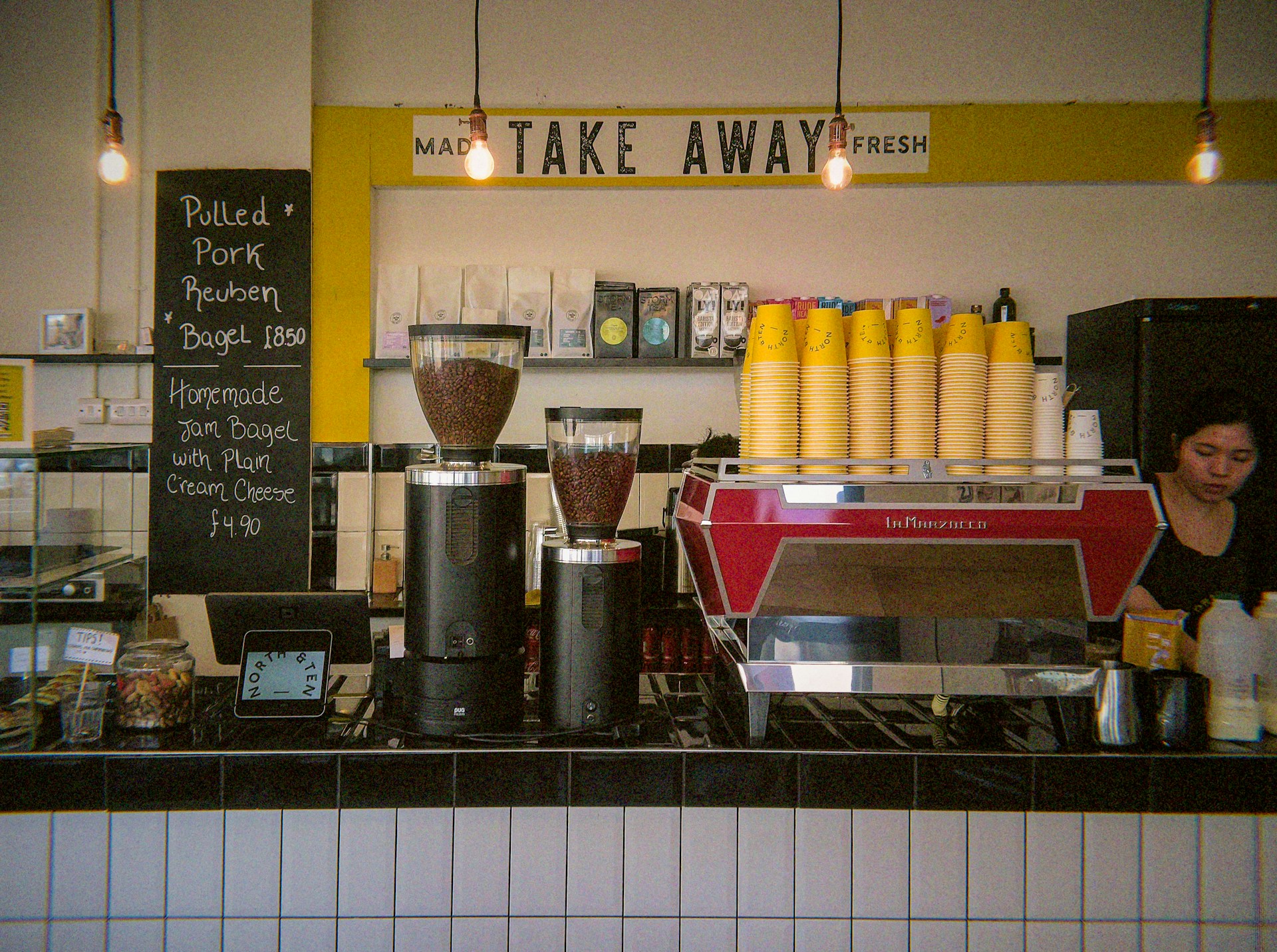
The price of a cup of coffee is rising across Britain as cafés and coffee chains contend with an unusual combination of expensive beans, higher wages, increased employment taxes, energy costs and business rates.
A flat white now costs as much as £6.50 at Lavazza’s flagship café near Regent Street in central London when consumed on the premises, according to figures reported by The Guardian. The same drink costs £4.40 to take away, while central London branches of Starbucks and Costa are reportedly charging around £5.20 and £4.70 respectively.
These prices are at the upper end of the market and should not be interpreted as the typical national cost of a coffee. They nevertheless illustrate the severity of the pressures facing operators in expensive city-centre locations.
Coffee businesses are being squeezed at almost every stage of the supply chain. Poor weather has disrupted crops in Brazil and Vietnam, international bean prices remain historically elevated, shipping and energy costs have increased, and domestic cafés are paying more for staff, property and regulatory compliance.
The result is a difficult commercial calculation. Cafés need to raise prices sufficiently to protect their margins, but not so far that a regular coffee becomes an occasional luxury.
Global coffee prices remain elevated
The cost pressures begin thousands of miles from Britain, in the tropical regions where coffee is grown.
Arabica coffee, which is generally associated with smoother flavours and is widely used in speciality coffee shops, is produced principally in countries including Brazil, Colombia and Ethiopia. Robusta, which has a stronger flavour and higher caffeine content, is particularly important in instant coffee and espresso blends and is produced extensively in Vietnam.
Lavazza has said that arabica bean prices have increased by around 230% since 2021, while robusta prices have risen by approximately 325%. The company attributes the increases to poor harvests, changing weather patterns, higher farming costs and speculative activity in commodity markets.
More recent data provide a slightly more balanced picture. The International Coffee Organization’s Composite Indicator Price averaged 248.90 US cents per pound in June 2026, a decline of 2.8% from May. Coffee prices have therefore eased from some of their recent peaks, but they remain volatile and historically high.
In April, the organisation reported that its composite indicator had fallen by 2.7% to 266.24 US cents per pound as expectations for global supplies improved. However, it also noted that certified coffee stocks remained at historically low levels and that higher fuel and shipping costs continued to affect the market.
This means cafés should not assume that a modest monthly fall in commodity prices will translate quickly into cheaper coffee.
Beans may be bought through contracts arranged months in advance. Roasters must also pay for transport, storage, energy, packaging and labour before the coffee reaches a café. Exchange-rate movements matter because coffee is normally traded internationally in US dollars.
A decline in the headline commodity price may therefore take time to work through the supply chain, while any renewed disruption can rapidly reverse the improvement.
Weather disrupts harvests in Brazil and Vietnam
Brazil and Vietnam are central to the outlook because together they account for a substantial proportion of global coffee production.
Heavy rainfall in parts of Brazil during June reportedly prevented machinery from entering waterlogged fields, delayed harvesting and reduced the quality of some beans. Rainfall during the week ending 28 June was said to be almost 2,000% above the historical norm in affected areas, with only around 52% of the harvest completed at that stage.
Excessive rain can cause ripe coffee cherries to fall from plants, delay drying and increase the risk of defects. However, prolonged dry weather can be equally damaging by restricting flowering and reducing future yields.
Vietnam has faced a different combination of problems. Drought has affected some growing regions, while farmers have experienced sharp increases in the cost of fertiliser, fuel and labour.
Coffee is therefore exposed to both immediate harvest conditions and longer-term changes in weather patterns.
The possibility of a strong El Niño event later in 2026 is creating further uncertainty. El Niño can bring very different effects to individual coffee-producing regions, including excessive rain in some areas and drought in others.
Lavazza believes that the market may require at least two consecutive years of strong harvests in Brazil and Vietnam before supplies and prices return to more stable conditions.
That cannot be guaranteed. Coffee plants take several years to mature, meaning farmers cannot increase production as quickly as manufacturers might increase the output of an ordinary consumer product.
Climate volatility also makes it harder for farmers, traders and roasters to forecast future supply.
The price of beans is only part of the cost
Consumers may assume that the largest expense in a cup of coffee is the coffee itself. In practice, the bean represents only one part of the final retail price.
A café must pay for baristas and other employees, rent, business rates, electricity, gas, water, equipment, maintenance, insurance, cleaning, card-processing charges, cups, lids, milk and waste disposal.
It must also collect VAT on most hot drinks sold to customers.
David Abrahamovitch, founder of the Grind coffee chain, told The Guardian that the company made only around 18p of profit from a £4.10 flat white.
According to the company’s breakdown, approximately £1.60 went towards staffing, 96p covered core operating costs, 68p represented VAT, 55p covered crockery or disposable cups and other individual costs accounted for a further 13p.
These figures are specific to Grind and may not reflect the economics of every coffee business. Nevertheless, they demonstrate why the selling price of a coffee cannot be compared directly with the wholesale cost of the beans and milk used to make it.
The difference between the apparent ingredient cost and the retail price must fund the entire operation surrounding the drink.
A café selling large volumes from a small site may be able to spread its fixed costs across more transactions. A quieter independent business, or one occupying an expensive property, may need a higher margin on each sale to remain viable.
Wages increased again in April
Coffee shops are labour-intensive businesses. Even highly efficient cafés require employees to take orders, prepare drinks, serve food, clean equipment and maintain the premises.
The National Living Wage for workers aged 21 and over increased by 4.1% on 1 April 2026, rising by 50p to £12.71 an hour. The minimum rate for workers aged between 18 and 20 increased by 8.5% to £10.85.
The increases provide a real benefit to millions of lower-paid workers, including many employed in hospitality. Higher earnings may also support consumer spending by increasing the disposable income of employees.
However, the cost to employers extends beyond the increase in hourly pay.
When the legal minimum rises, businesses may also need to increase the wages of supervisors and more experienced employees to maintain appropriate differences between roles. Pension contributions, holiday pay and some other employment costs rise alongside salary.
Hospitality businesses are particularly exposed because wages represent a substantial proportion of their expenditure and many employees are paid at or close to the statutory minimum.
The Low Pay Commission concluded that earlier increases in the National Living Wage had not caused a significant overall reduction in employment. However, hospitality organisations argue that the cumulative effect of repeated wage increases, weak demand and other cost pressures is encouraging businesses to reduce staffing, shorten opening hours or raise prices.
Both considerations are important. The wage increase improves incomes for employees but creates a genuine additional cost for employers operating with narrow margins.
Employer National Insurance adds to labour costs
Cafés are also paying more in employer National Insurance than they did before April 2025.
The standard employer contribution rate increased from 13.8% to 15%, while the annual threshold at which contributions generally become payable was reduced from £9,100 to £5,000.
Those rates and thresholds have continued into the 2026/27 tax year. Employers generally pay National Insurance at 15% on relevant earnings above the £5,000 annual secondary threshold, subject to available allowances and specific exemptions.
The increased Employment Allowance offsets some or all of this cost for many smaller employers. However, larger operators and businesses with substantial payrolls remain exposed to the higher contribution rate and lower threshold.
For a labour-intensive café chain, the combined cost of wages and employer contributions can be significant.
A business cannot easily automate every part of a hospitality service without changing the customer experience. Self-service ordering and automated coffee machines may reduce some staffing requirements, but many customers choose cafés partly for their atmosphere, service and interaction with staff.
Businesses must therefore decide how much of the extra employment cost can be absorbed through improved productivity and how much must be reflected in prices.
Business rates create uneven pressures
Property costs vary substantially between cafés.
Businesses occupying high-profile sites in London and other major cities can face high rents and substantial business-rates bills. Smaller operators in less expensive locations may pay much less or qualify for relief.
The business-rates system for retail, hospitality and leisure properties changed on 1 April 2026. The previous relief scheme ended and was replaced by lower permanent multipliers for qualifying properties, alongside a nationwide revaluation.
The small-business retail, hospitality and leisure multiplier was set at 38.2p, while the standard multiplier for qualifying properties became 43p.
However, the 2026 revaluation was based on property values from April 2024, when many hospitality rents had recovered from the depressed levels seen during the pandemic.
As a result, some operators have found that increases in their assessed rateable values have outweighed the benefit of the lower multiplier. Transitional arrangements limit how quickly some bills can rise, but they do not remove the underlying increase.
This helps explain why two cafés selling apparently similar drinks may need to charge very different prices.
A business in a premium central London location may face a cost base that is substantially higher than that of an independent café in a smaller town.
The £6.50 Lavazza flat white is therefore as much a reflection of location and service format as it is of the price of coffee beans.
Drinking in can cost more than taking away
Lavazza’s pricing also illustrates the difference between takeaway and dine-in customers.
Its central London flat white reportedly costs £4.40 to take away but £6.50 when consumed inside the café.
The difference may initially appear excessive, but a seated customer uses more of the café’s resources.
The business must provide and clean furniture, tables, crockery and toilets. Customers who remain in the café occupy limited space that could otherwise be used by someone making another purchase.
A takeaway customer may complete a transaction in a few minutes, while a seated customer might remain for an hour or more.
Dine-in pricing can therefore be used to recover the higher cost associated with providing space and service, particularly in an expensive city-centre property.
However, large price differences may cause customers to question whether sitting inside represents value for money. Operators must balance the economics of their premises against the risk of discouraging the very customers who create a lively café atmosphere.
Energy and transport costs remain uncertain
Coffee businesses also depend heavily on energy.
Roasters require heat to transform green coffee beans into the finished product. Cafés operate espresso machines, grinders, refrigerators, dishwashers, ovens, lighting and heating throughout the day.
Higher oil and gas prices can therefore affect coffee businesses directly through utility bills and indirectly through transport, packaging, farming and distribution costs.
The conflict in the Middle East has renewed concerns about energy supplies and shipping routes. Although the direct effect on individual cafés depends on their energy contracts and supply arrangements, prolonged increases in wholesale prices eventually filter through to businesses.
Operators tied to fixed-rate contracts may be protected temporarily. Others may experience an immediate increase when their agreements expire.
Independent cafés generally have less purchasing power and fewer opportunities to hedge energy or commodity costs than multinational chains.
Large groups can negotiate national contracts, buy beans in substantial volumes and spread administrative costs across hundreds of outlets. Smaller businesses may be more agile, but they are often more exposed to sudden cost movements.
Consumers continue to buy coffee
Despite rising prices, demand has remained comparatively resilient.
The British Coffee Association estimates that around 98 million cups of coffee are consumed in the UK each day. It also says the industry supports more than 210,000 jobs.
Lavazza has reported that its sales remain strong, while industry participants continue to invest in new shops, premium drinks, cold coffee and ready-to-drink products.
Coffee has become embedded in daily routines and social life. For many consumers, buying a coffee provides more than the drink itself. It offers convenience, a place to meet, somewhere to work or a small affordable treat.
This may make demand more resilient than spending on larger discretionary purchases.
However, resilience has limits.
A customer who buys a £4 coffee five times a week spends more than £1,000 a year. At £6.50, the annual cost of the same weekday habit would exceed £1,600.
Consumers may respond by visiting less frequently, choosing smaller or simpler drinks, switching to cheaper cafés or making more coffee at home.
The risk for businesses is that price increases intended to protect margins reduce transaction volumes sufficiently to damage overall profitability.
Premiumisation has supported higher prices
The development of speciality coffee has made consumers more willing to pay for quality, origin and preparation.
Many customers now distinguish between different beans, roasting styles and brewing methods in a way that was less common several decades ago.
Cafés have responded with single-origin coffee, seasonal blends, alternative milks, elaborate cold drinks and premium food offers.
This creates an opportunity to justify higher prices through a better experience rather than treating coffee as a simple commodity.
However, premiumisation can also blur the boundary between an ordinary daily drink and a luxury purchase.
A £6.50 flat white may be accepted in a flagship café offering table service in central London. The same price could be commercially unrealistic in a small high-street outlet where customers expect speed and value.
Successful operators will need to understand the particular needs of their customers rather than assuming the whole market will accept premium pricing.
Independent cafés face the greatest dilemma
Independent cafés often lack the purchasing scale of large chains but cannot always charge more than established brands.
Their differentiation may come from better coffee, personal service, local sourcing or community involvement. These strengths can encourage customer loyalty but do not remove the underlying cost pressures.
An independent operator may have limited negotiating power with landlords, energy suppliers and wholesalers. It may also be more dependent on the owner working long hours to contain staffing costs.
Increasing prices risks alienating regular customers. Holding prices steady may leave the owner earning little or no return after paying employees and suppliers.
Businesses may attempt to protect profitability by reducing menu complexity, changing opening hours, renegotiating supplier contracts or encouraging customers to purchase food alongside drinks.
Food can increase the average value of a transaction, although it also creates additional costs, waste and operational complexity.
Some cafés may concentrate on takeaway trade, while others may charge more for the use of their premises through dine-in pricing, service charges or minimum-spend policies.
There is unlikely to be a single solution suitable for every operator.
Larger chains are not immune
Major coffee chains have advantages in purchasing, property negotiation, marketing and technology, but they also operate large estates with substantial payrolls.
A modest increase in the cost of each employee, cup or unit of energy can become material when multiplied across hundreds of outlets and millions of transactions.
Chains must also maintain relatively consistent pricing and customer expectations across the country, even though the cost of operating individual shops varies considerably.
Regional or location-based pricing allows businesses to reflect local costs, but it can attract criticism when customers discover that the same drink is cheaper elsewhere.
Large operators may be better placed to absorb a temporary shock. Shareholders and lenders will nevertheless expect management to protect profitability over time.
Price increases are therefore likely to continue where companies believe customers will accept them.
Falling commodity prices may not produce cheaper drinks
Coffee drinkers may reasonably ask whether retail prices will fall if bean prices eventually decline.
In practice, reductions are likely to be slower and less complete than the preceding increases.
Businesses may be recovering from several years in which costs rose faster than prices. A decline in the cost of green coffee could therefore be used to rebuild margins rather than reduce menu prices immediately.
Other costs, including wages, rent, National Insurance and business rates, are unlikely to fall simply because the coffee harvest improves.
Competitive pressure will still matter. A chain that maintains high prices while rivals reduce theirs could lose customers, particularly where the product is broadly comparable.
Promotions, loyalty schemes and bundled offers may become more common than permanent headline price cuts.
The market may also divide more clearly between value-led takeaway businesses and premium cafés selling a wider experience.
High prices could encourage investment and adaptation
Sustained increases in coffee prices may produce changes throughout the industry.
Roasters may alter blends to manage the balance between arabica and robusta or develop longer-term relationships with growers to improve supply security.
Cafés may invest in equipment that reduces energy use, improves consistency or limits waste. Better staff training can also increase productivity and reduce the number of drinks that must be remade.
Digital ordering and loyalty systems may help businesses understand customer behaviour and encourage repeat visits.
Operators could also give greater attention to portion sizes, milk waste, disposable packaging and menu design.
Such changes cannot remove the effect of global harvest failures, but they can determine which businesses are best able to cope with them.
The danger is that businesses under severe immediate pressure may lack the cash required to make investments that would improve their long-term efficiency.
The £6.50 coffee is a warning, not a national norm
The emergence of a £6.50 flat white will inevitably attract comparisons with the £10 pint.
In both cases, an eye-catching price at a premium London venue can create the impression that the whole market has reached the same level.
That is not the case. Coffee remains available at substantially lower prices across much of Britain, and even Lavazza charges less for the same drink when it is taken away.
However, extreme prices can serve as an early indication of the pressures spreading through an industry.
Bean costs remain elevated, weather conditions are uncertain, energy markets are volatile and domestic operating expenses have increased. Cafés cannot absorb these costs indefinitely without reducing investment, employment or profitability.
At the same time, businesses must recognise that customers are also facing higher household bills and may not have the capacity to accept repeated price increases.
The future of the UK coffee market will therefore depend on whether operators can demonstrate sufficient quality, convenience and experience to justify higher prices.
Coffee remains one of Britain’s most popular everyday purchases. The challenge is ensuring that it does not become so expensive that the everyday customer begins to treat it as an occasional indulgence.
Photo by Nick Cozier on Unsplash