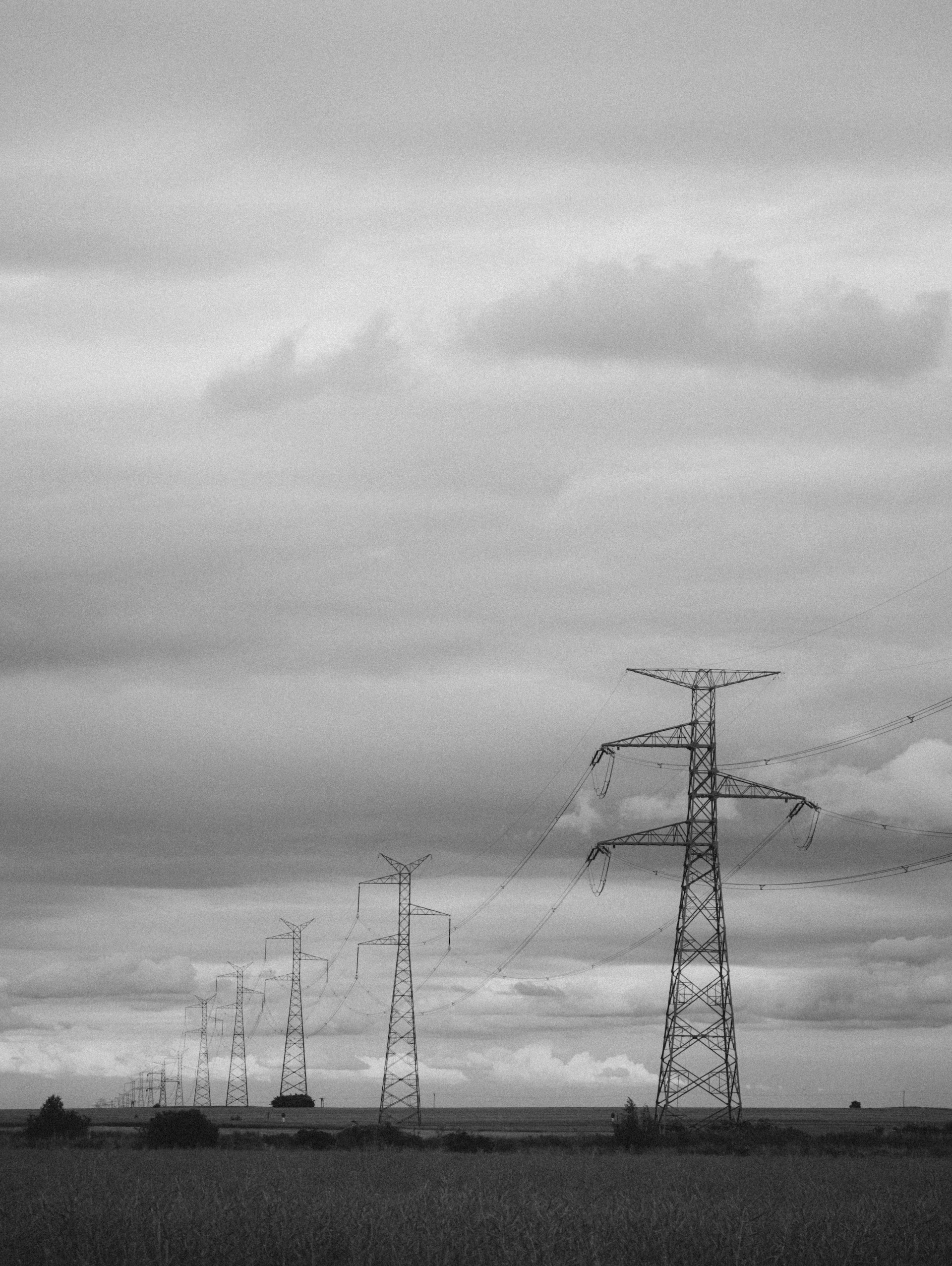
Britain’s incoming prime minister is being urged to make the cost of energy an immediate economic priority, as business groups warn that exceptionally high electricity prices are suppressing investment, weakening competitiveness and obstructing attempts to rebuild the country’s industrial base.
A joint report from the Confederation of British Industry and Energy UK argues that reforms to electricity taxation, environmental levies and the operation of the energy system could reduce total energy costs by as much as 20% for some businesses.
The organisations estimate that implementing their proposals could generate an additional £130 billion of economic activity between 2027 and 2050. They have called on Andy Burnham to begin developing a comprehensive business-energy strategy from his first day in Downing Street.
The report arrives at a difficult moment for the British economy. Renewed instability in the Middle East has pushed wholesale oil and gas prices higher, while businesses are already managing increased wages, employment taxes, borrowing costs and commercial property expenses.
Energy costs are therefore becoming part of a wider debate about whether the UK can improve productivity, attract industrial investment and compete internationally while its companies pay significantly more for electricity than many overseas rivals.
UK electricity prices remain internationally uncompetitive
The CBI and Energy UK estimate that non-domestic electricity prices in Britain have recently been approximately 45% higher than the median across the G7 economies.
They argue that the difference is placing UK businesses at a structural disadvantage, particularly when competing against companies operating in countries with greater access to inexpensive nuclear, hydroelectric, renewable or domestic fossil-fuel generation.
The report also claims that approximately 2.7 million businesses, representing around 90% of non-domestic electricity consumption, receive little or no assistance through the government’s existing schemes for energy-intensive industries. Four in ten businesses surveyed by the CBI said that high energy costs had caused them to reduce investment.
Official figures illustrate how rapidly costs increased following the pandemic and Russia’s invasion of Ukraine.
The average electricity price paid by UK non-domestic users rose from 14.81 pence per kilowatt-hour in the first quarter of 2021 to 28.39 pence at the end of 2023. Although it subsequently fell to 25.97 pence during the final quarter of 2024, it remained approximately 75% higher than at the beginning of 2021.
Average non-domestic gas prices followed a similar path. They remained more than twice their early-2021 level at the end of 2024, despite having declined from their peak.
High energy costs are affecting production as well as profits
Energy bills do not merely reduce the profits available to company owners and shareholders. They can influence whether a business invests, where it locates production and whether a particular product can be manufactured competitively in Britain.
Official analysis has found that the combined output of some of the UK’s most energy-intensive manufacturing industries, including petrochemicals, paper, metals, cement, ceramics and glass, fell by approximately one-third between the beginning of 2021 and the end of 2024. Output across those industries reached its lowest level since the relevant data series began in 1990.
Not all of that decline can be attributed to energy prices. Changes in demand, global competition, labour availability, interest rates and wider industrial restructuring have also affected manufacturing.
However, electricity and gas are significant inputs within these industries. A sustained price disadvantage can determine whether a British factory wins an international order or whether production is moved to another country.
The problem extends beyond heavy manufacturing. Warehouses require heating and lighting, supermarkets operate refrigerators, hotels heat rooms and water, restaurants power kitchens, data centres require substantial electricity and transport businesses are affected by both electricity and fuel prices.
Higher energy costs can therefore spread throughout supply chains before ultimately appearing in consumer prices.
The report proposes removing policy costs from electricity bills
The central proposal from the CBI and Energy UK is to remove the cost of the Renewables Obligation and Feed-in Tariff schemes from the electricity bills of all businesses.
These schemes were introduced to support investment in renewable generation. The Renewables Obligation encouraged larger renewable-energy projects, while Feed-in Tariffs supported smaller installations such as rooftop solar panels.
The payments remain contractual obligations. Removing them from business bills would therefore not make the underlying expense disappear.
The report suggests three possible alternatives: paying the cost through general taxation, creating a publicly financed Energy Transition Funding Scheme, or working with financial institutions to establish a privately financed fund.
It also recommends removing the electricity element of the Climate Change Levy, a tax applied to the energy consumed by businesses and public-sector organisations.
According to modelling undertaken for the report, removing the Renewables Obligation, Feed-in Tariff and electricity Climate Change Levy charges could reduce total energy costs by between 7% and 20%, depending upon the type of business, its consumption pattern and its existing eligibility for support.
The greatest proportional savings would not necessarily be received by the largest industrial users. Some energy-intensive businesses already benefit from exemptions, while data centres, commercial properties and smaller businesses may currently bear a greater share of policy and network costs relative to their total bills.
The £130 billion benefit would be spread over more than two decades
The report’s headline estimate of a £130 billion economic benefit requires careful interpretation.
It represents the cumulative increase in real gross domestic product that the modelling suggests could be produced between 2027 and 2050. It is not an annual saving, a direct cash payment to businesses or an immediate increase of £130 billion in government revenue.
The economic benefit is expected to arise gradually as lower electricity costs allow companies to invest more, become more productive, increase output and compete more effectively.
The modelling was undertaken using the National Institute of Economic and Social Research’s global econometric model. Importantly, it assumes that the fiscal cost of removing the charges from business bills would be recovered through general taxation.
The proposal would therefore redistribute the cost rather than abolish it.
Funding through taxation could spread the burden across a broader base and prevent electricity-intensive companies from carrying a disproportionate share. However, it could also increase government expenditure, require higher taxes elsewhere or reduce the money available for other public services.
The economic case depends upon the additional growth generated by lower business costs outweighing the effects of raising the replacement revenue.
Wider reform would go beyond removing levies
The CBI and Energy UK argue that transferring charges from bills would provide immediate relief but would not resolve the structural causes of high electricity prices.
Their wider proposals include reforming national electricity pricing to reduce the cost of balancing supply and demand, strengthening minimum energy-efficiency standards for commercial properties and helping businesses manage when they consume electricity.
The report also proposes a Business Energy Upgrade scheme for small and medium-sized companies, targeted operating-cost discounts for businesses switching from fossil fuels to electricity, and government-backed guarantees to expand corporate power-purchase agreements.
Power-purchase agreements allow businesses to buy electricity directly from generators under longer-term contracts. They can provide greater price certainty while helping renewable developers secure the predictable income needed to finance new projects.
Energy efficiency could also be important. Moving charges between bills and taxation may reduce the price paid for each unit of electricity, but reducing the number of units required can produce a permanent saving.
Many smaller businesses lack the capital or expertise to assess insulation, heating, lighting, machinery and energy-management investments. A properly designed upgrade scheme could therefore improve productivity while reducing demand on the national electricity network.
Why Britain’s electricity prices are so closely linked to gas
Policy costs explain only part of the difference between UK and international electricity prices.
Britain remains comparatively dependent upon natural gas, both for heating and for electricity generation. Gas-fired power stations are flexible and can increase production when demand rises or when wind and solar generation decline.
Under the existing wholesale market, generators bid to provide the electricity required during each trading period. Cheaper sources are generally used first, but the overall market price is often determined by the most expensive generator needed to meet demand.
Gas generation is frequently that marginal source. Consequently, an increase in the price of natural gas can raise wholesale electricity prices even when a substantial proportion of the electricity being consumed has been generated from wind, solar or nuclear power.
Ofgem reports that renewable sources provided 44% of Great Britain’s electricity during 2025, while fossil fuels accounted for 29%, all of which came from gas. Despite the growing renewable share, gas continued to determine wholesale prices for much of the time because it was still required to balance the system.
The National Energy System Operator estimates that gas could set the wholesale price only around 30% of the time by 2030 if more renewable generation, storage and network capacity are constructed.
This means that reducing policy charges may improve bills in the short term, but greater generation capacity and less dependence on internationally traded gas are likely to be necessary for a durable improvement.
Existing government support is focused on manufacturing
The outgoing government has already acknowledged that industrial electricity prices are damaging Britain’s competitiveness.
The British Industrial Competitiveness Scheme is expected to reduce electricity bills by as much as 25% for more than 10,000 eligible manufacturing businesses from April 2027. Affected industries include automotive, aerospace, pharmaceuticals, steel, metals, plastics and industrial equipment.
Eligible companies will be exempted from the indirect costs of the Renewables Obligation, Feed-in Tariff and Capacity Market. The government estimates that the support will be worth approximately £35 to £40 per megawatt-hour and could cost as much as £600 million annually.
A separate enhancement to the British Industry Supercharger has increased the network-charge discount available to approximately 500 of the most energy-intensive businesses, including steel, cement, glass and chemical producers.
The central criticism made by the new report is not that these schemes are unnecessary, but that they are too narrow.
Manufacturers exposed to international competition may have the clearest case for targeted assistance. However, retailers, hospitality operators, logistics businesses, data centres, offices and other commercial users also face higher bills, while collectively accounting for a substantial share of electricity consumption.
Extending support to every business would be significantly more expensive than helping selected industries, creating a difficult choice for the incoming government.
Cutting green levies does not necessarily mean abandoning net zero
The proposal is likely to become part of the political debate surrounding the cost of Britain’s environmental policies.
Some critics argue that renewable-energy levies and network investment have contributed to high bills and that net-zero targets should be delayed to reduce costs.
However, there is an important distinction between changing how the energy transition is financed and abandoning the transition itself.
The CBI and Energy UK are not proposing that Britain stop supporting low-carbon electricity. Their recommendation is that some historical support costs should be paid from taxation or alternative financing arrangements rather than being concentrated on electricity bills.
The Climate Change Committee has made a similar argument. It has recommended removing the remaining policy costs from electricity bills for both households and non-residential users, while simultaneously accelerating electrification, renewable generation and the adoption of low-carbon technology.
The committee argues that dependence upon oil and gas leaves Britain exposed to international price shocks. It estimates that faster adoption of electric vehicles and heat pumps could reduce UK consumption by as much as 80 million barrels of oil and 1.5 billion therms of gas in 2030.
It also expects a future system based more heavily upon renewable electricity to have lower annualised costs and less exposure to volatile fossil-fuel markets.
The debate is therefore not simply a choice between inexpensive fossil fuels and expensive clean energy.
Existing renewable contracts, electricity networks, storage, reserve generation and new infrastructure all involve costs. However, continued reliance on imported gas also carries significant economic and geopolitical risks.
The policy challenge is to determine how those costs should be shared and how quickly new infrastructure can reduce the UK’s dependence upon volatile wholesale markets.
Andy Burnham faces competing economic priorities
The recommendations present Andy Burnham with an opportunity to place industrial competitiveness at the centre of his early economic programme.
Burnham has spoken about reindustrialisation, regional growth and creating productive employment outside London and the southeast. Those ambitions will be difficult to deliver if manufacturers conclude that Britain is an uneconomic location for energy-intensive investment.
Lower electricity costs could support investment in advanced manufacturing, data centres, battery production, chemicals, food processing and other industries that require reliable and competitively priced power.
However, the incoming government will also face pressure to maintain fiscal credibility, fund public services and avoid transferring an excessive burden to households or taxpayers.
The Treasury will need to establish the total cost of the proposals, how they interact with existing industrial support and whether public funding should be temporary or permanent.
A universal reduction in business charges may be simpler than numerous exemptions, but it would also provide assistance to companies that are profitable and not exposed to international competition.
Targeted support can reduce the fiscal cost, although complex eligibility rules may exclude companies within important supply chains or discourage businesses from expanding beyond qualifying thresholds.
Different industries would benefit in different ways
A reduction in electricity prices would not affect every company equally.
Energy-intensive manufacturers could improve their ability to compete with overseas suppliers. Retailers, hotels, restaurants and leisure businesses might use the saving to protect margins or limit price increases. Data centres and technology companies could find the UK more attractive for new investment.
Smaller businesses might receive a comparatively modest cash saving, but benefit from more predictable costs and improved confidence when making investment decisions.
Energy suppliers and renewable developers would be affected differently. Moving policy charges away from bills should not reduce payments under existing agreements, provided the alternative funding mechanism remains reliable.
However, frequent changes in how energy projects are financed can increase political and regulatory risk. Investors may demand higher returns if they believe future governments could revise support mechanisms.
The design and durability of any reform will therefore matter as much as its immediate effect on bills.
Businesses need certainty as well as lower prices
The report highlights that volatility has become almost as important as the absolute level of energy prices.
Companies can often manage a known cost by adjusting prices, improving efficiency or changing their product mix. Rapid and unpredictable movements are more difficult because they undermine budgets, forecasts and investment appraisals.
Cornwall Insight’s analysis found that energy exposure varies according to site configuration, operating hours, production processes, procurement strategy and the ability to move consumption away from periods of high demand.
It warned that industrial businesses outside existing support schemes could see bills increase by as much as 20% by 2027.
Long-term policy stability could therefore be valuable even if Britain cannot immediately offer the lowest electricity prices in the G7.
Businesses deciding where to locate a factory or data centre will consider not only today’s price but the likely cost throughout the life of the investment, the speed of obtaining a grid connection and the reliability of future supply.
Energy policy has become economic policy
The central conclusion of the report is persuasive: energy can no longer be treated as a specialist issue separate from economic growth.
The price, availability and reliability of electricity affect manufacturing, digital infrastructure, transport, retail, hospitality and the ability of businesses to decarbonise.
Britain’s high energy costs are not caused by a single policy. They reflect exposure to gas prices, the design of the wholesale market, environmental obligations, network investment, insufficient generation and storage capacity, and the way costs are divided between households, businesses and taxpayers.
Removing selected levies could deliver meaningful relief and encourage investment, but it would not eliminate the cost of the commitments those levies currently finance.
A successful strategy will therefore need to combine short-term bill reductions with investment in generation, storage, networks and energy efficiency.
For Andy Burnham, the political opportunity is to present cheaper business energy and the transition towards a more secure electricity system as complementary objectives rather than competing ones.
The test will be whether the incoming government can reduce costs quickly without weakening investment, climate commitments or confidence in the public finances.
Photo by Adrian Rudzki on Unsplash