Wilko: The High Street Favourite That Lost Its Way
A full business analysis and strategic review
Wilko was one of those retailers that many people did not fully appreciate until it disappeared. It was practical, familiar and useful. You went in for batteries, paint, pegs, pet food, storage boxes, shampoo, bird seed, stationery, pick-and-mix, a mop, a tin opener, or something you had not realised you needed until you saw it on the shelf. It was not glamorous. That was part of the appeal.
For decades, Wilko occupied a valuable place in British retail: useful household products at accessible prices, in town centre locations, with enough range to feel like a small department store and enough value to feel like a discounter. It was particularly strong for customers who did not want, or could not easily access, large out-of-town retail parks.
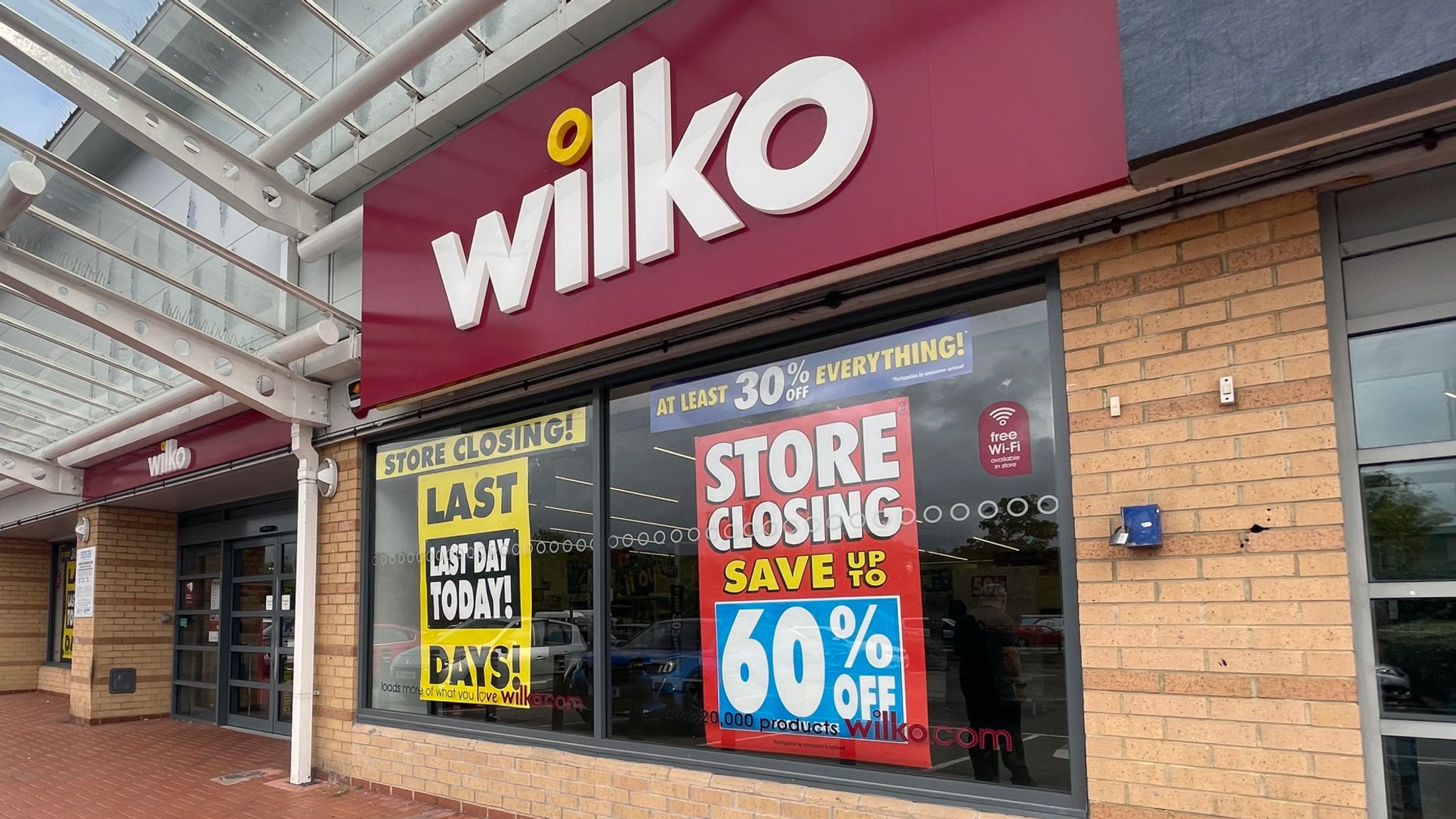
Then, in 2023, the business collapsed. Around 400 stores closed, approximately 12,500 jobs were lost, and a much-loved high street name vanished almost overnight from the retail estate. PwC, the administrator, said Wilko had 400 stores and around 12,500 employees when administration began on 10 August 2023.
Today, Wilko still exists, but not as the same business. The brand, website and intellectual property were bought by The Range, owned by CDS Superstores, and the name has since been relaunched online, in selected stores, through The Range, and through new concession-style partnerships.
The story of Wilko is not simply a story of Covid, inflation or the decline of the high street. Those things mattered, but they were not the whole story. Wilko failed because a once-clear business model became strategically confused, operationally weak, financially stretched and too slow to adapt.
The real lesson is uncomfortable: Wilko did not fail because people stopped liking it. It failed because liking a brand is not enough.
1. Origins: a practical retailer born in difficult times
Wilko’s roots go back to 1930, when James Kemsey Wilkinson opened the first Wilkinson store in Leicester. The company grew from a single hardware store into a national retailer selling homeware, household goods, garden products, DIY, cleaning, pets, stationery, health and beauty, and everyday essentials. The current Wilko corporate history describes the business as having grown from “a single hardware store” in 1930 to shops throughout the UK and a website receiving more than 2 million visits per week.
That origin matters. Wilko was not born as a fashion-led retailer or a lifestyle brand. It was born as a practical household retailer. Its original promise was simple: sell useful things at prices ordinary people could afford.
The business grew through a combination of careful organic expansion, family ownership and a value-led retail proposition. It was deeply associated with the high street, rather than out-of-town retail parks. For much of the twentieth century, that was a strength. Town centres were where people shopped, buses arrived, banks operated, markets traded and families bought everyday goods.
Wilko’s later history shows several phases of development. It responded to demand for DIY products in the 1950s, launched its first Wilko own-brand products in the 1970s, and introduced online shopping in the 2000s.
Recap
Wilko began as a practical value retailer, not a lifestyle brand. Its strength was usefulness: home, garden, DIY and household essentials at accessible prices.
2. What Wilko was good at
At its best, Wilko had three powerful strengths.
First, it was useful. The range was broad enough to make the shop worth visiting even when customers did not have a single fixed purchase in mind.
Second, it was accessible. Many stores were in town centres, making them useful to shoppers without cars, older customers, students, families and people doing quick errands.
Third, it had own-brand credibility. Wilko-branded paint, cleaning products, storage, garden items and household goods gave the business margin, identity and control. The current owner has explicitly said Wilko’s own-brand capability was one of the reasons it invested in the brand.
This was a valuable model. In many towns, Wilko filled the gap between a supermarket, a hardware shop, a pound shop and a small department store. It had a “get things done” identity long before that phrase became common in modern retail marketing.
The problem was that the model became harder to operate as retail changed. Large stores on high streets became expensive. Discounters expanded. Supermarkets pushed into general merchandise. Online retail improved. Retail parks grew. Customers expected better stock availability, clearer prices and faster convenience.
Wilko still had love. It no longer had enough operational advantage.
3. Expansion and the Woolworths opportunity
Wilko’s rise has often been compared with Woolworths. That comparison is useful, but imperfect.
When Woolworths collapsed in 2008, Wilko was one of the obvious beneficiaries. It sold many similar categories: household goods, stationery, small toys, confectionery, seasonal products and everyday useful items. In many places, it became the natural replacement for Woolworths in the public imagination.
The parliamentary evidence after Wilko’s collapse noted that the business was in a strong position after Woolworths and grew through the early 2000s into about 2014 or 2015. However, GlobalData’s Patrick O’Brien told MPs that Wilko then “ran out of room” in like-for-like sales growth around 2012 and failed to react to stronger competition.
This was a missed strategic opportunity. Wilko could have consolidated the “useful value home store” space after Woolworths. Instead, B&M, Home Bargains, The Range, Poundland, Savers and supermarkets all attacked different parts of the Wilko proposition.
In simple terms, Wilko had a head start. Competitors built faster.
4. Product range: too broad, too slow, too unclear
Wilko’s product range was both its charm and its weakness.
The business sold cleaning, toiletries, homeware, garden products, DIY, paint, pet food, stationery, toys, seasonal goods, food, household essentials and many smaller categories. That made the stores useful, but also operationally complex.
Retail analyst Richard Hyman told the Guardian that Wilko had too many large stores in expensive high street locations and failed to edit slow-moving ranges, such as furniture, which meant cash was not flowing quickly enough through the business.
This matters because value retail depends on stock turn. Low-margin products only work if they sell quickly, are replenished efficiently and generate enough cash to fund the next buying cycle. A slow-moving broad range ties up cash, fills space and reduces flexibility.
Wilko’s range also became strategically ambiguous. Was it a discount retailer? A family home store? A DIY-lite retailer? A garden retailer? A mini department store? A homeware brand? A convenience general merchant?
The answer was “a bit of all of them”. That worked when competition was weaker. It became dangerous when rivals sharpened their propositions.
B&M and Home Bargains were clearer on value and branded bargains. The Range was stronger on out-of-town home and garden scale. Dunelm and Ikea were stronger on home design. Savers and Poundland attacked health, beauty and everyday essentials. Supermarkets attacked household basics. Amazon attacked long-tail convenience.
Wilko was useful, but it became less distinctive.
5. The rebrand from Wilkinson to Wilko
The move from Wilkinson to Wilko was not, by itself, a bad idea. Many customers already used the name informally. A shorter, friendlier name made sense for own-brand products and modern retail.
But the rebrand coincided with a broader strategic drift. In parliamentary evidence, GMB’s Nadine Houghton said internal messaging suggested Wilko was moving towards something closer to a “John Lewis-type model”, away from its discount roots. She said members identified 2014 and 2015 as the beginning of the end, as the business moved away from a discount approach.
That evidence should be treated as one perspective, but it is strategically important. A value retailer must be careful when it tries to move upmarket. Customers may like nicer stores and better product presentation, but they still expect the prices and practicality that made the brand relevant.
Wilko appears to have become caught between identities. It was not cheap enough or operationally sharp enough to beat the best discounters. It was not stylish enough to compete with stronger homeware specialists. It was not digitally strong enough to offset weaker store economics.
This is one of the most important lessons from Wilko: a rebrand cannot replace a proposition.
6. Store estate: the wrong places, the wrong size, the wrong cost base
Wilko’s high street presence was once a strength. By the 2010s and early 2020s, it had become a burden.
The issue was not simply that high streets were dead. Many high streets still trade. The issue was that Wilko’s economics became increasingly mismatched to its locations.
Wilko sold low-margin goods, often bulky or practical products, from relatively large stores in town centres where rents, rates, staffing and logistics could be expensive. Competitors such as B&M, Home Bargains and The Range increasingly traded from retail parks or cheaper edge-of-town locations, where customers could park and buy larger items more easily.
GlobalData’s Patrick O’Brien told MPs that Wilko had “the wrong store locations and the wrong store types”, that its stores were “far too big”, and that it kept with a high street model while B&M and Home Bargains succeeded in retail parks.
The Guardian reported a similar point, citing analysts who said Wilko was outflanked by cheaper retail-park competitors and had too many large stores selling low-profit goods from expensive high street locations.
This was not a small tactical issue. It was a structural problem.
A store estate can quietly kill a retailer. Leases, rents, rates and service charges do not fall just because sales fall. If a retailer’s locations become less productive, its cost base becomes a trap.
7. Online: early enough to matter, not strong enough to save it
Wilko introduced online shopping in the 2000s, and its website became a meaningful part of the brand. The current Wilko history page refers to the website having received more than 2 million visits per week.
However, Wilko did not convert that online presence into a decisive competitive advantage. Former chair Lisa Wilkinson told MPs that one of the reasons for decline was that the business “failed to grow and scale” its online business.
That is a crucial admission. Wilko’s categories were well suited to omnichannel retail: click and collect, home delivery, bulky home items, garden seasonal products, DIY, cleaning, pet supplies and repeat purchases. It could have used its stores as collection points and local convenience hubs.
Instead, online remained too weak to compensate for store-estate problems. By the time The Range acquired the brand, the website and own-brand digital potential were still valuable, but the original company no longer had the financial strength to exploit them.
This is another lesson: having a website is not the same as having a digital strategy.
8. Supply chain and Project Optimus: when operations damage the proposition
Retail is brutally simple at customer level. If the product is not on the shelf, the customer cannot buy it.
Wilko’s availability problems became a major cause of decline. The business suffered from supply chain disruption, supplier confidence issues and internal infrastructure problems. Former CEO Mark Jackson told MPs that a warehouse management system implementation was “nothing short of a disaster” and led to shortages of stock availability in stores.
He also said poor availability drove much of the sales shortfall in the last two years, because the business did not have the cash to pay suppliers, suppliers restricted credit or stopped supply, and falling availability created a vicious circle.
This is where Wilko’s collapse moved from strategic weakness to operational breakdown. A value retailer with empty shelves loses the very reason customers visit. Once customers try B&M, Home Bargains, Poundland, Amazon or supermarkets instead, the habit changes.
Availability failure is especially dangerous for a retailer like Wilko because many visits are mission-based. Customers come in because they need paint, pet food, cleaning products, storage boxes or household essentials. If they cannot get them, they do not browse patiently. They go elsewhere.
9. Financial deterioration and cash pressure
Wilko ultimately failed because it ran out of cash. Lisa Wilkinson told MPs that “in essence, Wilko failed because we ran out of cash”, while identifying both external and internal factors, including declining high streets, long leases, high rents, business rates, Covid decisions, falling revenues, supplier confidence, online weakness, availability issues, unclear proposition and weak infrastructure.
The numbers were stark. The Guardian reported that Wilko’s sales fell by a fifth to £1.2 billion between 2019 and 2022, and that the company made a £35.9 million loss in its last filed accounts.
By the time of collapse, Wilko owed £625 million, including £548 million to unsecured creditors, who were expected to receive only a small fraction of what they were owed. Suppliers were owed more than £170 million, and the pension fund had a deficit of more than £50 million on the administration basis.
That is not merely a bad trading year. It is a full stakeholder failure: employees, suppliers, landlords, pensioners, creditors and taxpayers all carried consequences.
10. Dividends, governance and the family ownership question
Wilko’s collapse became especially controversial because it was a long-standing family-owned business. That created expectations of stewardship, responsibility and continuity.
GMB told MPs that £77 million in dividends had been taken out of the business over the previous decade, arguing that money should instead have been invested in online capability, price competitiveness and store quality.
It is important to be fair. Dividends are not inherently wrong. Family owners are entitled to returns when a business is profitable and solvent. But the strategic and moral question is whether distributions were prudent given the long-term deterioration in trading, margins, estate productivity and competitiveness.
The parliamentary hearing also highlighted concerns about leadership churn, lack of a chief executive for a long period, and weak accountability. GMB described “weak leadership” and a “failure to adapt to a changing market”.
This is one of the harshest lessons from Wilko. Family ownership can be a strength when it encourages long-term stewardship. It can become a weakness if loyalty, history and internal conviction reduce the willingness to face painful facts.
11. Covid, the mini-Budget and external shocks
Wilko’s former leadership pointed to external pressures, including Covid, business rates, high street decline, the cost-of-living crisis, financing difficulties and the 2022 mini-Budget. Lisa Wilkinson told MPs the business stayed open during Covid, did not furlough staff, paid landlords in full, and later faced sharply worsened financing terms after the mini-Budget.
Those points matter. The external environment was genuinely difficult. The pandemic damaged high street footfall. Inflation squeezed customers. Supply chains were disrupted. Interest rates rose. Credit insurers became nervous. Suppliers became cautious.
But external shocks do not fully explain why Wilko failed while some competitors grew. B&M, Home Bargains and The Range were operating in the same economy. Their models were better aligned to the market.
The fairest conclusion is this: external shocks accelerated the collapse, but internal strategic weaknesses made Wilko vulnerable in the first place.
12. Market positioning: where Wilko sat and why it became squeezed
Wilko’s original positioning was strong:
Everyday home and garden essentials, good value, available on the high street.
By the 2020s, that position had weakened. The market had moved around it.
| Competitor | Core position | Why it hurt Wilko |
|---|---|---|
| B&M | Discount variety, brands, seasonal, retail parks | Lower costs, sharper bargain perception, strong store rollout |
| Home Bargains | Branded value, disciplined range, retail parks and high streets | Strong value credentials and customer loyalty |
| The Range | Home, garden, DIY, large-format value | Better suited to bulky home and garden missions |
| Poundland | Cheap essentials, impulse, town centres | Stronger price clarity in everyday categories |
| Savers | Health, beauty and household value | Attacked toiletries and cleaning |
| Dunelm | Homeware and soft furnishings | Stronger design and home credibility |
| Supermarkets | Convenience and household basics | Captured essentials during grocery trips |
| Amazon | Long-tail convenience and delivery | Captured planned purchases and price comparison |
The Guardian quoted GlobalData’s Matt Walton as saying Wilko was caught in a “pincer movement” on price and design: outflanked on price by B&M, Home Bargains and The Range, while unable to compete on design with Dunelm or Ikea.
That is the strategic heart of the failure. Wilko was neither the cheapest, nor the most convenient, nor the most stylish, nor the strongest online, nor the best located for bulky purchases.
It remained useful, but usefulness without competitive sharpness was not enough.
13. PESTLE analysis
Political and legal
Wilko was exposed to business rates, employment law, pensions regulation, insolvency law, landlord negotiations and supplier-credit arrangements. Business rates and high street cost structures were repeatedly cited as pressures, but the key point is that the business had limited flexibility because of its store estate and leases.
Economic
The cost-of-living crisis should, in theory, have helped a value retailer. Instead, Wilko was too operationally weak to benefit fully. Inflation increased costs, customers became cautious, suppliers demanded tighter payment terms, and financing became harder. PwC said the group had been hit by challenging trading conditions through the pandemic and then the cost-of-living crisis, resulting in cashflow pressure and deteriorating trading.
Social
Wilko benefited from customer affection, but shopping habits changed. More people used retail parks, supermarkets, online delivery and discounters. High street convenience was still valuable, but no longer sufficient.
Technological
Wilko did not scale online strongly enough and had operational problems linked to warehouse systems and infrastructure. Technology was not merely a website issue. It affected stock availability, logistics, supplier confidence and customer experience.
Legal and insolvency
Once administration began, the ability to save the whole business narrowed quickly. PwC later sold the brand, website and intellectual property to The Range, but not the full operating estate.
Environmental
Wilko’s product categories, particularly garden, household cleaning, plastics, DIY and homeware, were exposed to sustainability expectations. This was not the main cause of failure, but future versions of the brand will need to show credibility on durability, packaging and responsible sourcing.
PESTLE conclusion
Wilko faced difficult external conditions, but the decisive issue was that its internal model was not resilient enough to withstand them.
14. SWOT analysis at the point of collapse
Strengths
Wilko had brand affection, high awareness, a practical product range, strong own-brand heritage, high street convenience, a large national estate and a trusted role in home and garden essentials.
Weaknesses
It had expensive and often oversized stores, weak sales density, poor availability, insufficient online scale, unclear positioning, margin pressure, weak infrastructure, supplier-credit problems and slow strategic decision-making.
Opportunities
It could have become the leading high street and omnichannel home essentials brand, moved more strongly into retail parks, built a sharper own-brand proposition, expanded click and collect, and focused on faster-moving categories.
Threats
B&M, Home Bargains, The Range, Poundland, Savers, supermarkets, Amazon, falling high street footfall, rising costs, weak supplier confidence and consumer price sensitivity all created pressure.
SWOT conclusion
Wilko had a brand worth saving, but not a business model that was still working.
15. Porter’s Five Forces
Competitive rivalry: very high
Wilko competed across too many categories against too many stronger specialists. Each competitor could beat it in part of the range.
Buyer power: high
Customers could switch easily. If Wilko did not have stock, or if prices were not compelling, shoppers had immediate alternatives.
Supplier power: rising sharply
As Wilko’s finances weakened, suppliers restricted credit or demanded different terms. That reduced availability, which reduced sales, which weakened supplier confidence further.
Threat of substitutes: high
Customers could buy the same goods from supermarkets, Amazon, discount chains, retail parks, DIY stores or specialist retailers.
Threat of new entrants: moderate
Building a national chain is hard, but new online sellers and category specialists could attack parts of the range without needing a full Wilko-style estate.
Five Forces conclusion
Wilko operated in a market where almost every force pushed against margins and cash. It needed a sharper proposition than it had.
16. BCG-style portfolio review
Own-brand home and household essentials: potential star
Wilko own-brand products were one of the most valuable parts of the business. The Range’s acquisition of the brand was partly driven by Wilko’s own-brand capabilities.
High street large stores: declining cash drain
Many stores were too large, too expensive and in the wrong locations for the changing market. They needed earlier restructuring.
Garden and DIY: attractive but location-sensitive
Garden and DIY were strong categories, but bulky purchases work better where customers can park or order online easily. High street stores were not always ideal.
Online: underdeveloped question mark
Online had traffic and potential, but not enough scale, integration or operational strength to rescue the wider business.
Food, health and beauty, and general impulse: vulnerable
These categories were attacked by supermarkets, Poundland, Savers and Home Bargains. Wilko had presence, but not enough dominance.
BCG conclusion
Wilko’s best assets were own-brand, trust and home essentials. Its weakest asset was the oversized legacy store estate that had once made it visible.
17. The administration and break-up
Wilko entered administration on 10 August 2023. PwC confirmed that the group had been under cashflow pressure and deteriorating trading conditions.
Attempts to save a large part of the business failed. A proposed rescue by Doug Putman, owner of HMV, collapsed after efforts to preserve hundreds of stores. Reporting at the time said central infrastructure costs, supplier issues and the cost of running the legacy operating model made a rescue commercially unviable.
The break-up then followed:
B&M agreed to buy a number of Wilko sites.
Poundland agreed to acquire up to 71 sites.
The Range bought the Wilko brand, website and intellectual property.
PwC announced that The Range’s deal included the brand, website and IP, and that 36 employees from Wilko’s digital team transferred to The Range.
This is an important distinction. Wilko the old operating company died. Wilko the brand survived.
18. Wilko today: a brand reborn, but not the old retailer
The new Wilko is owned by CDS Superstores, the owner of The Range. It relaunched online, appeared in The Range stores, and returned with selected physical stores. Wilko announced in late 2023 that five stand-alone concept stores would open before Christmas, ahead of a national rollout, and that Wilko products would be sold across The Range’s 200-store network.
The new model is very different from the old one. It is less about rebuilding 400 stores and more about using the Wilko brand across multiple channels:
Online.
Selected standalone stores.
Products within The Range.
Click and collect through wider infrastructure.
Concessions and partnerships.
In 2026, Wilko announced a Google Cloud collaboration to support AI-driven digital transformation, including personalisation, conversational interfaces and future agentic commerce applications across the CDS Superstores retail brands.
It has also moved into supermarket-style concessions. In March 2026, Morrisons and Wilko launched a new partnership, with Wilko products such as paint, decorating tools, household essentials and car care products appearing in Morrisons stores.
This future is not a return to old Wilko. It is a brand-licensing, omnichannel and concession-led revival.
19. Could Wilko return as a major high street chain?
It could return in selected locations, but it is unlikely to return as the same 400-store high street estate.
The new owner has shown interest in both city centre and out-of-town locations. Retail Gazette reported in 2025 that CDS was seeking 20,000 to 25,000 sq ft units for Wilko in shopping centres or high-footfall town and city centre sites, while The Range targeted larger out-of-town stores.
That makes strategic sense. The new Wilko needs fewer, better stores. It should avoid repeating the mistake of carrying too many underproductive sites with high fixed costs.
The brand still has a role, but probably as:
A smaller high street home and garden essentials format.
A digital-first own-brand retailer.
A concession partner in supermarkets or larger home stores.
A click-and-collect and marketplace brand.
A complement to The Range, rather than a direct replica of old Wilko.
The danger is nostalgia. Customers may say they want Wilko back, but that does not mean they will shop often enough to support a large physical estate.
20. Lessons for business leaders
Lesson 1: Customer affection is not a strategy
Wilko was loved. It still failed. A brand can have emotional goodwill and still run out of cash.
Lesson 2: The store estate can become a trap
Long leases, high rents and oversized stores can destroy flexibility. Retailers must act before the estate becomes unaffordable.
Lesson 3: Availability is the heart of value retail
Empty shelves are fatal. Once availability fails, customers leave and suppliers become even more nervous.
Lesson 4: Own-brand is powerful, but only if the operating model works
Wilko own-brand was valuable enough for The Range to buy the brand. But own-brand strength could not offset weak cash, weak availability and high costs.
Lesson 5: A rebrand cannot fix a confused proposition
Moving from Wilkinson to Wilko made sense. Moving away from clear value positioning did not.
Lesson 6: Family ownership needs challenge
Long-term ownership can be a strength, but only if the board is willing to face uncomfortable truths early.
Lesson 7: Digital must be integrated, not bolted on
Wilko had online presence, but not enough digital scale or operational integration to save the business.
Lesson 8: Turnarounds must start before the crisis
By the time Wilko needed emergency funding, CVA planning, supplier reassurance and estate restructuring all at once, the window was too narrow.
21. What the future of Wilko is likely to be
The future Wilko is likely to be smaller, more digital and more asset-light.
It will probably not be a full national high street chain in the old sense. Instead, it is likely to operate through a blend of online, own-brand products, selected stores, The Range infrastructure, supermarket concessions and partnerships.
The best future version of Wilko would focus on what customers still value:
Practical home essentials.
Affordable DIY.
Cleaning and household basics.
Garden and outdoor.
Storage.
Pet and wildlife.
Paint and decorating.
Useful own-brand products.
The worst future version would be a nostalgic label spread thinly across too many channels without a clear reason to exist.
The most likely outcome is somewhere in between. Wilko will survive as a brand. It may grow again physically, but far more cautiously than before. It will probably be used as a trusted own-brand and home essentials proposition within a wider CDS retail ecosystem.
Conclusion: why Wilko became a shadow of its former self
Wilko failed because it lost strategic clarity.
It began as a practical value retailer. It grew because it understood ordinary households and the everyday jobs they needed to get done. It had a strong own-brand tradition, useful stores and customer affection.
But over time, its operating model became less competitive. Stores were too large and often too expensive. The range was too broad and not edited sharply enough. Competitors became clearer, cheaper or more convenient. Online was not scaled sufficiently. Supply chain problems damaged availability. Supplier confidence weakened. Cash drained away. Leadership acted too slowly. By the time serious restructuring became unavoidable, the business no longer had enough time, money or trust to complete it.
The saddest part is that Wilko still had a place in customers’ minds. The brand did not become irrelevant. The business model did.
That is why the name could be bought and relaunched, but the old company could not be saved.
Wilko’s story should therefore be read not only as a retail failure, but as a warning. Heritage matters, but it does not pay suppliers. Affection matters, but it does not cover rent. A broad range matters, but only if stock turns and shelves are full. A family business can be powerful, but only if stewardship is matched by discipline.
Wilko’s future may yet be respectable as a digital, concession and selected-store brand. But the old Wilko, the 400-store high street mainstay, has gone.
The lesson is simple: a retailer must keep earning its place in customers’ lives, not just remembering when it used to have one.