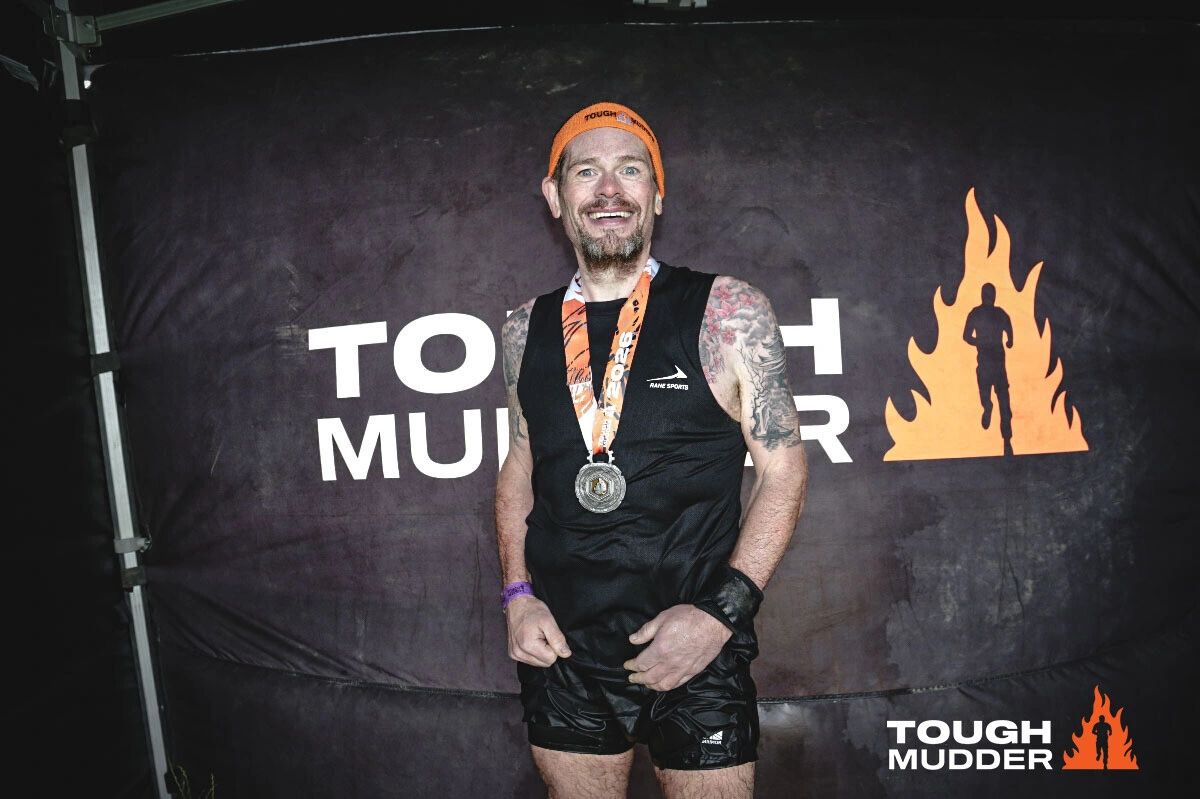
A full business analysis and strategic review of the organisations that turned mud, obstacles and shared suffering into an international fitness industry
Tough Mudder and Spartan have become two of the most recognisable names in mass-participation fitness.
They sell something that appears irrational when described plainly. Customers pay to run across difficult terrain, crawl through mud, climb walls, carry heavy objects, cross water, hang from obstacles, endure cold, risk failure and finish exhausted, bruised and covered in dirt.
Yet millions of people have willingly participated.
The explanation is that Tough Mudder and Spartan do not primarily sell running events. They sell challenge, identity, achievement, community and a story that participants can tell about themselves.
A conventional road race measures distance and time. Tough Mudder and Spartan add fear, spectacle, teamwork, uncertainty and theatre. Participants do not simply complete a course. They confront a physical test designed to feel larger than an ordinary weekend activity.
The two brands originally approached this market from different directions.
Tough Mudder built its identity around teamwork, camaraderie and memorable obstacles. Its standard events were designed as challenges rather than conventional races. Participants were encouraged to help strangers, and many obstacles could not be completed easily without cooperation.
Spartan was more competitive. It emphasised timing, rankings, penalties, physical discipline and progression through increasingly difficult race distances. Participants could enter a short Sprint, progress to a Super, complete a Beast and pursue a Trifecta of achievements.
For much of the 2010s, the two organisations were major rivals in the rapidly growing obstacle-course-racing market.
Then Tough Mudder collapsed financially.
After a dispute with creditors and its registration partner, Tough Mudder entered insolvency proceedings at the beginning of 2020. Spartan acquired its UK business and subsequently purchased the principal US assets through bankruptcy proceedings.
The acquisition brought the two leading obstacle-event brands under common ownership.
Almost immediately, the COVID-19 pandemic closed mass-participation events around the world. Spartan had bought a distressed rival just as most of its own expected event revenue disappeared. The combined organisation was forced into layoffs, furloughs, emergency financing and rapid restructuring.
It survived.
Today, Spartan and Tough Mudder sit within a broader portfolio that includes DEKA functional fitness events, trail running, extreme-endurance formats, children’s events and other outdoor challenges. The group increasingly describes this connected portfolio as a “House of Hard”, while preserving the distinctive identity of each brand.
This creates a compelling strategic proposition.
Spartan can serve competitive obstacle racers.
Tough Mudder can serve teams, charities, corporate groups and people seeking a memorable shared experience.
DEKA can serve gym members who want a repeatable indoor fitness test.
Trail and endurance events can serve runners seeking longer outdoor challenges.
Children’s events can introduce the next generation.
The combined portfolio can therefore follow a participant across several stages of fitness, from a first team mud run to competitive racing, functional fitness and ultra-endurance.
But the organisation remains exposed to substantial risks.
Live events require venues, temporary structures, staff, medical provision, insurance, transport, water, parking, toilets, security and complex logistics. Weather can undermine attendance. Injuries can damage confidence. Public-health failures can become international news. Rising ticket prices can make events inaccessible. New competitors such as HYROX are attracting the same customers through highly standardised and spectator-friendly indoor formats.
The central question is therefore not whether Spartan and Tough Mudder have valuable brands. They clearly do.
The question is whether the combined organisation can convert those brands into a resilient, repeatable and financially sustainable global fitness platform.
The likely answer is yes, but only if it remembers the lesson of Tough Mudder’s collapse.
Growth must be supported by operational discipline, cash control, safety, clear brand architecture and recurring customer relationships.
The organisation’s future is unlikely to be built by simply staging more mud runs.
It will be built by creating a connected ecosystem of events, training, communities, partnerships and achievement.
1. The origins of obstacle racing
Obstacle-course racing did not begin with Tough Mudder or Spartan.
Military training has used obstacles for generations. Soldiers have long been expected to climb walls, cross water, crawl under barriers, carry equipment and move over difficult terrain.
Assault courses later spread into schools, fitness training, television entertainment and endurance competitions.
In Britain, Billy Wilson established Tough Guy in Staffordshire during the 1980s. Tough Guy combined cross-country running with mud, water, heights, tunnels, fire and military-style obstacles. It became known as one of the earliest prominent civilian extreme-obstacle events.
Other races followed in Europe and North America. However, the sector remained relatively niche until social media, functional fitness and the growth of experience-led consumer spending created the conditions for rapid expansion.
Three important trends came together during the late 2000s.
- Running and endurance participation were growing.
- CrossFit, boot camps and functional training were becoming mainstream.
- Facebook and online video made unusual physical experiences highly shareable.
A conventional race photograph shows someone running.
An obstacle-race photograph can show someone jumping through fire, falling into mud, being pulled over a wall or emerging from ice-filled water.
That visual difference was commercially powerful.
Obstacle races were not only fitness events. They were content-generation machines before most businesses understood the importance of user-generated content.
Recap
Tough Mudder and Spartan did not invent obstacles, but they entered the market when social media, experiential spending and functional fitness made obstacle racing capable of becoming a global commercial category.
2. The founding of Tough Mudder
Tough Mudder was founded by Will Dean and Guy Livingstone, two British entrepreneurs living in the United States.
Dean had worked in counter-terrorism before attending Harvard Business School. While studying at Harvard, he researched endurance events and developed an obstacle-event business proposal.
The first Tough Mudder was held on 2 May 2010 at Bear Creek Mountain Resort in Pennsylvania.
The founders used Facebook advertising and word of mouth rather than relying on traditional sports-marketing channels. Approximately 4,500 people attended the first event, far more than might have been expected for an unproven concept.
The event demonstrated several things immediately.
There was demand for a physical challenge that felt more unusual than a conventional road race.
Participants were willing to travel and pay a premium for an event with a powerful identity.
The obstacles generated photographs and video that encouraged future participation.
Most importantly, the experience produced advocacy. Participants returned to work, social groups and families with stories about what they had endured.
Tough Mudder’s growth was therefore driven partly by paid marketing and partly by the participants themselves.
The customers became the advertising.
3. The Tough Guy controversy
Tough Mudder’s origin story also contains controversy.
While at Harvard, Dean researched Billy Wilson’s Tough Guy event. Wilson later alleged that Dean had used information and materials obtained during that research to create Tough Mudder.
The dispute resulted in litigation and an out-of-court settlement.
The controversy illustrates an important distinction between an original concept and a scalable business model.
Military-style obstacle events already existed. Tough Mudder’s commercial achievement was not inventing the idea of climbing, crawling and getting muddy.
Its achievement was combining obstacles with sophisticated branding, digital marketing, customer segmentation, event operations and international expansion.
In business, execution can become more commercially important than invention.
That does not eliminate questions about intellectual origin or business ethics. It does help explain why Tough Mudder grew far more rapidly than many earlier obstacle events.
4. Tough Mudder’s original value proposition
Tough Mudder positioned itself differently from a conventional race.
Its central message was that finishing mattered more than winning.
The standard events were generally not presented as individual competitive races. Participants were encouraged to enter with friends and help one another. Obstacles such as Everest, Pyramid Scheme and Block Ness Monster made cooperation part of the experience.
The promise was not elite athletic performance.
It was overcoming discomfort with other people.
This gave Tough Mudder an unusually broad market.
- Running clubs could enter.
- Gym members could enter.
- Work teams could enter.
- Charity fundraisers could enter.
- Groups of friends could enter.
- People pursuing weight-loss or confidence goals could enter.
A participant did not need to believe they could win. They needed to believe that they could finish with help.
This reduced the intimidation created by competition while preserving the feeling of toughness.
It also made the event commercially attractive to groups. One motivated organiser could recruit ten or twenty colleagues or friends.
The group became both customer and sales channel.
5. The importance of obstacle design
Tough Mudder understood that the obstacles were not merely physical barriers.
They were intellectual property.
Names such as Arctic Enema, Electroshock Therapy, Everest, Mudderhorn, Funky Monkey and Block Ness Monster turned temporary event structures into recognisable brand assets.
A well-designed obstacle served several purposes.
- It created fear before the event.
- It generated memorable photographs.
- It encouraged participants to discuss the course.
- It differentiated Tough Mudder from cheaper local mud runs.
- It gave returning participants a reason to compare seasons.
Some obstacles tested grip or upper-body strength. Others used cold water, darkness, enclosed spaces, heights or uncertainty.
The best obstacles created spectacle without requiring elite athletic ability.
This was important. Tough Mudder needed to appear extreme while remaining achievable for a large mass-participation audience.
The company was therefore not simply designing an athletic test. It was designing controlled emotional experiences.
Recap
Tough Mudder’s product was not the distance alone. Its product was a sequence of branded emotional moments involving fear, teamwork, relief and accomplishment.
6. Rapid growth and the experience economy
Tough Mudder expanded extraordinarily quickly.
By 2013, it had reportedly attracted more than 700,000 annual participants and generated revenue exceeding $100 million. Events were being staged across the United States and in markets including Britain, Australia, Canada and Germany.
This growth reflected the emerging experience economy.
Consumers, particularly younger adults, were increasingly willing to spend money on memorable activities rather than only physical possessions.
A Tough Mudder entry bought more than access to a course.
It bought:
- A training objective.
- A social commitment.
- A weekend experience.
- A finisher headband or medal.
- Photographs and social-media content.
- A story about resilience.
The event created value before, during and after the day itself.
Before the event, participants trained, recruited teams and discussed obstacles.
During the event, they experienced fear, physical effort and cooperation.
Afterwards, they shared photographs, wore branded merchandise and considered another event.
This extended engagement justified a ticket price substantially higher than many ordinary running events.
7. The origins of Spartan
Spartan emerged from a different endurance culture.
Joe De Sena was an entrepreneur, endurance athlete and organiser associated with the Death Race, an extreme event staged in Vermont.
The Death Race could last for many hours and included unpredictable physical and mental tasks. It appealed to a relatively small group of committed endurance participants.
Spartan was developed as a more accessible and scalable version of that philosophy.
The first Spartan Race was held in Vermont in 2010, the same year as the first Tough Mudder.
Where Tough Mudder emphasised teamwork and experience, Spartan emphasised competition, discipline and measurable achievement.
Participants were timed.
Obstacles had rules.
Failure could result in penalties.
Competitive athletes could race in elite or age-group categories, while ordinary participants could enter open waves.
This gave Spartan a dual identity.
It was both a mass-participation challenge and a competitive sport.
8. Spartan’s progression model
One of Spartan’s strongest commercial innovations was its structured race ladder.
The principal formats developed into:
| Format | Approximate distance | Typical obstacle count | Strategic role |
|---|---|---|---|
| Sprint | 5 kilometres | 20 obstacles | Entry point for new participants |
| Super | 10 kilometres | 25 obstacles | Intermediate progression |
| Beast | 21 kilometres | 30 obstacles | Major endurance challenge |
| Ultra | 50 kilometres | 60 obstacles | High-end endurance and prestige |
| Kids | Age-dependent distances | Adapted obstacles | Family participation and future customers |
The Trifecta encouraged participants to complete a Sprint, Super and Beast within a season.
This was commercially important because mass-participation events often suffer from a “one and done” problem.
A customer may complete one mud run, obtain the photograph and decide that the personal objective has been achieved.
Spartan converted one achievement into a progression pathway.
After completing a Sprint, the participant could pursue a Super. After the Super came the Beast. Completing all three created another status marker.
The event calendar became a journey rather than a single transaction.
9. Tough Mudder and Spartan as strategic opposites
The rivalry between Tough Mudder and Spartan was commercially useful because the brands represented different ideas of toughness.
| Characteristic | Tough Mudder | Spartan |
|---|---|---|
| Primary identity | Team challenge and shared experience | Competitive obstacle racing |
| Standard-event emphasis | Completion and camaraderie | Time, rank and performance |
| Participant psychology | “We will get through this together” | “I will test and improve myself” |
| Obstacle role | Spectacle, fear and teamwork | Athletic skill, strength and penalties |
| Core repeat mechanism | New obstacles, team occasions and endurance formats | Progression, Trifecta and rankings |
| Strong customer groups | Friends, charities and corporate teams | Competitive athletes and goal-driven individuals |
The distinction was not absolute.
Spartan participants frequently help each other, particularly in open waves. Tough Mudder developed competitive endurance formats such as World’s Toughest Mudder.
Nevertheless, the brands occupied recognisably different positions.
This distinction became strategically valuable after the acquisition because it allowed the combined organisation to serve a wider market without forcing every participant into the same event culture.
10. International expansion
Both organisations expanded internationally through a mixture of direct operation, licensing and local partnerships.
International licensing offered important advantages.
A local operator could provide:
- Venue relationships.
- Regulatory knowledge.
- Local staff and suppliers.
- Marketing expertise.
- Language and cultural understanding.
The parent company could provide the brand, event standards, obstacle designs, operating systems and marketing assets.
This was more capital-efficient than building a full direct organisation in every country.
However, licensing also created quality-control risk.
A poorly organised event in one country could damage the global brand. Participants usually distinguish only weakly between a licence holder and the brand owner.
Safety, obstacle construction, medical provision, refunds and customer service therefore required consistent international standards.
The strongest expansion markets were those combining affluent fitness consumers, suitable outdoor venues, tourism infrastructure and a culture of mass-participation sport.
11. The event business model
Obstacle-course racing has several revenue sources.
Race entry fees
Ticket sales are the core source of revenue. Prices usually rise as the event approaches, encouraging early commitment and providing working capital.
Sponsorship
Fitness, nutrition, apparel, footwear, automotive, financial-service and consumer brands can sponsor events or obstacles.
Merchandise
Clothing, footwear, accessories, headbands, medals and branded equipment extend the relationship beyond race day.
Photography and video
Participants value professional images because the event is highly visual.
Spectator and site income
Parking, spectator tickets, food, drink and hospitality can contribute additional revenue.
International licensing
Local operators can pay royalties based on event revenue and purchase obstacles, logistics support or merchandise from the parent company.
Training and content
Apps, coaching, training plans, memberships, books, media and gym partnerships can generate revenue and maintain engagement between events.
Corporate and charity participation
Large teams can produce substantial block bookings and help fill less popular start times.
The business model can therefore appear attractive.
Participants pay in advance.
Events can be staged on rural estates, ski resorts, military facilities or motorsport venues during quieter periods.
Sponsors gain access to a highly engaged audience.
The same obstacle designs can be used repeatedly.
But the economics are more fragile than they first appear.
12. The hidden costs of mud
A large obstacle event is operationally complex.
The organiser must secure a venue months in advance. Courses need planning, permissions and environmental assessment. Obstacles require engineering, transport, construction, inspection and dismantling.
Other costs include:
- Event staff.
- Contractors and volunteers.
- Medical teams.
- Insurance.
- Security.
- Parking management.
- Water and sanitation.
- Temporary roads and barriers.
- Registration technology.
- Timing systems.
- Photography.
- Waste removal.
- Marketing.
- Customer support.
Many of these costs are incurred before the event.
If registrations are weaker than expected, the obstacle, venue and staffing costs still need to be paid.
Weather creates additional uncertainty. Excessive rain can damage access and parking. Heat can increase medical risk. Storms can force course changes or cancellation.
The event business therefore combines advance revenue with substantial future obligations.
Ticket money received today may be needed to stage the event months later.
If that cash is used too aggressively to fund expansion or overhead, the business becomes vulnerable.
This appears to have been one of the structural weaknesses exposed during Tough Mudder’s decline.
13. Tough Mudder’s diversification attempts
As Tough Mudder grew, management attempted to expand beyond the core outdoor events.
The company developed or considered:
- Women-focused Mudderella events.
- Children’s formats.
- Urban and shorter courses.
- Television and media content.
- Training programmes.
- Permanent fitness facilities.
- International licensing.
- Extreme endurance formats.
The strategic logic was understandable.
Outdoor obstacle events are seasonal and operationally expensive. A broader fitness business could produce more recurring revenue and maintain year-round customer engagement.
However, diversification can consume management attention and cash before the core business is sufficiently stable.
A temporary outdoor event company does not automatically possess the skills needed to operate permanent gyms, produce television, manage digital subscriptions or run international franchises.
The danger is particularly high when a company is growing quickly. Strong headline revenue can hide weak cash conversion, excessive overhead and operational inconsistency.
14. Warning signs before the collapse
By the late 2010s, Tough Mudder’s growth story had weakened.
The original obstacle-race boom had matured. Numerous local races had entered the market. Some participants had completed one or two events and moved on. Customer acquisition became more difficult.
The organisation was also managing multiple markets, event formats, supplier relationships and strategic experiments.
A dispute with registration provider Active Network became particularly damaging. Online registration is the financial bloodstream of an event company. If registrations are interrupted, cash flow stops immediately.
At the end of 2019, Tough Mudder suspended ticket sales. Creditors later sought to force the US company into bankruptcy, alleging that they were owed approximately $855,000.
The UK business entered administration.
The brand still had recognition and customer demand, but the corporate structure could no longer meet its obligations normally.
Recap
Tough Mudder did not collapse because people suddenly stopped enjoying obstacles. It collapsed because a complex live-events business lost financial resilience, supplier confidence and control of its registration income.
15. Spartan’s acquisition of Tough Mudder
Spartan had already shown interest in acquiring its rival before the bankruptcy process was complete.
In February 2020, Spartan acquired Tough Mudder’s UK assets from administration.
It then acquired the principal US assets through a court-approved bankruptcy transaction. The reported consideration was approximately $700,000, together with the assumption of substantial liabilities and commitments, including obligations relating to prepaid event entries.
The purchase price appeared low compared with Tough Mudder’s previous scale.
But Spartan was not simply purchasing a logo.
It was assuming customer obligations, supplier issues, event commitments and the responsibility of rebuilding trust.
The transaction was strategically attractive because it:
- Removed a major competitor.
- Added one of the best-known brands in obstacle racing.
- Expanded the customer base.
- Created opportunities to share technology and event infrastructure.
- Allowed Spartan to cover both competitive and teamwork-led formats.
The acquisition also carried substantial risk.
Spartan had to integrate a distressed business while preserving a brand identity that differed from its own.
It then faced a crisis that no event organiser had planned for.
16. The pandemic shock
The acquisition was completed shortly before COVID-19 closed mass gatherings around the world.
Spartan’s founder later stated that approximately 90% of projected revenue disappeared within days as events were cancelled or postponed.
This was an existential threat.
The business depended heavily on physical participation. Digital content and merchandise could not replace the loss of event income.
Hundreds of employees were furloughed or laid off. Salaries were reduced. Joe De Sena later invested millions of dollars of additional personal capital into the company.
The pandemic nevertheless created a forced integration period.
With few events taking place, Spartan could work on combining technology, databases, customer-service systems and operations.
The shutdown also exposed a long-standing weakness. The organisation had been so focused on staging events that technology and recurring digital relationships had received insufficient attention.
The combined group survived because of emergency cost reductions, investment, customer loyalty and the eventual return of outdoor events.
The episode demonstrated both the resilience and fragility of the model.
17. Rebuilding after COVID-19
Outdoor mass-participation events were well positioned to recover once restrictions eased.
Consumers wanted social experiences, fitness goals and reasons to travel. Outdoor environments also appeared safer than crowded indoor entertainment during the earlier stages of reopening.
Spartan and Tough Mudder resumed events, rebuilt calendars and restored customer confidence.
The combined ownership allowed more shared infrastructure.
Some venues began hosting both Spartan and Tough Mudder events during the same weekend or across connected dates.
This improved venue utilisation and created operational efficiencies.
The organisation could use:
- Shared logistics teams.
- Common registration technology.
- Combined volunteer systems.
- Related sponsorship arrangements.
- Cross-brand marketing.
- Shared obstacle and site infrastructure.
The important strategic decision was not to merge the brands completely.
Spartan remained Spartan.
Tough Mudder remained Tough Mudder.
Shared ownership operated behind the customer experience rather than replacing it.
18. The current brand portfolio
The combined organisation now extends beyond its two best-known brands.
Spartan
The core competitive outdoor obstacle-racing brand, with Sprint, Super, Beast, Ultra, Stadion, championship and children’s formats.
Tough Mudder
The teamwork-led mud and obstacle brand, offering shorter events, longer challenges, Infinity formats and World’s Toughest Mudder.
DEKA
A standardised functional-fitness competition built around ten workout zones. Formats include DEKA FIT, DEKA MILE and DEKA STRONG.
Spartan Trail
Trail-running events that remove many of the obstacles but retain the outdoor terrain and endurance positioning.
Extreme Endurance
Longer and less conventional events, including Hurricane Heat-style challenges designed around resilience and teamwork.
Kids events
Shorter obstacle events aimed at families and younger participants.
Associated outdoor formats
The wider event platform has included or promoted hiking, mountain and endurance concepts in selected markets.
This is increasingly presented as one connected “House of Hard”.
The portfolio is strategically attractive because it spreads risk across different formats, venues and customer motivations.
However, it also recreates a danger familiar from Tough Mudder’s history: complexity.
The group must ensure that each brand has a clear role and credible economics.
19. The “House of Hard” strategy
The House of Hard concept attempts to connect the portfolio without removing the individuality of each event.
Shared achievement systems, collectible rewards, volunteer benefits and cross-brand promotions encourage participants to move between formats.
This creates several potential benefits.
Higher customer lifetime value
A participant who begins with a Tough Mudder 5K could later enter a Spartan Sprint, complete a DEKA event and attempt a Beast.
Reduced customer acquisition costs
The group can market new formats to people already in its database rather than finding every customer from the beginning.
Broader sponsor value
A sponsor can reach outdoor racers, gym competitors, families and endurance athletes through one relationship.
Greater volunteer flexibility
Volunteers can earn entries that may be used across eligible brands and markets.
More resilient venues
A venue can host several formats and attract participants across a full weekend.
The risk is that a unified architecture makes the brands feel interchangeable.
Tough Mudder customers should not feel that their cooperative event has simply become a softer Spartan race.
Spartan competitors should not feel that competitive standards are being weakened to accommodate mass participation.
The group must integrate systems, not identities.
20. The rise of DEKA
DEKA may become one of the most strategically important parts of the organisation.
Obstacle events are difficult to standardise. Terrain, weather, elevation and obstacle placement vary by venue.
DEKA uses a repeatable ten-zone fitness test. Participants complete exercises such as carries, rowing, cycling, lunges and weighted movements in a controlled format.
This produces several advantages.
- The format can be staged indoors.
- Performance can be compared between venues.
- Gyms can offer specific training programmes.
- Events are easier for spectators to follow.
- Weather risk is reduced.
- The movements are familiar to functional-fitness participants.
DEKA places Spartan directly against HYROX, which has become one of the fastest-growing fitness-event brands in the world.
HYROX’s success demonstrates demand for standardised competition among ordinary gym members. Participants can train for known exercises, record a time and compare performance internationally.
This is harder to achieve in a muddy outdoor race where every course differs.
DEKA is therefore not a side product.
It is the group’s most direct response to the shift from obstacle racing towards hybrid fitness competition.
21. HYROX as the major competitive threat
HYROX is a serious threat because it removes several barriers associated with obstacle racing.
Participants do not need to crawl through mud, enter cold water, confront heights or travel to a rural estate.
The events can be staged in large indoor venues near urban populations.
The format is standardised: repeated running sections combined with functional-fitness stations.
This makes HYROX:
- Easier to train for.
- Easier to understand.
- Easier to compare.
- Easier to watch.
- Easier to repeat frequently.
- More attractive to gym partnerships.
HYROX has also achieved strong participation among women and mixed teams, expanding the market beyond the traditionally male image associated with some extreme obstacle events.
Spartan cannot respond by making its outdoor races imitate HYROX.
It should use DEKA to compete in the standardised indoor market while preserving Spartan’s terrain and obstacle identity.
Tough Mudder should remain even more distinct, focusing on shared adventure rather than measurable functional fitness.
22. Safety as a strategic issue
Safety is not simply a compliance issue for an obstacle-race operator.
It is central to the licence to operate.
Participants knowingly accept physical challenge, but they expect organisers to manage avoidable dangers competently.
Obstacle racing includes risks that are not present in ordinary road running:
- Falls from height.
- Cold-water exposure.
- Drowning.
- Electrical obstacles.
- Crushes and collisions.
- Structural failure.
- Contaminated water or mud.
- Heat illness.
- Remote-course medical access.
In 2013, a participant died after entering a water obstacle at a Tough Mudder event in West Virginia. The resulting wrongful-death litigation was later settled.
In 2023, health authorities investigated hundreds of reported skin and soft-tissue infections associated with a Tough Mudder event in California. The outbreak was linked to exposure to contaminated mud or water.
These incidents show how one event can damage confidence across the entire international brand.
The combined organisation should therefore treat safety as a competitive advantage.
It should publish clear standards for:
- Obstacle engineering and inspection.
- Water quality.
- Medical staffing.
- Participant capacity.
- Weather thresholds.
- Emergency evacuation.
- Incident reporting.
- Independent post-event review.
Toughness should describe the participant’s challenge, not the organiser’s attitude to preventable risk.
23. The problem with waivers
Obstacle events require participants to sign extensive liability waivers.
Waivers are necessary because the activity involves obvious inherent risks. Participants may slip, fall, become exhausted or suffer injury despite reasonable precautions.
However, a waiver is not a substitute for competent operations.
It does not protect a brand from reputational damage.
Nor should management assume that contractual language excuses unsafe obstacle design, inadequate supervision or poor emergency procedures.
The strongest long-term approach is to make safety systems sufficiently robust that the waiver is a final legal protection rather than the primary risk-control mechanism.
24. Environmental impact
Obstacle events rely on outdoor landscapes, but they can also damage them.
Potential environmental impacts include:
- Ground erosion.
- Damage to vegetation.
- Water consumption.
- Contaminated runoff.
- Traffic and parking.
- Waste from food, packaging and temporary structures.
- Disturbance to wildlife.
- Noise affecting nearby communities.
The group’s long-term access to attractive venues depends on responsible site management.
Host estates, ski resorts and tourism authorities may welcome visitor spending, but they will expect restoration and environmental controls.
Future event contracts are likely to require stronger sustainability plans, including reusable structures, reduced single-use plastic, public transport, car sharing and monitored land restoration.
Environmental performance can also become part of the customer proposition. Many participants value outdoor landscapes and will expect the organiser to protect them.
25. The importance of host venues and tourism
Spartan and Tough Mudder can generate substantial economic activity for host regions.
Participants frequently travel with friends or family and spend money on:
- Accommodation.
- Food and drink.
- Fuel and transport.
- Local attractions.
- Retail.
This makes the events attractive to tourism authorities, particularly during quieter periods.
Ski resorts can use obstacle races outside the winter season. Country estates can monetise land without permanent development. Towns can attract thousands of visitors for a weekend.
Host support can reduce venue costs and improve local permissions.
However, the organisation must be able to demonstrate economic impact credibly. Inflated visitor claims may weaken trust with public authorities.
Transparent reporting on attendance, overnight stays and local spending would strengthen future partnerships.
26. Sponsorship and commercial partnerships
The participant base is attractive to sponsors because it is associated with fitness, resilience, outdoor activity and self-improvement.
Suitable categories include:
- Sportswear and footwear.
- Gyms and fitness franchises.
- Nutrition and hydration.
- Recovery products.
- Automotive brands.
- Insurance and financial services.
- Technology and wearable devices.
- Travel and tourism.
A strong sponsorship arrangement should do more than place a logo on an obstacle.
It should integrate training, products, content, participant benefits and race-day experience.
The three-year UK partnership with Snap Fitness illustrates the opportunity to connect events with year-round gym preparation.
This is strategically valuable because the event business needs recurring relationships.
A customer may attend only one or two major events each year. A gym relationship can keep the brand present every week.
27. Charity and corporate participation
Tough Mudder is particularly well positioned for charity fundraising and corporate teams.
The event provides a visible collective goal without requiring every participant to be an elite athlete.
Charities benefit because obstacle events create compelling fundraising narratives and photographs.
Companies use them for:
- Team building.
- Employee wellbeing.
- Leadership development.
- Charitable fundraising.
- Recruitment and culture.
This market could be developed further through structured corporate packages including training plans, reserved waves, hospitality, photography and post-event recognition.
However, the organisation should avoid presenting an extreme physical event as suitable for every employee. Corporate participation must remain voluntary and inclusive.
28. Pricing and accessibility
Obstacle events are relatively expensive compared with ordinary running races.
The ticket is only part of the cost.
Participants may also pay for:
- Travel.
- Accommodation.
- Parking.
- Insurance.
- Clothing and footwear.
- Food.
- Photography.
- Training or gym membership.
Rising prices can create a perception that toughness has become a premium lifestyle product.
This matters because the original brands were built around broad participation and authenticity.
The group should maintain accessible entry points through:
- Shorter formats.
- Early-booking prices.
- Team discounts.
- Volunteer-for-entry programmes.
- Charity partnerships.
- Youth pricing.
- Local-event promotions.
Premium endurance and championship products can command higher prices, but the first event must remain attainable.
29. Participant retention and the “one and done” problem
Mass-participation challenges can suffer from low repeat rates.
A participant may enter to celebrate a birthday, raise money or prove something personally. Once the goal has been achieved, another event may feel unnecessary.
Spartan addressed this through progression, rankings and the Trifecta.
Tough Mudder relies more heavily on:
- Different team occasions.
- New obstacles.
- Longer formats.
- Repeat participation with new friends.
- The social identity of Mudder Nation.
The combined group can improve retention by creating a visible journey across brands.
A possible participant pathway might be:
- Tough Mudder 5K with friends.
- Tough Mudder 15K.
- Spartan Sprint.
- DEKA FIT.
- Spartan Super and Beast.
- Tough Mudder Infinity.
- World’s Toughest Mudder or Spartan Ultra.
The organisation should use technology to show this progression, recommend appropriate next events and reward long-term participation.
30. Digital strategy and customer data
The group’s digital relationship should extend beyond ticket sales.
A strong digital platform could provide:
- Training plans.
- Event recommendations.
- Achievement history.
- Results and rankings.
- Photographs.
- Team management.
- Volunteer records.
- Merchandise.
- Recovery guidance.
- Local training communities.
This would make the organisation less dependent on repeatedly purchasing social-media advertising to reacquire the same customer.
Data can also improve event planning.
The company can examine:
- Repeat participation.
- Dropout rates.
- Popular formats.
- Travel distances.
- Team size.
- Price sensitivity.
- Injury and obstacle-failure patterns.
The pandemic demonstrated the danger of treating technology as secondary to event operations.
Digital infrastructure should now be considered part of the core product.
31. Media and content
Obstacle racing is visually compelling.
It can produce documentaries, athlete profiles, training series, live coverage and short social-video content.
Spartan has previously pursued television partnerships and championship broadcasting. Tough Mudder has generated competition and endurance programming.
The challenge is converting interest into profitable media.
Most viewers will not pay merely to watch ordinary participants complete a course. Content needs:
- Recognisable athletes.
- Clear competition.
- Human stories.
- Strong production.
- Uncertain outcomes.
Short-form content may be more commercially useful than expensive conventional television. Participant stories and dramatic obstacles can attract attention and direct audiences towards events.
Media should primarily support customer acquisition, community and sponsorship unless a clear standalone business case exists.
32. The Olympic opportunity
Obstacle sport is gaining greater formal recognition.
A ninja-style obstacle discipline will replace equestrian jumping within modern pentathlon at the Los Angeles Olympic Games in 2028.
Obstacle organisations are also working towards closer integration within recognised international sporting structures.
This does not mean Tough Mudder or the conventional Spartan Beast will become Olympic events.
The Olympic format is shorter, more standardised and closer to Ninja Warrior than a rural mud run.
Nevertheless, Olympic exposure can benefit the wider category.
It can:
- Legitimise obstacle sport.
- Encourage youth participation.
- Support national governing bodies.
- Attract sponsors.
- Create coaching pathways.
- Increase media interest.
Spartan is better positioned than Tough Mudder to benefit directly because it already emphasises competition, rules and championships.
Tough Mudder’s benefit will be more indirect through increased public awareness of obstacle-based fitness.
33. Founder dependence and governance
Joe De Sena remains strongly associated with Spartan’s identity.
His emphasis on discipline, resilience and deliberately choosing difficult experiences fits the brand closely.
Founder energy can be extremely valuable. It creates authenticity, clear purpose and media attention.
It can also create key-person risk.
A global portfolio spanning events, licensing, safety, technology and partnerships cannot depend indefinitely on one personality.
The organisation needs:
- Strong professional management.
- Clear financial controls.
- Independent safety oversight.
- Succession planning.
- Transparent responsibility across brands and regions.
Tough Mudder’s previous collapse demonstrates the danger of allowing brand confidence to run ahead of financial discipline.
34. Financial transparency
Spartan is privately owned, and detailed current financial information is limited.
This makes outside assessment difficult.
Publicly visible indicators such as event calendars, participation claims, sponsorships and international growth show substantial activity, but they do not establish profitability or cash generation.
The business should measure performance separately across:
- Directly operated events.
- Licensed international events.
- Tough Mudder.
- Spartan OCR.
- DEKA.
- Trail and endurance formats.
- Merchandise.
- Sponsorship.
- Digital and training products.
Management must resist using strong advance ticket sales as evidence of profit before the event obligations have been fulfilled.
Cash received for a future race is partly revenue and partly a promise.
35. Market positioning
| Brand or format | Core position | Main strength | Main weakness |
|---|---|---|---|
| Tough Mudder | Team-based obstacle experience | Camaraderie, memorable obstacles and brand awareness | Operational complexity and lower competitive repeat mechanism |
| Spartan | Competitive outdoor obstacle racing | Progression, rankings, global scale and strong identity | Can appear intimidating and male-oriented |
| DEKA | Standardised functional-fitness competition | Indoor scalability, repeatability and gym integration | Competes directly with rapidly growing HYROX |
| HYROX | Global indoor hybrid fitness race | Standardisation, social growth and spectator accessibility | Capacity constraints and increasingly premium pricing |
| CrossFit competitions | Functional-fitness community and elite competition | Deep gym network and training culture | Technical movements can discourage beginners |
| Local mud runs | Accessible regional obstacle events | Lower price and local convenience | Weaker brands, safety systems and production quality |
| Running events | Traditional mass-participation endurance | Simple format and broad accessibility | Less visual spectacle and obstacle variety |
| Ninja competitions | Short technical obstacle sport | Strong spectator appeal and Olympic relevance | Requires specialised venues and skills |
The combined group’s strongest position is not one event format.
It is its ability to serve several definitions of physical challenge through one connected portfolio.
36. PESTLE analysis
Political
Events depend on local authority permissions, land access, emergency services, tourism policy and, in some countries, support from public bodies.
Obstacle sport’s movement towards formal sporting recognition may create new opportunities but also additional governance requirements.
Economic
Participation is discretionary. Inflation affects ticket affordability, travel, accommodation, construction, wages, insurance and venue costs.
Economic pressure may encourage consumers to choose fewer events or attend locally.
Social
The organisation benefits from strong demand for fitness, social connection, personal achievement and experience-led spending.
It must nevertheless address perceptions that extreme fitness is elitist, performative or unnecessarily dangerous.
Technological
Registration systems, timing, wearable data, photography, apps, digital training and customer analytics are increasingly important.
Technology can also improve safety through obstacle monitoring, participant tracking and medical communication.
Legal
The group faces legal exposure involving personal injury, waivers, employment, consumer refunds, data protection, intellectual property, venue contracts and environmental compliance.
Environmental
Outdoor events affect land, water, transport and waste. Climate change may increase heat, flooding, wildfire and severe-weather disruption.
PESTLE conclusion
The social environment remains favourable, but operational, climate, safety and affordability pressures will require greater discipline.
37. SWOT analysis
Strengths
- Two globally recognised obstacle-event brands.
- Distinct competitive and cooperative identities.
- Millions of historical participants.
- Strong visual and social-media content.
- A broad international event calendar.
- Multiple distances and progression routes.
- Children’s, trail, endurance and functional-fitness formats.
- Powerful founder and community narratives.
- Potential operational efficiencies from combined ownership.
- Strong sponsorship and tourism appeal.
Weaknesses
- Heavy dependence on physical events.
- Exposure to weather and cancellations.
- High operational and insurance costs.
- Limited public financial transparency.
- Historical bankruptcy and customer-trust issues.
- Complex international quality control.
- Risk of one-time participation.
- Founder dependence.
- Potential confusion within the growing brand portfolio.
Opportunities
- Growth of DEKA and hybrid fitness.
- Gym partnerships.
- Corporate wellness.
- Children’s events.
- Olympic-related interest in obstacle sport.
- Tourism partnerships.
- Digital training and loyalty systems.
- International licensing.
- Women’s participation.
- Cross-brand progression.
- Safety and quality leadership.
Threats
- HYROX and new hybrid-fitness competitors.
- Serious injury or public-health incidents.
- Insurance-cost increases.
- Extreme weather.
- Economic pressure on discretionary spending.
- Over-expansion.
- Brand dilution.
- Poor international licensee performance.
- Falling repeat participation.
- Venue or community opposition.
SWOT conclusion
The organisation has powerful brands and favourable consumer trends, but it operates in a business where one poorly managed event can damage years of trust.
38. Porter’s Five Forces
Competitive rivalry: high
The group competes with HYROX, running races, triathlons, CrossFit events, local mud runs, charity challenges, adventure races and digital fitness communities.
Buyer power: high
Participants have numerous alternatives and can delay registration. Price comparison is easy, and poor reviews can affect sales quickly.
Supplier power: moderate to high
Suitable venues, insurers, medical providers, obstacle contractors and registration platforms can have substantial bargaining power.
Threat of substitutes: high
Consumers can choose gyms, holidays, festivals, marathons, cycling events, hiking, team sports or other experiences.
Threat of new entrants: moderate
A local mud run can be created relatively easily. Building an international brand, safety system, customer database and operational platform is much harder.
Five Forces conclusion
The barriers to staging an obstacle event are moderate. The barriers to building a trusted global obstacle-event brand are substantial.
39. BCG-style portfolio review
Spartan OCR: core strategic platform
Spartan remains the competitive centre of the organisation. It supports repeat participation, championships and international recognition.
Tough Mudder: high-value experiential brand
Tough Mudder remains culturally powerful. Its strongest future lies in team experiences, charities, corporate participation and memorable obstacles rather than becoming another timed race.
DEKA: growth engine
DEKA offers the greatest potential for standardised, urban and gym-connected expansion. It also faces the most intense direct competition.
Kids events: long-term customer development
Children’s formats build family weekends and create future participants. Safety and age-appropriate design are essential.
Trail running: adjacent market
Trail events broaden the portfolio, but the market is crowded and the brand differentiation is weaker without obstacles.
Extreme Endurance: prestige niche
Ultra and endurance formats create credibility and compelling stories but are unlikely to provide mass volume.
Merchandise and training: underdeveloped recurring opportunity
Merchandise, training and digital services can increase customer lifetime value, but they must remain authentic and useful.
Portfolio conclusion
The organisation should protect Spartan and Tough Mudder, invest selectively in DEKA and avoid allowing secondary formats to recreate the complexity that contributed to Tough Mudder’s earlier difficulties.
40. Ansoff Matrix
Market penetration
The group can increase participation through team discounts, stronger retention, repeat rewards, charity programmes and better use of its customer database.
Market development
Growth opportunities include new countries, urban venues, tourism destinations, corporate customers and groups currently underrepresented in obstacle racing.
Product development
Potential products include indoor formats, shorter events, accessible obstacles, family weekends, digital training, memberships and connected wearable experiences.
Diversification
The group should be cautious about permanent gyms, unrelated media ventures or broad lifestyle products unless a clear commercial advantage exists.
Ansoff conclusion
The strongest growth route is deeper participation across the existing fitness ecosystem, not unrelated diversification.
41. Mistakes and management lessons
1. Rapid growth can hide weak cash flow
High registration numbers and headline revenue do not guarantee financial resilience.
2. Advance ticket income creates obligations
Money received for future events must be protected sufficiently to deliver those events or provide refunds.
3. Supplier relationships are strategic
Event operators depend on contractors, venues and registration platforms. A major dispute can interrupt the entire business.
4. Brand strength does not excuse operational weakness
Tough Mudder remained famous while its corporate structure failed.
5. Diversification must follow capability
A company skilled at temporary outdoor events may not automatically be able to run gyms, media companies or subscription products.
6. Safety failures have global consequences
An incident at one venue can affect every market.
7. Distinct brands should remain distinct
The Spartan acquisition worked because Tough Mudder was preserved rather than simply absorbed.
8. Technology is not a support function
Registration, customer data and digital engagement are central to the business model.
9. The organisation must prepare for external shocks
The pandemic showed the danger of relying overwhelmingly on live events.
10. Founder determination needs professional systems
Resilience can save a company during crisis, but long-term scale requires governance and repeatable processes.
42. Stakeholder analysis
Participants
They expect excitement, safety, value, clear communication and fulfilment of event promises.
Employees and contractors
The organisation depends on experienced event teams, obstacle builders, medical staff, marketers and local contractors.
Volunteers
Volunteers provide substantial operational support and require proper training, treatment and recognition.
Venues and landowners
They need rental income, environmental protection and confidence that the site will be restored.
Local communities
Communities may benefit economically but also experience traffic, noise and disruption.
Insurers
Insurers influence obstacle design, safety standards and event viability.
Sponsors
Sponsors require engaged audiences, brand safety and measurable commercial returns.
Charities
Charities depend on dependable events and a positive participant experience.
International licensees
Licensees require strong brand support but must meet consistent operating standards.
Regulators and governing bodies
They are increasingly important as obstacle sport moves towards formal recognition.
43. Strategic recommendations
1. Preserve the distinction between Tough Mudder and Spartan
Shared systems should reduce cost, but the customer propositions should remain clearly different.
2. Make safety a published brand promise
The group should adopt transparent international standards for obstacles, water, medical provision and incident reporting.
3. Invest aggressively but selectively in DEKA
DEKA is essential to competing with HYROX, but expansion should be based on proven venue economics and gym partnerships.
4. Build a single digital achievement platform
Participants should be able to view results, photographs, training, teams and progress across the whole portfolio.
5. Develop cross-brand customer journeys
Marketing should recommend the next suitable challenge rather than simply promoting the next available event.
6. Protect customer funds and event obligations
Cash planning should distinguish clearly between completed-event revenue and funds relating to future commitments.
7. Grow corporate and charity packages
Tough Mudder is particularly well suited to structured team and fundraising products.
8. Reduce dependence on social-media advertising
Retention, email, communities, gyms and referrals should become more important than repeatedly buying customer attention.
9. Use licensing carefully
Asset-light international growth is attractive, but safety and customer service must be audited centrally.
10. Improve financial and operational transparency
Greater openness would reassure participants, partners, venues and potential investors following Tough Mudder’s previous insolvency.
11. Keep entry-level events accessible
Premium endurance events should not cause the whole portfolio to become unaffordable.
12. Build professional succession beyond the founder
The organisation should retain founder authenticity while developing a management structure capable of operating independently.
44. Future scenarios
Scenario 1: a successful global fitness platform
Spartan, Tough Mudder and DEKA retain distinct identities while sharing technology, venues and customer data. Participation grows and the organisation becomes the leading multi-format challenge platform.
Scenario 2: DEKA becomes the main growth engine
Indoor functional fitness grows faster than outdoor obstacle racing. DEKA expands through gyms and urban events while Spartan and Tough Mudder remain valuable but more seasonal.
Scenario 3: stable outdoor niche
The original obstacle-racing boom does not fully return, but Spartan and Tough Mudder retain loyal communities and profitable flagship weekends.
Scenario 4: HYROX captures the mainstream
Standardised hybrid fitness becomes the dominant participation trend. DEKA struggles to differentiate itself, and the group becomes more dependent on outdoor enthusiasts.
Scenario 5: safety crisis
A serious event failure produces litigation, insurance increases and loss of public trust. This remains the most damaging plausible scenario.
Scenario 6: Olympic halo effect
Obstacle sport’s inclusion within modern pentathlon increases youth participation, sponsorship and legitimacy. Spartan benefits through its competitive positioning.
Scenario 7: renewed financial over-expansion
The group adds too many formats and markets, increasing overhead and complexity faster than recurring cash generation.
Scenario 8: strategic investment or sale
A sports, events, private-equity or fitness-platform investor acquires a stake to support technology and global expansion.
45. Predictions
Prediction 1: Tough Mudder will survive as a distinct brand
Its teamwork identity remains too valuable to merge fully into Spartan.
Prediction 2: Tough Mudder will focus on fewer, stronger event weekends
The future is likely to favour large destination events and combined weekends rather than indiscriminate expansion.
Prediction 3: Spartan will remain the group’s competitive flagship
Its progression ladder, rankings and championships provide the clearest repeat-participation model.
Prediction 4: DEKA will be the fastest-growing internal format
Indoor functional fitness offers greater standardisation and closer links to gyms.
Prediction 5: HYROX will remain the group’s most significant external competitor
The battle for gym-based participants will become more important than competition from traditional local mud runs.
Prediction 6: more venues will host multiple group brands
Shared weekends improve infrastructure use and encourage cross-participation.
Prediction 7: obstacle sport’s Olympic visibility will help Spartan more than Tough Mudder
Competitive rules and rankings align more naturally with formal sport than Tough Mudder’s cooperative experience.
Prediction 8: safety and insurance will become more expensive
Climate, medical and legal risks will increase the value of rigorous operating standards.
Prediction 9: the group will pursue more gym and training partnerships
Year-round engagement is necessary to reduce dependence on occasional event entries.
Prediction 10: the organisation will remain private in the near term
A public listing would require greater financial transparency and more predictable earnings than a weather-exposed event portfolio currently appears to offer.
Prediction 11: a strategic investor remains plausible
A fitness, sports-media, events or private-equity investor could value the brands, database and international licensing platform.
Prediction 12: the combined organisation has a stronger future than Tough Mudder had independently
Shared ownership provides scale, operational resources and a broader product portfolio. The main risk is now not immediate survival, but disciplined execution.
Conclusion: Tough Mudder has been rescued, but the organisation must keep overcoming its own obstacles
Tough Mudder and Spartan emerged at almost the same time from the same broad social change.
Consumers wanted experiences that tested them, connected them with other people and gave them stories worth sharing.
Tough Mudder built a global brand around teamwork, fear and memorable obstacles.
Spartan built a global system around competition, progression and discipline.
Both helped turn obstacle racing from a specialist activity into a mass-participation industry.
But the two businesses were not equally resilient.
Tough Mudder grew rapidly, diversified and built enormous brand recognition. It also became financially vulnerable. A breakdown in supplier and registration relationships exposed deeper cash-flow and operational problems, leading to administration and bankruptcy proceedings.
Spartan acquired the brand and accepted the responsibility of honouring customers and rebuilding the event calendar.
The timing could hardly have been worse. The pandemic then removed most live-event revenue and placed the entire combined organisation at risk.
Its survival demonstrated genuine resilience.
The organisation that emerged is strategically stronger than either brand was alone.
Spartan provides competitive credibility.
Tough Mudder provides teamwork and broad experiential appeal.
DEKA provides an indoor, standardised response to the rise of hybrid fitness.
Trail, endurance and children’s formats broaden the customer journey.
The future opportunity is to turn these separate events into one connected platform without making them feel identical.
The future risk is that management repeats the mistakes of the past: too many formats, too many markets, excessive complexity and insufficient protection of cash required to deliver future events.
The organisation’s strongest strategy is therefore disciplined breadth.
It should share technology, data, safety systems, sponsorship, venues and administration.
It should not share everything visible to the participant.
A Tough Mudder should still feel like strangers and friends pulling each other over an obstacle.
A Spartan should still feel like an individual test against time, terrain and failure.
A DEKA event should still feel like a measurable fitness benchmark.
The combined group is unlikely to dominate all fitness events. HYROX has established enormous momentum. Traditional running remains more accessible. Local obstacle events can compete on price. Digital fitness offers convenience.
But Spartan and Tough Mudder possess something difficult to reproduce: globally recognised identities built around real physical achievement.
Their future is therefore positive, but conditional.
Tough Mudder is safer within Spartan ownership than it was as an independent company.
Spartan is stronger because it now owns the cooperative brand that once challenged it most directly.
DEKA gives the group a credible route into the fastest-growing part of competitive fitness.
Olympic recognition will increase the legitimacy of obstacle sport.
The greatest threats are not a lack of customer interest. They are safety failures, operational complexity, rising costs and financial overreach.
The conclusion is that the organisation should survive and grow, but it will increasingly resemble a diversified endurance and fitness platform rather than merely an obstacle-race organiser.
The original products were mud, walls, fire, ice and barbed wire.
The real product was always transformation.
As long as people continue to seek difficult experiences that prove something to themselves and connect them with others, Tough Mudder and Spartan will have a market.
The organisation’s task is to ensure that the greatest obstacles it faces are on the course, not on its balance sheet.