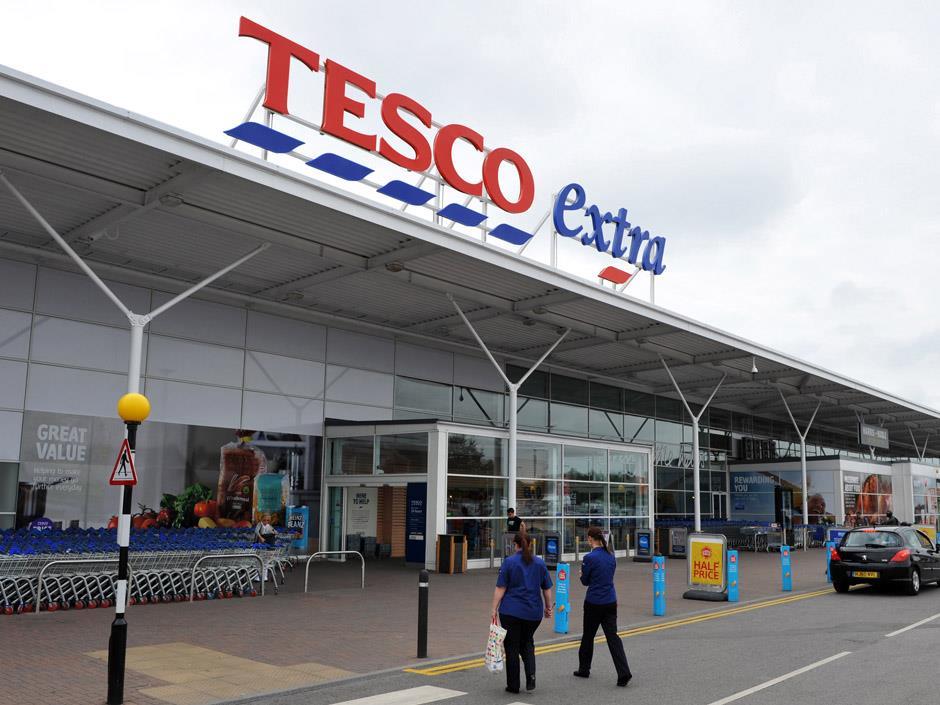
Tesco plc: Britain’s Supermarket Giant and the Fight to Stay Dominant
A full business analysis and strategic review
Tesco is one of the great British business stories. It began with Jack Cohen selling surplus groceries from a market stall in London’s East End in 1919. It became a national grocer, then a supermarket chain, then a retail empire, then a global experiment, then a scandal-hit turnaround case, and today it is again the clear leader in UK grocery.
It is easy to think of Tesco as simply “the biggest supermarket”. That is true, but not enough. Tesco is more than a retailer. It is a logistics system, data business, loyalty platform, property operator, convenience-store network, wholesaler, online grocer, financial-services partner, supplier negotiator and national price-setter. It sits at the centre of British household spending.
The company’s current position is strong. In its 2025/26 preliminary results, Tesco reported sales excluding VAT and fuel of £66.6 billion, adjusted operating profit of £3.15 billion, free cash flow of £1.96 billion and UK market share of 28.5%, up 24 basis points year-on-year. Tesco also described this as its highest UK market share for a decade.
But Tesco’s dominance is not guaranteed. It has been bruised before. It lost focus in the early 2010s, over-expanded abroad, misread the rise of Aldi and Lidl, suffered a major accounting scandal in 2014, exited the United States after the failure of Fresh & Easy, and had to rebuild trust under Dave Lewis and then Ken Murphy. The question now is whether Tesco can maintain its dominance in a market that has become more value-conscious, more data-driven, more fragmented and more competitive.
The short answer is this: Tesco is likely to remain the UK’s dominant grocer for the foreseeable future, but only if it continues to behave as a disciplined value retailer rather than a comfortable incumbent.
1. Origins: Jack Cohen and the market-stall mentality
Tesco began in 1919, when Jack Cohen started selling surplus groceries from a market stall in Hackney, East London. The Tesco brand name first appeared in the 1920s, with the name generally traced to a combination of tea supplier T. E. Stockwell and Cohen’s own surname. The first Tesco store opened in 1929 in Burnt Oak, Edgware.
The early Tesco was shaped by Cohen’s famous philosophy: “pile it high and sell it cheap.” That phrase matters because it captures a principle that still sits underneath Tesco’s best moments. Tesco wins when it combines scale, volume, value and operational energy. It gets into trouble when it forgets the customer and becomes too focused on empire, complexity or financial engineering.
Cohen was not building a boutique food shop. He was building a mass-market retail machine. His insight was that ordinary households wanted reliable access to affordable groceries, and that scale could be used to lower prices, turn stock faster and expand aggressively.
This was not an elegant strategy. It was a practical one. Tesco’s DNA was not premium food theatre. It was value, volume and hustle.
Recap
Tesco’s origins matter because they explain its enduring strength. At its best, Tesco understands mass-market Britain better than anyone else. Its original promise was simple: make food and household goods available, affordable and convenient.
2. From small shops to supermarkets
Tesco’s early expansion followed the wider transformation of British grocery retail. The company grew through small shops, self-service stores, supermarkets and acquisitions. It floated on the London Stock Exchange in 1947 and opened its first self-service shop in St Albans in 1948, followed by its first supermarket in Maldon in 1956.
During the 1950s and 1960s, Tesco expanded heavily through acquisition, buying chains such as Williamson’s, Harrow Stores, Irwins, Charles Phillips and Victor Value. That acquisition-led approach helped Tesco build scale quickly, but it also created a sprawling estate and a reputation that, by the 1970s, was sometimes associated with basic quality and aggressive discounting rather than customer experience.
This period contains an important early lesson. Scale alone is not enough. Tesco’s “pile it high” approach created growth, but by the late twentieth century British consumers were becoming more demanding. They did not only want cheap food. They wanted better stores, better ranges, better quality, better service and more pleasant shopping.
The modern supermarket customer was changing, and Tesco eventually changed with them.
3. The shift from price merchant to customer-led supermarket
Tesco’s great strategic transformation came in the late twentieth century, particularly under Lord MacLaurin and then Sir Terry Leahy. Tesco moved from being seen as a basic value grocer to becoming a more rounded, customer-led supermarket business. It invested in larger stores, better ranges, fresh food, own-label quality, customer data and national scale.
The key strategic move was Tesco Clubcard, launched in 1995. Clubcard was more than a loyalty scheme. It was one of the most important data innovations in British retail. It gave Tesco a direct view of customer behaviour, allowing it to understand shopping patterns, personalise offers and make more informed decisions about ranging, promotions and store strategy. Contemporary accounts of the Clubcard development describe how Dunnhumby’s early analysis showed that Tesco could understand customer behaviour at a level that surprised the board.
Clubcard helped Tesco move from mass retailing to data-led mass retailing. That was a huge leap. It allowed Tesco to keep the advantages of scale while becoming more responsive to individual customer behaviour.
The timing was excellent. In the 1990s and 2000s, Tesco rose above Sainsbury’s and became the UK’s dominant supermarket. Its proposition broadened from food into general merchandise, clothing, petrol, banking, telecoms, online grocery, convenience stores and international retailing.
At its best, this was Tesco’s golden formula:
Large stores for the weekly shop.
Express stores for convenience.
Online for home delivery.
Clubcard for loyalty and data.
Own-label ranges for margin and customer choice.
Scale for price competitiveness.
A broad estate for reach.
That combination was extremely powerful. It made Tesco not just a supermarket, but a household infrastructure business.
4. The “Tesco everywhere” era
By the 2000s, Tesco was everywhere. It had Extra hypermarkets, Superstores, Metro stores, Express convenience shops, petrol stations, online delivery, Tesco Bank, Tesco Mobile, clothing through F&F, and growing international businesses. It was not simply gaining market share. It was becoming part of British daily life.
That brought benefits and risks.
The benefit was convenience. Customers could shop with Tesco in many ways: big weekly shop, top-up shop, petrol station, local convenience, online delivery, mobile phone, credit card and insurance. Tesco captured more of the household wallet.
The risk was resentment and strategic overreach. Critics described the rise of “Tescopoly”, arguing that Tesco had become too dominant in towns, supply chains and planning decisions. Its scale gave it power, but also made it a target. More importantly, Tesco’s size began to make the business complex.
Large companies can start to believe their own inevitability. Tesco was no exception. Its expansion into new categories and geographies made strategic sense in parts, but the combined result was a business that became harder to manage, easier to criticise and more exposed when trading conditions changed.
Recap
The “Tesco everywhere” era created a retail giant, but also created the conditions for later problems: complexity, arrogance, international distraction and a weakening connection with the core UK food customer.
5. Product and service expansion
Tesco’s product range expanded far beyond groceries. It developed strong own-label tiers, including value ranges, core Tesco products and premium Finest lines. It expanded into non-food, clothing, electricals, homeware, toys, petrol, financial services, telecoms, opticians, pharmacy and online marketplace activity.
This expansion followed a clear strategic logic. Once customers trusted Tesco and visited regularly, Tesco could sell more categories to the same households. That logic worked in some areas, but not all.
Own-label became one of Tesco’s greatest strengths. It allowed Tesco to compete at multiple price points, defend margin and offer alternatives to brands. In today’s value-conscious market, own-label is particularly important because customers increasingly compare quality and price across Tesco, Aldi, Lidl, Sainsbury’s and M&S.
Finest gave Tesco premium credibility. It allowed shoppers to trade up for occasions without leaving the Tesco ecosystem.
Everyday value and price-matching allowed Tesco to defend against Aldi and Lidl.
F&F clothing gave Tesco a non-food growth route, although clothing is no longer as central to Tesco’s strategic narrative as food, convenience and digital.
Tesco Bank was an attempt to monetise trust and customer data, but Tesco later moved away from full ownership of the banking operation. In 2024, Tesco agreed to sell most of Tesco Bank’s banking operations to Barclays, retaining insurance and money services through a partnership model. That decision reflected a broader trend: Tesco increasingly prefers to focus capital and management attention on retail, data, convenience and food rather than owning every adjacent activity itself.
The lesson is that Tesco can stretch its brand, but only when the extension strengthens the core customer relationship. When the extension becomes a distraction, Tesco is better off partnering, simplifying or exiting.
6. International expansion: ambition, achievement and overreach
Tesco’s international expansion was one of the most ambitious parts of its history. It built operations in Central Europe and Asia, and for a period it aimed to become a serious global retailer. Some markets worked better than others. Central Europe remains part of the group today, but other ventures were exited.
The most famous failure was the United States.
Tesco launched Fresh & Easy in the western United States in 2007. It was a bold attempt to create a different kind of neighbourhood grocery format: fresh food, prepared meals, smaller stores and a streamlined shopping experience. But it struggled badly. The concept failed to connect with enough American shoppers, the timing was hit by the financial crisis, and the business never achieved the scale or sales density required. Research and case analysis of Fresh & Easy commonly identifies wrong market assumptions, weak localisation, recession timing and flawed entry strategy as key factors.
Fresh & Easy was a major strategic mistake, but not because the idea was stupid. Tesco deserved some credit for trying something new. The mistake was believing that analytical confidence and operating discipline could overcome deep local market differences. American grocery behaviour, car use, coupon habits, store expectations, food culture, labour practices and regional competition were not simply variations of British retail.
The lesson was clear: retail does not globalise as easily as management presentations suggest.
Tesco eventually retreated from much of its overseas expansion and refocused on the UK, Ireland and Central Europe. That refocus was painful, but necessary.
7. The rise of Aldi and Lidl: the threat Tesco underestimated
The biggest structural threat to Tesco has not been Sainsbury’s, Asda or Morrisons. It has been Aldi and Lidl.
For many years, the discounters were treated as niche operators: useful for some shoppers, but not a full threat to mainstream supermarkets. That was a serious misreading. Aldi and Lidl improved quality, expanded ranges, opened more stores, invested in fresh food and trained customers to think differently about value.
The Competition and Markets Authority noted in 2023 that Aldi and Lidl’s combined market share had risen from under 6% in 2012 to nearly 18% by June 2023. The CMA also noted that discounter growth had coincided with falling average operating margins among the major supermarkets.
The discounters’ power came from simplicity:
Smaller ranges.
High own-label penetration.
Low operating complexity.
Fast stock turn.
Clear price perception.
Efficient stores.
Limited service layers.
Aldi and Lidl did not need to beat Tesco on everything. They only needed to change enough customer habits to reduce Tesco’s pricing power and force it to defend value more aggressively.
Tesco’s response has been strong in recent years. It has used Aldi Price Match, Clubcard Prices, sharper own-label ranges, better availability and supplier scale to narrow the gap. But the rise of Aldi and Lidl permanently changed the industry. Tesco can no longer assume that customers will pay more for range, brand and convenience without constant proof of value.
Recap
Aldi and Lidl did not destroy Tesco, but they forced Tesco to become better. The discounters reminded Tesco of its own origins: value, efficiency and customer focus.
8. The 2014 accounting scandal: Tesco’s lowest modern point
The darkest chapter in modern Tesco history was the 2014 accounting scandal, when Tesco overstated profits by recognising supplier income too early and delaying cost recognition. Tesco entered into a Deferred Prosecution Agreement in 2017, and the Serious Fraud Office settlement included a £129 million fine relating to historic accounting practices.
The scandal was devastating because it struck at the company’s credibility. Retail is a low-margin business, and supplier income is technically complex. But complexity does not excuse weak controls or cultural pressure. The scandal suggested that Tesco had become too focused on meeting numbers and not focused enough on transparent performance.
The timing made matters worse. Tesco was already under pressure from discounters, weak UK trading, international failures and strategic drift. The accounting issue confirmed that the company needed more than a trading reset. It needed a cultural reset.
Dave Lewis, who joined from Unilever, became chief executive in 2014 and led the turnaround. His task was brutally clear: restore trust, rebuild the balance sheet, simplify the business, refocus on customers and stop pretending Tesco could grow its way out of every problem.
This was a classic turnaround case. Tesco had to rediscover the basics: price, availability, service, stores, cash, controls and credibility.
9. The Dave Lewis turnaround: back to the core
Dave Lewis inherited a business that had lost focus. His turnaround was built on simplification and trust.
Tesco sold or exited non-core assets, cut costs, repaired supplier relationships, simplified ranges, improved pricing and refocused on UK food retail. It accepted that it could not be everything everywhere. The sale of overseas operations and non-core interests allowed management to concentrate on the main business.
The Booker merger, announced in 2017 and completed in 2018, was a key strategic move. Tesco and Booker described the combination as creating the UK’s leading food business, bringing together retail and wholesale expertise, supply chain capability and digital capacity to serve both “in home” and “out of home” food markets. The deal valued Booker at approximately £3.7 billion and promised revenue and cost synergies.
The strategic logic was strong. Booker gave Tesco access to wholesale, catering, symbol stores and independent retail. It also broadened Tesco’s exposure from household grocery shopping to food consumed away from home. This mattered because food retail was becoming more fragmented: people were eating at home, buying lunch on the go, ordering delivery, shopping in convenience stores and using local independents.
Booker also helped Tesco participate in convenience and wholesale without relying solely on its own store estate.
However, Booker brought reputational and competition challenges. Some independent retailers have since accused Tesco and Booker of pricing and supply practices that disadvantage local shops, particularly where Tesco retail prices undercut products available to independents through Booker. Tesco disputes such criticisms, but the issue highlights the tension of owning both a dominant supermarket chain and a major wholesale supplier.
The Booker acquisition was therefore strategically clever, but not without stakeholder risk.
10. The Ken Murphy era: Clubcard, value and data-led dominance
Ken Murphy became chief executive in 2020, taking over a business already stabilised by Dave Lewis. His task was different. Lewis had to rescue Tesco. Murphy had to grow it again without losing discipline.
Tesco’s recent strength rests on four pillars:
Clubcard Prices.
Aldi Price Match.
Strong availability.
Data-led personalisation.
Clubcard Prices has become one of Tesco’s most powerful modern weapons. It changes the psychology of grocery shopping. Customers who use Clubcard feel they are getting better prices, while Tesco gains data, loyalty and promotional control. It also makes direct price comparison more complicated because the shelf price and the loyalty price are different.
Aldi Price Match performs a different role. It reassures customers that Tesco is not ignoring the discounters. It does not mean Tesco matches Aldi across the whole shop, but it reduces the perceived risk of choosing Tesco for essentials.
Together, these mechanics allow Tesco to sit in the middle of the market while defending both ends:
Cheap enough on essentials to stop mass leakage to Aldi and Lidl.
Broad enough in range to beat discounters on choice.
Premium enough through Finest to capture treat spending.
Convenient enough through Express and online.
Data-rich enough through Clubcard to personalise value.
That is why Tesco has been taking share again. In its 2025/26 results, Tesco reported UK market share of 28.5%, up year-on-year and described as a decade high.
The current Tesco is therefore not merely “big”. It is big, data-led and increasingly disciplined.
11. Current financial position
Tesco’s 2025/26 numbers show a business in good health, but not without pressure. On a 52-week comparable basis, sales excluding VAT and fuel rose 4.6% to £66.6 billion, adjusted operating profit rose 0.8% to £3.15 billion, free cash flow rose 11.8% to £1.96 billion, and net debt stood at £10.56 billion.
The modest adjusted operating profit growth compared with stronger sales growth tells us something important. Tesco is investing heavily in price, quality, service, distribution and digital capability. It is choosing to defend market position rather than simply maximise short-term margin.
Reuters reported that Tesco guided to adjusted operating profit of £3.0 billion to £3.3 billion for the year to February 2027, compared with £3.152 billion in 2025/26, while noting uncertainty from wider economic and geopolitical conditions.
The financial conclusion is this: Tesco is profitable, cash-generative and strategically strong, but grocery remains a low-margin, high-volume business. A few basis points of margin matter. Wage costs, energy, food inflation, supplier negotiations, promotional intensity and customer switching can all affect results quickly.
12. Market positioning: where Tesco sits today
Tesco’s current positioning is unusually strong because it covers multiple customer missions.
It is not the cheapest grocer. Aldi and Lidl still own the clearest discount perception.
It is not the most premium grocer. M&S and Waitrose own more of that space.
It is not the only convenience player. Co-op, Sainsbury’s Local, Morrisons Daily, One Stop and independent stores all compete.
It is not the only online grocer. Ocado, Sainsbury’s, Asda and Morrisons all matter.
But Tesco is the strongest all-rounder.
A simplified positioning map looks like this:
| Retailer | Core position | Main strength | Main weakness |
|---|---|---|---|
| Tesco | Mass-market leader | Scale, Clubcard, range, convenience, online | Must constantly defend value perception |
| Sainsbury’s | Mainstream quality-value | Improved food offer, Nectar, quality perception | Smaller scale than Tesco |
| Asda | Value-led big-box grocer | Price heritage, George, large stores | Strategic recovery still underway |
| Aldi | Hard discount | Price simplicity, own-label strength | Smaller range, limited online |
| Lidl | Hard discount plus bakery/fresh appeal | Fast growth, strong value perception | Smaller range, fewer services |
| Morrisons | Fresh food maker | Market Street, manufacturing, British food | Weaker share and debt pressure |
| M&S Food | Premium convenience and quality | Own-label quality, innovation | Expensive, not full weekly-shop range |
| Waitrose | Premium full-service grocer | Quality, service, affluent base | Price perception |
| Ocado | Online premium and range | Delivery, range, technology | Limited physical presence |
The Competition and Markets Authority described Tesco, Sainsbury’s, Asda and Morrisons as major supermarkets offering wide ranges across demographics, while Aldi and Lidl compete with smaller ranges, low prices and few frills. That distinction still explains much of the market structure.
Tesco’s central advantage is that it can defend against almost everyone. It can match discounters on selected essentials, compete with Sainsbury’s on mainstream quality, compete with convenience stores through Express, compete online, use Booker in wholesale, and use Finest to capture premium occasions.
That breadth is hard to copy.
13. Benchmarking Tesco against key competitors
Tesco versus Sainsbury’s
Sainsbury’s is Tesco’s strongest mainstream supermarket competitor. It has improved its value perception through Nectar Prices, focused on food quality and benefited from the weakness of Asda and Morrisons. But Tesco has greater scale, a larger convenience network, stronger Clubcard heritage and a broader data ecosystem.
Sainsbury’s can take share, but it is unlikely to overtake Tesco without a major structural change in the market.
Tesco versus Asda
Asda historically challenged Tesco on price. Today, Asda is in recovery mode after ownership change, debt, IT separation from Walmart and market share pressure. The Guardian reported in June 2026 that Asda’s chair Allan Leighton is trying to stabilise the business, modernise systems and rebuild value credentials, while Asda sits only narrowly ahead of Aldi.
Asda could recover, but Tesco’s current execution is significantly stronger.
Tesco versus Aldi
Aldi remains the most important price threat. It has trained shoppers to trust limited-range, own-label, low-price retailing. Tesco’s answer is not to become Aldi. It is to reduce the price gap enough that customers choose Tesco for range, convenience and trust.
Tesco versus Lidl
Lidl is growing quickly and has overtaken Morrisons to become the fifth-largest supermarket in Great Britain, with reported market share of 8.6% in May 2026. Lidl’s bakery, fresh food, seasonal ranges and store expansion make it a serious long-term threat.
Tesco versus Morrisons
Morrisons has a credible fresh food story, but it is financially and strategically weaker. Tesco has stronger market share, loyalty data, convenience and online capability.
Tesco versus M&S and Waitrose
M&S and Waitrose attack Tesco from the premium end. Tesco’s Finest range is the defence. Tesco does not need to beat M&S on premium quality. It needs to stop mainstream customers from leaving Tesco for premium occasions.
Tesco versus Amazon
Amazon is a long-term structural threat, but not yet a Tesco-killer in UK grocery. Grocery is operationally difficult, low margin and perishable. Amazon has increasingly used partnerships rather than relying only on its own physical grocery estate. Tesco’s store network and online grocery capability remain strong advantages.
14. PESTLE analysis
Political and regulatory
Tesco is politically exposed because food prices affect every household. Government, regulators and the media pay close attention to supermarket pricing, supplier treatment, loyalty schemes, competition, business rates, employment conditions and food security.
The CMA’s grocery work noted that discounters had gained share, supermarket margins had fallen over the previous decade, and grocery competition remained intense. It also found that price is not the only consideration for customers, who also consider range, convenience and quality.
Economic
Tesco is exposed to food inflation, wage costs, energy, logistics, rent, interest rates and consumer confidence. In a cost-of-living squeeze, Tesco can gain if it is trusted on value, but it can also lose customers to Aldi and Lidl if shoppers feel Tesco is too expensive.
The current environment rewards retailers that can combine price investment with operational efficiency. Tesco’s scale gives it an advantage, but also means its decisions are highly visible.
Social
Customers want value, but they also want convenience, quality, fresh food, healthy choices, ethical sourcing, premium treats, rapid delivery and easy shopping. The market is not simply moving downmarket. It is fragmenting. The same household may shop at Aldi for basics, Tesco for a main shop, M&S for treats and Amazon for household products.
Tesco’s strength is that it can serve multiple missions. Its weakness is that it must avoid becoming bland.
Technological
Technology is central to Tesco’s future. Clubcard, online grocery, Whoosh rapid delivery, retail media, AI, forecasting, personalised offers, automated distribution, digital shelf-edge pricing and supplier data all matter.
Tesco’s 2025/26 presentation emphasised using reach, data and AI to unlock long-term growth opportunities.
Legal
Tesco must manage food safety, employment law, competition law, supplier codes, data protection, product labelling, planning law, financial regulation through partnerships, and sustainability reporting.
The 2014 accounting scandal remains a warning that governance failures in a low-margin business can be severe.
Environmental
Tesco is exposed to food waste, packaging, agriculture, carbon emissions, transport, refrigeration, plastic, deforestation risk and supplier sustainability. Its scale means it can influence supply chains, but also attracts scrutiny.
PESTLE conclusion
Tesco operates at the intersection of household economics, national politics, technology and supply-chain complexity. Its size is an advantage, but it also means mistakes become public quickly.
15. SWOT analysis
Strengths
Tesco’s strengths are substantial: market leadership, Clubcard, scale, strong own-label architecture, online grocery, convenience stores, Booker wholesale, supplier buying power, logistics, brand trust, cash generation and data capability. Its 2025/26 market share of 28.5% shows that it is not merely defending its position, but currently gaining share.
Weaknesses
Tesco’s weaknesses include complexity, public scrutiny, thin grocery margins, dependence on the UK market, exposure to discounters, potential over-reliance on loyalty pricing, and reputational memory from past scandals. Its scale can also make it slower than smaller specialists in certain categories.
Opportunities
Opportunities include deeper personalisation through Clubcard, retail media, online growth, convenience expansion, rapid delivery, Booker synergies, private label growth, health and wellness, food-to-go, premium own label, automation, AI-led stock control and supplier collaboration.
Threats
The threats are Aldi and Lidl, Sainsbury’s improvement, Asda recovery, wage and energy inflation, supplier tension, political intervention, data privacy concerns, retail-media backlash, food inflation, online disruption, and possible future consolidation among rivals.
SWOT conclusion
Tesco’s strongest defence is not size alone. It is the combination of size, data, price investment, range and convenience. Its biggest danger is complacency.
16. Porter’s Five Forces
Competitive rivalry: very high
UK grocery is brutally competitive. Tesco faces full-line supermarkets, discounters, premium grocers, convenience chains, online retailers, wholesalers, foodservice operators and delivery platforms. Rivalry is high because grocery is frequent, price-sensitive and low-margin.
Buyer power: high
Customers can switch easily. They can split shops across Aldi, Lidl, Tesco, M&S, Amazon and local stores. Clubcard reduces switching, but does not eliminate it.
Supplier power: mixed
Tesco has enormous buying power, but major branded suppliers also have leverage. Supplier relationships are delicate because Tesco must balance price investment, margin, availability and public fairness.
Threat of substitutes: high
Substitutes include eating out, meal delivery, farm shops, local butchers, Amazon, discount chains, convenience stores, meal kits and direct-to-consumer food brands.
Threat of new entrants: low in full-line grocery, high in specific missions
A new national supermarket chain is unlikely. But new entrants can attack pieces of the market: rapid delivery, meal kits, online speciality, frozen food, premium meals, health products or household essentials.
Five Forces conclusion
Tesco’s market is structurally difficult, but Tesco is one of the few businesses with the scale and data to defend across multiple fronts.
17. BCG-style portfolio review
UK large stores: cash engine
Tesco’s large supermarkets and Extras remain central. They support volume, range, online picking, customer loyalty and supplier scale. They are mature, but still vital.
Tesco Express and convenience: growth and defensive platform
Convenience is strategically important because shopping habits are fragmented. Tesco Express allows Tesco to capture top-up missions, urban customers, commuters and local shoppers.
Online grocery: strategic necessity
Online grocery is not always easy to make highly profitable, but Tesco cannot afford to underplay it. The CMA noted that online grocery accelerated during Covid and remains a significant channel.
Clubcard and data: star asset
Clubcard is arguably Tesco’s most powerful strategic asset after its store network. It drives loyalty, pricing, personalisation and retail media.
Booker: strategic platform with stakeholder risk
Booker gives Tesco wholesale and foodservice reach, but also creates tension with independent retailers who may feel disadvantaged by Tesco’s dual role.
Tesco Bank: reduced strategic priority
The Barclays transaction shows Tesco moving towards partnership rather than full banking ownership. This is sensible if it frees capital and management attention for retail.
Central Europe: useful but secondary
Central Europe provides diversification, but Tesco’s strategic heart is the UK and Ireland.
Non-food and marketplace: opportunity, but caution required
Tesco’s non-food marketplace can extend choice, but it must avoid repeating the old mistake of becoming distracted from food retail.
18. Ansoff Matrix: growth options
Market penetration
Tesco can grow by increasing basket size, frequency and loyalty among existing UK customers. Clubcard Prices, Aldi Price Match, Finest, online, Whoosh and personalised offers all support this.
Market development
Tesco’s scope for major UK supermarket expansion is limited, but convenience, urban formats, rapid delivery and Booker-supported wholesale channels offer market development opportunities.
Product development
Tesco can develop more premium own-label food, healthier products, meal solutions, food-to-go, plant-based ranges, private-label household products, personalised offers and retail-media products.
Diversification
Diversification should be cautious. Tesco has learned that not every adjacent opportunity deserves ownership. Partnerships, such as the Barclays banking arrangement, may be preferable to full diversification.
Ansoff conclusion
Tesco’s future growth is most likely to come from deeper share of existing customer spend, data-led pricing, convenience, online and wholesale, not from a return to grand international expansion.
19. Pricing analysis: the battle for value perception
Pricing is the heart of Tesco’s current strategy.
Tesco does not need to be cheaper than Aldi on every item. It needs customers to believe that shopping at Tesco will not punish them financially. That is different.
Aldi and Lidl have a powerful simple message: low prices every day. Tesco has a more complex value architecture:
Aldi Price Match.
Clubcard Prices.
Everyday Low Prices.
Own-label tiers.
Finest for trade-up.
Promotions.
Personalised coupons.
This complexity is both powerful and risky. It allows Tesco to target value more precisely, but it can also make customers suspicious if non-Clubcard prices look inflated. Regulators and consumer groups have scrutinised loyalty pricing across the sector, and Tesco must ensure that Clubcard Prices feel like genuine value rather than pricing theatre.
The CMA observed that retailers do not passively track competitors’ prices, but use conscious and adaptive pricing strategies, and that consumers respond to perceived value by switching.
Tesco’s challenge is therefore to keep pricing credible. If customers trust Clubcard, it is a moat. If customers start to see it as manipulation, it becomes a reputational risk.
20. Mistakes and management lessons
1. International overreach
Tesco expanded internationally with confidence, but retail is highly local. The Fresh & Easy failure showed that data and capital cannot substitute for deep cultural and market understanding.
2. Losing focus on the UK customer
In the early 2010s, Tesco became stretched across geographies and categories. The UK core weakened just as Aldi and Lidl were improving.
3. Underestimating discounters
Tesco and other major supermarkets underestimated how far Aldi and Lidl could move into mainstream shopping habits. The discounters did not need to copy Tesco. They changed the rules.
4. Accounting and culture failure
The 2014 accounting scandal was not simply a technical issue. It reflected pressure, weak controls and a culture that needed rebuilding.
5. Complexity became a hidden cost
Tesco’s broad empire created operational and managerial complexity. The turnaround required simplification.
6. Non-food was overplayed
Large non-food ranges worked for a time, but online competition and changing store economics weakened the logic. Tesco’s future is food-led, not general merchandise-led.
7. Scale created public backlash
Tesco’s dominance made it powerful, but also vulnerable to political, media and supplier criticism. The bigger Tesco becomes, the more carefully it must manage trust.
Recap
Tesco’s mistakes were not random. They came from the same source: confidence becoming overconfidence. The turnaround worked because Tesco returned to discipline.
21. Stakeholder analysis
Customers
Customers want value, availability, quality, convenience and trust. Tesco’s success depends on remaining relevant to ordinary households while also serving premium, health-conscious and time-poor customers.
Employees
Tesco is one of the UK’s largest private employers. Labour costs, morale, training, automation and service quality are all critical.
Suppliers
Tesco’s scale gives it buying power, but suppliers need fair relationships and predictable terms. Supplier pressure can damage availability and reputation.
Investors
Investors want profit growth, cash generation, dividends, buybacks and strategic discipline. Tesco’s 2025/26 free cash flow performance and buyback activity have supported investor confidence.
Regulators
The CMA, Groceries Code Adjudicator, FCA-related bodies, data regulators and government all matter. Tesco’s size guarantees scrutiny.
Communities
Tesco stores are local employers and community anchors, but they also compete with independent shops. The Booker relationship adds further sensitivity.
Technology partners
Data, AI, retail media, online fulfilment, payments and logistics partners will become increasingly important.
22. Tesco and the future of grocery data
Tesco’s future advantage may be less about shelf space and more about customer intelligence.
Clubcard is no longer just a reward scheme. It is a data engine. It allows Tesco to understand who buys what, when, where and in response to which prices. That information supports:
Personalised offers.
Supplier-funded promotions.
Retail media.
Stock planning.
Range optimisation.
Price investment.
Customer segmentation.
AI-led recommendations.
This creates a powerful flywheel. More customers using Clubcard creates more data. More data creates better offers. Better offers create more loyalty. More loyalty creates more supplier value.
But the flywheel has reputational risk. Customers may become uneasy if personalisation feels intrusive. Regulators may scrutinise loyalty pricing. Suppliers may resist data monetisation if they feel Tesco captures too much value.
Tesco must therefore make data feel like a customer benefit, not simply a corporate asset.
23. Will Tesco maintain dominance over the UK grocery market?
My assessment is yes, but with qualifications.
Tesco is likely to remain the UK’s largest grocer over the next five to ten years because:
Its market share lead is very large.
Clubcard is deeply embedded.
Its store network is unmatched.
It has strong online grocery capability.
It has convenience reach.
It has Booker wholesale.
It has supplier scale.
It has rebuilt value credibility.
Its main traditional rivals are weaker than Tesco.
Aldi and Lidl will continue growing, but their model has limits. They cannot easily offer Tesco’s full range, online scale, convenience network, premium tier, wholesale platform and data ecosystem without losing some of their simplicity.
Sainsbury’s can gain share, but overtaking Tesco would require a dramatic shift.
Asda may recover, but it is currently repairing its own business.
Morrisons is unlikely to challenge Tesco’s leadership in the near term.
Amazon remains a long-term threat, but grocery is difficult and Tesco’s physical network is a major advantage.
The bigger risk is not that one rival overtakes Tesco. It is that Tesco’s share is gradually eroded from many directions: Aldi on basics, Lidl on value and fresh, M&S on premium, Amazon on household and convenience, Sainsbury’s on mainstream quality, and local stores on top-up shopping.
Tesco can maintain dominance, but not by standing still.
24. Future scenarios
Scenario 1: Tesco remains dominant and disciplined
This is the most likely scenario. Tesco maintains market share around the high 20s, continues to invest in Clubcard Prices, Aldi Price Match, online, convenience and retail media, and uses cost savings to fund price investment. It remains the clear UK leader.
Scenario 2: Tesco grows into a data-led retail platform
In this stronger scenario, Tesco becomes not just a supermarket but a retail data and media platform. Clubcard, AI, supplier insight, personalised offers and marketplace growth become major profit drivers.
Scenario 3: Margin pressure intensifies
In this scenario, Tesco keeps sales strong but profits are squeezed by wages, energy, price competition and supplier tension. It remains dominant, but investor returns weaken.
Scenario 4: Discounters resume rapid share gains
If household budgets tighten sharply, Aldi and Lidl could gain another wave of share. Tesco would respond with more price investment, which would defend share but pressure margins.
Scenario 5: Regulatory and political intervention rises
If loyalty pricing, supplier terms, food inflation or market dominance become politically contentious, Tesco may face stronger regulation or public pressure.
Scenario 6: Market consolidation reshapes the field
If Asda or Morrisons struggle further, consolidation speculation may increase. Any major grocery merger would face heavy CMA scrutiny, but structural change among weaker rivals could indirectly strengthen Tesco’s position.
25. Strategic recommendations
Tesco should focus on eight priorities.
First, protect value perception. Clubcard Prices and Aldi Price Match must remain credible, simple and trusted.
Second, keep improving own-label quality. Own-label is Tesco’s best defence against both discounters and brands.
Third, use data carefully. Personalisation should feel helpful, not manipulative.
Fourth, continue simplifying operations. Complexity was a historic weakness and must not return.
Fifth, invest in stores. Physical retail still matters, especially for fresh food, trust and convenience.
Sixth, grow online profitably. Online grocery is essential, but it must be operationally efficient.
Seventh, manage Booker fairly. Tesco must avoid the perception that it is using wholesale power to weaken independent retailers.
Eighth, avoid grand distractions. Tesco’s future is not a return to global empire-building. It is disciplined dominance in food, data, convenience and adjacent services.
Conclusion: Tesco’s advantage is scale, but its future depends on humility
Tesco is a British success story, but not a simple one.
It began with Jack Cohen’s market-stall instincts: buy well, sell cheaply, move quickly and understand ordinary customers. It grew into the UK’s dominant supermarket through scale, acquisitions, self-service, supermarkets, Clubcard, convenience, online and operational ambition.
Then it lost its way. It over-expanded, underestimated discounters, became too complex, failed in the United States and suffered a major accounting scandal. Those mistakes nearly broke the aura of inevitability around the business.
The recovery was built on returning to basics: value, trust, availability, cash, data, stores and customers.
Today, Tesco is again in a strong position. Its 2025/26 results show rising sales, strong cash flow, a decade-high UK market share and continuing investment in value, quality and service.
Will it maintain dominance? Probably yes.
But dominance will look different from the old Tesco era. It will not be based on endless hypermarket expansion or global conquest. It will be based on data, loyalty, price credibility, convenience, online, wholesale, own-label strength and operational efficiency.
Tesco’s biggest danger is not Aldi, Lidl, Amazon or Sainsbury’s individually. Its biggest danger is forgetting the lesson of its own history: when Tesco becomes arrogant, it stumbles; when it listens to customers, it wins.
The future Tesco should be less empire and more engine.
A national food engine.
A data engine.
A convenience engine.
A value engine.
If it keeps those working together, Tesco is likely to remain Britain’s dominant grocer for many years yet.