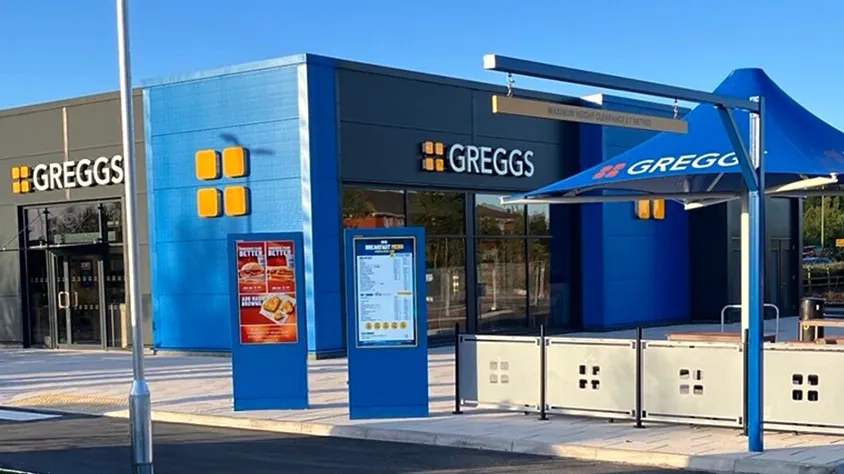
Greggs: From North East Bakery to Britain’s Food-to-Go Powerhouse
A full business analysis and strategic review
Greggs is one of the most remarkable British retail stories of the last century. It began as a small North East bakery business, delivering eggs and yeast by pushbike to families in Newcastle. Today it is a nationwide food-to-go retailer with more than 2,700 shops, a major manufacturing and logistics network, a fast-growing app, delivery partnerships, supermarket grocery ranges, franchise locations, travel hub formats and ambitions to serve significantly more than 3,000 UK shops over the long term.
What makes Greggs interesting is not simply that it grew. Lots of retailers grow. The more interesting point is that Greggs changed what it was. It moved from being a traditional high street baker into a modern fast-food, coffee, breakfast, lunch, dinner and convenience retailer. It did so without losing its plain-speaking, value-led identity.
That is a difficult trick. Many heritage brands modernise and lose their soul. Greggs modernised while becoming more Greggs.
Yet the next chapter will be harder. Greggs now faces questions about whether Britain has reached “peak Greggs”, whether its new stores risk cannibalising existing ones, whether consumer health trends will reduce demand for pastries and sweet treats, and whether the business can maintain margins while wages, rents, food costs and investment spending rise. Reuters reported in March 2026 that Greggs’ underlying pre-tax profit fell 9.4% in 2025, even though sales rose 6.8% to £2.15 billion.
The strategic question is therefore not whether Greggs is successful. It clearly is. The better question is whether Greggs can continue growing without over-stretching the model that made it successful in the first place.
1. The origins: a very North East business
Greggs began in 1939 when John Gregg started delivering eggs and yeast by pushbike to families in Newcastle. Ten years later, he opened Greggs of Gosforth on Gosforth High Street, making and selling fresh bread and bakery products from his own shop. Greggs still refers to that origin story as central to its brand identity.
This matters because Greggs did not begin as a fast-food chain. It began as a local bakery, rooted in everyday household food. Its early proposition was practical: fresh bread, good value, local service and trust.
After John Gregg died in 1964, his son Ian Gregg took over the business and began developing the in-shop bakery concept. The Greggs Foundation history records 1964 as the point when Ian Gregg took over and started building the shop-based model that would eventually become the national chain.
The early Greggs story is therefore not a glamorous consumer-brand story. It is a family business story: local, disciplined, practical and food-led.
Recap
Greggs began as a local bakery business, not as a national fast-food brand. That heritage still matters because customers see Greggs as familiar, unpretentious and value-led.
2. Organic growth and regional acquisitions
Greggs grew first through regional expansion and then through acquisition. After its North East beginnings, it expanded outside its home region in the 1970s, including into Scotland and other parts of England. Company history sources record acquisitions including Rutherglen in Glasgow, Thurston’s in Leeds, Broomfields, Bowketts, Tooks and Price’s in Manchester during the 1970s.
This approach was logical. Greggs was not trying to build a single national brand overnight. It was acquiring local and regional bakery chains, then gradually bringing them into a wider operating model. That gave it access to shops, local customers, production capacity and management knowledge.
In 1984, Greggs began trading on the London Stock Exchange. At that point, it had already grown into a sizeable regional bakery group. The listing gave it access to capital and helped fund its next stage of expansion.
The most significant acquisition came in 1994, when Greggs bought the retail baking interests of Allied Bakeries, including Bakers Oven. That deal added 424 shops and nearly doubled the size of the company. Bakers Oven was particularly important because it strengthened Greggs in areas where it was less represented, including parts of the South East.
The Bakers Oven acquisition was a turning point. Greggs was no longer simply a northern bakery chain expanding gradually. It was becoming a national operator.
3. The move to one brand
For a time, Greggs operated multiple regional names and brands. This made sense historically because many acquired bakery businesses had local recognition. But over time, the advantage shifted towards one national identity.
In 2008, Greggs rebranded the remaining Bakers Oven shops as Greggs. That decision was important because it allowed national advertising, consistent customer recognition and a clearer brand proposition.
This was one of the most important strategic choices in Greggs’ history. A collection of regional bakery chains can be loved locally, but a national food-to-go brand needs scale, consistency and marketing efficiency.
The rebrand also made Greggs easier to understand. It was not trying to be Bakers Oven in one place, Braggs somewhere else and Greggs somewhere else again. It was becoming one brand with one promise: quick, affordable, familiar food.
Recap
The move to one Greggs brand helped turn a bakery group into a national retail proposition. It simplified the business and created the platform for mass-market growth.
4. The big strategic pivot: from bakery to food-to-go
The most important strategic shift in modern Greggs was the move away from being mainly a traditional baker and towards being a food-to-go retailer.
This was not cosmetic. It changed products, stores, shop locations, opening hours, marketing, supply chain and customer perception. The logic was simple: supermarkets had become too strong in take-home bread and baked goods. Greggs could not easily beat them on loaves, multipacks and household bakery staples. But it could win on freshly prepared food for immediate consumption.
A 2016 Guardian interview with then-chief executive Roger Whiteside described how Greggs repositioned itself from a “take-home” bakery to a “food-on-the-go” brand because it realised it would not win against supermarkets in take-home baked goods.
That pivot was strategically excellent. Greggs stopped fighting the wrong battle and focused on where it had real advantage: hot savouries, sandwiches, coffee, breakfast, snacks and quick meal occasions.
The change also shifted Greggs’ competitive set. It was no longer just competing with local bakers. It was competing with McDonald’s, Subway, Pret, Costa, supermarkets, convenience stores, petrol forecourts and coffee shops.
This was brave because it risked alienating some traditional customers. But it was necessary. The old bakery market was not where the growth was. Food-to-go was.
5. Product range expansion: from bread to bakes, breakfast, coffee and dinner
Greggs’ product evolution shows how carefully it has expanded.
The core remains savoury bakery: sausage rolls, steak bakes, chicken bakes, cheese and onion bakes, pasties, slices and other hot baked products. These are the emotional heart of the brand. But Greggs has added sandwiches, baguettes, salads, sweet bakery, doughnuts, hot drinks, breakfast rolls, pizza, wedges, goujons, hot food boxes, vegan products, grocery ranges and delivery-specific items.
Greggs’ current strategy page describes it as a modern food-on-the-go retailer offering freshly prepared food at low prices, with its own manufacturing and logistics helping keep prices down.
Coffee is particularly important. Greggs’ freshly ground Fairtrade espresso range helped it move into a daily habit category. In 2026, industry reporting said Greggs had overtaken Costa Coffee to become the UK’s largest branded coffee operator by outlet count, with 2,737 outlets compared with Costa’s 2,707.
That does not mean Greggs is a premium coffee brand. It means it has become a mass-market coffee access brand. The customer proposition is not “the best coffee in town”. It is “good enough coffee, available everywhere, at a fair price, with food”.
Breakfast has also become a major strength. Greggs’ 2025 preliminary results said it remained the number one brand in food-to-go breakfast, according to Circana.
Evening trade is the next growth frontier. Greggs reported that around 2,000 shops were open beyond 5pm in 2025, with evening sales representing 9.4% of company-managed shop sales and remaining its fastest-growing daypart.
The direction is clear: Greggs wants to move from bakery snack to all-day food-to-go.
6. The vegan sausage roll: product innovation as cultural moment
The 2019 vegan sausage roll was one of the most successful UK product launches of recent years. It was not merely a new product. It was a marketing event.
Reuters reported in July 2019 that vegan sausage rolls helped bring more customers into Greggs shops and contributed to a 58% rise in first-half profit.
The product worked for several reasons. It broadened Greggs’ customer appeal. It gave the brand relevance with younger, flexitarian and plant-based consumers. It created social media attention. It also allowed Greggs to appear progressive without becoming preachy or abandoning its core.
The vegan sausage roll also showed something important about Greggs’ brand tone. Greggs can be funny. It can participate in popular culture. It can take criticism and turn it into publicity. YouGov described the launch as a strong example of social media and publicity driving brand awareness.
This was a strategic breakthrough. Greggs had already been modernising. The vegan sausage roll made that modernisation visible.
Recap
The vegan sausage roll succeeded because it was commercially sensible, culturally timely and completely consistent with Greggs’ tone: accessible, witty and value-led.
7. Current business model: simple at the front, complex behind the scenes
Greggs looks simple to the customer. You walk in, buy a sausage roll, coffee, sandwich or pizza slice, and leave. Behind that simplicity is a highly controlled manufacturing and logistics operation.
Greggs’ own strategy describes its business model around manufacturing, logistics, people, customer channels and customer relationships. It makes food in its own manufacturing centres, moves products through its own logistics network, operates company-managed shops, works with franchise partners, sells through delivery and wholesale, and uses the Greggs App to build loyalty.
This vertical integration is one of Greggs’ major strengths. It allows consistency, cost control, product development and supply chain efficiency. It also allows Greggs to offer low prices while maintaining margins.
But it also creates fixed cost. Manufacturing sites, distribution centres, vehicles, technology systems and shop networks need scale. Greggs must keep growing sales to make the infrastructure pay.
That is why the current investment programme matters. Greggs is building new National Distribution Centres in Derby and Kettering to increase logistics capacity to 3,500 shops. Its 2025 preliminary results said Derby would add frozen capability and production capacity, while Kettering would support chilled and ambient goods through increased automation.
This is not just operational detail. It is strategy. Greggs is building the back-end infrastructure for the next stage of growth.
8. Financial position: growth, but margin pressure
Greggs delivered total sales of £2.151 billion in 2025, up 6.8% on 2024. Company-managed like-for-like sales rose 2.4%. However, underlying operating profit fell 4.0% to £187.5 million, underlying profit before tax fell 9.4% to £171.9 million, and statutory pre-tax profit fell 17.9% to £167.4 million.
That is the key tension in the business. Greggs is still growing sales, but profits have come under pressure. The company blamed challenging market conditions, weather disruption, cost pressures and the impact of heavy investment.
Capital expenditure peaked at £287.5 million in 2025 and is expected to reduce to around £200 million in 2026, then to £150 million to £170 million from 2027 onwards. Greggs says free cash generation should improve as investment requirements reduce.
This makes 2026 to 2028 an important period. Greggs has been investing heavily ahead of future growth. Investors will now want to see that investment convert into higher returns, not just more shops.
9. Market positioning: where Greggs sits
Greggs occupies a powerful position in the UK market.
It is cheaper than Pret.
It is more bakery-led than McDonald’s.
It is more food-led than Costa.
It is more convenient than many independent cafés.
It is more emotionally familiar than most supermarket grab-and-go ranges.
Its real positioning is not “bakery”. It is affordable everyday food-to-go.
Greggs’ 2025 preliminary results said it increased its share of food-to-go visits by 0.5 percentage points to 8.6% for the year to December 2025, based on Circana data. It also said Greggs was a top-four brand across all dayparts and in delivery.
A simple positioning map would place Greggs as follows:
| Brand | Main strength | Customer perception |
|---|---|---|
| Greggs | Value, speed, bakery food, breakfast, convenience | Familiar, affordable, everywhere |
| McDonald’s | Scale, speed, drive-thru, hot meals | Fast, cheap, consistent |
| Pret | Freshness, urban lunch, premium convenience | More expensive, city-focused |
| Costa | Coffee, seating, familiarity | Coffee-led, mainstream |
| Subway | Customisation, sandwiches | Functional, declining clarity in some markets |
| Supermarkets | Meal deals, value, range | Cheap and convenient |
| Independents | Quality, local appeal, atmosphere | Less consistent, often pricier |
Greggs’ magic is that it sits between fast food, bakery, coffee and convenience. It is not the best at everything, but it is good enough at many things, at a price customers understand.
10. Competitive benchmarking
Greggs’ competitors attack from several directions.
McDonald’s competes on breakfast, coffee, value, drive-thru and hot food. It has stronger seating, drive-thru infrastructure and global systems. Greggs has stronger bakery identity and arguably more everyday British familiarity.
Costa competes on coffee and morning routines. Greggs has overtaken Costa by outlet count, but Costa still has stronger coffee-shop credentials and more seating-led occasions.
Pret competes on city lunch, freshness, sandwiches, salads and office worker habits. Greggs is much cheaper and more national, but Pret has more premium appeal.
Supermarkets compete through meal deals. Tesco, Sainsbury’s, Morrisons, M&S and Co-op all attack lunch, breakfast and food-to-go. Co-op has recently been reported as expanding smaller food-to-go stores, which directly overlaps with Greggs’ convenience territory.
Independent cafés and bakeries compete on quality and local identity. They cannot match Greggs’ scale, but they can beat it on authenticity, coffee quality or premium bakery.
The key point is that Greggs does not face one competitor. It faces a battle for occasions: breakfast, lunch, snack, coffee, delivery, dinner, travel, petrol station, shopping centre and workplace.
11. PESTLE analysis
Political and legal
Greggs is exposed to VAT rules, employment law, food safety regulation, planning, business rates, packaging rules and nutritional policy. The 2012 “pasty tax” controversy showed how sensitive the business can be to tax treatment of hot takeaway food. Greggs warned at the time that the proposed VAT change could materially affect profits and lead to store closures; the government later altered the proposal after public opposition.
Economic
Greggs is exposed to consumer confidence, wages, food inflation, energy, rents and transport costs. In March 2026, Reuters reported that Greggs’ sales growth slowdown was being driven more by subdued consumer confidence than weight-loss drugs, according to chief executive Roisin Currie.
Social
Greggs benefits from demand for quick, affordable food. But it also faces changing dietary habits, including demand for higher-protein, higher-fibre and healthier options. Roisin Currie told Reuters that broader trends towards higher protein, higher fibre and healthy options were more significant than GLP-1 weight-loss drugs for Greggs’ trading.
Technological
The Greggs App, delivery platforms, self-service ordering screens, loyalty data, automation and supply chain systems are now central to growth. Greggs reported that its app was scanned in 26.7% of company-managed shop transactions in 2025, up from 20.1% in 2024.
Environmental
Greggs faces pressure on food waste, packaging, transport emissions and supply chain sustainability. Its 2025 preliminary results said it had introduced more efficient double-deck trailers, 25 urban artics and renewable HVO fuel at three sites, with 28% of fuel usage switched to a renewable source.
PESTLE conclusion
Greggs is well-positioned for value-led food-to-go, but it operates in a market where tax, labour costs, consumer health trends, technology and sustainability all matter.
12. SWOT analysis
Strengths
Greggs has a trusted national brand, clear value positioning, strong food-to-go market share, vertical integration, a large shop estate, strong breakfast credentials, a growing app, delivery partnerships and a supply chain being built for 3,500 shops.
Weaknesses
Its weaknesses are margin pressure, weather sensitivity, reliance on UK growth, possible overexposure, limited international experience, and a product range still associated with indulgence. Its 2025 profit decline shows that sales growth does not automatically protect earnings.
Opportunities
The biggest opportunities are retail parks, railway stations, airports, roadsides, supermarkets, smaller “Bitesize” formats, evening trade, delivery, grocery retailing, app engagement, healthier products and selected international trials. Greggs says future openings will focus on underrepresented locations such as retail parks, railway stations, airports, roadsides and supermarkets.
Threats
Threats include McDonald’s, Costa, Pret, supermarket meal deals, Co-op food-to-go, wage inflation, food cost inflation, consumer health trends, market saturation, cannibalisation and operational complexity.
SWOT conclusion
Greggs’ strengths remain powerful, but the business is entering a more mature phase. The easy growth may be behind it. Future growth must be more targeted.
13. Porter’s Five Forces
Competitive rivalry: high
Food-to-go is crowded. Greggs competes with fast food, supermarkets, cafés, coffee shops, convenience stores, petrol forecourts and delivery operators.
Buyer power: high
Customers can switch easily. A sausage roll, sandwich, coffee or lunch deal has many substitutes. Greggs reduces this risk through habit, value and convenience.
Supplier power: moderate
Greggs’ own manufacturing and logistics reduce supplier dependence, but food commodities, energy, labour and packaging remain important.
Threat of substitutes: high
Customers can bring food from home, buy supermarket meal deals, use delivery platforms, visit cafés or choose healthier alternatives.
Threat of new entrants: moderate
Opening one food-to-go outlet is easy. Building a national brand with manufacturing, logistics, app, property relationships and franchise partners is difficult.
Five Forces conclusion
Greggs operates in a structurally competitive market. Its advantage comes from scale, value, convenience and operational discipline.
14. BCG-style portfolio review
Core savouries: cash cow and brand engine
Sausage rolls, steak bakes and other savouries are the heart of Greggs. They drive footfall, recognition and habit. They must be protected.
Breakfast: star
Greggs is a leader in food-to-go breakfast. Breakfast has high repeat potential and fits coffee, rolls, bacon, porridge, egg pots and commuter routines.
Coffee: growth platform
Greggs is now a major coffee operator by outlet count. Coffee supports frequency, morning visits and add-on sales.
Evening trade: rising star
Evening is still a smaller part of sales, but it is growing quickly. Greggs reported evening sales at 9.4% of company-managed shop sales in 2025.
Delivery: useful but operationally complex
Delivery represented 6.8% of company-managed shop sales in 2025. Greggs said delivery basket values tend to be around three times walk-in basket values, but delivery also adds complexity and platform dependency.
Grocery retailing: question mark with upside
Greggs’ Bake at Home range with Iceland and Tesco extends the brand beyond shops. In 2025, Greggs added pastries to Iceland and launched elements of the range with Tesco, with products available in 800 larger Tesco stores and a subset planned for 1,900 Tesco Express stores from January 2026.
International: question mark
Greggs previously tried and failed in Belgium, closing a loss-making 10-shop operation in 2008. Its 2026 Tenerife airport trial is therefore best understood as a careful test, not a full international rollout.
15. Ansoff Matrix: growth options
Market penetration
Greggs can sell more to existing customers through app loyalty, meal deals, product innovation, breakfast frequency, better queue management and extended hours.
Market development
The biggest market development opportunities are underrepresented UK locations: transport hubs, retail parks, petrol forecourts, supermarkets, hospitals, universities and airports. Greggs opened 121 net new shops in 2025 and said more than half of new openings were in alternative sites such as petrol forecourts, supermarkets, retail parks, hospitals and university campuses.
Product development
Product opportunities include healthier items, protein-led breakfast, iced drinks, pizza, evening meals, hot boxes, lower-calorie savouries, vegetarian and vegan lines, and delivery-optimised products.
Diversification
Grocery, merchandise, international travel locations and self-service formats are diversification routes. These should remain close to the core brand. Greggs should avoid drifting into full restaurant, premium coffee shop or unrelated lifestyle territory.
16. Pricing analysis: value is the core moat
Greggs’ strongest strategic asset is value. Not cheapness alone, but value: familiar food, acceptable quality, quick service and a price that feels fair.
That value position is powerful during cost-of-living pressure. But it is also fragile because cost inflation can force price rises. Reuters reported in November 2024 that Greggs expected additional annual costs from tax and wage changes, although Roisin Currie said any price increases would only lift the average transaction value by “pennies”.
Greggs must avoid becoming too expensive for its core customer. If a sausage roll, coffee or lunch deal starts to feel like a treat rather than an everyday purchase, the brand weakens.
The right pricing strategy is therefore layered:
Keep hero products visibly affordable.
Use bundles for breakfast and lunch.
Use the app to reward frequent customers.
Offer premium or seasonal products without making the core feel expensive.
Protect value perception even when costs rise.
Greggs does not need to be the cheapest in every category. It does need customers to believe it is fair.
17. Mistakes, missed opportunities and management lessons
1. The Belgium experiment
Greggs’ previous overseas expansion into Belgium failed, with the company closing a loss-making 10-shop operation in 2008. The lesson is that Greggs is highly culturally specific. A sausage roll-led British bakery proposition does not automatically travel.
2. The risk of being too bakery-led for too long
Before the food-to-go pivot, Greggs risked being trapped in a declining traditional bakery position. Supermarkets had become too strong in take-home bakery. The Roger Whiteside-era repositioning solved that problem, but it could have been addressed earlier.
3. The Greggs Moment lesson
Greggs tested more coffee-shop-style formats, including Greggs Moment, but the concept did not become the future of the business. The lesson was useful: Greggs can improve stores and seating, but it should not pretend to be a premium café.
4. Health trends were once a weakness
Greggs has often been associated with indulgent bakery food. That is not necessarily bad, but it becomes a risk when consumer behaviour shifts towards protein, fibre, lower calories and weight management. Greggs is now responding with healthier options, but the brand must keep moving.
5. Growth can create cannibalisation risk
Greggs says it monitors new openings to avoid cannibalising existing shops and noted that 53% of 2025 new openings were in areas with no other Greggs within a mile. That is reassuring, but the risk will increase as the estate grows further.
6. Operational complexity is rising
Greggs used to be relatively simple: shops selling bakery food. It now has delivery, app loyalty, franchise, grocery, evening meals, self-service tests, travel hubs, supermarkets and large automated distribution centres. Complexity can quietly damage service and margins if not controlled.
18. Stakeholder analysis
Customers
Customers want value, convenience, speed, familiarity and increasingly healthier or more flexible choices. Greggs must keep its core customers while broadening appeal.
Employees
Greggs employs more than 33,000 people and has a strong reputation for sharing success with staff. The Guardian reported that Greggs paid a £20 million profit-share bonus to eligible staff despite lower profits in 2025.
Investors
Investors want proof that the heavy investment programme will restore returns. Greggs says its key focus is restoring return on capital employed to around 20%.
Franchise partners and landlords
Greggs’ growth increasingly depends on partners in petrol forecourts, transport hubs, supermarkets and other alternative sites. Its brand is attractive to landlords because it brings footfall and a reliable covenant.
Delivery platforms
Just Eat and Uber Eats extend Greggs’ reach, but they also create dependency and margin pressure. Greggs says three quarters of company-managed shops now accept orders via Just Eat and Uber Eats.
Communities
Greggs’ identity is still tied to local communities and value. It must be careful not to lose that social connection as it becomes bigger and more automated.
19. Where Greggs is likely to expand
Retail parks
Retail parks are a strong fit because they offer parking, family visits, commuting routes and shopping trips. They also suit breakfast, lunch and coffee.
Transport hubs
Railway stations, airports and bus interchanges are highly attractive. Greggs is already opening in railway stations and airports, including Manchester Airport, Leeds railway station, Dartford, St Pancras and Glasgow Airport.
Petrol forecourts and roadsides
Roadside sites fit Greggs perfectly: convenience, speed, hot food and coffee. Partnerships with forecourt operators can accelerate expansion without relying only on traditional high streets.
Supermarkets
Greggs can expand through in-store concessions and grocery products. Its relationship with Tesco and Iceland shows that the brand can work beyond its own shops.
Smaller formats
The “Bitesize Greggs” format is designed for high-footfall locations with limited space. The first opened at Sevenoaks railway station in November 2025, with more trial locations planned.
Self-service and express formats
Greggs is now trialling a self-service Greggs Express format at Glasgow Airport with Motor Fuel Group. The logic is speed and convenience for customers on the move.
International travel locations
The Tenerife South Airport store is a cautious but interesting move. Because Tenerife has heavy UK tourist traffic, it allows Greggs to test overseas demand without entering a fully unfamiliar local market.
20. Likely future scenarios
Scenario 1: Disciplined growth beyond 3,000 shops
This is the most likely positive scenario. Greggs continues opening around 100 to 150 net shops per year, focuses on underrepresented locations, improves app engagement, grows delivery and evening trade, and benefits from lower capital expenditure after 2026.
Scenario 2: Slower growth, higher returns
In this scenario, Greggs reduces the pace of openings and focuses more on refurbishments, operational efficiency, queue reduction, product quality and returns on capital. This may be the best scenario for shareholders if the UK estate becomes more mature.
Scenario 3: The evening opportunity works
Greggs becomes a serious dinner and delivery brand. Pizza, wedges, goujons, boxes and hot food extend the brand into evening occasions without losing the core. This would unlock more sales from existing shops.
Scenario 4: Peak Greggs
This is the risk scenario. Store growth begins to cannibalise existing sales, cost inflation remains stubborn, consumers become more health-conscious, and Greggs becomes overexposed. Sales still grow, but returns weaken.
Scenario 5: Careful international testing
Greggs may open more travel-led international sites in places with high British tourist flows, such as airports in Spain, Portugal or holiday destinations. A full European rollout is unlikely in the near term because the Belgium experience showed that Greggs does not automatically translate abroad.
21. Strategic recommendations
Greggs should focus on six priorities.
First, protect value. Greggs must remain affordable in the minds of ordinary customers.
Second, grow where it is genuinely underrepresented. Retail parks, transport hubs, roadsides, hospitals and universities are more attractive than simply adding more high street sites.
Third, keep the menu disciplined. Innovation matters, but too much complexity can slow service and increase waste.
Fourth, make evening trade work carefully. Dinner can grow, but Greggs should not become a confused takeaway restaurant.
Fifth, use technology to reduce friction. App ordering, loyalty, delivery management, self-service and queue analytics should make Greggs faster and easier.
Sixth, treat international expansion as testing, not conquest. Greggs is a British cultural brand. That is a strength at home, but a challenge abroad.
Conclusion: Greggs is not just a bakery anymore
Greggs is one of Britain’s best examples of strategic reinvention. It began as a local bakery business in Newcastle, grew through regional acquisitions, became a national chain, simplified under one brand, and then successfully repositioned itself as a modern food-to-go retailer.
Its genius lies in making mass-market convenience feel familiar rather than corporate. Greggs is everywhere, but it still feels oddly local. It is big, but not grand. It is commercial, but not polished to the point of blandness.
The future is promising, but more complicated than the past. Greggs now has to prove that it can keep growing without becoming overbuilt, overcomplicated or overpriced. The company is investing in supply chain capacity for 3,500 shops, opening new formats, growing delivery, extending into the evening, expanding grocery ranges and testing international travel sites.
The most likely future is not explosive international expansion or sudden decline. It is a more mature Greggs: more travel hubs, more retail parks, more roadsides, more digital ordering, more evening food, more grocery partnerships, more automation and a more carefully managed estate.
Greggs will continue in business because it understands something simple but powerful: people want food that is quick, familiar, filling and fairly priced.
The risk is that the business forgets the simplicity that made it work.
The opportunity is that Greggs becomes not just Britain’s favourite bakery, but Britain’s most efficient everyday food-to-go brand.