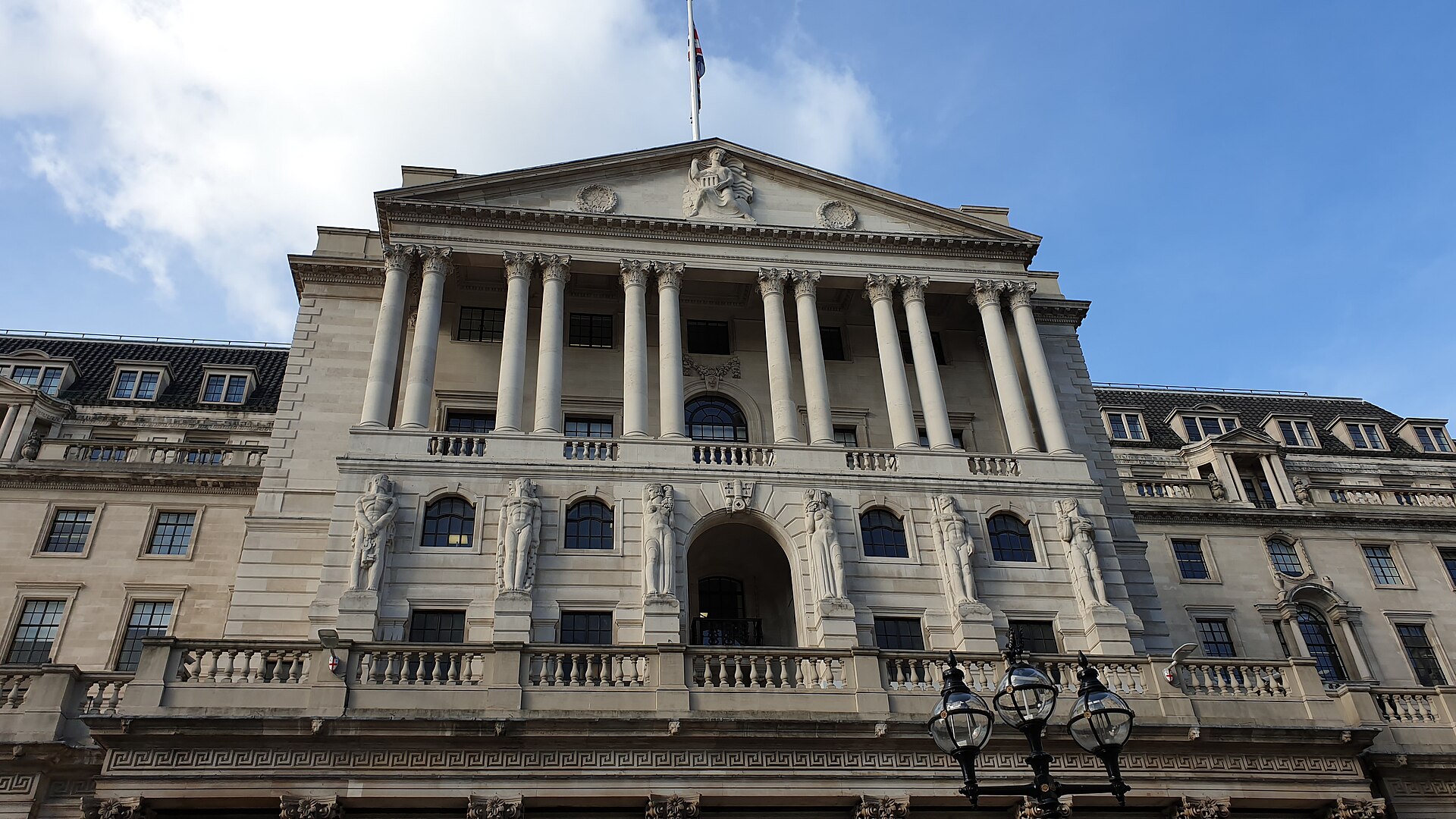
UK inflation held steady in May, giving the Bank of England more room to keep interest rates unchanged as policymakers assess whether recent energy price shocks will feed through into the wider economy.
The Consumer Prices Index rose by 2.8% in the 12 months to May 2026, unchanged from April and below expectations of a rise to 3.0%. The figure remains above the Bank of England’s 2% target, but the weaker-than-expected reading has reduced immediate pressure for another rate rise.
The data comes one day before the Bank’s next interest-rate decision, with economists widely expecting Bank Rate to remain at 3.75%. For households and businesses, the figures offer some relief, but not a clear turning point. Inflation has stopped rising for now, but borrowing costs are still high, services inflation remains sticky, and global energy markets remain a major risk.
Inflation steadier than expected
The latest figures suggest that inflationary pressure did not strengthen as much as feared in May.
Lower prices for some food items and domestic heating oil helped offset higher transport costs, including petrol and air fares. That kept the headline CPI rate unchanged at 2.8%, matching April’s 13-month low.
The result will be welcomed by households, particularly after several years of pressure from food, energy and mortgage costs. It may also reassure businesses that the recent rise in oil and fuel costs has not yet created a broader acceleration in consumer prices.
However, inflation is still running above target. Prices are still rising, just at a slower pace than during the worst of the inflation shock. For consumers, that means household budgets remain under pressure. For companies, it means costs remain difficult to manage, especially where wages, transport, energy or imported goods are significant.
Transport costs remain a pressure point
The most important upward pressure came from transport.
Air fares rose sharply during the month, while petrol prices also contributed to higher costs. Transport inflation matters because it affects both consumers and businesses. Higher fuel costs can increase commuting costs, delivery charges, logistics costs and the price of goods moving through supply chains.
For some businesses, especially retailers, manufacturers, wholesalers and hospitality suppliers, transport is not a minor overhead. It can directly affect margins.
That is why the recent global energy backdrop matters. The US-Iran conflict had increased concern over oil supplies and shipping through the Strait of Hormuz, one of the world’s most important energy corridors. A preliminary agreement has since eased some market fears, but central banks are unlikely to assume the risk has disappeared.
Energy shocks can take time to pass through the economy. A rise in oil today may affect business costs, freight contracts and consumer prices over several months. That makes the Bank of England’s job more difficult.
Services inflation still matters
Although the headline figure was better than expected, services inflation rose to 3.7% in May.
This will be closely watched by the Bank of England because services inflation is often seen as a better guide to domestic price pressure. It is more closely linked to wages, rents, business costs and consumer demand than volatile items such as fuel or air fares.
Core inflation, which excludes food, energy, alcohol and tobacco, rose slightly to 2.6%. That suggests underlying inflation is not accelerating dramatically, but it is not yet low enough for policymakers to relax.
This creates a mixed picture.
The headline rate supports a pause in interest rates. The services figure argues for caution. The Bank may therefore avoid raising rates this week, while still warning that borrowing costs may need to remain higher for longer if inflation proves persistent.
Bank of England expected to hold rates
The Bank of England is widely expected to keep Bank Rate at 3.75% at its June meeting.
That would give businesses and mortgage borrowers some stability, but it should not be confused with a return to cheap money. Interest rates remain much higher than they were during the long period before the inflation surge, and many households and companies are still adjusting to higher debt costs.
For mortgage holders, the decision may mean that rates do not rise immediately. But those refinancing fixed-rate deals may still face higher payments than they were used to several years ago.
For businesses, the same applies. Overdrafts, floating-rate loans, asset finance, property borrowing and refinancing remain expensive. Investment plans may still be delayed if companies are uncertain about future interest rates, demand and energy costs.
A rate hold would therefore be a pause, not a pivot.
Businesses face a complicated outlook
The inflation data gives businesses some good news, but not enough certainty.
If inflation remains lower than expected, the Bank of England may have less reason to raise rates later in the year. That would help companies with debt and could support investment confidence. It may also ease pressure on consumer spending if households believe prices are becoming more stable.
But several risks remain.
Manufacturers have reported higher raw material costs. Energy prices remain vulnerable to geopolitical disruption. Wage pressure has not disappeared. And services inflation suggests that parts of the domestic economy are still seeing cost increases.
For businesses, the practical challenge is planning. Pricing decisions, wage negotiations, stock purchasing, investment and borrowing all depend on expectations for inflation and interest rates. A stable headline CPI figure helps, but it does not remove uncertainty.
Household relief may be limited
For households, unchanged inflation is better than a renewed rise, but the benefit may feel limited.
Many prices remain much higher than they were before the inflation shock. Food, rent, insurance, energy and borrowing costs continue to take a large share of household income. Even where inflation slows, consumers may not feel better off if wages fail to keep pace with the cumulative rise in prices.
There is also a difference between inflation slowing and prices falling. A 2.8% inflation rate still means that the overall price level is rising. The squeeze eases only gradually.
That matters for retailers and consumer-facing businesses. If households remain cautious, companies may struggle to increase prices further without damaging sales volumes.
The wider economic picture
The inflation figures arrive at a sensitive point for the UK economy.
Growth has been weak, the labour market has cooled, and businesses are still dealing with higher costs. At the same time, inflation has not fully returned to target, and the Bank of England remains concerned about whether temporary price shocks could become embedded.
That leaves policymakers with a difficult balance.
Raising interest rates could help contain inflation, but it would also add pressure to borrowers and risk weakening growth further. Cutting rates could support demand, but might look premature if inflation rises again later in the year.
Holding rates allows the Bank to wait for more evidence. It also sends a message that inflation remains above target and that policy will stay restrictive until the Bank is confident price growth is under control.
A cautious signal, not a victory
The May inflation figures are encouraging, but they do not mark the end of the inflation challenge.
The good news is that CPI did not rise as expected. Food prices and heating oil helped offset some of the pressure from transport. Core inflation remains relatively contained. That strengthens the case for the Bank of England to leave interest rates unchanged.
The caution is that services inflation rose, energy risks remain, and inflation is still above the 2% target. The Bank is unlikely to declare victory while geopolitical uncertainty, wage pressures and business costs remain live risks.
For households and businesses, the message is therefore mixed.
There may be no immediate rate rise, but there is also unlikely to be quick relief from high borrowing costs. Inflation is lower than feared, but not yet low enough to restore full confidence.
The UK economy appears to have avoided another inflation shock for now. The question is whether that stability can hold through the rest of the year.
Image: Wikimedia Commons, CC0