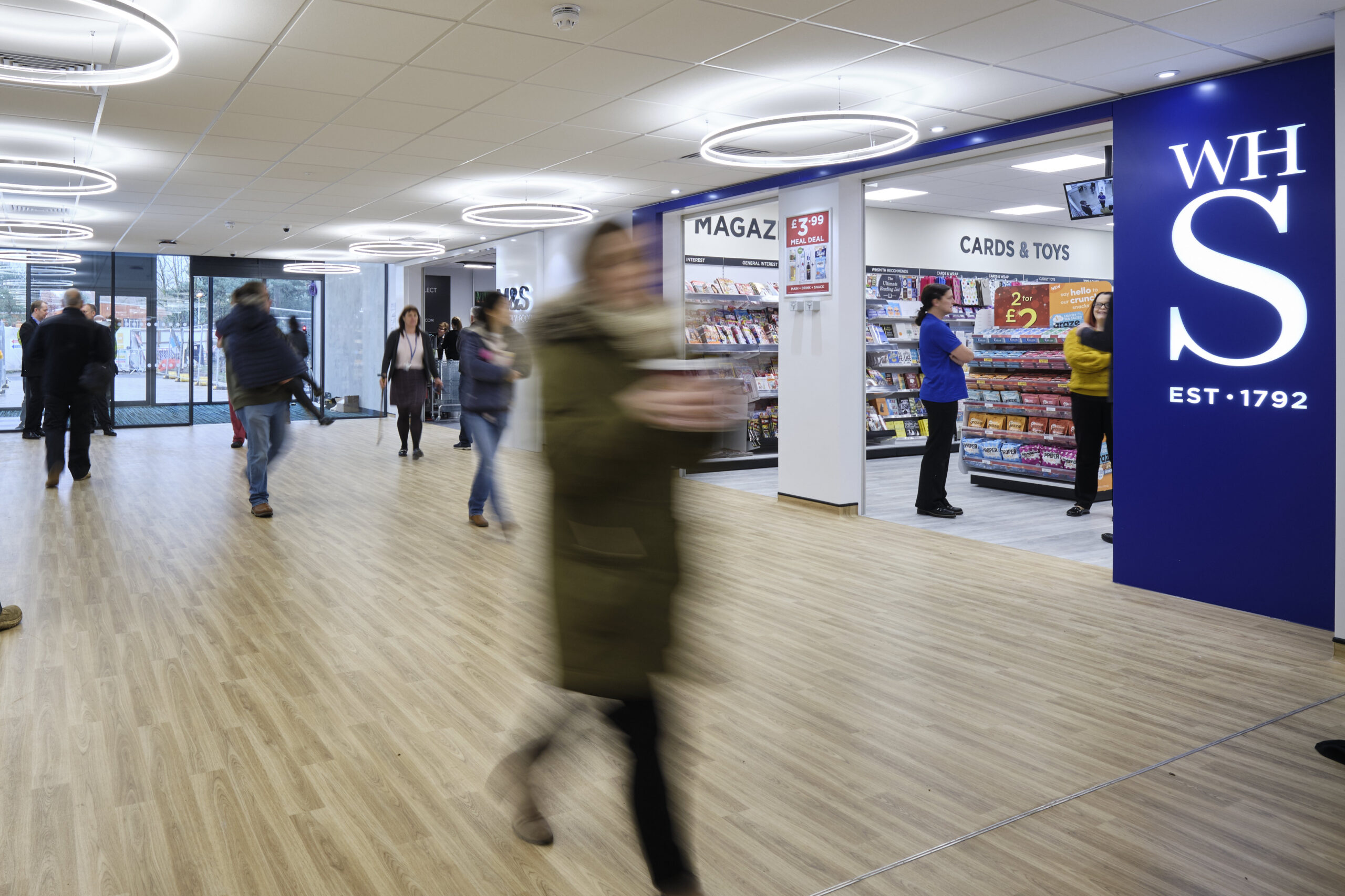
The future of TG Jones, the rebranded former WHSmith high street chain, is under growing pressure as its owner seeks approval for a major restructuring plan that could see up to 150 stores close.
The retailer, which operates around 450 shops and employs about 5,000 people, is trying to push through a rescue deal that would cut rents, close underperforming branches and give the business more time to complete a turnaround.
The plan is being led by Modella Capital, the investment firm that bought WHSmith’s high street business last year and renamed it TG Jones. The business is separate from WHSmith’s travel division, which continues to operate in airports, railway stations and other travel locations.
According to reports, TG Jones has warned that its future could be at risk if creditors and the court do not approve the restructuring. A court hearing is expected later this month.
For shoppers, staff, landlords and town centres, the stakes are high. The proposals could preserve much of the chain and protect thousands of jobs, but they also involve heavy losses for landlords and the possible closure of a large number of local stores.
A rescue plan built around rent cuts
The proposed restructuring is focused heavily on reducing property costs.
Reports suggest that landlords of more than 120 stores could receive no rent for a three-year period, while hundreds of other shops may face rent reductions of between 15% and 75%.
That would give TG Jones breathing space to lower prices, improve stores and reshape its product range. But it would also transfer a large part of the pain onto property owners.
Some landlords have criticised the proposals as unfair, arguing that profitable stores would also be affected and that shareholders may benefit from a rescue while landlords carry much of the financial burden.
That is the central tension in the deal.
From TG Jones’s perspective, without radical action the business may not survive. From the landlords’ perspective, the plan risks using their income to support a turnaround they may never benefit from.
The post-WHSmith challenge
TG Jones has faced a difficult transition since the former WHSmith high street estate was sold.
For generations, WHSmith was one of the most familiar names on the British high street. Even if some customers felt the stores had become tired, the brand still carried recognition and habit.
The move to TG Jones has been a major change. Rebrands are difficult at the best of times, but particularly so when they involve a long-established retailer with hundreds of branches, a broad customer base and deep association with newspapers, stationery, books, cards and travel essentials.
The business also inherited a challenging store estate. Many shops needed investment, some locations were underperforming, and the wider high street trading environment remained difficult.
The new management has argued that the chain can still be saved. Plans reportedly include lower prices, fewer but better products, brighter stores, more store-level management, and stronger partnerships with brands such as Toys “R” Us, Hobbycraft and the Post Office.
That is a credible direction in theory. The harder question is whether it can be delivered quickly enough.
Why this matters beyond one retailer
The TG Jones situation is not just a story about one chain of stationery shops.
It reflects a wider problem across UK retail. Many traditional high street businesses are still adjusting to a market shaped by online shopping, weaker footfall, higher staffing costs, higher business rates, cautious consumers and changing town centre habits.
Retailers that once relied on national scale and familiar locations can no longer assume that the old model will work. Stores need to justify their space, attract regular local visits and offer something that cannot be easily replicated online.
For TG Jones, that challenge is particularly sharp. Stationery, books, cards, toys, newspapers, magazines and convenience goods are all markets where consumers have many alternatives. Supermarkets, discount retailers, Amazon, specialist online sellers and local independents all compete for parts of the same spend.
That means the business needs a clearer reason for customers to visit. Lower prices may help, but the stores also need to feel relevant, well stocked and useful.
Post Office services add another layer
There is also a community dimension.
Many former WHSmith and TG Jones stores host Post Office counters. That makes some branches more important than a normal retail unit because they provide access to postal, banking and government-related services.
If stores close, local communities could face reduced access to those services unless replacement branches are found.
This is particularly important in towns where bank branches have already closed and where Post Office counters provide a remaining point of face-to-face financial access.
For landlords and creditors, the issue is commercial. For staff, it is about job security. For customers, especially in smaller towns, closures can also affect basic local services.
That makes the restructuring more sensitive than a normal store rationalisation.
Modella under scrutiny
Modella Capital’s role is also attracting attention.
The firm has become an increasingly prominent buyer of struggling or challenged retail businesses, including Hobbycraft, Claire’s UK and The Original Factory Shop. Some of those investments have already faced severe financial pressure, including administrations and store closures.
Supporters of this type of investment argue that distressed retail businesses often need specialist owners willing to move quickly, renegotiate costs and take difficult decisions that larger listed groups may no longer want to make.
Critics argue that aggressive restructuring can place too much pressure on landlords, suppliers, staff and local communities, while leaving questions over whether the underlying business model has really been fixed.
TG Jones will be an important test case. If the restructuring succeeds and the chain stabilises, Modella can argue it has saved a large part of a historic high street business. If it fails, it will reinforce concerns about whether buying distressed retailers and pushing through rapid restructuring is enough to build sustainable retail companies.
What a turnaround would need
A successful turnaround will require more than lower rent.
TG Jones needs to rebuild customer awareness after the rebrand, sharpen its product offer and improve the shopping experience. Stores need to look cleaner, brighter and more relevant. Prices need to feel competitive. Stock needs to be reliable. Staff need enough support and hours to run shops properly.
The business also needs to decide what it really is.
Is TG Jones a stationery chain, a newsagent, a convenience-led high street store, a local service hub, a toy and craft partner, or a general retailer? The answer may differ by location, but customers need a clear reason to walk in.
In retail, cost-cutting can buy time, but it rarely creates long-term loyalty by itself.
The most encouraging part of the reported plan is the recognition that stores need to be improved, product ranges simplified and prices made more attractive. The risk is that the business may not have enough time, cash or customer goodwill to complete the job.
Jobs, landlords and town centres await the court decision
The immediate focus is now on creditor support and court approval.
If the restructuring is approved, TG Jones is likely to move quickly with closures, rent changes and operational reforms. That would be painful for affected staff and towns, but it may preserve the majority of the estate.
If the plan is rejected, the risk of administration or a more disorderly collapse would increase. That could place more jobs and more stores at risk.
This is why the case is so finely balanced. A restructuring plan that landlords dislike may still be better for many stakeholders than a collapse. But that does not make the landlord objections irrelevant. A rescue that depends on one group of creditors taking most of the pain will always attract challenge.
A familiar high street story
TG Jones is facing a modern high street problem in its most concentrated form.
It has a historic legacy, a large store estate, thousands of staff, important local services, tired shops, rising costs, changing customer habits and a new brand that has not yet fully landed with shoppers.
The proposed rescue may give it a chance. But it is not a guarantee.
For British town centres, the case is another reminder that familiar names do not survive on nostalgia alone. High street retailers need investment, clarity, strong local execution and a reason for customers to keep coming back.
For TG Jones, the next few weeks may decide whether the former WHSmith high street chain becomes a leaner, revived retailer or another chapter in the long-running reshaping of Britain’s high streets.