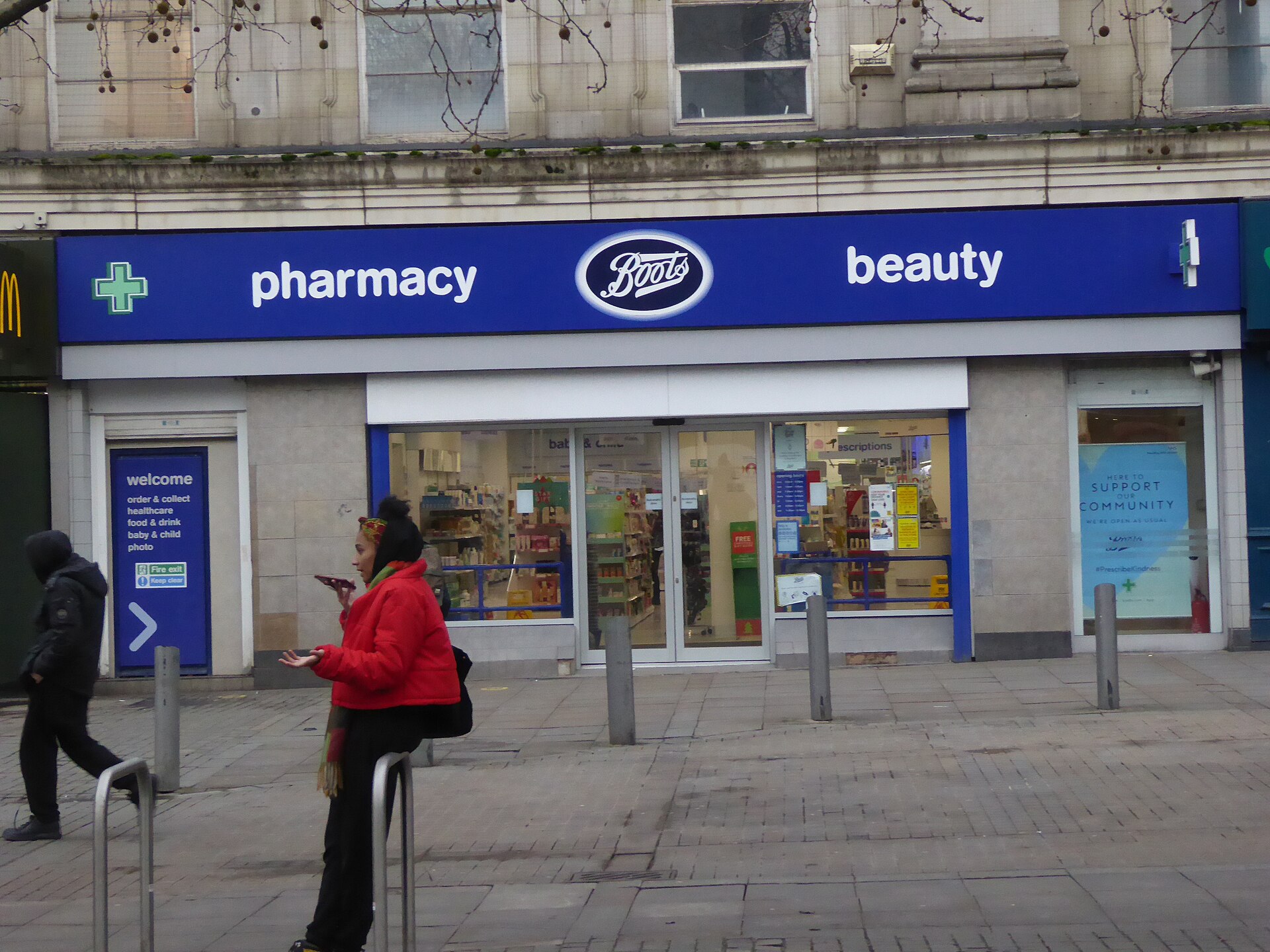
Boots’ ownership future has been thrown back into uncertainty after Australian pharmacy group Sigma Healthcare withdrew from talks over a potential $10bn acquisition of the UK health and beauty chain.
Sigma, which owns Chemist Warehouse, confirmed that it had ended preliminary discussions over buying The Boots Group after deciding that the deal did not currently meet its strategic and capital investment objectives. The decision removes one of the most prominent potential bidders from the process and leaves Boots’ private equity owner, Sycamore Partners, considering its next move.
The development is significant because Boots had been seen as a possible candidate for a return to the London Stock Exchange. A private sale could have replaced that route, potentially delivering a faster exit for Sycamore. Sigma’s withdrawal now raises fresh questions over whether Boots is more likely to be sold to another strategic buyer, floated in London, or retained for longer while its owner continues to reshape the business.
A setback, but not necessarily the end of the process
Reports last week suggested that Sycamore Partners had held talks with several parties over a possible sale of Boots, including Sigma Healthcare and the Canadian branch of the Weston family. The possible price was reported at around $10bn, or approximately £7.5bn.
Sigma’s decision to walk away does not mean the sale process is over. The Weston family, which has deep retail and pharmacy interests through businesses including Loblaw and Shoppers Drug Mart in Canada, has also been linked with the chain. Sycamore could also revive plans for a London listing if market conditions are judged to be favourable.
However, the withdrawal does highlight the scale of the decision facing any buyer. Boots is one of the UK’s best-known retail and pharmacy brands, but it is also a large, complex business operating in a market facing structural change, cost pressure and growing competition.
For Sigma, the choice appears to have been one of discipline over ambition. The company had only recently expanded into the UK through a joint venture with Greenlight Healthcare, under which some London pharmacies are expected to be rebranded as Chemist Warehouse. Acquiring Boots would have been a much larger move, giving Sigma immediate national scale but also exposing it to integration risk, debt, regulation and a very different pharmacy market.
Investors appeared to welcome the withdrawal. Sigma’s shares rose after the company confirmed it would no longer pursue the deal, suggesting shareholders preferred the group to focus on its existing growth plans rather than undertake a major overseas acquisition.
Why Boots remains attractive
Boots remains a valuable asset. Founded in Nottingham in 1849, it is one of the most recognisable names on the British high street and operates more than 1,800 stores across the UK. It combines retail health and beauty, pharmacy, opticians, private healthcare services, beauty brands and online trading.
The business has also reported stronger recent performance. For the year to August 2025, Boots’ revenue rose to around £7.5bn, while pre-tax profit increased by 25% to £337m. Growth has been supported by beauty, healthcare services and strong demand for weight-loss treatments.
That trading performance helps explain why Boots continues to attract interest. While many traditional retailers are struggling with footfall, labour costs, rents and online competition, Boots occupies a relatively distinctive position. It is not simply a retailer, but also a pharmacy network, a healthcare services provider and a beauty platform.
The rise in demand for paid health services, vaccinations and weight-loss treatments has also strengthened its healthcare proposition. At the same time, Boots has invested in premium beauty, new brands and digital channels, helping it compete with specialist beauty retailers, supermarkets and online marketplaces.
For a strategic buyer, those strengths could be attractive. A pharmacy group with operational expertise could use Boots as a platform for wider healthcare services. A retailer with strong beauty or convenience credentials could use it to deepen its position in the UK. A financial buyer could see scope to improve margins, optimise the estate and prepare the business for a future listing.
Why the deal may have looked difficult
The reasons for Sigma’s withdrawal were not explained in detail, but the company’s statement that the acquisition did not meet its strategic and capital investment objectives points to several likely considerations.
The first is scale. A $10bn transaction would be transformational for Sigma. It would have required significant financial commitment and would have come shortly after its combination with Chemist Warehouse. Large international acquisitions can create value, but they can also distract management and stretch balance sheets.
The second is market structure. The UK pharmacy market is not the same as Australia. NHS prescriptions, reimbursement arrangements, staffing costs, store economics, regulation and competition from supermarkets and online providers all affect the commercial model. Chemist Warehouse has succeeded in Australia through a high-volume, discount-led format, but that model may not translate directly into the UK market.
The third is execution risk. Boots is a major employer with a large store estate, healthcare responsibilities, a well-known brand, legacy systems and a complex relationship with the NHS. Integrating it with an Australian pharmacy and retail model would not be straightforward.
The fourth is timing. Sigma has already chosen a lower-risk route into the UK through its Greenlight Healthcare partnership. That allows it to test the Chemist Warehouse brand in selected locations without taking on the cost and complexity of buying the country’s largest pharmacy multiple.
From that perspective, walking away from Boots may be seen as caution rather than failure.
Private equity and the future of Boots
Boots’ future has been uncertain for several years. Walgreens Boots Alliance first explored a sale in 2022, but no deal was completed. The business later became part of the assets controlled by Sycamore Partners after the private equity firm acquired Walgreens Boots Alliance.
Sycamore has since been widely expected to explore options for Boots, either through a sale or public listing. Boots’ appointment of new leadership and its improved financial performance had fuelled speculation that the company could return to the London market.
A flotation would be significant for the UK, particularly at a time when London has been trying to attract and retain major listings. A Boots IPO would bring a major consumer brand back to the public markets and could provide a test of investor appetite for large UK retail and healthcare businesses.
A private sale, by contrast, could provide a faster exit and potentially a cleaner transaction if a buyer is willing to pay a premium. That may appeal to Sycamore, but the withdrawal of Sigma suggests buyers may be cautious about valuation and execution risk.
The uncertainty also matters for employees, suppliers and communities. Boots remains a major high-street presence and a significant employer, particularly around its Nottinghamshire base. Any change in ownership could affect investment priorities, store strategy, staffing, digital transformation and the balance between retail and pharmacy services.
London market implications
The fate of Boots is also being watched because of its potential implications for the London Stock Exchange.
The UK market has faced criticism in recent years for losing companies to overseas exchanges, seeing takeovers of listed businesses and failing to attract enough major new listings. A successful Boots float would be seen as a vote of confidence in London.
If Sycamore instead sells Boots privately, it would remove one of the most recognisable possible IPO candidates from the pipeline. That would be a disappointment for those hoping for a revival in London listings.
However, the picture is not straightforward. A rushed or poorly received IPO would not help London either. For Boots to succeed as a listed company, investors would need to be convinced that the business has stable earnings, a credible growth strategy, manageable debt and enough resilience in a tough consumer environment.
That may be why Sycamore appears to be keeping options open.
Strategic choices ahead
Boots now sits at the centre of several overlapping trends: consolidation in pharmacy, pressure on high-street retail, growth in beauty, rising demand for private healthcare services, and the continued search for value by private equity owners.
The company’s recent performance gives it options. It is not a distressed asset. Its profits are rising, its beauty business is performing well, and its pharmacy and health services give it a role beyond conventional retail.
But it is also operating in a challenging environment. The UK high street remains under pressure. Labour costs have risen. Pharmacy economics are changing. Online competition remains intense. Consumers are value-conscious, and retailers are having to work harder to drive footfall.
A future owner would need to invest carefully. Cutting costs alone would risk weakening the brand and service quality. Heavy expansion would require confidence in the long-term economics of the market. The most likely successful strategy would involve a combination of store optimisation, digital growth, healthcare services, beauty investment and disciplined capital allocation.
A reminder that not every strategic deal makes sense
Sigma’s withdrawal is also a reminder that attractive assets are not always attractive deals.
Boots has scale, brand recognition and profitability. It could give an international buyer a powerful UK platform. But valuation, timing, funding and strategic fit all matter.
For Sigma, buying Boots would have been a bold statement of global ambition. It would also have been a major risk. By stepping back, the company appears to be signalling that overseas growth remains important, but not at any price.
For Sycamore, the challenge is now to prove that Boots can command the valuation it wants, whether through another buyer or the public markets.
For Boots, the immediate future may involve more uncertainty. But the underlying business appears stronger than during previous sale attempts, and that may give its owner time to consider the best route.
The question is no longer simply whether Boots can be sold. It is whether the right buyer, at the right price, with the right strategy, can be found.
Image: Ardfern, Wikimedia Commons, CC BY-SA 4.0