Goldman Sachs has warned that Brent crude could rise above $120 a barrel before the end of 2026 if the Middle East conflict continues and disruption through the Strait of Hormuz fails to ease.
The forecast represents a severe disruption scenario rather than the investment bank’s central expectation. Nevertheless, it illustrates the scale of the economic risk created by continuing attacks, restricted tanker movements and threats to alternative shipping routes through the Red Sea.
Brent crude rose above $92 a barrel on Wednesday as the United States continued strikes against Iranian targets and Iran responded with attacks against American facilities in the region. Oil prices were also supported by threats against Saudi shipping near the Bab el-Mandeb Strait and disruption to exports from the Black Sea.
For UK businesses, the consequences of a prolonged oil shock would extend far beyond petrol and diesel prices. Higher crude costs could feed into transport, manufacturing, aviation, agriculture and consumer prices, while also making it more difficult for the Bank of England to reduce interest rates.
Goldman outlines a severe disruption scenario
Goldman Sachs reportedly believes Brent crude could exceed $120 a barrel during the final quarter of 2026 if oil movements through the Strait of Hormuz remain severely restricted.
Under this scenario, Persian Gulf production would recover only gradually and might not return to normal until late 2027, despite the expansion of alternative pipelines. Brent could consequently average approximately $100 a barrel during 2027.
The warning follows estimates that Persian Gulf oil flows have fallen below 45% of their pre-war level. Earlier optimism that the route would gradually reopen has been weakened by renewed fighting between the United States and Iran.
However, the $120 figure is not Goldman’s base forecast.
Its central scenario assumes eventual de-escalation and Brent averaging approximately $80 a barrel during the final quarter of 2026, followed by an average of around $75 in 2027. The difference between the central and severe scenarios demonstrates how dependent the oil market has become on military and diplomatic developments.
Why the Strait of Hormuz matters
The Strait of Hormuz is the narrow maritime passage connecting the Persian Gulf with the Gulf of Oman and the wider international shipping network.
Before the latest conflict, around one-fifth of global oil supplies passed through the strait. Saudi Arabia, Iraq, Kuwait, the United Arab Emirates, Qatar and Iran all depend on it to varying degrees. A significant interruption therefore removes a substantial volume of oil from the international market rather than affecting only one country or producer.
Some production can be diverted through pipelines. Saudi Arabia can transport crude across the country to the Red Sea port of Yanbu, while the United Arab Emirates operates a pipeline to Fujairah outside the strait.
These alternatives cannot replace all the oil normally shipped through Hormuz. Their usefulness is also being challenged by threats to vessels using the Red Sea.
Iran-aligned Houthi forces in Yemen have threatened Saudi oil shipping near the Bab el-Mandeb Strait. Three tankers carrying Saudi crude reportedly changed direction on Tuesday rather than travelling past the Yemeni coast, potentially adding time and cost to their journeys.
The risk is therefore no longer confined to one shipping route. If both Hormuz and the southern entrance to the Red Sea become difficult to navigate, Gulf producers will have fewer practical alternatives for moving oil to customers.
Shipping costs could rise before supplies run out
Oil prices do not require a complete closure of the Strait of Hormuz to increase sharply.
Shipping companies must consider the safety of their vessels and crews, the availability of insurance and the possibility of tankers being damaged, detained or forced to change course.
War-risk insurance premiums can rise significantly even while some traffic continues. Longer journeys also increase fuel, charter and staffing costs.
These expenses are eventually reflected in the price paid by refiners and fuel distributors. Businesses and consumers can therefore face higher prices even when sufficient oil remains physically available.
The latest tensions in the Black Sea add another layer of uncertainty. The Caspian Pipeline Consortium stopped accepting oil from Kazakhstan after attacks on tankers at its export terminal, creating the possibility of reduced Kazakh production if the interruption continues.
Transport businesses would feel the immediate effect
The most direct UK impact would be experienced by businesses using large quantities of petrol, diesel or aviation fuel.
Hauliers, delivery companies, bus operators, construction contractors, agricultural businesses and tradespeople would all face higher operating expenses.
Some companies can introduce fuel surcharges or adjust customer prices. Others operate within competitive markets or fixed-price contracts and may be unable to recover the full increase.
Smaller businesses are likely to be particularly exposed because they generally have less purchasing power and fewer opportunities to hedge their future fuel requirements.
Even companies that use relatively little fuel directly may face higher supplier and distribution charges. Almost every physical product must be transported at some point, allowing an oil-price increase to spread across the economy.
Manufacturers face higher material and distribution costs
Crude oil is not used only to produce road and aviation fuels.
Petroleum is an important input into plastics, chemicals, synthetic fibres, packaging, lubricants, paints and numerous industrial products. Manufacturers could therefore face higher material costs at the same time as their transport and energy expenses increase.
Businesses operating on narrow margins may have to decide whether to increase prices, reduce investment or absorb the additional cost.
Fixed-price contracts present a particular risk. A manufacturer or contractor that agreed a price before the oil shock may be required to complete the work even though its fuel, freight and material costs have increased.
Companies entering longer-term agreements may therefore review whether their contracts contain inflation, energy or fuel adjustment clauses.
Food and agriculture could come under pressure
Agriculture is exposed through fuel, machinery, fertiliser, packaging and transportation.
Higher diesel prices increase the cost of operating agricultural equipment and moving produce. Fertiliser prices can also be affected by wider energy-market disruption, particularly when conflict influences natural gas supplies alongside oil.
Food processors then face higher costs for ingredients, packaging, refrigeration and distribution.
These pressures can eventually reach supermarkets and consumers. The effect is rarely immediate, because businesses may have existing contracts and inventories, but a prolonged oil shock would make food-price increases more likely.
Airlines could face another difficult period
Aviation is among the industries most directly exposed to crude prices because jet fuel represents a substantial part of an airline’s operating cost.
Most major airlines hedge some of their future fuel requirements. This provides temporary protection from rapid changes but does not remove the underlying expense.
As existing hedging contracts expire, airlines must purchase fuel at prevailing market prices. If oil remains elevated, higher fares or reduced profit margins may follow.
International conflict also creates operational problems. Airspace closures and route changes can increase flying time and fuel consumption even before the underlying price of fuel is considered.
Airports, travel companies, hotels and tourism businesses could be affected if higher fares or geopolitical uncertainty weaken passenger demand.
Inflation could stay above target for longer
A sustained increase in oil prices would complicate the Bank of England’s attempt to return inflation to its 2% target.
Bank Rate currently stands at 3.75%, while the Bank’s published measure of current inflation is 2.8%. Its next interest-rate decision is scheduled for 30 July.
Higher oil prices affect inflation directly through petrol and diesel and indirectly through freight, food, manufacturing and travel.
The Bank of England has found that adverse oil-supply shocks can have larger and more persistent effects when inflation is already elevated. Its latest research suggests that the effect becomes more significant once annual inflation rises above thresholds of approximately 3.1% to 3.5%, particularly when higher prices influence household expectations.
The central bank must distinguish between an immediate energy shock and the risk that it becomes embedded in wages and business pricing.
Higher interest rates cannot reopen shipping routes or increase Middle Eastern production. However, the Bank may keep borrowing costs higher to prevent the initial increase from spreading into persistent domestic inflation.
For businesses, that could mean facing expensive energy and transport at the same time as higher loan, overdraft and refinancing costs.
Consumer spending could weaken
An oil shock can produce the difficult combination of higher inflation and weaker economic growth.
Households spending more on petrol, transport, food and other essentials have less money available for discretionary purchases. Retailers, restaurants, leisure operators and other consumer-facing businesses could therefore experience weaker demand.
This presents companies with a difficult pricing decision.
Passing additional costs to customers protects margins but may reduce sales. Absorbing the increase supports demand but weakens profitability and cash flow.
Businesses with high levels of debt may be especially vulnerable if reduced consumer spending coincides with higher interest costs.
Some UK companies could benefit
Higher oil prices would not affect every business negatively.
North Sea oil and gas producers could receive more for their output. Specialist engineering companies, offshore service businesses and energy traders may also benefit from increased activity or stronger margins.
Expensive fossil fuels could strengthen the commercial case for renewable electricity, electric vehicles, energy efficiency and alternative fuels.
However, these benefits would be unevenly distributed and would not remove the broader inflationary effect on the economy.
The UK has diverse gas supplies, including domestic production, Norwegian pipelines, European interconnectors and liquefied natural gas terminals. The government previously said that only around 1% of UK gas supply in 2025 came from Qatar. This reduces the immediate risk of a physical gas shortage, although international energy prices can still affect UK bills.
Why oil may not reach $120
There are several reasons why Goldman’s severe scenario may not materialise.
A ceasefire or diplomatic agreement could quickly reduce the geopolitical risk premium included in oil prices. Tanker traffic could recover, while producers could make greater use of pipelines and terminals outside Hormuz.
Governments could release strategic oil reserves, and producers outside the Gulf could increase output in response to higher prices.
High prices also weaken demand. Consumers travel less, businesses reduce fuel use and economies slow, limiting the market’s ability to sustain extremely elevated prices.
The US Energy Information Administration’s July forecast assumed that production and trade flows would recover towards pre-conflict levels by the end of 2026. On that basis, it expected Brent to average $74 during the third quarter of 2026 and $65 in 2027.
That forecast was prepared before the latest escalation and may now prove optimistic. It nevertheless provides an important counterpoint to the $120 scenario.
The eventual price will depend on the duration and extent of the disruption rather than the existence of conflict alone.
What UK businesses should consider
Businesses cannot predict military or diplomatic developments, but they can assess how exposed they are to an oil shock.
Companies should identify where oil enters their cost base, including fuel, freight, air travel, plastics, packaging, chemicals and supplier prices.
Cash-flow forecasts could include scenarios for materially higher fuel and distribution costs. Businesses operating on narrow margins should consider when price increases would become necessary and how customers might respond.
Existing contracts should be reviewed for fixed prices, fuel surcharges and inflation-adjustment clauses. New agreements may need clearer provisions covering substantial movements in energy and transport costs.
Companies dependent on Middle Eastern, Red Sea or Black Sea shipping should speak to freight providers about alternative routes, insurance charges and possible delays.
Larger fuel users may consider hedging, although this introduces additional costs and financial risks and requires appropriate professional advice.
The objective is not to assume that Brent will reach $120. It is to ensure that the business can continue operating if oil remains considerably more expensive than originally forecast.
A warning rather than a certainty
Goldman Sachs’ forecast should be understood as a warning about the consequences of prolonged disruption, not a prediction that $120 oil is inevitable.
Its base case continues to assume eventual de-escalation and prices substantially below the severe scenario.
However, the deterioration in tanker movements through Hormuz, threats to Red Sea shipping and disruption in the Black Sea have increased the number of risks affecting global supply simultaneously.
For UK businesses, the duration of the shock may ultimately matter more than the highest price reached.
A short-lived increase could be uncomfortable but manageable. Oil remaining close to or above $100 for a sustained period would have deeper consequences for inflation, borrowing costs, consumer spending and business investment.
The conflict therefore represents more than an energy-market story. It is becoming an important test of the resilience of the UK economy and the ability of businesses to manage another period of rapidly changing costs.
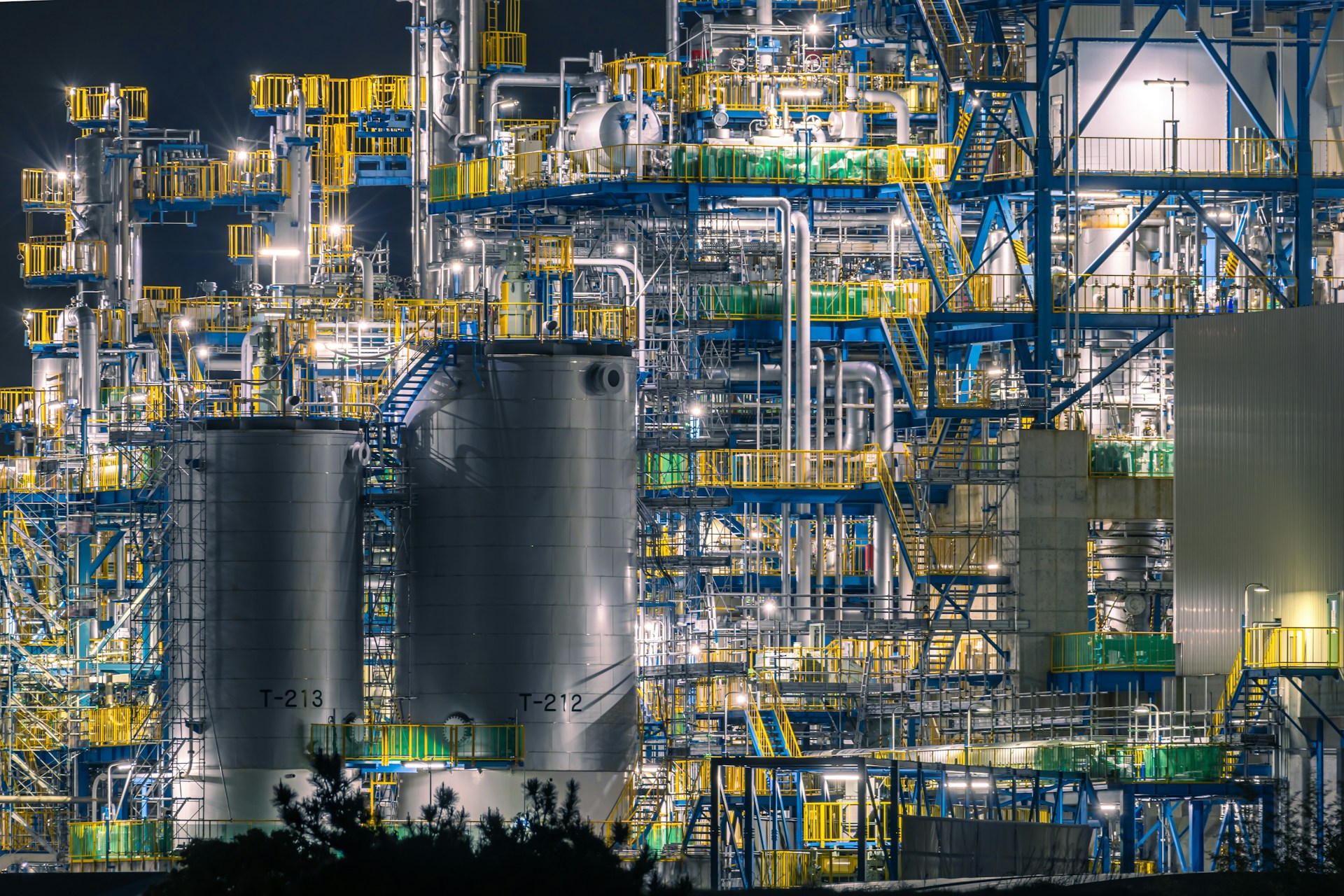
Photo by Kamekichi Photos on Unsplash