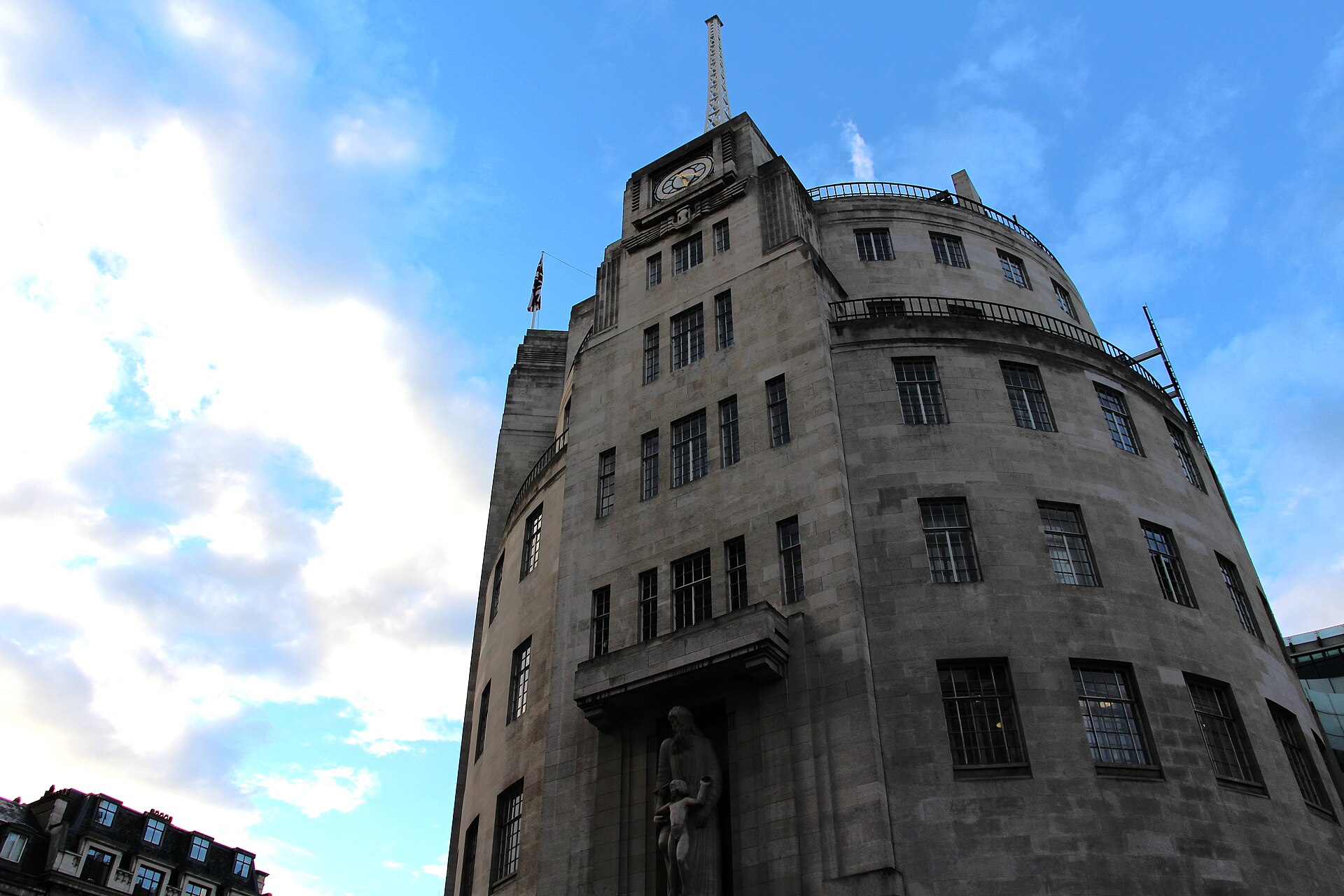
A full institutional, financial and strategic review of the British Broadcasting Corporation
The BBC is not simply a television company.
It is a television broadcaster, radio network, news organisation, streaming platform, educational resource, production company, international broadcaster, national archive, cultural institution and one of Britain’s most recognisable organisations.
For more than a century, the BBC has reported wars, elections, royal occasions, sporting triumphs, national disasters, scientific discoveries and profound social change. It has brought entertainment into British homes, introduced generations of children to education and storytelling, supported British music, drama and comedy, and helped define how the United Kingdom sees itself and is seen by the wider world.
It has also been criticised throughout almost its entire history.
Governments have accused it of hostility. Oppositions have accused it of favouring governments. Conservatives have claimed it is culturally progressive and institutionally left-leaning. The political left has argued that it is excessively deferential to establishment power. Commercial broadcasters and publishers complain that its publicly funded scale can distort competition. Some households resent being required to purchase a television licence. Others regard the BBC as one of the few institutions capable of providing universal and broadly trusted information.
The BBC therefore occupies an unusual position. It is widely used, frequently criticised, culturally influential and permanently contested.
Its future is now more uncertain than at almost any point since its creation.
The challenge is not that broadcasting has disappeared. People consume more video, audio, news and entertainment than ever before. The challenge is that the old distinction between broadcasting and everything else has collapsed.
The BBC was designed for a world in which radio frequencies were scarce, television channels were few, audiences gathered around common programmes and the licence fee could be connected to possession or use of a television set. That world no longer exists.
Audiences now move between BBC iPlayer, Netflix, YouTube, Disney+, ITVX, Channel 4, Amazon Prime Video, Spotify, TikTok, podcasts, commercial radio, gaming and social media. Children may know BBC programmes without watching a BBC television channel. Adults may read BBC News, listen to BBC podcasts and watch BBC clips online without considering themselves traditional BBC viewers.
The BBC remains present in this environment, but its principal funding mechanism still rests largely on yesterday’s definition of television consumption.
That is the central strategic problem.
The BBC’s public services are used by the overwhelming majority of British adults, but the number of households purchasing a television licence is falling. Linear television viewing is declining. Younger audiences spend more time with YouTube, streaming and social video. Production costs are rising. The BBC is being asked to invest in technology while maintaining national television channels, radio networks, local services, regional production, educational output, news operations and the World Service.
The approaching renewal of the BBC’s Royal Charter therefore presents a fundamental choice.
Should the BBC become smaller and concentrate only on services that the commercial market is unlikely to provide?
Should it remain a broad universal institution?
Should the television licence be expanded to cover modern streaming consumption?
Should every household make a contribution?
Should some BBC content carry advertising?
Should archive programmes or premium services be placed behind an optional subscription?
Or should the BBC eventually become something closer to a conventional streaming company?
The immediate position is clearer than some headlines suggest. The television licence will not disappear next year. It costs £180 from April 2026 and will increase again with inflation in April 2027. The present Royal Charter remains in force until 31 December 2027.
The major uncertainty begins on 1 January 2028, when the new Charter is expected to take effect.
The most likely outcome is not the complete abolition of public funding. It is a modernised and broadened funding model, supported by greater commercial income, targeted concessions and potentially some optional subscription or advertising-supported services.
The deeper transformation will be organisational.
The BBC of the future will be less defined by scheduled television channels and more by its role as Britain’s universal public-service media platform. It will still broadcast, but it will increasingly distribute journalism, education, culture and entertainment wherever audiences choose to consume them.
The BBC is not facing a simple choice between survival and closure.
It is facing a choice between reinvention and managed decline.
1. Origins: broadcasting before the BBC
The BBC emerged from the development of wireless radio after the First World War.
Radio technology had initially been associated with military communications, shipping and experimental transmission. As domestic receiving equipment became available, pressure grew for organised entertainment and information services.
The British government did not want an uncontrolled broadcasting system resembling the fragmented commercial model developing in the United States. Radio frequencies were limited, and uncoordinated transmission could cause interference. The General Post Office, which controlled communications policy, therefore encouraged British wireless manufacturers to establish a single broadcasting company.
The British Broadcasting Company was formed in October 1922 by a consortium of wireless manufacturers. Its members included companies connected with Marconi and other early radio equipment producers.
The first daily BBC broadcast took place from the 2LO station in London on 14 November 1922.
The original company had a commercial foundation. Manufacturers wanted broadcasting because programmes encouraged households to purchase radio receivers. However, the organisation quickly developed ambitions beyond supporting equipment sales.
The arrival of John Reith transformed its purpose.
Reith became general manager and believed broadcasting should improve national life. He did not see radio merely as entertainment or as a vehicle for advertising. He saw it as a public service capable of spreading knowledge, culture, education and reliable information.
That philosophy would shape the BBC for the next century.
Recap
The BBC began as an industry-supported solution to the practical problem of organising radio broadcasting. John Reith turned it into something more ambitious: a national public-service institution.
2. John Reith and the public-service ideal
John Reith’s influence on the BBC is difficult to overstate.
The phrase most closely associated with the Reithian mission is that broadcasting should “inform, educate and entertain”. It accurately summarises the philosophy around which the BBC developed.
Reith believed broadcasting should not simply give audiences what they already wanted. It should expose people to knowledge, music, debate, culture and ideas they might not otherwise encounter.
This approach was paternalistic. Early BBC broadcasting could be formal, restrained and socially conservative. Reith did not regard popular taste as the only measure of value. He believed a national broadcaster had a responsibility to raise standards.
That philosophy contained both strength and weakness.
The strength was that the BBC developed a purpose beyond ratings and profit. It could provide educational programmes, serious discussion, classical music, religious services, public information and minority interests.
The weakness was that the institution could appear remote, metropolitan and convinced of its own judgement. The affectionate nickname “Auntie” reflected both trust and criticism. The BBC could be respected while also being accused of lecturing the population.
This tension has never disappeared.
The modern BBC is less paternalistic than Reith’s organisation, but it still faces the same fundamental question: should a public broadcaster follow audience demand, shape audience demand, or do both?
A purely commercial broadcaster can concentrate on attracting profitable audiences. The BBC must also consider public value, education, cultural representation, national cohesion and services that may never produce a commercial return.
That remains its central justification.
3. From company to corporation: the Royal Charter of 1927
On 1 January 1927, the British Broadcasting Company became the British Broadcasting Corporation.
The new organisation was established by Royal Charter as a public corporation. John Reith became its first Director-General.
The Royal Charter remains the constitutional basis of the BBC. It defines the organisation’s mission, public purposes, governance and broad relationship with government. A separate Framework Agreement provides more detailed rules.
This structure was designed to create distance between the BBC and direct government control.
The BBC is not a government department. Ministers do not formally decide the content of individual news bulletins or television programmes. The organisation is expected to exercise editorial independence.
However, that independence has always been qualified.
- The government grants and renews the Royal Charter.
- The government determines the level and structure of the licence fee.
- The government participates in appointing the BBC Chair.
- Parliament scrutinises the organisation.
- Ofcom regulates it.
The BBC is therefore independent, but it is not sovereign. Its existence and funding ultimately depend on a political settlement.
This creates a permanent tension. The BBC must hold governments to account while periodically negotiating its future with those same governments.
The licence fee protects it from annual dependence on direct government budgets, but the periodic funding settlement still gives government substantial influence.
The Charter system has survived because no replacement has yet achieved the same balance between editorial independence, public accountability and financial stability.
Recap
The 1927 Charter created the BBC as a public corporation rather than a state broadcaster or conventional commercial company. That compromise remains the foundation of the institution and the source of many of its tensions.
4. Radio creates a national institution
Radio allowed the BBC to become part of everyday British life.
The early schedule included news, music, drama, talks, religious broadcasting, educational programmes, children’s output and live events. Broadcasting connected households with experiences that had previously required attendance at a theatre, concert hall, public meeting or sporting venue.
The General Strike of 1926 demonstrated radio’s national importance. With newspaper production disrupted, the BBC became an essential source of information. The crisis also revealed the difficulty of maintaining independence during political conflict. The government expected the broadcaster to behave responsibly, while critics questioned whether organised labour received sufficient opportunity to explain its position.
This would become a recurring pattern.
Every national crisis increased the BBC’s importance while exposing it to arguments about balance, authority and political pressure.
Radio also helped create shared national experiences. Listeners heard the same voices, news, music and public occasions. Before television and digital media, the BBC helped establish a common national conversation.
Broadcasting House opened in London in 1932, providing a physical centre for the expanding organisation. It became one of the most recognisable symbols of institutional broadcasting in Britain.
5. The World Service and the beginning of global broadcasting
The BBC Empire Service began in 1932 and later became the Overseas Service and then the BBC World Service.
Its original purpose reflected Britain’s imperial position. It connected audiences across the Empire and carried British news, culture and perspectives overseas.
As the Empire declined, the service developed into an international news organisation broadcasting in English and numerous other languages. Its value increasingly rested not on promoting imperial authority, but on providing information considered more independent and reliable than local state-controlled media.
The World Service became one of Britain’s most important sources of international influence.
Its power was not based on coercion. It was based on credibility.
A government can purchase advertising or conduct diplomatic campaigns, but trust is harder to manufacture. The BBC’s ability to reach audiences in countries with restricted media environments gave Britain a form of soft power that few other institutions could match.
That role remains strategically important.
At a time of disinformation, authoritarian media control and geopolitical competition, the World Service provides Britain with an international presence that cannot be measured only through direct financial return.
Its weakness is that its benefits are diffuse. It serves international audiences who do not pay the domestic television licence. This creates a continuing argument over whether the service should be funded mainly by licence fee payers or by government through the Foreign, Commonwealth and Development Office.
The most rational future model is shared funding, with stronger direct government support reflecting the World Service’s diplomatic and strategic value.
6. The BBC during the Second World War
The Second World War established the BBC as a national and international institution.
Domestic broadcasting provided news, public information, speeches, entertainment and a sense of continuity. International services transmitted to occupied Europe and other parts of the world.
The BBC operated within wartime censorship and national-security restrictions. It was not independent in the same way as during normal peacetime broadcasting.
Nevertheless, credibility remained crucial.
Propaganda that is obviously false quickly loses influence. The BBC’s long-term value depended on maintaining a reputation for accuracy, including when the news was unfavourable.
Entertainment also supported morale. Comedy, music and drama were not secondary luxuries. They helped families, military personnel and communities cope with uncertainty.
The BBC’s wartime role demonstrated the breadth of public service:
- Information.
- Education.
- National communication.
- International influence.
- Emergency resilience.
- Entertainment.
The ability to perform these functions together remains one of the strongest arguments for maintaining a broad universal institution rather than replacing the BBC with a collection of separate commercial services.
7. The birth of television
The BBC began the world’s first regular high-definition television service from Alexandra Palace in 1936.
Television was initially an expensive and specialist medium. Radio remained dominant, and only a small number of households owned television sets.
Television broadcasting was suspended during the Second World War and resumed in 1946.
The post-war period transformed television from an experiment into a mass medium. Rising household incomes, technological improvements and major national events encouraged television ownership.
The coronation of Queen Elizabeth II in 1953 became a decisive moment. Millions watched, often gathering in the homes of relatives or neighbours who owned sets. Television demonstrated its ability to bring the nation together around a live event.
The BBC was no longer principally a radio organisation.
It was becoming a television institution.
This transition required major investment in studios, transmitters, production skills and outside broadcasting. It also expanded the organisation’s cultural influence.
Television could show rather than merely describe. It brought news footage, drama, comedy, sport, documentaries and children’s programmes directly into the home.
The BBC’s ability to move from radio to television is an important historical lesson. The organisation has already survived one fundamental technological transition.
Its current move from scheduled broadcasting to online distribution is therefore not unprecedented.
The difference is that the BBC once moved into a medium with limited competition. Today, it is moving into a digital environment dominated by global technology and entertainment companies.
8. Commercial competition: the arrival of ITV
The launch of ITV in 1955 ended the BBC’s television monopoly.
Commercial television introduced advertising-funded broadcasting, regional franchises and stronger competition for popular audiences. ITV brought entertainment, drama, gameshows and a more explicitly commercial approach.
Competition forced the BBC to change.
A monopoly can become complacent. ITV encouraged the BBC to become more responsive, modern and entertaining. It demonstrated that public-service broadcasting did not need to be solemn.
The BBC’s answer was not to abandon public service, but to broaden it.
The competition established the mixed broadcasting ecology that continues today: a publicly funded BBC alongside commercial public-service broadcasters.
This mixed model has been one of the strengths of British media. The BBC establishes standards, supports training and invests in genres that might not be highly commercial. Commercial broadcasters provide competition, innovation and alternative editorial voices.
The relationship is also tense.
When the BBC expands into popular entertainment, online news, local audio or digital services, commercial competitors may argue that public funding allows it to distort the market.
If the BBC were permitted to carry widespread advertising, it would compete directly for the revenues supporting ITV, Channel 4, Channel 5, commercial radio and publishers.
That is one reason a fully advertising-funded BBC is unlikely to be a sensible solution.
9. BBC Two, colour television and cultural expansion
BBC Two launched in 1964, giving the corporation greater space for educational, cultural, factual and experimental programmes.
The new channel helped the BBC serve different audiences without requiring every programme to appeal to the largest possible number of viewers. It became associated with documentaries, arts, comedy, science and specialist interests.
BBC Two also became the first British television channel to broadcast regularly in colour in 1967.
The expansion reflected a key public-service principle: breadth.
A universal broadcaster cannot be judged solely by whether every individual watches every service. Its value lies partly in serving different groups at different times.
One household may value children’s programming. Another may rely on local radio. Another may use BBC News. Another may watch major sport. Another may listen to classical music. Another may use Bitesize. Another may rarely watch scheduled television but turn to the BBC during an election or national emergency.
This portfolio logic is central to the BBC’s funding debate.
The licence fee is not a direct subscription to one channel or programme. It funds an ecosystem.
That makes it harder to explain than Netflix, but potentially more socially valuable.
10. Radio reform and the creation of national networks
The growth of pirate radio during the 1960s demonstrated that the BBC was failing to serve younger music audiences adequately.
The corporation responded in 1967 by reorganising its national radio services.
- Radio 1 targeted popular music and younger listeners.
- Radio 2 developed from the Light Programme.
- Radio 3 concentrated on classical music, arts and culture.
- Radio 4 became the principal home of speech, news, drama and current affairs.
The BBC also expanded local radio, beginning with BBC Radio Leicester in 1967. Local stations offered news, discussion, sport and community information that national networks could not provide.
Radio demonstrates why a narrow market-failure definition of the BBC would be insufficient.
Some BBC radio services attract large audiences. Others serve cultural or regional purposes that are unlikely to be replicated commercially at the same depth.
Radio 3, local radio, minority-language broadcasting and extensive speech radio would be difficult to finance entirely through advertising or subscriptions.
The challenge is cost.
Maintaining national and local networks is expensive. As audiences move towards podcasts and on-demand audio, the BBC must decide which linear services remain essential and which can be redesigned or consolidated.
11. Education, children and the Open University
Education has been part of the BBC’s mission from the beginning.
Schools broadcasting, adult education, language programmes, documentaries and instructional content helped make knowledge available outside formal institutions.
The BBC’s partnership with the Open University became one of the clearest expressions of this role. Television and radio programmes supported distance learning and helped make higher education accessible to people unable to attend conventional universities.
Children’s programming also became central to the BBC’s identity.
From early radio and television programmes to Blue Peter, Play School, Newsround, CBeebies, CBBC and Bitesize, the BBC created trusted content for younger audiences without relying on advertising.
This matters because children’s media has significant public value but difficult commercial economics.
Advertising-funded children’s television faces regulatory limits. Subscription services target households able and willing to pay. Algorithmic platforms can expose children to low-quality, inappropriate or manipulative material.
The BBC can provide educational and entertaining content designed around child development and public purpose rather than advertising engagement.
Its challenge is distribution.
Children increasingly consume content on YouTube and other platforms rather than through dedicated television channels. The BBC must therefore take public-service content to those platforms while maintaining safety, quality and a recognisable relationship with the BBC brand.
12. Nations, regions and representing the United Kingdom
The BBC is a British institution, but Britain is not culturally or politically uniform.
England, Scotland, Wales and Northern Ireland have different identities, institutions and media needs. Within England, regional differences are equally important.
The BBC has therefore developed national and regional television, radio and online services, together with Welsh-language and Gaelic broadcasting partnerships.
Representation matters in several ways.
- It affects which stories are covered.
- It determines where programmes are commissioned and produced.
- It influences who appears on screen and radio.
- It affects whether audiences believe the BBC understands their lives.
For many years, the BBC was criticised for excessive concentration in London. The relocation of major operations to Salford, Cardiff, Glasgow, Belfast and other centres helped redistribute production and employment.
The move of BBC Sport, BBC Breakfast, children’s services and parts of radio to Salford demonstrated that national broadcasting did not need to be managed entirely from London.
Regional investment also supports the wider creative economy. BBC commissions help production companies develop skills, intellectual property and employment outside the capital.
The challenge is to avoid treating relocation as a numerical exercise. A programme made outside London is not necessarily representative of the place where it is produced.
The future BBC must distribute both employment and editorial authority.
13. Shared national experiences
One of the BBC’s strongest continuing roles is its ability to bring large audiences together.
Examples include:
- General elections.
- Royal weddings, jubilees, funerals and coronations.
- The Olympic Games.
- Wimbledon.
- Major football tournaments.
- Remembrance events.
- Children in Need.
- Comic Relief.
- Eurovision.
- National emergencies.
- Major drama and entertainment finales.
In a fragmented media environment, shared experiences have become rarer. That arguably makes them more valuable.
Streaming services are highly effective at serving individual preferences. They are less effective at creating a common national space.
The BBC can still provide moments in which millions encounter the same event, images and information at the same time.
This role should not be romanticised. National audiences are diverse, and no single broadcaster can represent every perspective perfectly.
Nevertheless, a society composed entirely of personalised information feeds risks losing shared reference points.
The BBC’s future value may therefore lie partly in doing what algorithms do not: creating experiences intended for the public as a whole.
14. Satellite, cable and multichannel television
The arrival of Channel 4 in 1982, satellite television, cable services and later digital multichannel broadcasting ended the era in which the BBC and ITV dominated viewing.
Sky transformed sports and subscription television. Dedicated news, music, documentary, children’s and entertainment channels multiplied. Audiences gained more choice.
The BBC responded by expanding its own services, including digital television channels, BBC News 24 and online platforms.
This was strategically necessary, but it also increased cost and organisational complexity.
A public broadcaster must remain visible enough to fulfil its mission. Yet every new channel, service and platform creates operating costs.
The BBC’s historical tendency has often been to add services when technology changes. Closing or consolidating them is politically and culturally harder.
The future BBC cannot indefinitely maintain every legacy service while investing in every new platform.
Resources will increasingly need to move from declining forms of distribution into services that reach future audiences.
That means some linear channels, schedules or local structures may eventually become smaller, shared or digital-first.
15. BBC Online and the digital transition
The BBC recognised the importance of the internet relatively early.
BBC Online developed into one of the UK’s largest and most widely used digital services. BBC News, BBC Sport, weather, education and programme information became part of everyday internet use.
This digital strength has brought both public benefit and market controversy.
Commercial newspapers argue that a publicly funded BBC website competes with subscription and advertising-funded journalism. Local publishers have raised similar concerns about BBC local news.
The BBC’s defence is that reliable online information is now essential to fulfilling its public purposes. A public broadcaster that existed only on television and radio would fail to serve large sections of the population.
Both arguments have merit.
The BBC needs a strong digital presence, but it should avoid using public funding to dominate areas where commercial provision is already healthy and diverse.
Its online strategy should concentrate on areas of distinctive public value:
- Trusted news and verification.
- Public information.
- Education.
- Sport of national interest.
- Local democratic reporting.
- Culture.
- Children’s services.
- Accessibility.
The question is not whether the BBC should be online. It must be.
The question is how its scale can strengthen rather than weaken the wider British media sector.
16. BBC iPlayer: from catch-up service to strategic centre
BBC iPlayer launched in 2007.
Initially, it was principally a catch-up service allowing viewers to watch programmes they had missed. It later developed into an on-demand destination offering box sets, live channels, archive material and personalised recommendations.
iPlayer is now strategically central.
The BBC cannot remain dependent on linear schedules when audiences expect programmes on demand. For younger viewers in particular, the distinction between television and streaming has little practical meaning.
However, iPlayer began with structural disadvantages.
Netflix, Amazon and Disney spread technology investment across global subscriber bases. The BBC serves the UK public and remains subject to rights restrictions, regulatory obligations and competition controls.
The BBC also does not automatically hold permanent digital rights to every programme it has ever broadcast. Contracts with writers, performers, musicians, producers and other rights holders can restrict what is available.
The iPlayer experience has improved, but it still competes with platforms built around sophisticated recommendations, global technology budgets and deep personalisation.
The BBC must now make iPlayer the principal gateway to BBC video while continuing to serve audiences who rely on traditional broadcasting.
This is not simply a technical project.
It requires changes to commissioning, rights, marketing, audience measurement and organisational culture. Programmes must increasingly be conceived for on-demand discovery rather than simply added to iPlayer after scheduled transmission.
17. BBC Sounds and the transformation of audio
BBC Sounds brings together live radio, catch-up programmes, music content and podcasts.
It is the audio equivalent of the iPlayer strategy: an attempt to transform separate radio networks into a unified digital service.
The opportunity is substantial.
The BBC has enormous strengths in speech radio, journalism, drama, comedy, documentaries, music and archives. These can be repackaged for on-demand listening and distributed to younger audiences.
The challenge is competition.
Spotify, Apple, YouTube and commercial podcast platforms operate at global scale. They benefit from personalised discovery, creator ecosystems and enormous music libraries.
BBC Sounds must therefore compete through distinctiveness rather than breadth alone.
Its strongest assets include:
- Trusted news.
- Radio drama.
- Comedy.
- Documentaries.
- Cultural discussion.
- Music expertise.
- Children’s audio.
- Local and national radio.
The future of BBC audio will be hybrid. Live radio will remain important, particularly for news, sport, music curation and companionship. On-demand listening will become increasingly central for younger audiences.
The BBC should not treat podcasts merely as shortened or repackaged radio programmes. It needs formats created specifically for digital listening.
18. BBC Studios and commercial expansion
The BBC is publicly funded, but it is not funded only by the television licence.
BBC Studios is the corporation’s principal commercial engine. It produces programmes, distributes content internationally, operates channels and streaming services, licenses formats and brands, manages consumer products and exploits intellectual property.
Its portfolio includes some of the most valuable British television brands in the world.
Programmes and franchises such as Doctor Who, Strictly Come Dancing, Top Gear, Planet Earth and Bluey demonstrate different forms of commercial value.
- A programme can be sold internationally.
- A format can be remade locally.
- Characters can support merchandise.
- Archive content can support channels and streaming.
- Production capability can serve external broadcasters and platforms.
Commercial growth is strategically important because it supplements public funding and increases the international reach of British content.
But BBC Studios cannot replace the licence fee.
Commercial success is concentrated in programmes with international or consumer-product potential. Local radio, regional news, parliamentary coverage, educational services and minority-language programming do not become commercially viable merely because Bluey or Strictly performs well overseas.
Commercial activity also creates risk.
If the BBC becomes too focused on programmes with global sales potential, public-service priorities may be weakened. The public service must not become merely an incubator for commercially exploitable intellectual property.
The correct relationship is complementary.
The licence fee supports universal public-service activity. BBC Studios monetises appropriate programmes, formats and brands internationally. Part of the resulting return supports the wider BBC.
The stronger BBC Studios becomes, the more resilient the organisation will be. Commercial revenue should nevertheless remain a supplement rather than a substitute for universal funding.
19. Governance, independence and accountability
The modern BBC is governed by the BBC Board and regulated externally by Ofcom.
The Board is responsible for strategy, performance, editorial standards and stewardship of public money. The Director-General acts as chief executive and editor-in-chief.
Ofcom assesses whether the BBC meets its regulatory obligations, including impartiality, accuracy, audience service and market impact.
The National Audit Office scrutinises financial management and value for money. Parliamentary committees hold senior leaders to account.
This structure provides substantial oversight, but it is complicated.
The BBC must answer to:
- Its Board.
- Ofcom.
- Government.
- Parliament.
- The National Audit Office.
- Licence fee payers.
- Commercial partners.
- Audiences.
- Employees.
- Nations and regions.
- Industry competitors.
Complex accountability can create caution and slow decision-making. Yet the absence of accountability would be unacceptable for an organisation receiving billions of pounds of compulsory public funding.
The challenge is to create clear accountability without political micromanagement.
One of the strongest reforms would be a more transparent and independent process for determining BBC funding. Government should retain democratic oversight, but the financial assessment should be informed by an independent body using published evidence.
Funding negotiations conducted behind closed doors create suspicion that governments can reward or punish the BBC according to political convenience.
20. Current leadership and the new strategic moment
Matt Brittin became BBC Director-General in 2026, succeeding Tim Davie.
His appointment brought a leader with substantial experience in technology and digital platforms into an organisation facing an existential distribution challenge.
That background is highly relevant.
The BBC’s central strategic problem is no longer simply producing good programmes. It is ensuring that audiences can find, trust and value BBC content in an environment shaped by global platforms.
Brittin has argued that the existing licence mechanism is no longer aligned with modern consumption. He has nevertheless emphasised that universal, sustainable and large-scale funding remains essential.
This signals an important shift.
The BBC is not simply defending the television licence exactly as it exists. Its leadership is beginning to argue for a broader contribution reflecting the way people now consume media.
The leadership challenge remains enormous.
- Modernise technology.
- Improve iPlayer and Sounds.
- Reach younger audiences on third-party platforms.
- Protect impartiality and trust.
- Reduce costs.
- Maintain national and local services.
- Grow commercial revenue.
- Manage industrial relations.
- Prepare for the new Royal Charter.
No Director-General can solve these challenges through one restructuring. The organisation requires a clear long-term operating model.
21. Current financial position
The BBC remains a large organisation with annual group income approaching £6 billion.
For the 2025/26 financial year, total BBC Group income was £5.962 billion.
Licence fee income was £3.879 billion, while other income, including commercial and grant income, contributed £2.083 billion.
The BBC reported a group deficit of £121 million, its third consecutive annual deficit.
The organisation’s financial position is not an immediate insolvency crisis. It has substantial income, assets, brands, commercial operations and authorised borrowing capacity.
It is, however, facing a structural sustainability problem.
The number of licences in force fell from 23.8 million in March 2025 to 23.3 million in March 2026. The increase in the licence fee helped maintain nominal revenue, but fewer households were paying.
This creates a dangerous long-term pattern.
If the payer base continues to decline, the fee charged to remaining households would need to rise more quickly simply to maintain the same level of income. That could increase opposition and encourage further non-payment.
BBC Commercial performed more strongly. BBC Studios generated revenue of approximately £2.128 billion during 2025/26 and increased earnings before interest, tax, depreciation and amortisation to £263 million.
Commercial returns are valuable, but they cannot finance the whole public-service system.
The BBC has already delivered hundreds of millions of pounds in savings and has announced a further £500 million savings programme by 2028. Continuous savings, however, eventually affect programmes, services, technology and audience trust.
A funding model cannot be called sustainable if it requires continuous reduction in the service being funded.
Recap
The BBC still receives substantial income, but the mechanism is weakening. Nominal licence income has been maintained partly by price increases while the number of paying households has continued to fall.
22. Market positioning: where the BBC sits
| Organisation or platform | Core position | Principal strength | Principal weakness |
|---|---|---|---|
| BBC | Universal public-service media | Trust, breadth, UK content, news, radio and national reach | Funding uncertainty and organisational complexity |
| Netflix | Global subscription entertainment | Technology, scale, personalisation and global originals | Limited public-service role and no universal news provision |
| YouTube | Global open-video platform | Scale, creators, search and younger audiences | Variable quality, misinformation and safety concerns |
| ITV | Commercial British public-service broadcaster | Popular entertainment, drama, advertising and ITVX | Advertising exposure and smaller funding base |
| Channel 4 | Commercial public-service broadcaster | Younger audiences, distinctive programming and innovation | Financial vulnerability |
| Sky | Subscription television, sport and connectivity | Premium sport, technology and customer relationships | High consumer cost and commercial focus |
| Spotify | Global audio and podcast platform | Personalisation, music scale and convenience | Limited UK public-service role |
| Commercial radio | Music, personality and advertising | Efficient popular formats and advertiser access | Less extensive speech, education and public-service output |
| Newspapers and digital publishers | Journalism and commentary | Plurality, investigation and distinctive viewpoints | Advertising and subscription pressure |
| Social media platforms | Personalised discovery and rapid distribution | Reach, engagement and youth usage | Misinformation, polarisation and weak editorial accountability |
The BBC’s advantage is not that it outperforms every rival in every category.
Netflix may provide stronger entertainment recommendations. YouTube offers greater variety and reach. Sky has premium sports rights. Spotify has a much larger music catalogue. Newspapers offer sharper editorial identities.
The BBC’s advantage is the combination.
No other British media organisation provides national and local news, television, radio, children’s services, education, culture, entertainment, regional production and international broadcasting at comparable universal scale.
23. The younger-audience challenge
The BBC’s most serious audience threat is generational.
Older audiences continue to use BBC television and radio heavily. Younger audiences spend far more time with YouTube, streaming services, social video, gaming and podcasts.
This does not mean young people reject all BBC content.
They may encounter BBC News on YouTube, watch drama on iPlayer, use Bitesize, follow sport through clips or listen to BBC podcasts.
The problem is that they may not perceive these experiences as part of one valuable relationship with the BBC.
This weakens willingness to pay.
The BBC must therefore achieve two objectives simultaneously:
- Go to the platforms younger audiences already use.
- Ensure those audiences recognise the BBC’s contribution and understand why it matters.
Distribution through YouTube and social platforms is necessary, but complete dependence on them would be dangerous. Algorithms can change. Platforms control user data and discovery. Their commercial incentives may conflict with public value.
The BBC needs both distributed content and strong owned platforms.
It should use third-party platforms for discovery and encourage deeper engagement through iPlayer, Sounds and BBC accounts.
The organisation also needs younger voices in commissioning and leadership, not merely content created by older executives attempting to imitate youth culture.
24. Trust and impartiality
The BBC’s most important asset is trust.
Without trust, compulsory public funding becomes much harder to defend.
Impartiality does not require every programme to be emotionally neutral or every unsupported claim to receive equal attention. It means that news and current affairs should be produced fairly, accurately and without institutional political campaigning.
The difficulty is that audiences increasingly disagree about what impartiality means.
Political polarisation encourages people to judge reporting according to whether it supports their existing beliefs. Social media removes context and amplifies isolated errors. Presenters have public identities and personal social-media accounts. News moves rapidly, increasing the risk of mistakes.
The BBC must therefore become more transparent.
- Corrections should be prominent.
- Editorial decisions should be explained.
- Conflicts of interest should be managed consistently.
- Opinion and reporting should be distinguished clearly.
- Staff social-media rules should be proportionate and enforceable.
The BBC should not pursue false balance between evidence and misinformation. It must nevertheless demonstrate that editorial conclusions are reached through fair and rigorous processes.
Trust is built slowly and can be damaged quickly.
No funding mechanism can compensate for a sustained loss of credibility.
25. Why the television licence is under pressure
The licence fee was historically connected to ownership of receiving equipment.
A radio licence applied to radio use. A television licence applied to television reception.
The system made sense when almost every household watched scheduled television and receiving equipment was easy to identify.
Today, a household may own numerous screens but use none of them for live television. Another household may read BBC News, listen to podcasts, use BBC educational material and watch BBC clips through social platforms without requiring a licence. A third may watch live programming on a non-BBC channel and therefore require a television licence even if it rarely uses the BBC.
This creates a widening gap between payment and consumption.
The television licence also has distributional weaknesses.
- A high-income household pays the same amount as a low-income household.
- A single adult pays the same household fee as a large family.
- A heavy user pays the same as an occasional user.
These features can be defended on the basis that the BBC is a public service rather than an individual subscription. Libraries, roads and emergency services are not priced according to personal use.
However, many people perceive the licence as a payment for watching television rather than as a contribution to public media.
That perception matters.
The funding mechanism is losing legitimacy even while BBC services retain very high reach.
The problem is not necessarily that the public has rejected the BBC.
It is that the legal trigger for payment no longer reflects how people encounter BBC content.
26. What happens to the licence fee in 2027?
The immediate position is clear.
The annual television licence costs £180 from 1 April 2026.
It will increase again in April 2027 in line with CPI inflation under the existing funding settlement.
The exact 2027/28 amount has not yet been announced. It will depend on the inflation calculation applied by the government.
The present Royal Charter expires on 31 December 2027.
The licence fee therefore remains the BBC’s principal public funding mechanism throughout 2027.
There will be no automatic abolition of the television licence on 1 January or 1 April 2027.
Existing rules will continue. A licence will still be required to watch or record live television on any channel or service and to use BBC iPlayer.
The main decision concerns what happens when the new Royal Charter begins on 1 January 2028.
The distinction is important:
2027 is the final year of the existing settlement.
2028 is the potential beginning of a reformed model.
The government had not reached a final decision by July 2026. It was considering a range of options, including expanding the scope of the licence to households using streaming or video-sharing services, placing a charge through streaming subscriptions, introducing more targeted concessions and allowing the BBC to generate additional commercial income.
The BBC leadership has expressed support for considering a universal household levy because it could widen the payer base and reduce collection costs. The government has been more cautious about such a levy because of concerns that it would resemble a new household tax and could be regressive.
A sudden end to BBC funding is highly unlikely. The organisation commissions programmes years in advance and requires predictable income to operate national services.
27. Main funding options from 2028
| Funding option | Advantages | Disadvantages | Assessment |
|---|---|---|---|
| Existing licence retained unchanged | Familiar, predictable and supports independence | Payer base is falling and the live-television definition is outdated | Possible as a temporary arrangement, but unlikely to survive unchanged for the full Charter period |
| Modernised licence covering more online viewing | Retains public funding and reflects modern consumption | Difficult to define, collect and enforce consistently | Highly plausible |
| Universal household contribution | Broad payer base, potentially lower fee and lower collection costs | Politically resembles a household tax and requires concessions | Economically coherent, but politically difficult |
| Funding through general taxation | Could be progressive and cheap to collect | Creates greater risk of annual political interference | Unlikely to become the main model |
| Full subscription | Clear customer choice and commercial relationship | Ends universality and undermines news, radio, education and local services | Very unlikely as the core model |
| Advertising-funded BBC | Could reduce the household charge | Would divert revenue from commercial broadcasters, radio and publishers | Full advertising is unlikely |
| Limited digital advertising | Generates additional income without advertising across every service | Still creates market-distortion concerns | Plausible for archive, international or selected non-core content |
| Optional archive subscription | Monetises valuable historical content | Rights are complex and public content could become inaccessible | Plausible as a supplementary service |
| Expanded BBC Studios returns | Uses global commercial success to support public service | Income is volatile and cannot finance all public obligations | Will grow, but cannot replace public funding |
28. Why full subscription would not work
A subscription-funded BBC would become a fundamentally different institution.
Subscription works when non-payers can be excluded from the service. That is straightforward for an entertainment library. It is less appropriate for universal news, emergency information, education, radio and national events.
A subscription BBC would need to prioritise programmes capable of attracting and retaining paying customers.
Popular drama, entertainment and sport would gain importance. Local radio, regional news, educational material, parliamentary coverage, religious broadcasting and minority interests would struggle to justify their cost.
The BBC would become more similar to a commercial streaming platform while lacking the international scale of Netflix, Amazon or Disney.
It might also become less British. Pressure for international subscription growth would encourage programmes designed for global appeal rather than domestic public value.
Most importantly, subscription would weaken universal access.
The correct conclusion is not that every BBC service must always be free from commercial charges. It is that the core institution must remain universally funded and accessible.
Optional commercial services can sit around that core.
29. The case for a broader household contribution
A universal household contribution is economically more coherent than the present television licence.
Instead of linking payment narrowly to watching live television or BBC iPlayer, households would contribute towards a national public-media service.
This would reflect the fact that the BBC reaches people through television, radio, websites, apps, social platforms, education, emergency information and international broadcasting.
A broader contribution could reduce collection and enforcement costs. BBC leadership has indicated that administering the present system costs around £190 million a year.
If the payer base expanded from around 80% of households towards universal coverage, the amount charged to each household could potentially be reduced.
However, the model would require protections.
- Low-income households should receive targeted concessions.
- Appropriate provision would be needed for students and young adults.
- Existing disability and care-home concessions would need review.
- The funding level should be agreed through a transparent multi-year process.
- Government should not be able to alter funding annually according to its relationship with the BBC.
The political challenge is substantial. A compulsory household contribution would be described by opponents as a new tax.
Nevertheless, it more accurately reflects the BBC’s present role than a licence attached to traditional television viewing.
30. Advertising: attractive income, serious consequences
Advertising appears to offer a simple solution.
The BBC has large audiences. Advertising against those audiences could generate income and reduce the amount households need to pay.
But the revenue would not appear from nowhere.
It would be diverted from ITV, Channel 4, Channel 5, commercial radio, newspapers, digital publishers and other advertising-funded businesses.
The British advertising market is already heavily influenced by Google, Meta, Amazon and other global platforms. Allowing the BBC to compete across all its domestic services could weaken the remaining British commercial media sector.
Advertising would also change the audience experience.
- Programmes would be interrupted.
- Scheduling could become more commercially driven.
- Advertisers would seek attractive demographics.
- The distinction between public and commercial broadcasting would narrow.
A more plausible approach is limited advertising around selected services.
This might include older archive programmes, international services, third-party platforms where advertising is already expected, or optional non-core products.
Even limited advertising would require careful competition assessment.
31. Archive subscriptions and commercial additions
The BBC archive represents enormous cultural and commercial value.
It contains drama, comedy, documentaries, interviews, news, sport, music, children’s programmes and recordings spanning generations.
An optional subscription service could provide deeper archive access while keeping current public-service programmes universally available.
The model has several attractions.
- It could generate revenue from highly engaged audiences.
- It could support restoration and digitisation.
- It could give older programmes a new commercial life.
- It could serve international audiences.
- It could reduce pressure on the core public contribution.
However, rights are a major obstacle.
The BBC may not hold complete digital rights to older programmes. Payments may be due to writers, actors, musicians, producers and estates.
There is also a public-value concern. Programmes originally created through licence fee funding should not all disappear permanently behind a commercial paywall.
A balanced model would offer rotating free access and an optional deeper archive service.
32. Recommended funding model from 2028
The strongest long-term funding model would combine six elements.
1. A modern universal contribution
Public funding should remain universal, but payment should no longer depend solely on watching live television or using BBC iPlayer.
2. Targeted affordability support
Concessions should be concentrated on households genuinely unable to afford the contribution rather than using broad age-based exemptions regardless of income.
3. Independent funding assessment
An independent commission should assess the cost of fulfilling the Charter and recommend a transparent multi-year settlement.
4. Stronger commercial returns
BBC Studios should continue expanding production, distribution, streaming, formats, consumer products and international brands.
5. Optional commercial services
Archive access, premium international products and selected non-core services could use subscriptions or limited advertising.
6. Greater government funding for the World Service
The World Service should receive a larger and more predictable direct government contribution because it supports international policy, democratic values and British influence.
This hybrid system would not satisfy everyone.
Opponents of compulsory funding would still object. Commercial competitors would scrutinise the BBC’s activities. The organisation would still need to demonstrate efficiency and impartiality.
But the model would align funding more closely with the modern institution.
33. PESTLE analysis
Political
The BBC operates under continuous political scrutiny. Governments determine the Charter and funding settlement, while politicians regularly criticise editorial decisions.
The organisation’s international role also intersects with foreign policy, national security and democratic influence.
Political pressure is unavoidable. The strategic requirement is to maintain independence while remaining publicly accountable.
Economic
Production costs, wages, technology and sports rights continue to rise.
Household financial pressure makes licence fee increases controversial.
Advertising markets are under pressure, limiting the scope for BBC advertising without damaging commercial competitors.
The BBC also contributes to the creative economy through commissioning, employment, training and intellectual property.
Social
Audiences are fragmenting by age, politics, geography, culture and platform.
Demand for trusted information remains strong, but trust in institutions is under pressure.
People increasingly expect personalised and on-demand services. Concerns about misinformation, online safety and social division also strengthen the case for public-service media.
Technological
Artificial intelligence, connected televisions, streaming, recommendation systems, smart speakers, social video and changing search behaviour are transforming media.
AI offers opportunities in translation, accessibility, personalisation, archive discovery and production. It also creates risks around misinformation, copyright, authenticity and employment.
Legal
The BBC must comply with the Charter, Framework Agreement, Ofcom regulation, data protection, employment law, copyright, defamation, contempt rules, election law and online safety requirements.
Its commercial and public-service activities must remain appropriately separated.
Environmental
Television production, travel, buildings, data centres and distribution have environmental impacts.
The BBC also influences public understanding of climate and environmental issues, creating a particular responsibility for accuracy.
PESTLE conclusion
The BBC operates in one of the most politically and technologically exposed environments of any British institution. Its mission remains valuable, but its operating model must change more quickly.
34. SWOT analysis
Strengths
- Exceptional brand recognition.
- Reach across most of the British population.
- Strong position in national news and major events.
- Trusted television, radio and digital services.
- An extensive cultural archive.
- Education and children’s programming.
- A large international audience.
- BBC Studios’ production and distribution capabilities.
- Support for Britain’s creative industries.
- Experience adapting to technological change.
The BBC’s greatest strength is breadth combined with public trust.
Weaknesses
- The licence fee is increasingly disconnected from media behaviour.
- The organisation is large and complex.
- Decision-making can be slow.
- Younger audience relationships are weaker.
- Funding settlements are politically vulnerable.
- The BBC carries significant legacy costs.
- Some services overlap.
- Technology has not always matched global platforms.
- Editorial failures affect trust in the entire institution.
Opportunities
- Become the leading British public-service digital platform.
- Grow BBC Studios internationally.
- Use AI to improve translation, accessibility and archive discovery.
- Collaborate more closely with other British broadcasters.
- Expand educational and media-literacy services.
- Modernise local news.
- Monetise selected archive and international content.
- Reach younger audiences through third-party distribution.
- Strengthen the World Service.
Threats
- Continued decline in licence participation.
- Political intervention.
- YouTube, Netflix, Spotify and social platforms capturing more attention.
- Opposition from commercial competitors.
- Production-cost inflation.
- Editorial or safeguarding failures.
- Inability to fund both legacy services and digital transformation.
- A weak or unstable post-2027 settlement.
SWOT conclusion
The BBC remains strategically powerful, but its funding and distribution systems are weaker than its brand and content capabilities.
35. Porter’s Five Forces
Competitive rivalry: extremely high
The BBC competes with domestic broadcasters, international streaming services, technology platforms, newspapers, podcasts, gaming and social media.
Audience power: high
Audiences have more choice than ever and can leave a service instantly. The BBC cannot depend on historical loyalty.
Supplier power: high in important areas
Actors, writers, producers, sports bodies, musicians and technology providers can command high prices. Global platforms have increased competition for creative talent.
Threat of substitutes: extremely high
Almost every form of digital entertainment or information can substitute for part of the BBC’s offer. Few can substitute for the whole public-service portfolio.
Threat of new entrants: low at institutional scale, high at content level
It is easy for creators and specialist publishers to enter individual content markets. It is extremely difficult to recreate a universal national broadcaster, local network, global news operation and historic archive.
Five Forces conclusion
The BBC faces intense competition for attention, but its institutional scale and breadth remain difficult to reproduce.
36. BCG-style portfolio review
BBC News: essential public-service core
BBC News is central to the organisation’s legitimacy. It should remain universally funded, widely distributed and protected from direct commercial pressure.
BBC One: national mass-audience platform
BBC One remains valuable for major events, drama, entertainment and news. Its linear audience will decline, but the brand can remain important within iPlayer.
BBC Two and BBC Four: cultural and factual portfolio
These services support factual, arts and specialist output. Their long-term future may be increasingly digital rather than dependent on separate schedules.
BBC iPlayer: principal growth platform
iPlayer should become the centre of the BBC’s video strategy. It requires further investment in personalisation, rights, marketing and technology.
BBC radio networks: resilient but uneven
Radio 2 and Radio 4 remain powerful. Radio 1 is important for younger audiences but competes with global music platforms. Radio 3 and specialist networks deliver cultural public value.
BBC local radio: public value under cost pressure
Local radio is particularly valuable during emergencies, elections and community events. The existing structure may nevertheless need redesign around digital reporting and shared production.
BBC Sounds: digital audio growth platform
Sounds should receive continued investment, with more formats designed specifically for on-demand consumption.
Children’s and educational services: mission-critical
CBeebies, CBBC and Bitesize provide distinctive value. Their distribution must move towards the platforms younger audiences actually use.
BBC Studios: commercial growth engine
BBC Studios should expand, but without allowing commercial potential to dominate public-service commissioning.
World Service: strategic national asset
The World Service deserves stable shared funding and greater recognition as part of Britain’s international infrastructure.
Portfolio conclusion
The BBC should protect functions rather than every historic format. News, education, culture, local connection and national moments may remain essential even if the channels delivering them change.
37. Ansoff Matrix
Market penetration
The BBC can increase engagement through stronger iPlayer recommendations, improved BBC accounts, better cross-promotion and wider archive availability.
Market development
It can reach younger audiences through YouTube, social video, podcasts, games and partnerships. The World Service and BBC Studios can deepen international reach.
Product development
Opportunities include personalised public-service feeds, AI-supported translation, accessibility tools, verified news products, educational platforms, archive subscriptions and digital local services.
Diversification
Diversification should remain close to the BBC’s core capabilities. Commercial content, production and archive services can support revenue. Unrelated ventures would create distraction.
Ansoff conclusion
The BBC’s priority should be digital product development and audience migration, not diversification away from media and public service.
38. Major mistakes and institutional failures
1. Politically opaque funding settlements
Successive settlements have sometimes appeared rushed or politically negotiated. This damages confidence in both independence and long-term planning.
2. Failure to resolve the licence fee’s legitimacy problem earlier
The BBC recognised digital change but did not build a sufficiently compelling case for how universal public funding should evolve beyond the television set.
3. Slow organisational change
The BBC launched important digital services early, but internal structures often remained channel-first rather than audience-first.
4. The Jimmy Savile crisis
The failure to expose decades of abuse associated with a prominent BBC figure, together with the mishandling of related editorial decisions, created one of the organisation’s deepest crises. It raised serious questions about culture, safeguarding, deference and accountability.
5. The Martin Bashir and Panorama scandal
The methods used to secure the 1995 interview with Diana, Princess of Wales, and the later failure to investigate them properly damaged the BBC’s reputation for integrity.
6. Workplace and presenter misconduct
Cases involving prominent presenters have demonstrated the risk created when individuals become powerful brands within the institution. Safeguarding, whistleblowing and conduct systems must operate consistently.
7. Excessive complexity
Multiple management layers, channels, platforms and initiatives can dilute responsibility and make savings harder to deliver.
8. Local-service cuts without trusted replacements
Reducing local radio or regional output before digital alternatives are established can weaken one of the BBC’s most distinctive public functions.
9. Treating younger audiences as a demographic exercise
Young people should not be addressed through superficial changes in language or presentation. The BBC needs services, formats and leadership shaped by their actual media behaviour.
Recap
The BBC’s greatest failures have generally occurred when institutional confidence became complacency. Public trust requires an organisation willing to challenge powerful people, explain decisions and admit mistakes.
39. Stakeholder analysis
Licence fee payers
They require value, fairness, transparency and evidence of efficient spending.
Non-paying users
Many people consume BBC content legally without requiring a licence. Their relationship with the BBC must be addressed by any future funding model.
Audiences
Audiences differ by age, region, nation, income, culture and political outlook. No single programming strategy can serve them all equally.
Government
Government establishes the Charter and funding framework but should not control editorial decisions.
Parliament
Parliament provides democratic scrutiny and public accountability.
Ofcom
Ofcom regulates standards, performance and market impact.
Employees and freelancers
The BBC depends on journalists, producers, technicians, presenters, engineers and creative workers. Repeated restructuring affects morale and capability.
Independent producers
BBC commissioning supports a large production ecosystem and regional creative employment.
Commercial competitors
ITV, Channel 4, radio groups, newspapers and digital publishers require fair competition and clarity about the BBC’s remit.
Nations and regions
The BBC must reflect the different identities, communities and democratic institutions of the United Kingdom.
International audiences
World Service audiences depend on reliable information, often in difficult or restricted media environments.
Society as a whole
The BBC contributes to democratic information, cultural memory, education and social cohesion. These benefits extend beyond individual programme consumption.
40. Where the BBC might expand
1. Verified digital news
The BBC can become a leading provider of verified news, explainers, fact-checking and source transparency.
2. Education and media literacy
Bitesize could develop into a broader learning and media-literacy platform.
3. AI-supported language services
Artificial intelligence could help translate and adapt content across UK and international languages, provided editorial oversight remains strong.
4. Archive services
The archive offers opportunities for public access, education, subscription and international licensing.
5. Collaboration between British broadcasters
Shared technology and distribution infrastructure could help British public-service media compete with global platforms.
6. Local democratic information
Digital local services could combine news, council coverage, weather, transport, emergencies and community information.
7. Global commercial brands
BBC Studios can continue expanding successful formats, franchises and children’s brands.
8. Third-party distribution
The BBC must reach audiences on YouTube, social platforms, connected televisions and emerging digital interfaces.
9. Personalised public service
Personalisation should help audiences discover useful content without creating ideological filter bubbles.
10. International public-interest journalism
A better-funded World Service could expand in strategically important languages and regions where independent media is weakening.
41. Future scenarios
Scenario 1: successful public-service transformation
The new Charter establishes sustainable universal funding. The BBC invests in technology, grows iPlayer and Sounds, reaches younger audiences, strengthens BBC Studios and maintains public trust.
Scenario 2: reformed licence fee with gradual digital migration
The funding mechanism is modernised but remains recognisably similar to the licence fee. Linear services reduce gradually while digital services grow.
This is the most likely scenario.
Scenario 3: hybrid commercial BBC
The public contribution is reduced, with more advertising, subscription and commercial activity. News and core public services remain universal, but entertainment becomes more commercially influenced.
Scenario 4: continued managed decline
The funding mechanism is not reformed adequately. Licence numbers keep falling, savings continue and services are gradually reduced.
The BBC survives, but becomes less capable and less relevant.
Scenario 5: political fragmentation
Charter negotiations become dominated by disputes over impartiality and culture. Funding becomes unstable and leadership changes repeatedly.
Scenario 6: digital renewal with younger audiences
The BBC builds a stronger relationship with younger users through iPlayer, Sounds, YouTube, education, sport and social news. Support for universal funding begins to recover.
Scenario 7: trust crisis
Repeated editorial, governance or safeguarding failures weaken the BBC’s legitimacy. Even a technically sound funding settlement becomes politically unsustainable.
42. Predictions
Prediction 1: the television licence will not end in 2027
It will rise with inflation in April 2027 and continue under the existing Charter until 31 December 2027.
Prediction 2: universal public funding will survive beyond 2027
The BBC is unlikely to become a purely subscription-funded company. Too many essential services cannot be supported effectively through subscriptions.
Prediction 3: the definition of who must pay will change
A model based mainly on live television and BBC iPlayer is increasingly difficult to defend. The scope is likely to become broader and more platform-neutral.
Prediction 4: the final model will be hybrid
Public funding will remain central, but BBC Studios, partnerships, archive subscriptions and selected commercial revenue will become more important.
Prediction 5: full domestic advertising will be rejected
The impact on ITV, Channel 4, Channel 5, commercial radio and publishers would be too severe. Limited advertising remains possible.
Prediction 6: the BBC will become smaller in linear broadcasting
Scheduled channels and radio networks will remain, but investment and commissioning will increasingly prioritise digital consumption.
Prediction 7: iPlayer will become the principal BBC television brand
BBC One and BBC Two will remain recognisable, but iPlayer will increasingly organise the overall viewing relationship.
Prediction 8: BBC Studios will be expected to contribute more
Commercial performance will become an increasingly important strategic and political measure.
Prediction 9: government funding for the World Service will increase
Its geopolitical importance will become increasingly difficult to finance mainly through the domestic licence fee.
Prediction 10: the BBC will remain politically controversial
No funding or governance reform can eliminate arguments about impartiality, representation and institutional power.
Prediction 11: the greatest risk is gradual erosion, not abolition
The more realistic danger is falling income, repeated cuts, weaker programmes and declining relevance.
Prediction 12: the BBC will survive
Its scale, usage, cultural importance, news role and contribution to the creative industries make outright abolition unlikely.
The organisation that survives will be less recognisable as a traditional broadcaster and more clearly a digital public-service media institution.
43. Strategic recommendations
1. Replace channel-first thinking with audience-first public service
The BBC should organise increasingly around news, audio, video, education, local services and international output rather than treating every linear channel as permanent.
2. Protect universal core funding
News, radio, education, children’s services, local output and major national events should remain universally accessible.
3. Modernise the licence from 2028
Payment should reflect the BBC’s role as a cross-platform public-media institution rather than being tied narrowly to traditional television.
4. Introduce stronger targeted concessions
Affordability support should be directed towards households least able to pay.
5. Establish an independent funding process
Funding should be assessed transparently and agreed over several years, reducing political interference and sudden real-terms cuts.
6. Grow BBC Studios carefully
Commercial growth should support, not distort, the public-service mission.
7. Use limited commercial supplements
Archive subscriptions, international products and controlled advertising could generate additional income outside the core service.
8. Strengthen the World Service settlement
Government should recognise international broadcasting as strategic national infrastructure.
9. Invest in iPlayer, Sounds and digital discovery
Technology should be treated as core public-service infrastructure rather than administrative overhead.
10. Reach younger audiences where they are
The BBC should distribute effectively through third-party platforms while maintaining strong owned services.
11. Improve transparency and correction
Editorial accountability should be visible, rapid and consistent.
12. Simplify management
Resources should move from administration and duplication towards journalism, programmes, technology and audience service.
13. Protect local and regional journalism
Reform may be necessary, but local democratic coverage should not become a casualty of digital transition.
14. Collaborate with the wider British media sector
The BBC should act as an anchor institution rather than attempting to dominate every market.
15. Explain the public-value case clearly
The BBC must explain what universal funding provides beyond individual programmes.
Conclusion: the BBC must define the public-media age
The BBC began in 1922 as a company created to organise wireless broadcasting.
It became a public corporation under Royal Charter in 1927.
It helped make radio a national medium, built international broadcasting, served Britain through war, pioneered regular television and responded to commercial television, satellite, cable, digital broadcasting and the internet.
It created iPlayer, BBC Sounds and a global commercial production business.
It has survived technological change, political conflict, financial pressure, editorial failure and repeated predictions of its demise.
Its present challenge is different in scale but familiar in principle.
The BBC must adapt its methods of distribution without losing its public purpose.
The television licence will continue throughout 2027. The amount will rise with inflation in April of that year. The genuine decision arrives with the new Royal Charter in January 2028.
The present funding mechanism should not survive unchanged.
It is increasingly irrational to base payment for a national public-media institution mainly on whether a household watches live television or uses one particular streaming platform.
But the failure of the present mechanism does not mean the failure of universal public funding.
A subscription BBC would become narrower, more commercial and less capable of supporting news, radio, education, local journalism, children’s programmes and national events.
A fully advertising-funded BBC would damage the wider British media market.
Direct dependence on annual government taxation would weaken perceived independence.
The strongest solution is a modern universal contribution, supported by targeted concessions, independently assessed multi-year funding, stronger commercial returns, optional archive subscriptions and carefully controlled advertising outside core public services.
Funding reform alone will not secure the BBC’s future.
The organisation must simplify itself. It must improve technology. It must make iPlayer and Sounds more compelling. It must take trusted content to the platforms younger audiences use. It must protect local, national and international journalism. It must treat editorial trust as its most valuable asset. It must demonstrate that public money is spent efficiently.
Most importantly, it must explain what it is for.
The BBC cannot justify its future merely by pointing to nostalgia or famous programmes. It must show that universal public-service media remains essential in a fragmented, algorithmic and increasingly unreliable information environment.
The central question is no longer whether Britain needs a national television broadcaster.
It is whether Britain needs a shared, independent and universally accessible public-media institution.
The answer is yes.
But that institution must be designed for the next century, not preserved as a museum of the last one.