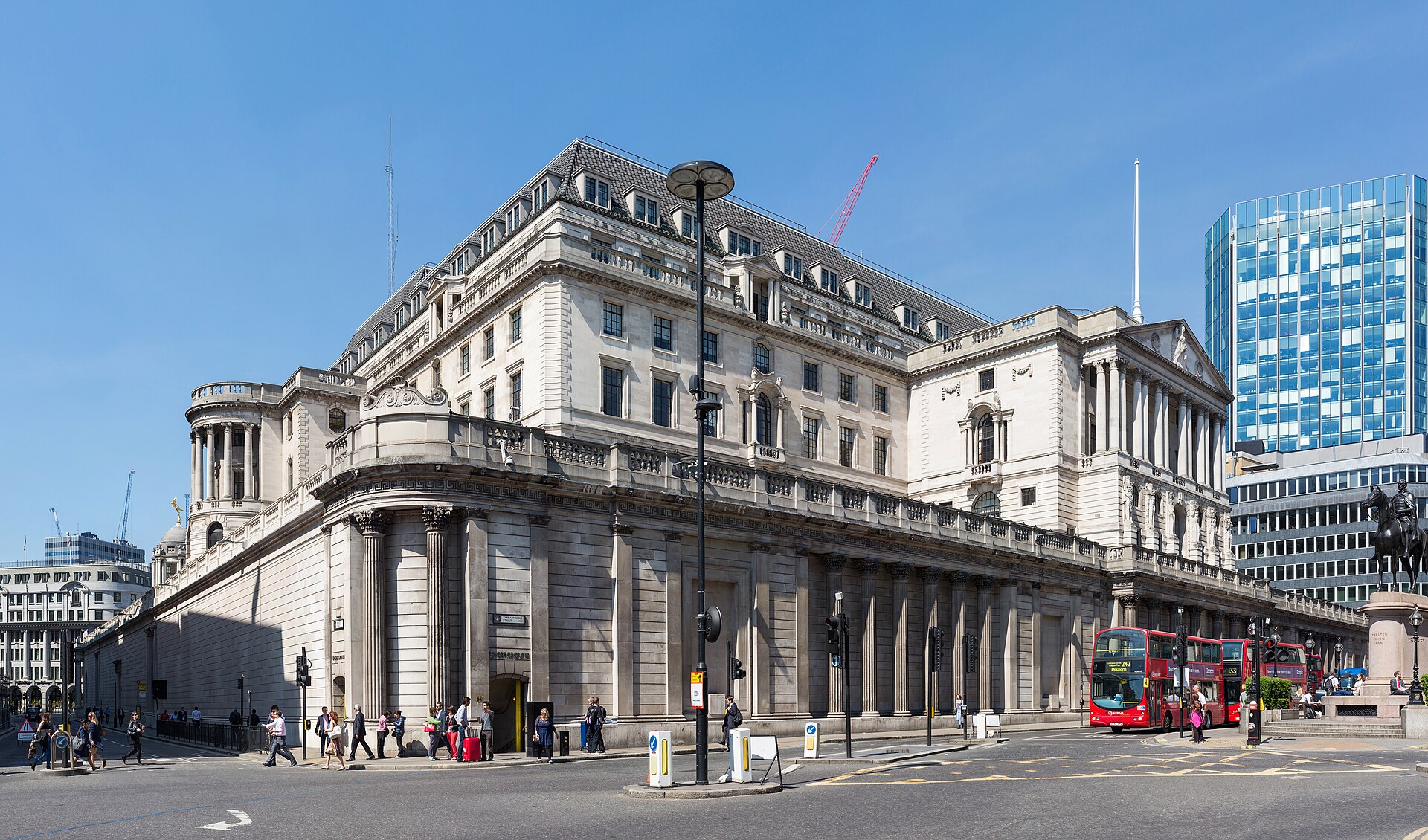
Britain’s prolonged period of weak economic growth represents the most important structural challenge facing the incoming government, according to Bank of England Governor Andrew Bailey.
Appearing before the House of Commons Treasury Committee, Bailey said the UK had experienced low growth for approximately 16 to 17 years. Although he described the financial system as resilient, he warned that financial stability alone could not resolve the deeper problems affecting productivity, investment and living standards.
His intervention amounts to a carefully framed message for Andy Burnham as he prepares to succeed Sir Keir Starmer as prime minister. Bailey declined to comment directly on the political transition, but identified stronger economic growth as the central issue confronting the country.
The remarks also came as renewed fighting between the United States and Iran pushed energy prices and UK government borrowing costs higher, adding another immediate challenge to Britain’s already subdued economic outlook.
Britain’s long-term growth rate has fallen sharply
The scale of Britain’s growth problem becomes clearer when the economy’s performance before and after the global financial crisis is compared.
In a separate Mansion House speech, Bailey said the UK economy’s potential growth rate averaged approximately 2.8% a year during the 15 years preceding the financial crisis. Productivity accounted for around 2.4 percentage points of that annual expansion, while growth in the supply of labour contributed 0.4 percentage points.
During the approximately 15 years following the crisis, potential growth fell to around 1.3% a year. Productivity contributed only 0.4 percentage points, while labour supply accounted for 0.8 percentage points.
Potential growth represents the rate at which an economy can expand over the longer term without generating excessive inflation. It depends principally upon the size of the workforce, the amount of capital available and how efficiently labour, technology and equipment are used.
The figures suggest that much of Britain’s post-crisis growth has depended upon adding workers rather than producing significantly more output from each hour worked. Population and employment growth can increase the overall size of the economy, but they do not necessarily generate substantial improvements in individual living standards.
Bailey said average annual growth in national income per person fell from approximately 2% between 1990 and the financial crisis to only 0.6% after the crisis. That difference compounds considerably over time and helps explain why many households feel that the economy has stagnated even when headline GDP has continued to increase.
Recent growth has been stronger, but the wider trend remains weak
The latest official figures are not uniformly negative.
UK gross domestic product increased by 0.6% during the first quarter of 2026, following growth of only 0.1% during the final quarter of 2025. Services expanded by 0.8%, while production and construction also recorded increases. GDP per person grew by 0.6% during the quarter and was 0.7% higher than a year earlier.
However, a single strong quarter does not remove the structural problem identified by the Bank of England.
Annual GDP growth was only 1% in 2024 and 1.3% in 2025. Moreover, real household disposable income per person fell by 0.8% during the first quarter of 2026, despite the increase in economic output. This means that the improvement in GDP did not immediately translate into greater spending power for the average household.
Business investment increased by 0.9% during the quarter but remained 1.3% below its level a year earlier. The OECD has separately concluded that British business investment remains below its pre-Brexit level, restricting the amount of machinery, technology and infrastructure available to each worker.
These figures illustrate the difference between a temporary improvement in activity and a permanent increase in the economy’s productive capacity.
Consumer spending, government expenditure or stock movements can produce quarterly growth. Sustained improvements in living standards generally require stronger investment, skills, infrastructure and productivity over many years.
Productivity is at the centre of the problem
Productivity measures how much output is produced from a given quantity of labour and capital. When productivity rises, businesses can increase wages and profits without necessarily increasing prices.
It also allows the government to collect more tax revenue without raising tax rates, helping to fund healthcare, pensions, education, defence and other public services.
Office for National Statistics estimates based on the Labour Force Survey indicate that output per hour increased by only 0.4% between the first quarters of 2025 and 2026. Output per worker fell by 0.1% over the same period.
Alternative estimates using payroll and administrative information produced stronger figures, reflecting continuing uncertainty surrounding UK labour-market data. Nevertheless, the ONS concluded that productivity growth remains weak compared with the period before the 2008 financial crisis.
The reasons extend beyond the performance of individual workers.
Productivity depends upon the machinery, software, transport, energy infrastructure and management systems available to them. A skilled employee using outdated technology or operating within an inefficient supply chain may produce less than a similarly skilled worker in a better-equipped business.
Weak productivity can therefore become self-reinforcing. Low growth makes companies cautious about investing, while insufficient investment prevents productivity and growth from improving.
A succession of economic shocks has made the problem worse
Bailey identified the pandemic, Russia’s invasion of Ukraine and Brexit as important negative supply shocks affecting the British economy.
Each has disrupted the economy in a different way.
The pandemic interrupted production, education, healthcare and investment while contributing to a lasting increase in economic inactivity. The war in Ukraine pushed up energy and food prices. Brexit introduced additional barriers and administrative costs for some businesses trading with the European Union.
More recently, conflict in the Middle East has again raised the cost of energy and international transport.
The International Monetary Fund expects UK growth to slow to approximately 1% in 2026 as higher energy prices restrict household spending, increase production costs and discourage investment. It forecasts a gradual recovery once the energy shock subsides.
The OECD is slightly more cautious, forecasting growth of 0.9% in 2026 and 1.1% in 2027. It expects renewed inflation, uncertainty and tighter financial conditions to weigh upon consumption and investment.
These forecasts remain subject to considerable uncertainty, particularly because the future course of the US-Iran conflict and global energy prices cannot be predicted with confidence.
Energy instability creates another obstacle
Bailey told MPs that Britain had so far experienced relatively limited inflationary effects from the renewed Gulf conflict. However, he warned that the peace process remained fragile and that the situation was likely to remain unstable.
Although crude-oil prices had previously fallen from their April peak, refined products such as petrol and diesel had not declined to the same extent. These products have a more direct effect on the costs faced by households, haulage operators and other businesses.
Brent crude rose by more than 4% to approximately $87 a barrel during Tuesday’s trading. The renewed inflation risk pushed the yield on 30-year UK government bonds to approximately 5.73%, its highest level for two months.
Higher energy prices weaken growth through several channels.
They reduce the disposable income available to households, increase the operating costs faced by businesses and can cause the Bank of England to maintain higher interest rates. Companies must then manage weaker demand, higher production expenses and more expensive borrowing simultaneously.
This is particularly difficult for Britain because the country remains exposed to internationally traded oil and gas. A domestic government cannot control the global price of those commodities, although it can influence energy efficiency, generation capacity and the resilience of the national system.
Weak growth places pressure on the public finances
Stronger growth would not solve every problem facing the Treasury, but continued stagnation would make its choices considerably more difficult.
Britain’s public debt is already approximately 95% of GDP. An ageing population, rising healthcare costs and higher debt-interest payments are expected to place increasing pressure upon the public finances during the coming decades.
The Office for Budget Responsibility estimates that, under its central long-term scenario, a permanent fiscal tightening worth approximately 3.8% of GDP would eventually be required to prevent debt rising above its current share of the economy.
Under a higher-productivity scenario, the required adjustment falls to approximately 1.8% of GDP. Under a lower-productivity scenario, it rises to 8.6%. These are illustrative scenarios rather than forecasts, and the outcome depends partly upon how future governments use the proceeds of growth.
The figures nevertheless demonstrate the relationship between productivity and the public finances.
When the economy grows more rapidly, tax receipts normally increase and many items of public expenditure become smaller relative to national income. When growth remains weak, governments have less capacity to improve services or reduce debt without raising taxes.
This helps explain why growth has become a political priority across the main parties. Without it, arguments about taxation and public expenditure increasingly become disputes over how to divide a slowly expanding or stagnant economy.
The Bank of England cannot create long-term growth on its own
Monetary policy can support economic stability, but it cannot independently resolve Britain’s structural weaknesses.
The Bank of England sets interest rates primarily to maintain price stability. Lower interest rates can stimulate borrowing and demand, while higher rates can restrain inflation.
However, changing Bank Rate cannot directly build houses, improve transport, train workers, expand the electricity grid or reduce trade barriers.
Bailey argued that stable monetary and fiscal frameworks provide the foundation upon which companies can make long-term decisions. More fundamental growth must come from the supply side through investment, technology, skills, trade, infrastructure, competition and effective institutions.
This distinction is important for the incoming government.
An attempt to accelerate growth principally through higher public spending or looser monetary policy could increase demand without expanding productive capacity. If the economy cannot produce the additional goods and services required, the result may be higher inflation rather than permanently stronger growth.
Sustainable growth requires improvements in the amount the economy can produce.
Bailey rejects a simple choice between growth and regulation
The Bank governor also pushed back against arguments that weaker financial regulation would automatically produce more lending and faster economic expansion.
He told MPs that Britain would not obtain stronger growth without financial stability. In his Mansion House speech, he said the debate should focus on whether individual regulations achieve a clear purpose efficiently, rather than treating all regulation as either beneficial or harmful.
Well-designed regulation can reduce transaction costs, support competition, encourage confidence and protect depositors. Poorly designed regulation can create unnecessary costs, restrict entry and prevent businesses from innovating.
Bailey therefore supported reviewing and simplifying specific rules but rejected broad deregulation that could weaken the resilience of banks.
The experience of the financial crisis remains relevant. A temporary increase in lending obtained by allowing banks to hold insufficient capital could ultimately produce severe losses, restricted credit and a prolonged recession.
The Bank’s argument is that resilient and profitable banks are better placed to lend throughout the economic cycle. Major UK banks recorded aggregate returns of 15.4% earlier this year, while their market valuations suggested that investors expected returns to remain above the cost of capital.
Investment must become more attractive
One of the incoming government’s most difficult tasks will be encouraging businesses to invest while maintaining confidence in the public finances.
Companies invest when they expect future demand to justify the cost and risk. Frequent policy changes, high borrowing costs, uncertain energy prices and delays within the planning system can make otherwise viable projects unattractive.
The government’s existing industrial strategy seeks to provide greater certainty by concentrating support upon sectors including advanced manufacturing, clean energy, life sciences, digital technology and professional services. It is intended to operate over ten years rather than changing with each annual Budget.
The success of that strategy will depend upon implementation.
Announcing funds and sector plans does not guarantee that factories, laboratories, data centres or transport links will be constructed. Businesses also require timely planning decisions, sufficient electricity connections, skilled employees and confidence that tax and regulatory arrangements will remain reasonably stable.
The government must therefore consider the combined investment environment rather than examining taxation, planning, energy and skills as unrelated policies.
Labour supply and skills also matter
Productivity is only one part of the economy’s potential growth rate. The number of people available to work and the hours they can contribute are also important.
The UK has experienced persistent problems involving long-term sickness, skills shortages and people leaving the workforce. The OECD has identified stagnant labour utilisation and rising inactivity as constraints upon GDP per person.
Increasing employment could support growth and reduce welfare expenditure. However, this cannot be achieved solely by applying greater financial pressure to people who are unable to work.
Healthcare waiting lists, mental-health provision, occupational health, childcare, transport and workplace flexibility can all affect whether someone is able to enter or remain within employment.
At the same time, businesses frequently report difficulties recruiting people with technical, construction, engineering and digital skills. Training policy therefore needs to respond more closely to the industries in which investment and employment are expected to grow.
Artificial intelligence offers an opportunity, but not an immediate solution
Bailey believes artificial intelligence could become the next general-purpose technology capable of increasing productivity across much of the economy.
Previous technologies of this type include electricity, the internal-combustion engine and the internet. Their economic importance came not only from the original invention but from the many new products, processes and business models that subsequently developed around them.
AI could improve research, diagnostics, automation, customer service, financial processes and the operation of machinery. However, its effect may take years to become visible within national productivity data.
Businesses must first reorganise workflows, train employees, improve data and invest in complementary systems. Simply purchasing an AI product does not automatically make a company more productive.
The technology also creates regulatory, cybersecurity and legal risks. Bailey called for public policy to encourage the productive and safe use of AI rather than relying upon a simple choice between unrestricted adoption and excessive control.
For Britain, the challenge will be turning its universities, financial sector and technology expertise into widespread productivity improvements rather than allowing the benefits to remain concentrated within a small number of companies.
What the warning means for UK businesses
Persistently weak national growth affects businesses even when their own markets remain profitable.
Slow growth normally means weaker demand, greater competition for customers and more pressure upon margins. It also restricts government finances, increasing the possibility of higher taxes or reduced public investment.
Companies may become reluctant to recruit or invest when the wider outlook is uncertain. That caution can reinforce the national problem by reducing productivity and future capacity.
However, low aggregate growth does not mean that every industry will stagnate.
Technology, defence, healthcare, renewable energy, financial services and specialised manufacturing may continue to expand even when the overall economy is subdued. Businesses able to improve productivity, enter overseas markets or solve specific customer problems can outperform the national trend.
The central risk is that too many companies respond to uncertainty by reducing investment indefinitely. Cost control can protect cash in the short term, but sustained underinvestment can weaken competitiveness and leave a business unable to respond when conditions improve.
Growth and stability must be pursued together
Bailey’s warning should not be interpreted as an endorsement of any single political programme.
The Bank of England is not responsible for choosing planning, tax, trade, energy or industrial policies. Its role is to maintain monetary and financial stability while explaining the economic risks that could prevent it from fulfilling that responsibility.
Nevertheless, the diagnosis is difficult to dispute.
Britain has experienced repeated external shocks, but the decline in productivity and potential growth began before the pandemic, the Ukraine war and the latest Middle East conflict. The underlying weakness is therefore structural rather than simply the product of one government or one crisis.
Andy Burnham’s government will inherit an economy that recorded encouraging growth at the beginning of 2026 but remains vulnerable to energy prices, weak investment, subdued productivity and expensive public debt.
Attempting to stimulate demand without expanding productive capacity risks higher inflation and borrowing costs. Pursuing fiscal restraint without investment could further weaken infrastructure and growth.
The more credible route lies in combining economic stability with long-term reforms that make investment easier, improve skills and health, strengthen energy security, reduce unnecessary barriers and encourage new technology.
The benefits will not appear immediately. Productivity improvements often take years to develop and may extend beyond a single parliamentary term.
That delay is one reason governments have struggled to address the problem. The costs of reform are often immediate and visible, while the economic gains are gradual and dispersed.
Bailey’s intervention is therefore both a warning and a challenge. Britain has constructed a comparatively resilient financial system, but resilience is not the same as prosperity.
The incoming government must now demonstrate how it intends to turn stability into investment, productivity and rising living standards.