Britain’s government borrowing costs have risen to their highest level since May after renewed fighting between the United States and Iran disrupted an already fragile ceasefire and pushed global energy prices sharply higher.
The yield on ten-year UK government bonds briefly moved above 5% on Tuesday, having traded below 4.88% during the previous week. It later eased to approximately 4.98% after weaker-than-expected US inflation figures reduced some of the pressure across global bond markets.
The movement reflects growing concern that higher oil and gas prices could increase UK inflation, force the Bank of England to raise interest rates and place further strain on the public finances.
Although the immediate trigger came from the Gulf, the market reaction also illustrates Britain’s wider vulnerability to energy shocks, persistent inflation, political uncertainty and a public debt burden that has become increasingly expensive to finance.
Oil prices rise as ceasefire breaks down
The renewed bond-market pressure followed several days of escalating conflict between the United States and Iran.
Brent crude rose by almost 10% on Monday before climbing above $87 a barrel during Tuesday’s trading. Prices subsequently eased after the US administration withdrew a proposal to impose a 20% charge on cargo passing through the Strait of Hormuz, but concerns about the security of global energy supplies remained.
The Strait of Hormuz is one of the world’s most important energy routes. Any interruption to shipping through the waterway could restrict the movement of oil and liquefied natural gas, increasing wholesale prices across Europe and Asia.
Gas markets have also been affected. UK and European wholesale gas contracts have risen as traders assess the risk of disruption to supplies and increased competition for alternative sources of energy.
For the UK, which remains dependent upon imported energy, sustained increases in oil and gas prices can quickly affect transport, manufacturing, electricity generation and household bills.
Why higher oil prices push up gilt yields
Gilts are bonds issued by the UK government to finance public spending and refinance existing debt.
Investors purchasing a gilt effectively lend money to the government in return for interest payments and the repayment of the bond’s face value when it matures. When investors sell gilts, their market price falls and the yield available to a new buyer rises.
The recent increase in yields therefore means that investors are demanding a greater return before lending to the British government.
Energy prices influence gilt markets because they can affect inflation. More expensive oil raises the cost of petrol, diesel, aviation fuel, shipping and industrial production. Higher gas prices can also feed through into household energy bills and the operating expenses of businesses.
If companies pass those increases to customers, inflation may remain above the Bank of England’s target for longer. Bond investors then anticipate that interest rates will remain elevated or rise further, reducing the attractiveness of existing bonds paying lower fixed returns.
The sell-off has not been confined to Britain. Government borrowing costs also increased in the United States and eurozone, although UK gilts have been particularly sensitive because of Britain’s combination of energy dependence, relatively high inflation and constrained public finances.
Interest-rate expectations change again
The Bank of England kept Bank Rate at 3.75% in June, but its Monetary Policy Committee acknowledged that energy prices remained volatile.
Using the energy prices available in the middle of June, the Bank expected inflation to remain just below 3% during the third quarter before rising to slightly above 3.25% towards the end of the year. Those projections may need to change if the latest rise in oil and gas prices proves sustained.
Markets are now anticipating nearly two quarter-percentage-point increases in UK interest rates by the end of 2026. A rate rise as early as November is considered increasingly possible, although expectations can change rapidly alongside oil prices, inflation data and developments in the Gulf.
UK Consumer Price Index inflation stood at 2.8% in May, unchanged from April and above the Bank of England’s 2% target. The figure was considerably below the levels experienced during the cost-of-living crisis, but it remained high enough to limit the Bank’s ability to disregard another energy shock.
Bank of England Governor Andrew Bailey has said that monetary policy cannot reverse an interruption to energy supplies. The Bank must nevertheless respond if an initial increase in fuel and energy prices begins to affect wages, inflation expectations and prices across the wider economy.
Britain faces a particularly difficult policy trade-off
An energy shock places the Bank of England in a difficult position because it can increase inflation while simultaneously weakening economic growth.
Higher energy costs reduce household disposable income and increase the expenses faced by businesses. Consumers may respond by cutting discretionary spending, while companies may postpone investment or reduce recruitment.
Raising interest rates can prevent the initial price shock from developing into persistent inflation. However, higher rates also increase mortgage payments and borrowing costs, placing further pressure on household spending and business investment.
The Bank must therefore judge whether the increase in energy prices is likely to be temporary or whether it will become embedded in wage negotiations, service prices and corporate pricing decisions.
Andrew Bailey told MPs this week that the effect of the renewed Middle East conflict on UK inflation had so far been limited. That assessment provides some reassurance, but it was made against an unstable geopolitical background in which energy prices can change considerably within a single trading session.
Higher gilt yields increase pressure on the public finances
The rise in yields also creates a direct challenge for the Treasury.
The government must regularly issue new gilts to finance borrowing and replace bonds that reach maturity. When market yields rise, new debt is generally issued at a higher cost, gradually increasing the government’s annual interest bill.
The effect is not immediate across the entire stock of public debt because many existing gilts pay fixed interest rates. However, the cost rises as debt is refinanced and additional borrowing is undertaken.
Britain is also unusually exposed to changes in inflation because a significant proportion of government debt is linked to the Retail Prices Index. Higher inflation can therefore increase debt-interest expenditure directly, as well as indirectly through higher yields on conventional gilts.
Recent experience demonstrates the scale of the risk. The Office for Budget Responsibility estimated that interest rates turning out higher than expected added approximately £45 billion to debt-interest spending in 2023-24 compared with its October 2021 forecast.
The OBR uses market expectations for interest rates, oil and gas prices when preparing its economic and fiscal forecasts. A sustained deterioration in those assumptions could therefore reduce the government’s headroom against its fiscal rules.
That could leave ministers facing difficult choices between lower spending, higher taxes, reduced investment or greater borrowing.
A difficult inheritance for the incoming government
The gilt-market movement comes as Andy Burnham prepares to become prime minister on 20 July following Keir Starmer’s resignation.
Burnham has indicated that his government will continue to comply with the existing fiscal rules. However, investors are waiting for greater detail about his spending priorities, taxation plans and choice of chancellor.
Some fund managers have reduced their exposure to gilts because of concern that the new administration could adopt a more expansionary fiscal policy.
Rathbones has reportedly cut its holdings of UK government bonds as a precaution against greater borrowing or a weakening of fiscal discipline. Markets have also focused on speculation that Ed Miliband could be appointed chancellor, although no final appointment had been confirmed when the markets moved.
Government spending does not automatically lead to a loss of market confidence. Borrowing that produces stronger productivity, infrastructure or sustainable economic growth can improve the long-term fiscal position.
However, investors will examine whether additional commitments are properly funded and whether the government can retain sufficient flexibility to respond to further economic shocks.
The rise in yields is therefore not solely a judgment on domestic politics. It primarily reflects the global energy shock, but political uncertainty can magnify the effect when investors are already concerned about borrowing and inflation.
What higher gilt yields mean for businesses
Gilt yields act as an important benchmark for borrowing costs across the economy.
Banks and investors use government bond yields when pricing corporate loans, commercial mortgages and bonds issued by businesses. If the government must offer investors a return of approximately 5%, companies generally have to pay more because their debts carry additional credit risk.
Larger businesses seeking to raise finance through bond markets may therefore face higher interest costs. Smaller companies could experience the effect through bank loans, overdrafts and asset-finance agreements.
The consequences will be particularly important for businesses with large amounts of variable-rate debt or borrowing facilities that must be renewed during the coming months.
Higher financing costs can make marginal investment projects uneconomic. Companies may delay purchasing machinery, opening new premises, undertaking acquisitions or recruiting additional staff.
Property, construction, hospitality and retail businesses could be especially exposed because they commonly combine significant borrowing requirements with sensitivity to household spending.
Energy-intensive manufacturers face pressure from both sides. They must absorb higher electricity, gas and transport expenses while also confronting a more expensive cost of capital.
Mortgage rates may also come under pressure
Gilt yields do not determine mortgage pricing directly, but they are closely connected to the wider interest-rate markets used by lenders.
Fixed mortgage rates are particularly influenced by swap rates, which reflect expectations for Bank Rate over the term of the loan. If investors expect the Bank of England to raise rates, swap rates can rise and lenders may increase the cost of new fixed deals.
The latest increase in energy prices has therefore interrupted the improvement in mortgage pricing seen during parts of the spring and early summer.
Homeowners already protected by a fixed-rate agreement will not face an immediate increase. However, borrowers approaching the end of an existing deal could find that anticipated reductions in mortgage rates are delayed or reversed.
The impact could also spread to the housing market. Higher mortgage costs reduce affordability, restrict the amount that buyers can borrow and may weaken demand for property.
Commercial landlords and developers face similar pressures when refinancing loans or assessing whether new construction projects remain viable.
Sterling remains comparatively resilient
Despite the increase in oil prices and gilt yields, sterling strengthened slightly against the US dollar on Tuesday, rising to approximately $1.338.
The pound also remained close to its strongest trade-weighted level for a year, partly because of weakness in the euro.
This resilience may appear surprising because higher energy prices generally weaken the outlook for an importing economy such as the UK.
However, currencies are influenced by several competing factors. Expectations of higher UK interest rates can support sterling because they increase the potential return available from sterling-denominated assets.
The pound was also affected by movements in the dollar following softer US inflation figures.
A stronger currency can reduce the sterling cost of imported oil and other commodities, providing some protection against inflation. It can nevertheless make British exports more expensive overseas and reduce the translated value of foreign earnings reported by UK companies.
Stock-market impact varies between sectors
The effect on UK shares has been mixed.
The FTSE 100 recovered from an early fall and recorded modest gains, helped by increases in BP and Shell. Higher oil prices can improve the revenues and cash generation of energy producers, although the outcome depends upon production volumes, refining margins and taxation.
The FTSE 250, which contains more businesses exposed to the domestic economy, performed less strongly.
Airlines, transport groups, manufacturers and consumer-facing businesses can be negatively affected by higher fuel costs and weaker household demand. Banks may initially benefit from higher lending rates but could face greater credit losses if borrowers struggle to meet repayments.
The market response therefore reflects a redistribution of income between sectors rather than a uniform effect across the economy.
Gilt yields could fall again if tensions ease
The recent movement does not necessarily mean that ten-year yields will remain above 5%.
Government bond markets can reverse rapidly when geopolitical tensions ease or new economic information changes expectations for inflation and interest rates.
Earlier in the conflict, the announcement of a ceasefire between the United States and Iran caused oil prices and UK yields to fall sharply. The breakdown of that agreement has now produced the opposite reaction.
Softer US inflation data already caused the ten-year gilt yield to retreat below 5% after its initial rise. That movement demonstrated how international inflation and interest-rate expectations influence UK borrowing costs even when the original source of the market concern lies elsewhere.
A durable ceasefire, secure passage through the Strait of Hormuz and lower oil prices could allow investors to reduce their expectations of UK rate rises.
However, further attacks or a prolonged interruption to energy supplies could push oil, inflation expectations and gilt yields higher.
What businesses should watch
Businesses should pay attention to five closely connected developments over the coming weeks:
- the price of Brent crude and European wholesale gas;
- shipping activity through the Strait of Hormuz;
- the next UK inflation figures;
- the Bank of England’s decision on 30 July;
- and the incoming government’s fiscal and ministerial announcements.
Companies with significant exposure to energy, foreign exchange or variable-rate borrowing may need to update their forecasts using several different assumptions rather than relying upon a single central estimate.
Cash-flow forecasts should consider the combined effect of higher energy bills, increased financing costs and weaker consumer demand.
Businesses planning to refinance debt may also wish to assess their options early. Waiting for rates to decline could prove beneficial if the conflict eases, but it also creates the risk of refinancing into a more difficult market if conditions deteriorate further.
A warning rather than a crisis
The rise in gilt yields above 5% is not, by itself, evidence of a UK financial crisis.
The movement has occurred alongside a wider global bond sell-off caused primarily by higher energy prices and renewed geopolitical risk. The subsequent retreat below 5% also suggests that markets remain responsive to better inflation news.
Nevertheless, the episode is a warning about the limited room available to British policymakers.
Inflation remains above target, government borrowing is expensive and businesses are already dealing with high employment, energy and financing costs. A prolonged oil and gas shock could intensify each of those pressures simultaneously.
For the incoming government, maintaining market confidence will require credible fiscal plans alongside measures capable of improving growth and investment.
For the Bank of England, the challenge will be to prevent an energy-price shock from becoming embedded in wider inflation without placing unnecessary pressure on an already subdued economy.
For businesses, the immediate lesson is that borrowing and energy costs are likely to remain volatile. The eventual outcome will depend less upon a single day’s gilt movement than upon whether the renewed Gulf conflict can be contained before higher costs spread throughout the British economy.
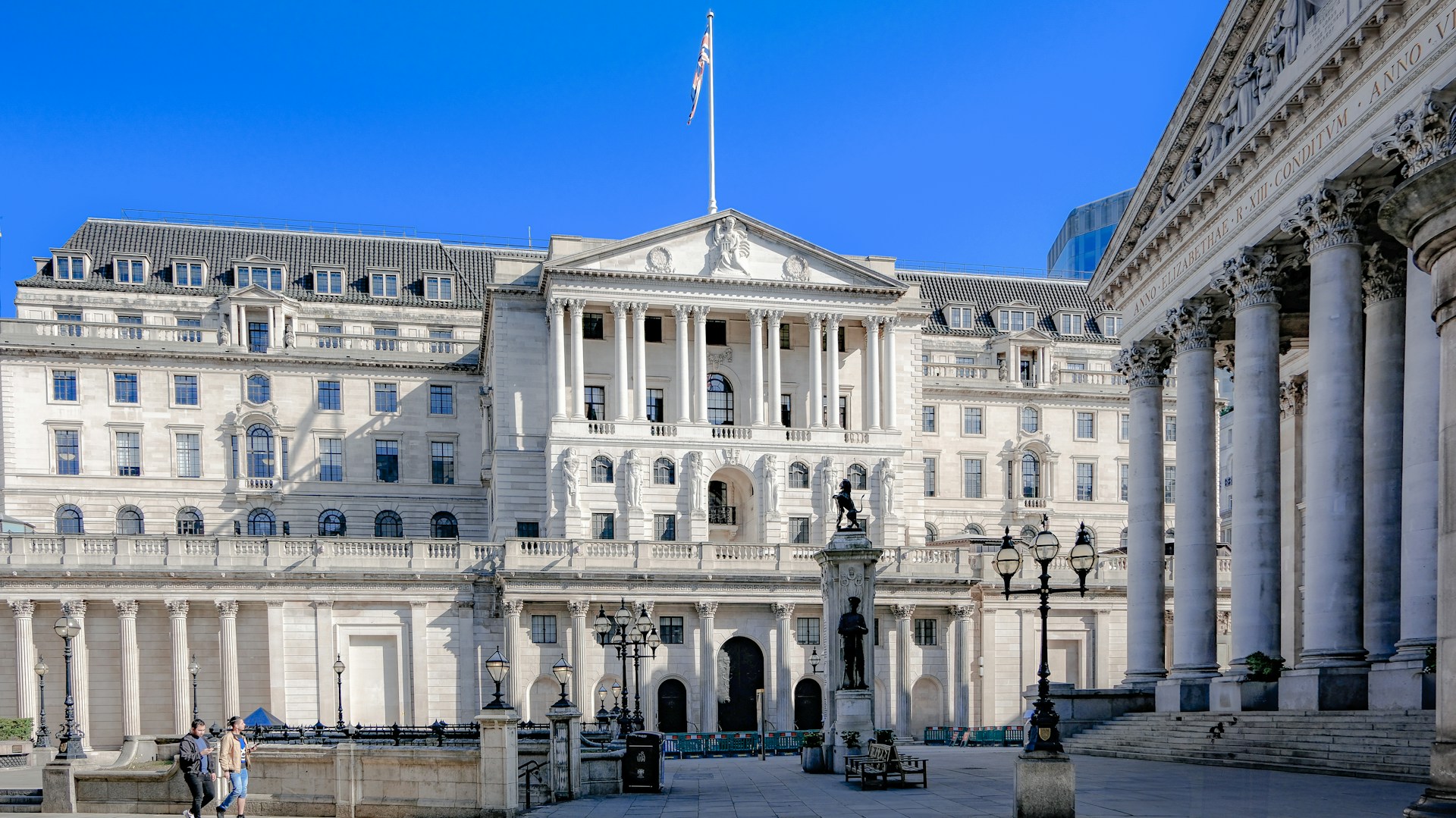
Photo by Sue Winston on Unsplash