UK Economy Expected to Stall as Energy Costs and Weak Services Hold Back Growth
The UK economy may have recorded little or no growth during May as higher energy costs, subdued activity across important service industries and continuing international uncertainty placed renewed pressure on businesses and households.
The Office for National Statistics will publish its first estimate of May’s gross domestic product on Thursday 16 July. Economists currently expect the figures to show either no monthly growth or a further contraction of 0.1%, following a 0.1% decline in April.
Although another weak month would add to concerns about Britain’s economic outlook, the wider picture remains more complicated. Growth was relatively strong during the opening months of 2026, retail sales recovered in May and international forecasters still expect the UK economy to expand over the year as a whole.
The latest figures are therefore likely to show an economy that has lost momentum, rather than one that has entered a clear and sustained downturn.
Economists predict another weak month
Pantheon Macroeconomics expects GDP to have been unchanged during May, with continuing weakness in services offset by a more mixed performance elsewhere in the economy.
Deutsche Bank has taken a more pessimistic view, forecasting a 0.1% monthly contraction. Its chief UK economist, Sanjay Raja, has suggested that activity remained sluggish across information and communications, professional services, financial services and property-related businesses.
These sectors are particularly important because services represent the largest part of the British economy. Weakness among professional advisers, financial companies, technology businesses, recruitment firms and property operators can also indicate that companies are postponing investment, recruitment and expansion decisions.
A second consecutive monthly decline would strengthen concerns that economic growth is slowing sharply after a better-than-expected start to the year. However, monthly GDP figures can be volatile and are often revised when the ONS receives more complete information.
The May estimate will therefore need to be considered alongside the wider three-month trend, employment figures, inflation and evidence from individual industries.
April brought an abrupt loss of momentum
The economy contracted by 0.1% in April after expanding by 0.3% in March and 0.4% in February. It was the first monthly decline in GDP since August 2025.
Services output fell by 0.2% during April, while production was unchanged and construction increased by 0.1%.
Administrative and support services were among the weakest areas, recording a 2.2% monthly decline. Employment activities fell by 2.6%, while services provided to buildings and landscapes decreased by 4.3%.
Arts, entertainment and recreation output also fell by 4.3%. Sports, amusement and recreation activities declined by 9.1%, making them the largest individual negative contributor to monthly GDP.
Manufacturing provided some support, increasing by 0.4% during April. Pharmaceutical production, basic metals and rubber and plastic products were among the better-performing manufacturing industries.
Construction also continued its partial recovery, although the monthly increase was driven by repair and maintenance work while new construction activity declined.
The longer-term figures remain more encouraging
The April contraction followed several months of expansion and did not reverse all the growth recorded earlier in the year.
GDP increased by 0.7% in the three months to April compared with the previous three-month period. This was the fifth consecutive period of three-month growth.
Services output increased by 0.8% over that period, construction grew by 1.6% and production contracted by 0.1%. Compared with the same three months a year earlier, GDP was 1.1% higher.
The distinction between monthly and three-month figures is important. A flat or negative May estimate would show that momentum has weakened, but it would not necessarily mean that the earlier expansion has disappeared completely.
Nevertheless, businesses are likely to be more concerned about the direction of travel than the historic three-month comparison. Companies making decisions about recruitment, capital expenditure and borrowing need confidence that demand will continue to grow, rather than confirmation that activity was stronger several months ago.
Retail sales offer some grounds for optimism
Consumer spending may have provided limited support during May.
Retail sales volumes increased by 1.2% during the month, following a revised decline of 1% in April. The ONS said retailers attributed the recovery partly to promotional activity and warmer weather, which supported online businesses and department stores.
Stronger demand for seasonal goods, outdoor products and household items may have helped offset weaker conditions elsewhere in the economy.
However, the retail figures should be interpreted cautiously. Promotional activity can increase sales volumes without generating a corresponding improvement in profit margins. Consumers may also have brought forward spending or moved purchases between different categories rather than increasing their overall expenditure.
Retail sales are only one component of the economy, and stronger performance among retailers may not be sufficient to offset weakness across professional, financial and property services.
The figures nevertheless suggest that household demand has not collapsed and provide a more balanced picture than the gloomy GDP forecasts alone.
Energy costs remain a major concern for businesses
The conflict involving Iran has affected the UK economy principally through higher oil, gas, transport and supply-chain costs.
Britain is vulnerable to energy shocks because households and businesses remain heavily exposed to gas prices. Gas accounts for more than three-fifths of final household energy consumption, while wholesale gas prices also have a significant influence over electricity prices.
Higher energy costs reduce households’ disposable income and increase operating expenses for companies. Businesses may respond by raising prices, reducing profit margins, postponing investment or cutting employment.
The impact is especially significant for transport, logistics, manufacturing, hospitality, agriculture and other energy-intensive industries. Companies operating under fixed-price contracts may be unable to pass higher costs to customers immediately.
ONS surveys show that 64% of trading businesses expressed some degree of concern about energy prices in late June. The proportion increased to 88% among accommodation and food service businesses.
Energy prices have therefore become both a direct cost and an important source of uncertainty. Even where wholesale prices fall temporarily, renewed geopolitical tension can quickly reverse the improvement.
Britain remains exposed to decisions made overseas
The UK’s immediate economic prospects will depend partly on developments that domestic policymakers cannot control.
As a net energy importer, Britain is likely to experience weaker activity when global energy costs rise. Higher prices reduce household spending power and increase costs throughout supply chains.
Forecasts produced after the escalation of the Middle East conflict were revised down sharply. Estimates cited by the House of Commons Library ranged from annual UK growth of 0.4% to 0.7%, compared with the Office for Budget Responsibility’s pre-conflict forecast of 1.1%.
More recent assessments have become slightly less pessimistic. The International Monetary Fund now expects the UK economy to grow by 1% during 2026 before recovering to 1.3% in 2027 as the energy shock fades.
The IMF forecast indicates that Britain is still expected to avoid an annual contraction. Growth of approximately 1%, however, would remain weak by historic standards and leave the economy vulnerable to further disruption.
Modest national growth can also feel like stagnation for individual households and businesses, particularly when population growth, inflation and uneven regional performance are taken into account.
Bank of England faces conflicting pressures
Weak economic activity would normally strengthen the argument for lower interest rates. Reducing borrowing costs could support business investment, mortgage holders, housing activity and consumer spending.
Higher energy prices create the opposite pressure because they can push inflation upwards.
The Bank of England maintained Bank Rate at 3.75% in June. Seven members of the Monetary Policy Committee voted to leave rates unchanged, while two voted for an increase to 4%.
The split demonstrates the difficulty facing policymakers. Raising rates could help prevent higher energy costs from becoming embedded in wages and domestic prices, but it would also place further pressure on borrowers and potentially weaken an already subdued economy.
Reducing rates could stimulate demand, but it might also add to inflationary pressure or weaken sterling, increasing the cost of imports.
The Bank will therefore examine the May GDP estimate alongside inflation, pay growth, employment and business survey data. A single month of weak growth is unlikely to determine interest-rate policy by itself.
What the slowdown means for UK businesses
For businesses, the forecasts reinforce the need for cautious planning rather than assuming either a rapid recovery or a severe recession.
Companies exposed to energy, fuel and transport costs should consider how further price volatility would affect cash flow and profitability. Forecasts may need to include several scenarios covering different energy-price and demand assumptions.
Businesses operating under long-term fixed-price contracts should review whether their agreements contain mechanisms for recovering exceptional cost increases. Where prices cannot be changed, protecting margins may depend on productivity improvements, purchasing decisions or renegotiating terms with suppliers.
Employers may also remain cautious about permanent recruitment. Temporary workers, contractors and interim appointments can provide flexibility, although excessive caution can leave companies without the skills needed when demand improves.
Retail, leisure and hospitality businesses may receive temporary support from warmer weather, major sporting events and promotional activity. These factors could strengthen activity during June and July, but they should not be treated as evidence of a permanent improvement in consumer confidence.
Companies considering investment may find opportunities where competitors are delaying decisions. However, borrowing costs, energy exposure and realistic demand forecasts will remain important considerations.
A fragile outlook rather than an inevitable downturn
The expected May GDP figures are likely to reinforce the view that Britain’s economy has entered a slower and more difficult period.
Another month without growth would be disappointing after the stronger performance recorded earlier in 2026. Weak service-sector activity, elevated energy costs and international uncertainty are all restricting confidence and investment.
However, the economy is not uniformly weak. Retail sales recovered in May, manufacturing has shown pockets of strength and GDP remained higher over the three months to April. The IMF also continues to expect positive annual growth.
The central risk is that prolonged uncertainty causes businesses and households to delay spending, recruitment and investment, turning a temporary slowdown into a more persistent period of stagnation.
The ONS figures on Thursday will provide the first clear indication of whether April’s contraction was an isolated setback or part of a broader loss of momentum. For UK businesses, the most sensible approach remains careful cash-flow management, realistic forecasting and preparation for a range of possible economic outcomes.
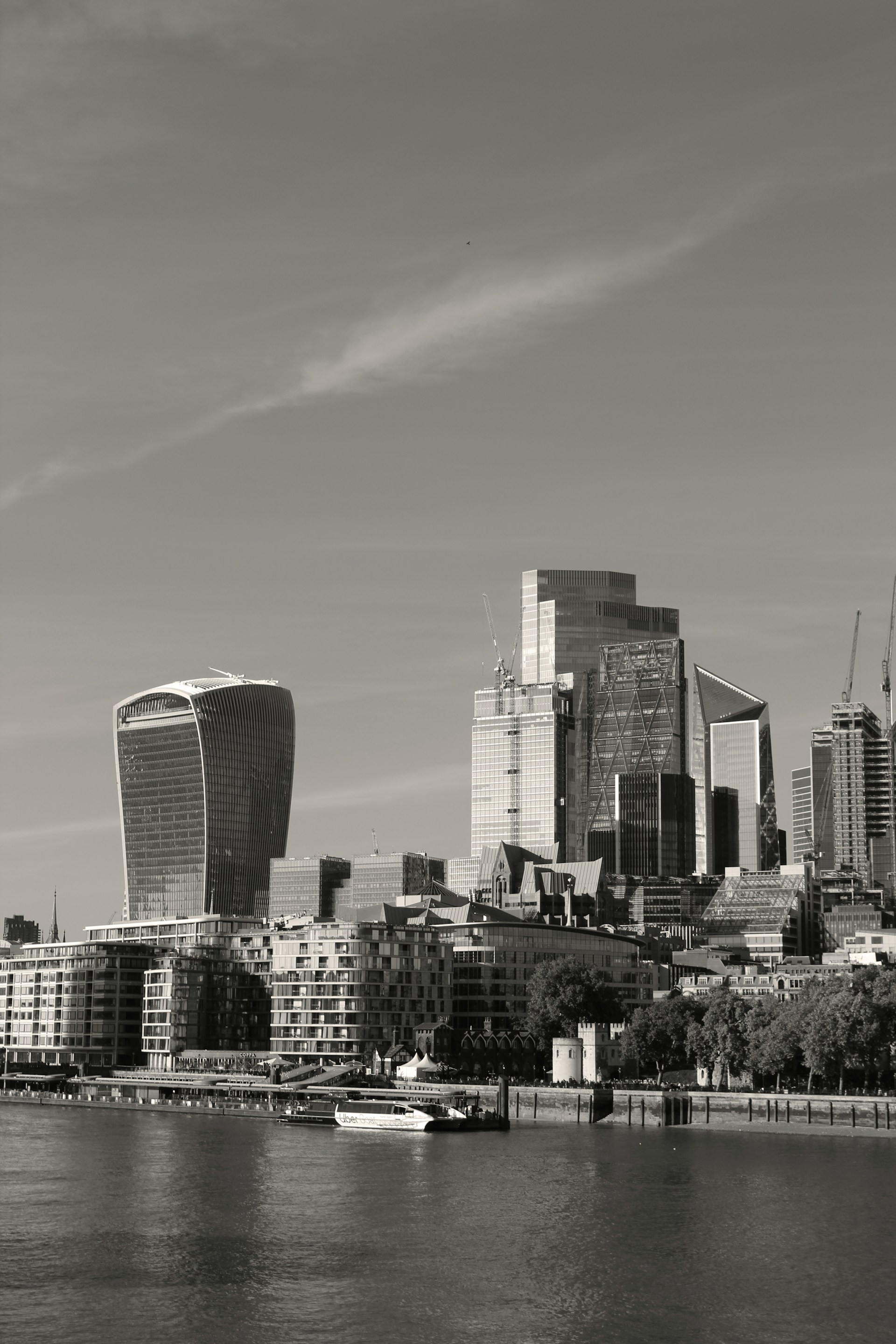
Photo by Amir Arsalan Shamsabadi on Unsplash