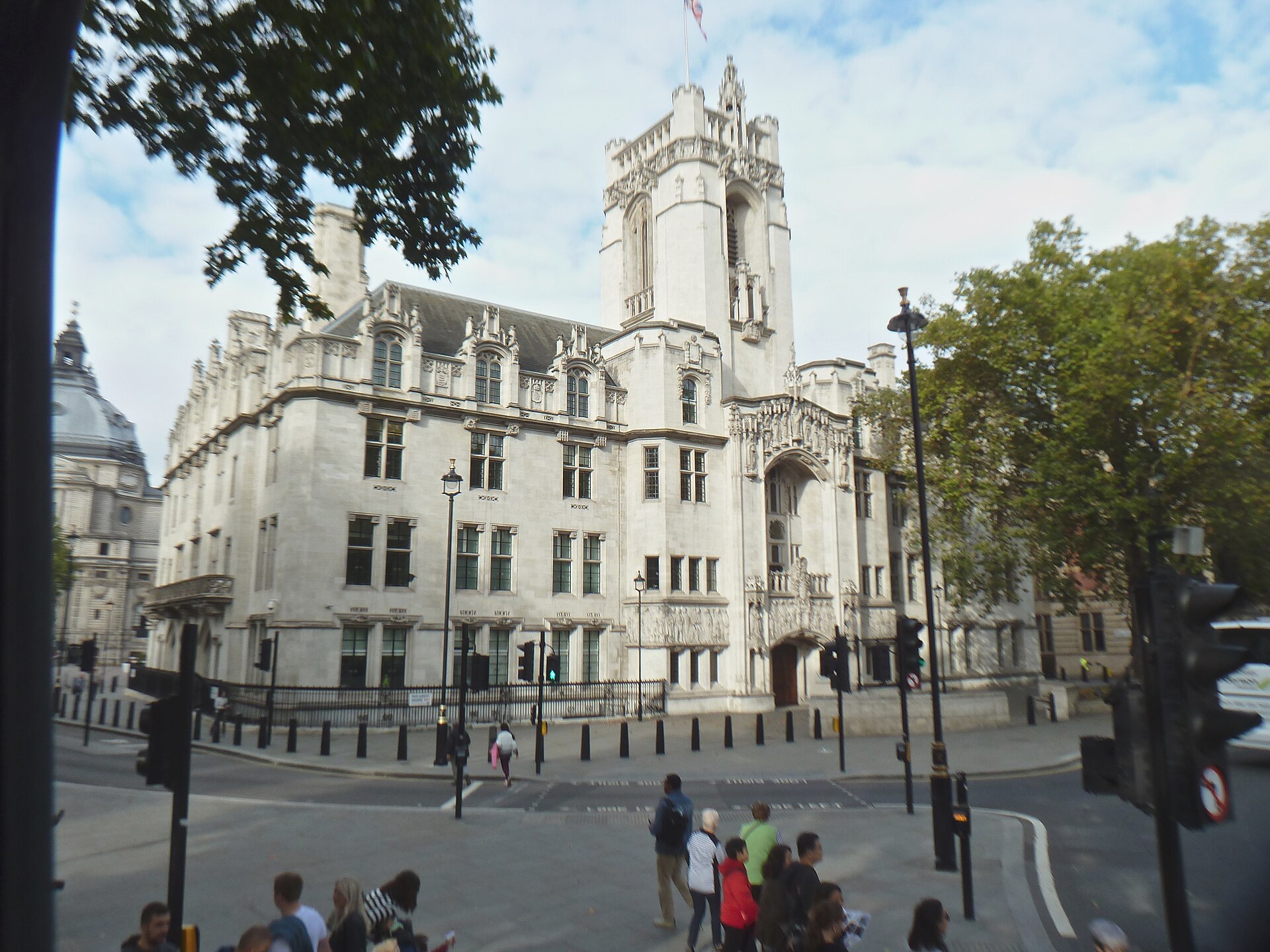
BlueCrest Capital Management has lost a near £200 million Supreme Court battle with HMRC, in a ruling that could reshape how some hedge funds, investment firms and professional partnerships treat senior staff for tax purposes.
The case centred on whether certain members of BlueCrest’s limited liability partnership should be treated as genuine partners or as employees for income tax and National Insurance purposes.
BlueCrest argued that senior portfolio managers and traders were partners because their remuneration was connected to the profits of the business and because they made significant trading decisions. HMRC argued that many of them were, in substance, salaried members who should be taxed in the same way as employees.
The Supreme Court unanimously dismissed BlueCrest’s appeal. It found that most of the relevant remuneration was “disguised salary” and that high-value trading responsibility did not, by itself, amount to significant influence over the affairs of the partnership.
The decision is a major win for HMRC. It is also a warning to LLPs that a member’s title, earnings or commercial importance will not necessarily be enough to secure partner-style tax treatment.
What the case was about
Limited liability partnerships are widely used by professional services firms, investment managers and hedge funds. They can be commercially sensible structures, allowing members to share profits, participate in ownership and operate with flexibility.
But the tax treatment of LLP members differs from that of employees. Genuine partners are usually treated as self-employed for tax purposes. That means the LLP is not generally liable for employer National Insurance contributions on their profit shares in the same way as it would be for employees.
In 2014, the Government introduced the salaried members rules to stop individuals being placed into LLP structures when, in substance, they looked more like employees.
The rules ask whether three conditions are met. Broadly, these concern whether the member receives disguised salary, whether they lack significant influence over the LLP, and whether their capital contribution is too low.
If all three conditions are met, the individual is treated as an employee for tax purposes.
BlueCrest’s dispute focused mainly on two points: whether the relevant members’ pay was disguised salary, and whether their trading responsibilities gave them significant influence over the partnership.
Why BlueCrest lost
The Supreme Court accepted that BlueCrest’s portfolio managers and desk heads had significant responsibility. They made multi-million-pound investment decisions and could have a major impact on the firm’s performance.
However, the court drew a distinction between operational responsibility and influence over the LLP as a whole.
The judges found that significant influence must come from the legal and contractual rights of the member within the LLP structure, not merely from personal performance, commercial importance or informal influence. In other words, being important to the business is not the same as having a meaningful role in governing the business.
That distinction was central. A senior trader may control large positions, make valuable decisions and generate substantial profits. But if they do not have legally enforceable rights to influence the LLP’s strategic affairs, they may still fail the significant influence test.
The court also rejected BlueCrest’s argument that remuneration was sufficiently tied to LLP profits. The fact that payments were capped by overall profits was not enough. The court considered the structure and purpose of the rules, and concluded that most of the relevant pay was disguised salary.
Why HMRC sees this as important
For HMRC, the ruling supports the principle that tax should follow the substance of an arrangement, not just its legal label.
The salaried members rules were designed to prevent businesses from avoiding employment taxes by putting people into LLP membership without giving them the economic risk, capital commitment or governance role normally associated with partnership.
From HMRC’s perspective, the BlueCrest judgment gives clarity. It confirms that high pay, personal performance and operational responsibility are not automatically enough to avoid salaried member treatment.
That matters because the difference in tax treatment can be substantial. In BlueCrest’s case, Reuters reported that HMRC had demanded around £142 million in tax and a further £55.3 million in National Insurance contributions for the years 2014 to 2019.
The ruling is therefore not simply technical. It affects real money, and it may influence how HMRC approaches other LLPs.
BlueCrest argues the ruling damages business certainty
BlueCrest has strongly criticised the outcome. The firm said the UK was “no longer a serious contender” as a place to do business and argued that HMRC’s published guidance on the salaried members rules was wrong.
That criticism reflects a wider concern among some financial services firms. If tax rules are seen as uncertain, or if guidance does not match the courts’ later interpretation, businesses may argue that the UK becomes harder to plan around.
This is an important point. Tax certainty matters, particularly for internationally mobile firms. Hedge funds, asset managers and private capital businesses can often choose between jurisdictions. If the UK is perceived as unpredictable, that can weaken its attractiveness.
However, the counterargument is also strong. A competitive tax system does not mean allowing employee-like arrangements to receive partner-style tax treatment. If someone is, in substance, an employee, HMRC will argue that they should be taxed accordingly.
The challenge for the UK is therefore to combine competitiveness with clarity and fairness.
Wider implications for LLPs
The judgment is likely to be studied carefully across the professional services and investment sectors.
The immediate impact may be greatest for hedge funds and investment firms where senior traders or portfolio managers are treated as LLP members but do not have formal governance rights or substantial capital at risk.
Larger professional services firms may be less exposed if their partners contribute meaningful capital and have clearer voting rights, management structures and genuine economic participation. But the decision still matters because it reinforces the need for LLP arrangements to be properly documented and commercially real.
Firms relying mainly on informal influence or individual commercial value may now need to review their position.
It is not enough to say that someone is senior, important or profitable. The question is whether the LLP agreement and wider governance arrangements give that person commercially meaningful influence over the affairs of the partnership.
The importance of documentation
One practical lesson from the case is the importance of documentation.
LLPs should be able to show clearly how members participate in governance, how profits are allocated, how capital is contributed, and what risks members actually bear.
If an individual is described as a partner but receives largely fixed or personal-performance-based remuneration, has little say in strategy, and contributes limited capital, HMRC may be more likely to challenge the arrangement.
The Supreme Court’s approach puts emphasis on enforceable rights. That means LLP agreements, side letters, board structures, voting provisions and governance records all become more important.
This is a useful business lesson beyond tax. A structure should reflect commercial reality. If the paperwork says one thing but the day-to-day economics say another, the risk of challenge increases.
A warning against title inflation
The BlueCrest case also highlights the risk of title inflation.
In many firms, people may be called partners, members, directors or principals for commercial or cultural reasons. Those titles can be useful internally and externally. But tax and employment status depend on substance, not branding.
This is particularly relevant in sectors where senior employees are rewarded by reference to performance. A trader, adviser, consultant or manager may be highly skilled and highly paid, but that does not automatically make them a business owner.
The distinction matters for tax, governance, risk and employment rights.
Businesses should therefore be careful when using partnership titles for people who do not share the core features of partnership: influence, capital, risk and participation in the overall fortunes of the firm.
Competitiveness versus anti-avoidance
The wider policy issue is the balance between competitiveness and anti-avoidance.
The UK wants to remain a leading financial centre. It needs tax rules that are understandable, stable and internationally competitive. But it also needs to protect the tax base and prevent structures that turn employees into partners in name only.
The BlueCrest ruling may be seen by some as another example of the UK becoming more difficult for financial firms. Others will see it as a necessary correction to arrangements that blurred the line between employment and partnership.
Both concerns deserve attention.
If HMRC guidance has not been sufficiently clear, it should be updated quickly. Firms should be able to understand the rules before they structure their affairs. But businesses should also recognise that courts will look at purpose, substance and legal rights, not only formal labels.
A strategic lesson for businesses
The case offers a wider strategic lesson: tax planning must be aligned with governance and economic reality.
A structure that produces a tax advantage but does not reflect how power, risk and reward actually operate within the business is vulnerable. It may survive for years, but if challenged, the cost can be severe.
The BlueCrest dispute covered five tax years. By the time a case reaches the Supreme Court, the financial exposure, advisory cost, management distraction and reputational impact can be enormous.
For any business using partnership, contractor, agency or incentive structures, the lesson is clear. Do not rely only on historic practice or industry norms. Test whether the structure would still look robust if examined by HMRC, a regulator, a tribunal or a court.
That means asking difficult questions early. Who controls the business? Who bears risk? Who contributes capital? Who participates in profits and losses? Who has enforceable rights? Who is, in practical terms, an employee?
A ruling that will echo beyond BlueCrest
The Supreme Court decision does not mean every LLP member in every firm will be treated as an employee. Genuine partners remain possible and legitimate.
But the judgment narrows the room for firms to rely on informal influence, commercial importance or personal performance as evidence of partnership status.
For HMRC, this is a significant victory. For BlueCrest, it is a costly defeat. For the wider market, it is a reminder that the LLP structure must be used carefully.
The UK’s financial sector depends on both competitiveness and credibility. A clear, fair and predictable tax system is part of that. The BlueCrest ruling may strengthen HMRC’s hand, but it also increases pressure on the tax authority to ensure its guidance is aligned with the law as now clarified by the Supreme Court.
The message for firms is straightforward. If a member looks like an employee, is paid like an employee, and lacks real influence over the partnership, calling them a partner may no longer be enough.