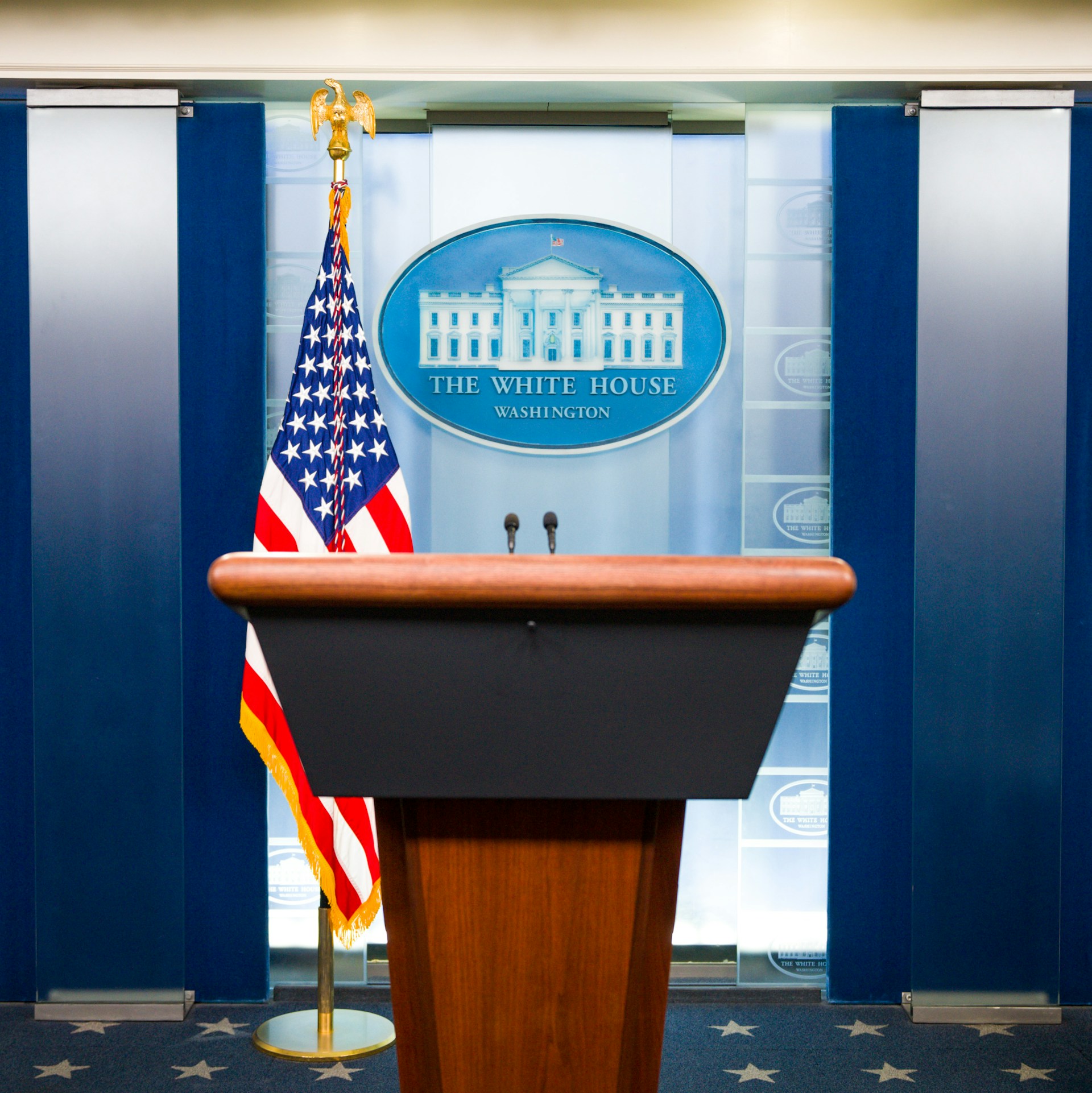
As the United States approaches its 250th anniversary, the country remains the most powerful economy in the world. It has the largest nominal GDP, the deepest capital markets, the most important reserve currency, the strongest military, and a technology sector that still shapes global business.
Yet the picture is changing. America is not becoming weak, but it is becoming less singular. Its lead over the rest of the world is narrower in some areas, more contested in others, and increasingly dependent on whether it can keep attracting capital, talent, allies and trust.
That distinction matters. The United States is not facing immediate displacement by a single rival. China has major economic and industrial strengths, but also serious domestic weaknesses. Europe remains wealthy and influential, but fragmented. India is growing quickly, but still much poorer per person. The dollar remains dominant, even as more countries look for alternatives.
The more realistic story is not American decline, but the gradual movement towards a more multipolar world.
For businesses, investors and policymakers, that may be the most important point. The old assumption that America would automatically set the rules of global trade, finance, technology and security is becoming less reliable.
America is still the world’s largest economic power
The United States remains the world’s largest economy at market exchange rates. World Bank data shows US GDP at around $30.8 trillion in 2025, compared with China at around $19.5 trillion and the European Union at around $21.2 trillion.
That economic scale gives America enormous influence. Its consumer market remains one of the most important in the world. Its companies dominate many high-value sectors. Its financial markets shape global investment flows. Its universities, research institutions and venture capital networks continue to attract entrepreneurs and innovators.
The US also retains a major advantage in productivity and income. Its GDP per head is far higher than China’s and still materially ahead of most large developed economies. That supports household consumption, business formation and the ability to finance innovation.
However, scale alone no longer tells the full story. China is already larger on some purchasing power measures. It is also the dominant force in many areas of manufacturing, clean energy supply chains, electric vehicles, batteries and critical minerals processing.
The United States is still wealthier and more financially powerful, but it no longer has the same industrial dominance it enjoyed after the Second World War or even at the end of the Cold War.
The dollar remains dominant, but confidence is being tested
The US dollar is still the central currency of the global economy.
It is used in trade, reserves, banking, debt issuance and financial markets. The depth and liquidity of US Treasury markets give the dollar a role that no other currency currently matches. Even countries that criticise American policy often continue to hold dollars because there is no obvious equivalent substitute.
That said, dollar dominance is not the same as dollar invulnerability.
The dollar’s share of global official reserves has declined from its early-2000s peak. Central banks have diversified gradually into other currencies and gold. Recent surveys suggest more reserve managers are considering reducing dollar exposure over the coming decade, partly because of geopolitical risk and concern over US policy unpredictability.
This does not mean the dollar is about to be replaced. The euro lacks a unified fiscal structure. China’s renminbi is constrained by capital controls and limited trust in Chinese financial institutions. Gold is useful as a reserve asset, but not a full operating currency for the global financial system.
The stronger argument is that the dollar may decline slowly rather than collapse suddenly. For businesses, that means the dollar will remain central to trade and finance, but exchange rate volatility and reserve diversification could become more important strategic risks.
Military power is still unmatched, but no longer uncontested
America’s military power remains extraordinary. It spends far more on defence than any other country, maintains a global network of bases, and possesses unmatched power projection capability.
SIPRI data shows US military spending at around $954 billion in 2025, compared with an estimated $336 billion for China. The United States also retains major advantages in aircraft carriers, global logistics, intelligence, advanced weapons, alliances and nuclear capability.
However, military dominance is no longer absolute in every theatre. China has invested heavily in missiles, naval capability, cyber power, space assets and regional anti-access systems. Russia’s war in Ukraine has shown the enduring importance of artillery, drones, industrial capacity and attrition. Conflicts in the Middle East have shown how non-state actors and regional powers can impose costs on more powerful states.
This is a different kind of military competition. America can still project force globally, but rivals can make that projection more expensive and politically risky.
The lesson is that power is not only about total spending. It is about geography, industrial capacity, alliances, technology, political will and the ability to sustain operations over time.
Technology remains America’s strongest card
Technology is the clearest area where America still has a commanding advantage.
The US dominates private AI investment, frontier model development, venture capital, cloud infrastructure, chip design and the platform companies that shape global digital life. Companies such as Microsoft, Nvidia, Apple, Amazon, Google, Meta and OpenAI continue to define much of the world’s technology agenda.
Stanford’s 2026 AI Index reported that US private AI investment reached $285.9 billion in 2025, more than 23 times the equivalent figure for China. The US also led in newly funded AI companies by a wide margin.
That is a major source of economic and geopolitical power. AI, semiconductors, cloud computing and data infrastructure are becoming central to productivity, defence, finance, healthcare, manufacturing and scientific discovery.
But even here, the lead is not unchallenged. China has narrowed the performance gap in AI models, expanded open-source AI development, and built powerful domestic technology ecosystems. South Korea, Taiwan, Japan, the Netherlands and Europe all hold important positions in specific parts of the semiconductor and technology supply chain.
America’s technology advantage is therefore real, but it depends on international supply chains, foreign talent, energy infrastructure, regulatory confidence and allies.
If the US becomes less open to skilled migration, less predictable in trade policy, or less trusted by partners, its technology lead could become harder to maintain.
Immigration may become a strategic weakness
One of America’s historic strengths has been its ability to attract people.
Migrants have played a major role in American entrepreneurship, science, technology, medicine and higher education. The ability to draw ambitious people from around the world has helped the US renew itself across generations.
That advantage is now under pressure. US Census Bureau projections point to a sharp decline in net international migration, from 2.7 million in 2024 to 1.3 million in 2025, with a possible fall to around 321,000 by July 2026 if current trends continue.
Gallup data also suggests that America remains the top destination for would-be migrants, but its appeal has fallen. In 2025, 15% of adults worldwide who wanted to move permanently to another country named the US as their preferred destination, the lowest figure in nearly two decades of Gallup research.
This matters because demographics feed directly into economic power. A country with slower population growth and weaker immigration may face labour shortages, lower innovation, slower consumption growth and more pressure on public finances.
For a country built partly on talent attraction, reduced openness is not just a social or political issue. It is an economic strategy issue.
Soft power is also changing
America still has enormous cultural influence. Hollywood, music, universities, sport, technology brands and the English language continue to project American ideas around the world.
But soft power is harder to sustain when political polarisation, unpredictable policymaking and international mistrust increase.
Brand Finance’s 2026 Global Soft Power Index still ranked the United States first overall, but reported that the US recorded the steepest score decline of any nation brand, while China consolidated second place and ranked higher than the US on 19 of 35 nation brand attributes.
That should not be overstated. Soft power indices are imperfect and depend on survey design. But they reflect a broader point: America’s influence now faces more organised competition.
China is building cultural, technological and economic influence. Gulf states are using investment, sport and diplomacy to expand their global role. India is increasing its demographic and digital presence. Europe remains influential through regulation, climate policy, consumer standards and cultural institutions.
America is still powerful, but the audience is more sceptical and the competition is more active.
Policy unpredictability is a business risk
The biggest threat to American dominance may not be China. It may be uncertainty created by America itself.
Tariffs, immigration restrictions, political disputes over the Federal Reserve, fiscal deficits, debt ceiling conflicts and sudden policy reversals all affect how businesses and investors view the US.
America’s strengths are built not only on size, but on trust: trust in institutions, contracts, property rights, open markets, independent courts and predictable policy.
If that trust weakens, the cost is not immediate collapse. It is gradual hedging. Companies diversify supply chains. Central banks hold more gold. Allies build alternative defence capacity. Investors demand higher returns. Trading partners reduce exposure.
That is what a less dominant America may look like. Not abandonment, but caution.
What this means for businesses
For businesses, the shift towards a less US-centred world has practical implications.
The US will remain essential. Companies will still need to understand American consumers, regulation, finance, technology and politics. For many sectors, the US will remain the most important market in the world.
But businesses should avoid assuming that American leadership automatically provides global stability.
Supply chains may become more regional. Currency exposure may need closer management. Technology standards may diverge. Trade policy may become more political. Sanctions, export controls and industrial policy may affect commercial decisions more directly.
Companies that rely heavily on US demand, US platforms, US funding or US regulatory assumptions should consider whether they have sufficient resilience.
The strategic question is no longer whether America matters. It plainly does. The question is how to operate in a world where America matters enormously, but no longer sets every rule uncontested.
A strategic lesson in dominance
The American position offers a wider lesson for any business or economy: dominance is not permanent simply because it has lasted a long time.
Market leaders often retain deep advantages even after competitors catch up. They have scale, capital, brand, infrastructure and relationships. But if they assume those advantages are automatic, they become vulnerable.
The United States still has exceptional strengths. Its economy is large, innovative and wealthy. Its financial markets are deep. Its military is powerful. Its technology firms are world-leading. Its universities and research networks remain extraordinary.
But dominance depends on renewal. It depends on openness, investment, institutional credibility, alliances, infrastructure and the ability to adapt.
The US remains mighty. The real question is whether it can remain attractive, predictable and trusted enough to convert that might into leadership.
As America reaches 250 years, its challenge is not simply to prove that it is still powerful. It is to prove that it can keep leading in a world where others are stronger, more confident and less willing to follow automatically.
Photo by Nils Huenerfuerst on Unsplash