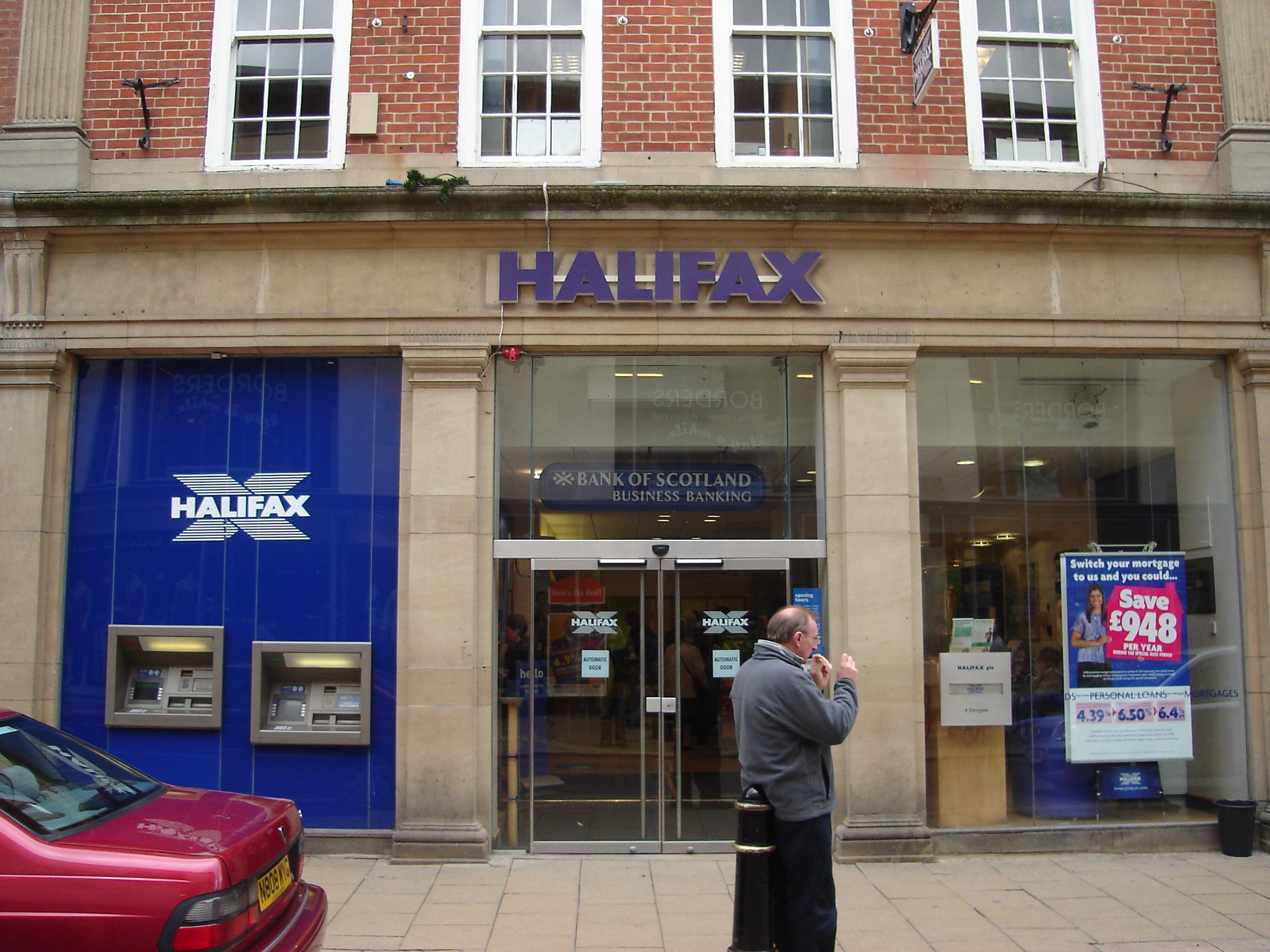
Lloyds Banking Group’s decision to phase out the Halifax brand brings to an end one of the most recognisable names in British retail banking.
The change means Halifax will be rebranded as Lloyds in England, Wales and Northern Ireland, with Halifax branches moving across to Lloyds branding during 2027. Bank of Scotland will remain the group’s lead customer brand in Scotland.
For Lloyds, the move is about simplification. For customers, it should mean little immediate practical change. For Halifax, West Yorkshire, it is something more emotional: the disappearance of a financial name that has been tied to the town for more than 170 years.
The decision highlights a wider issue facing banks and many other large businesses. Simplifying operations can make commercial sense, but it can also weaken the local identity and historical connection that helped build customer trust in the first place.
What Lloyds has announced
Lloyds Banking Group has confirmed that Halifax will change to Lloyds over time. Existing Halifax customers will start to use the Lloyds app in the coming months, and their accounts will be rebranded gradually.
The bank says there is nothing customers need to do immediately. Account numbers and sort codes will remain the same, and customers will be contacted directly through trusted channels including the Halifax app, online banking, email and letter.
Lloyds has also said there will be no role reductions as a result of the announcement and no changes to previously announced branch plans. Halifax branches will either be rebranded as Lloyds during 2027 or, where there is already a nearby Lloyds branch, customers will be served by the existing Lloyds branch in the same community.
That distinction matters. This is not being presented as a branch closure programme. It is a brand consolidation.
However, the change still arrives against a backdrop of wider branch closures across the UK banking sector. Customers have already seen significant reductions in physical banking access as banks shift more services online. Even where the Halifax decision does not directly close branches, it will still feel to many people like another step away from the traditional high street banking model.
Why Lloyds is making the change
The strategic logic is clear. Lloyds Banking Group currently operates several major consumer-facing brands, including Lloyds, Halifax, Bank of Scotland and Scottish Widows.
Running multiple banking brands creates complexity. It means separate marketing, customer communication, product positioning, brand identity and operational infrastructure. In a world where banking is increasingly app-based, that complexity can become harder to justify.
Since early 2025, customers have already been able to manage accounts across Lloyds Banking Group branches. Many customers also already use common technology across the group’s brands. Moving Halifax into the Lloyds name allows the group to present a simpler national banking proposition.
The bank’s position is that Halifax customers will keep the features they value while also gaining access to Lloyds products and innovations, including rewards and premium propositions.
From a management point of view, this is a familiar corporate argument. A simpler brand structure should be easier to operate, easier to communicate and easier to invest behind. It may also help Lloyds compete more effectively with digital banks, which often have clearer and more consistent customer propositions.
The end of a West Yorkshire banking name
The difficulty is that Halifax is not just a generic financial label.
The Halifax Permanent Benefit Building Society was founded in West Yorkshire in the 1850s to help local people save and buy homes. Over time, it grew from a local building society into one of the best-known financial brands in the UK.
By the twentieth century, Halifax had become a major force in savings and mortgages. It demutualised in 1997, merged with Bank of Scotland in 2001 to form HBOS, and became part of Lloyds Banking Group after the financial crisis.
That history matters because building societies were not originally designed as ordinary shareholder-owned banks. They were rooted in local savings, mutual support and home ownership. Halifax’s name therefore carries a legacy that goes beyond modern banking products.
For the town of Halifax, the brand has long been part of local identity. Its disappearance from the high street will inevitably be viewed by some as a loss of heritage, even if jobs, accounts and customer services remain in place.
The response from local politicians and residents reflects that sentiment. The concern is not only whether customers can still access banking services, but whether a town that gave its name to a national institution is losing another visible part of its economic story.
Customers should be alert to fraud risk
The most immediate customer issue is not likely to be account access, but fraud risk.
Brand changes create opportunities for scammers. Customers may receive legitimate messages from Halifax or Lloyds, but criminals may also try to exploit the transition by pretending that customers need to move money, share security details or click suspicious links.
Lloyds has been clear that customers will not be asked to move money, transfer funds or share security details as part of the change. Any such request should be treated as a scam.
This is an important communication challenge. Large-scale customer migrations can be technically successful but still create confusion. The bank will need to explain the process clearly, repeatedly and in plain language, particularly for older or less digitally confident customers.
For customers, the safest approach is simple: use only the official app, online banking, branch or phone number already known to them. Do not follow unexpected links or act on unsolicited calls.
The wider trend in banking
The Halifax decision sits within a broader change in UK banking.
Banks are reducing branch networks, investing heavily in digital platforms and attempting to simplify operations. Customers increasingly manage money through mobile apps, automated systems and online channels. The economics of branch banking have become more difficult as footfall has declined.
At the same time, competition has changed. Digital-first banks and fintech firms have raised expectations around app design, speed, transparency and customer experience. Traditional banks are responding by simplifying products, consolidating systems and investing in digital services.
This does not mean branch banking is irrelevant. For many individuals, small businesses and vulnerable customers, physical access still matters. Cash, complex queries, bereavement issues, fraud concerns and advice-led interactions are not always easily handled through an app.
The strategic challenge for Lloyds and other banks is therefore to modernise without leaving parts of their customer base behind.
Brand strength versus operational efficiency
From a business strategy perspective, the decision raises an important question: when is a brand worth preserving?
Brands can be expensive to maintain, especially when they sit inside a larger group with overlapping products. A simplified brand structure can reduce duplication and make investment more efficient.
But brands also carry trust, familiarity and emotional value. Halifax may no longer be independent, but it remains recognisable. It has a distinct history and a different customer association from Lloyds.
For some customers, that distinction may not matter. They may care mainly about app quality, interest rates, service and convenience. For others, particularly long-standing customers, the loss of the Halifax name may feel like a reduction in choice.
Businesses often underestimate this issue. Customers may accept operational change, but still object to the disappearance of a name they recognise. A brand is not just a logo. It is a shortcut for memory, habit, trust and identity.
Why the decision may still make commercial sense
Despite the emotional reaction, Lloyds’ decision may still prove commercially sensible.
The group has to compete in a market where scale, technology and efficiency matter. Maintaining several parallel consumer brands may no longer provide enough benefit to justify the complexity. If customers already use shared systems and branches, a unified brand may be the logical next step.
The fact that Bank of Scotland will remain the lead brand in Scotland is also revealing. Lloyds appears to recognise that some regional identities still carry strategic value. The decision is therefore not a complete rejection of local or historic branding. It is a judgement about which brands still support the group’s future proposition.
The key test will be customer response. If Halifax customers move across smoothly and feel they gain access to better products and services, the change may be seen as a practical simplification. If customers feel confused, ignored or pushed into a less personal banking model, it could damage trust.
A lesson for other businesses
The Halifax decision offers a useful lesson for any business managing legacy brands.
Simplification can be powerful. It can cut duplication, reduce cost, focus investment and make the customer journey clearer. But simplification should not be confused with removing meaning.
Before retiring a long-standing brand, businesses need to understand what the brand represents to customers, staff and communities. They also need to explain why the change is happening, what will improve, and what will remain protected.
In Lloyds’ case, the operational argument is understandable. Banking is becoming more digital, more centralised and more technology-led. But the brand argument is more sensitive. Halifax is not merely a product line. It is part of British financial history and part of West Yorkshire’s civic identity.
The strongest brand transitions are those that preserve trust while improving service. Lloyds will need to show that this is not simply a cost-saving exercise, but a genuine attempt to give customers a clearer and better banking experience.
A historic name leaves the high street
The disappearance of Halifax from the high street marks the end of an era in British banking.
It reflects the continuing shift from local financial institutions towards large, simplified and digitally driven banking groups. It also shows the tension between heritage and efficiency that many established businesses now face.
For Lloyds, the decision may help create a simpler and more focused consumer bank. For customers, the practical disruption should be limited if the transition is handled well. For Halifax as a town, however, the loss of the name will feel more significant.
The commercial logic may be clear, but the emotional cost should not be dismissed. The Halifax name helped shape the history of British saving and home ownership. Its retirement is not just a rebrand. It is a reminder that even the strongest local business identities can disappear when the economics of an industry change.