Excerpt:
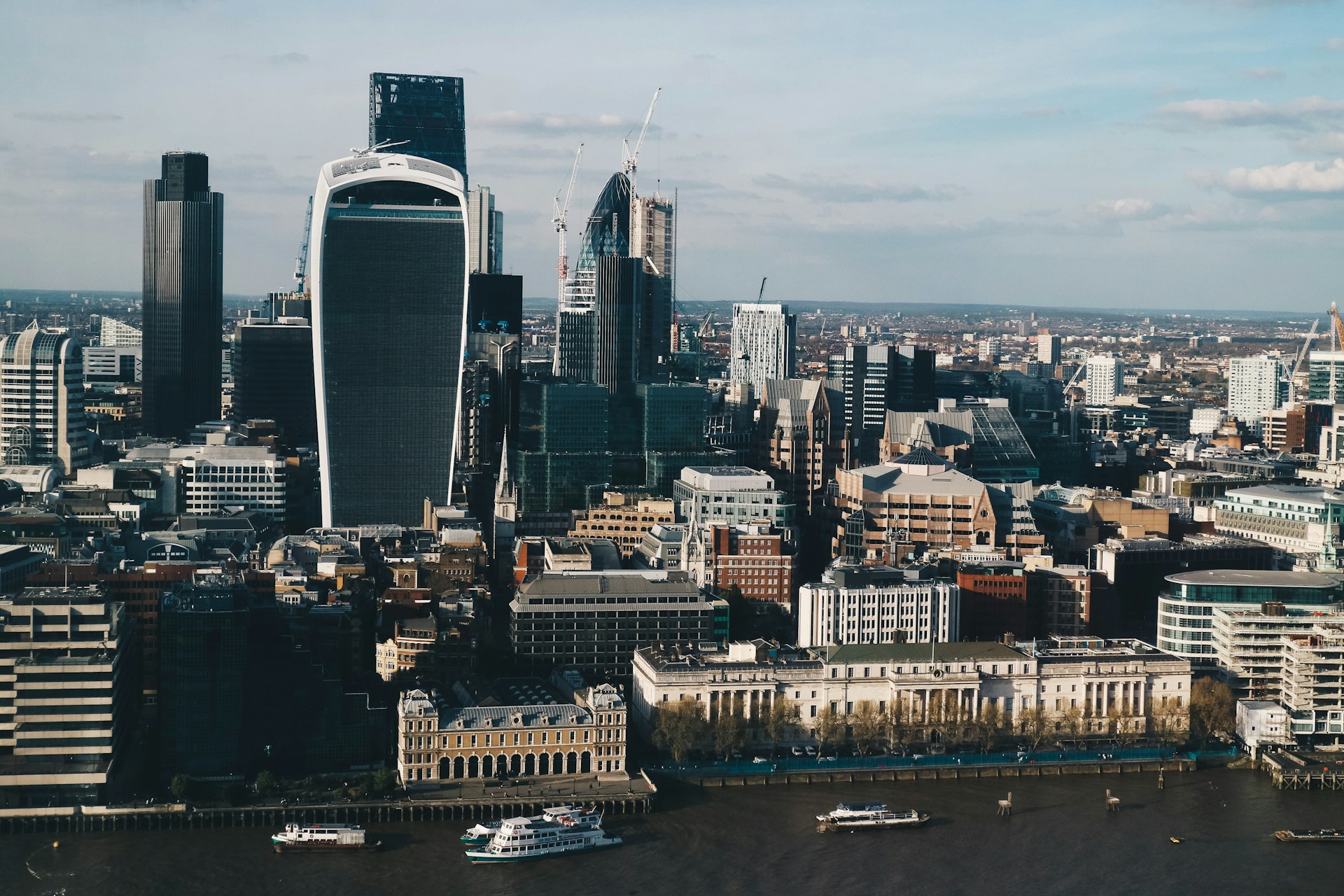
A decade after the Brexit referendum, London’s financial district has avoided the worst predictions of decline. The City remains one of the world’s leading financial centres, but its post-Brexit success has come with lost European business, relocated jobs, pressure on listings and a continuing need to adapt.
Ten years after the United Kingdom voted to leave the European Union, the City of London has not suffered the collapse that some predicted in 2016. Instead, London’s financial district remains one of the world’s most important financial centres, supported by deep capital markets, specialist insurance, foreign exchange, fintech, professional services and an international legal system that continues to attract global business.
However, the story is more complex than a simple post-Brexit success. The City has proved resilient, but it has also changed. Some EU-facing activity has moved to European centres such as Paris, Dublin, Frankfurt and Amsterdam. Firms have had to create additional entities inside the EU, duplicate operations, manage extra regulatory processes and rethink how they serve European clients.
The result is a financial centre that is still powerful, but no longer operating in quite the same way.
A financial district that adapted rather than declined
The immediate post-referendum fear was that Brexit would lead to a large-scale loss of financial jobs, business and influence. London-based firms lost automatic passporting rights, meaning they could no longer serve EU customers in the same way from the UK.
That forced banks, asset managers, insurers and trading firms to restructure parts of their European operations. Some activity moved abroad, and the EU gained a greater share of certain business lines.
Yet the more dramatic predictions of a hollowed-out City have not come to pass. London has retained many of the characteristics that made it a global financial centre before Brexit: language, law, time zone, talent, market depth, advisory expertise and a concentration of connected professional services.
Those advantages are difficult to replicate quickly. Financial centres are not built only on regulation or political access. They rely on networks, expertise, trust, infrastructure and the ability to bring together lawyers, accountants, financiers, insurers, consultants, investors and specialist advisers in one place.
In that sense, Brexit weakened one part of London’s proposition, but did not remove the wider ecosystem that supports it.
Insurance, fintech and foreign exchange remain major strengths
One of the strongest parts of the post-Brexit City has been insurance, particularly specialist and commercial risk. London remains a major global centre for insurance and reinsurance, with Lloyd’s continuing to play a central role in complex risk markets.
Fintech has also helped refresh London’s image. The UK remains one of the world’s leading destinations for financial technology investment, supported by venture capital, regulation, technical talent and proximity to established financial institutions.
Foreign exchange is another area where London remains difficult to dislodge. The City’s global role in currency trading has helped preserve its importance even as some European business has shifted elsewhere.
This matters because London’s financial strength is not dependent on one single sector. It is a cluster. Banking, insurance, asset management, fintech, legal services, consultancy, accounting and data services reinforce each other. When one part of the market faces pressure, others can continue to grow.
The cost of Brexit has not disappeared
The resilience of the City should not be mistaken for proof that Brexit had no cost. It did.
The loss of passporting rights increased operational complexity. UK-based firms that wanted to retain EU clients had to invest in European subsidiaries, move some staff and capital, and satisfy regulators on both sides of the Channel.
That has created a more fragmented operating model. Some business that might once have been booked or managed from London now takes place elsewhere. Some jobs were relocated. Some regulatory influence has been lost.
The UK also faces a broader challenge in maintaining its role as a financial exporter to Europe. While London remains a global hub, its competitive position in EU-facing services has been reduced. The City is still strong, but its European dominance is less automatic than it was before 2016.
That distinction is important. London has not been replaced by a single European rival. Paris, Dublin, Frankfurt, Amsterdam and Luxembourg have each gained different parts of the market. Instead of one clear winner, the post-Brexit landscape has become more dispersed.
London’s listings problem remains a concern
The bigger weakness may be less about banks leaving London and more about the future of UK capital markets.
London has struggled in recent years to attract and retain major public company listings. A number of companies have looked to the United States for deeper pools of capital and higher valuations. UK IPO activity has also been subdued, although regulators and policymakers hope reforms will improve the market.
The Financial Conduct Authority has introduced changes to listing rules to make London more competitive, and the Government has set out wider financial services reforms aimed at encouraging investment and growth.
These reforms matter because a strong financial centre is not just about banks and insurance markets. It is also about whether growing companies want to list, raise capital and remain headquartered in the UK.
If London remains a centre for trading, law, insurance and global finance, but loses ground as a preferred location for ambitious public companies, that would represent a different kind of challenge.
A more global City
One of the most notable changes since Brexit is that London has become even more focused on global rather than purely European opportunity.
The United States remains a major partner for UK financial and professional services. Asia, the Middle East and global private capital markets are increasingly important. The City’s future may depend less on recreating its pre-Brexit relationship with the EU and more on positioning itself as a flexible international hub.
That does not mean Europe is no longer important. The EU remains a major market and regulatory relationship for UK financial firms. But the City’s long-term prospects are likely to depend on its ability to serve global capital flows, manage specialist risks, support innovation and connect international investors with opportunities.
What it means for business
For British businesses, the lesson from the City is not that Brexit was either harmless or disastrous. The lesson is that strong business ecosystems can adapt, but adaptation comes at a cost.
The City survived because it had deep foundations: skills, infrastructure, institutions, reputation and international connectivity. Those strengths gave it options when the regulatory environment changed.
That is a useful wider business lesson. Organisations with diverse capabilities, strong networks and a clear market position are better able to absorb shocks. Those dependent on a single route to market, a single regulatory advantage or a narrow customer base are more vulnerable when conditions change.
London’s financial district remains a major success story for the UK economy. But it is now competing in a different environment, with stronger European rivals, more demanding global capital markets and continuing questions about the depth of the UK’s own investment culture.
The City is stronger than many expected a decade after the Brexit vote. But its future strength will depend less on proving that it survived Brexit, and more on whether it can keep attracting capital, talent, companies and confidence in the decade ahead.