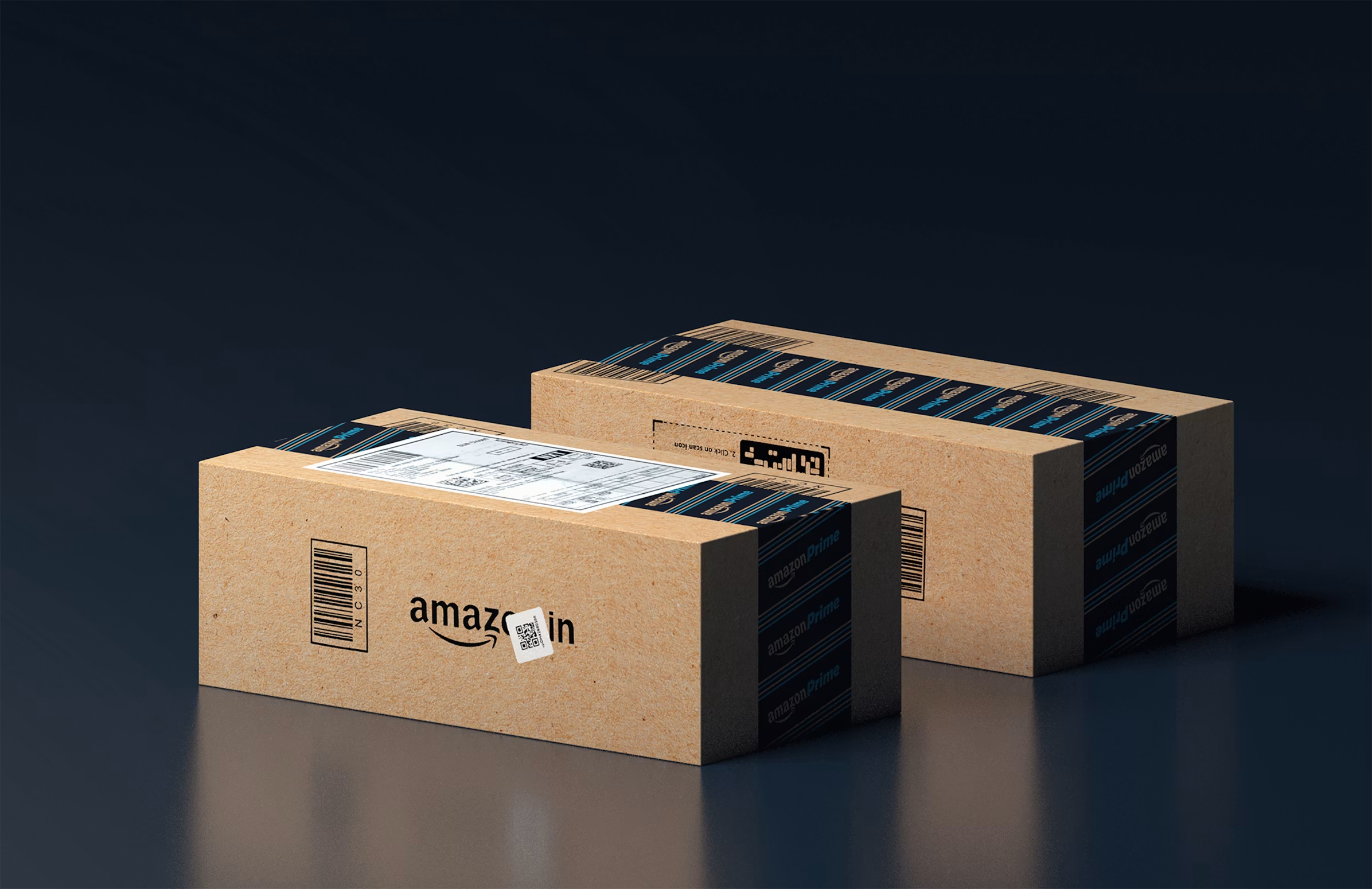
Amazon Prime Day has returned with four days of deals, but consumer groups and cyber security researchers are warning shoppers to slow down before clicking, paying or sharing personal details.
The 2026 event runs from 23 to 26 June, with Amazon promising hundreds of thousands of exclusive deals for Prime members across categories including clothing, beauty, kitchen, home and electronics.
For Amazon, Prime Day is one of the biggest retail moments of the year. For consumers, it is marketed as a chance to save money on everything from household essentials to technology. But for fraudsters, the same mix of urgency, brand recognition and high transaction volume creates an ideal opportunity to target shoppers.
That makes this year’s event more than a shopping story. It is also a test of consumer trust, cyber security and the growing pressure on online retailers to protect customers during major sales events.
Prime Day starts earlier than usual
Amazon has confirmed that Prime Day 2026 runs for four days from 23 June to 26 June. The sale is earlier than the traditional mid-July slot, with early deals already appearing before the official start.
The company has promoted savings across everyday essentials, groceries, household items, beauty products, personal care, Amazon private brands, Prime Video and Audible. It is also using personalised deal recommendations, price alerts and price history tools to help shoppers track offers.
That reflects how Prime Day has changed. It is no longer simply a short burst of discounted gadgets. It has become a broader retail event covering everyday purchases, subscription services, home goods and seasonal spending.
For households still watching budgets closely, that shift matters. A sale event once associated with televisions, tablets and impulse buys is increasingly being used by shoppers to stock up on practical items such as cleaning products, groceries, school supplies and household basics.
Shoppers are more cautious
The wider economic context is important.
Recent reporting suggests that Prime Day is being watched as a signal of consumer strength. In the United States, analysts expect the event to show whether households are still willing to spend despite pressure from inflation and higher fuel costs. The same broad consumer behaviour is visible in the UK: shoppers are looking for value, but they are also becoming more careful.
This creates a more competitive environment for retailers. Prime Day may be Amazon’s event, but rival retailers increasingly run their own promotions around the same period, giving shoppers more opportunities to compare prices.
That is good news for consumers, but it also makes the sales environment harder to navigate. A deal may look attractive on one website, but it may not be the cheapest available. A product may appear discounted against a recommended retail price, but that does not always mean it is lower than its usual selling price.
The basic advice is simple: treat the sale as a prompt to compare, not a reason to rush.
Cyber criminals target the Prime Day rush
The most serious warning is around scams.
Check Point Research has warned that criminals have been preparing for Prime Day for months. Between December 2025 and May 2026, it identified 6,843 new Amazon-themed domains registered worldwide. The number rose sharply in early 2026, peaking at 1,446 new domains in April, roughly two months before the event.
The concern is that fraudulent websites can use familiar branding, copied product pages, fake urgency messages and realistic checkout screens to trick shoppers into handing over payment details or account information.
Some scams mimic the Amazon marketplace. Others copy individual product pages, complete with star ratings, Prime delivery wording and “Amazon’s Choice” style trust signals. Fraudulent messages may also arrive by email or text, claiming there is a delivery problem, an account issue or a need to verify a code.
These tactics work because they feel familiar. During a major sale, shoppers expect time-limited offers, rapid checkout and delivery notifications. Scammers exploit exactly that behaviour.
Online shopping remains a major fraud risk
The Prime Day warning sits within a wider rise in online shopping scams.
Citizens Advice estimated last year that more than seven million UK adults had been deceived by a scam in the previous 12 months. It said online shopping scams were the most common type, accounting for 26% of those personally caught out.
The National Cyber Security Centre has also warned shoppers to be alert during major retail events, urging people to check that shops are legitimate, secure important online accounts with two-step verification, avoid unexpected delivery links and pay securely rather than by direct bank transfer.
The problem is not limited to Amazon. Large brands are often impersonated because shoppers recognise them and trust them. During high-volume retail events, fake websites, phishing emails, scam texts and fraudulent advertisements can all become more convincing because consumers are already expecting offers.
That is why the most important defence is not a technical one. It is behavioural. Shoppers need to pause.
How to spot a weak deal or a fake one
There are two separate risks during Prime Day.
The first is buying something that is not really a bargain. The second is being drawn into a scam.
A weak deal may still be sold by a legitimate retailer. The price may be lower than the listed recommended price, but not much lower than its normal recent price. Consumers can reduce that risk by checking price history, comparing against other retailers and deciding what they actually need before the sale begins.
A fake deal is more dangerous. It may lead to a cloned website, a counterfeit product, a payment scam or stolen account details. Warning signs include unusual web addresses, misspellings, pressure to act immediately, requests for passwords or verification codes, and payment methods that avoid normal card protections.
Shoppers should go directly to Amazon’s website or app rather than clicking unexpected links in emails, adverts or messages. They should also check Amazon’s own Message Centre to confirm whether a message claiming to be from the company is genuine.
Retailers also face pressure
Prime Day is not only a consumer issue. It creates operational pressure across the wider retail sector.
Retailers, payment processors, logistics firms and marketplaces face a surge in legitimate transactions, customer service queries and delivery activity. At the same time, fraudsters increase their attempts to exploit the same systems.
That means retailers must manage two priorities at once: making sales easy and keeping customers safe.
For Amazon and other large platforms, the business case for strong fraud prevention is clear. Trust is part of the product. If customers believe major sales events are too risky, or that fake sellers and cloned sites are too easy to find, the value of those events weakens.
For smaller retailers running competing sales, the challenge is also significant. They may benefit from shoppers comparing prices beyond Amazon, but they also need to prove they are legitimate, reliable and secure. Clear contact details, transparent delivery policies, secure checkout and visible returns information all matter.
The consumer protection angle
One of the most useful protections for shoppers is the way they pay.
Credit card payments may provide additional protection under Section 75 of the Consumer Credit Act where a qualifying purchase is over £100 and up to £30,000. Debit card chargeback may also help in some cases, although it is not the same legal protection.
Consumers should be particularly cautious if they are asked to pay by bank transfer, gift card, cryptocurrency or another unusual method. Scammers often use these methods because they are harder to reverse.
It is also worth checking the return policy before buying. Prime Day purchases are usually returnable, but there can be exceptions for certain categories or third-party sellers. Shoppers should not assume that every item will have the same return rights or process.
A bigger story about trust in digital commerce
Prime Day shows how online retail has matured.
The event is no longer just about Amazon offering discounts. It has become a wider commercial moment that affects rival retailers, advertisers, logistics networks, payment companies, cyber criminals and consumers.
That makes trust essential. Consumers need to believe that deals are genuine, websites are safe and sellers are reliable. Retailers need to show that sales growth is not being achieved at the expense of customer protection.
The most successful retailers will be those that combine competitive pricing with transparency and security. The most careful shoppers will be those who compare prices, check URLs, avoid pressure tactics and resist the urge to buy simply because a countdown clock is running.
The practical message
Prime Day can still offer good value, especially for consumers who know what they want and have checked prices in advance. But the event rewards discipline more than speed.
A genuine saving on an item you already planned to buy is useful. A rushed purchase of something you do not need is not a saving. A fake deal that steals your card details is far worse.
For households under pressure, the best approach is to make a list, set a budget, compare prices and buy through trusted routes.
For businesses, the lesson is just as clear. Big retail events now carry cyber and reputational risk as well as sales opportunity.
Amazon Prime Day may be a celebration of online shopping, but in 2026 it is also a reminder that digital trust has become one of retail’s most valuable assets.