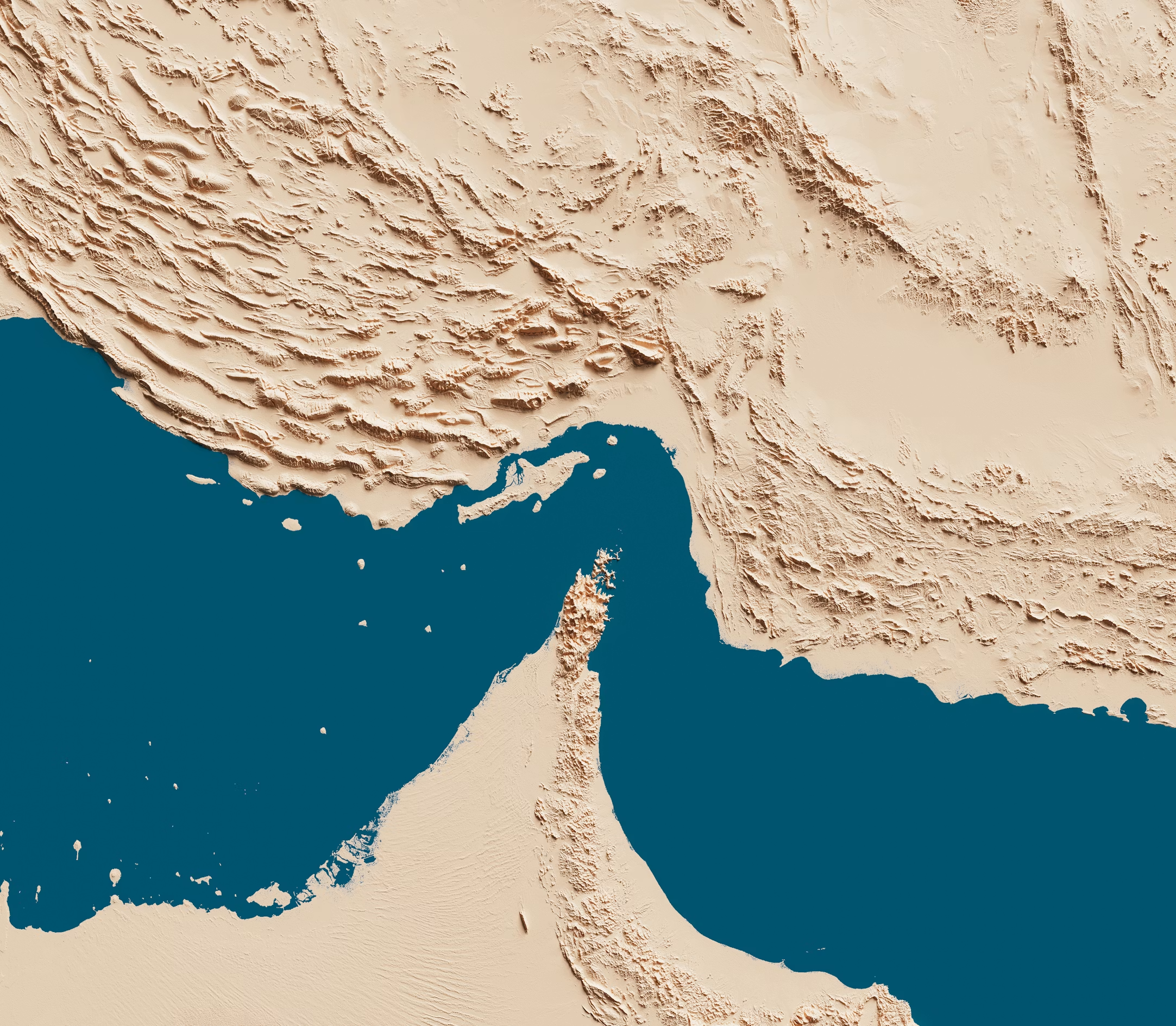
Global markets started the week in a more optimistic mood after reports of progress in US-Iran peace talks helped push oil prices lower and lifted investor sentiment across Asia and Europe.
Brent crude fell below $80 a barrel on Monday, easing some of the pressure that had built up in energy markets during the recent escalation around the Strait of Hormuz. Stock markets also moved higher, with investors responding positively to signs that Washington and Tehran may be moving towards a more structured diplomatic process.
The talks, held in Switzerland with mediation from Qatar and Pakistan, have reportedly produced a roadmap towards a final agreement within 60 days. That was enough to calm some immediate market nerves, even though analysts and shipping industry figures continue to warn that the route back to normality remains far from straightforward.
The Strait of Hormuz remains central to the economic story. It is one of the world’s most important energy chokepoints and is closely watched by oil traders, shipping companies, governments and central banks. Any disruption to the strait can quickly feed into oil prices, freight rates, inflation expectations and financial markets.
Oil prices ease as risk premium falls
The fall in oil prices reflects a reduction in the geopolitical risk premium that had been built into the market.
When traders fear disruption to major energy supplies, oil prices typically rise because buyers are willing to pay more to secure future supply. If the risk of disruption appears to fall, that premium can unwind quickly.
That appears to be what happened on Monday. Reports of progress in US-Iran talks encouraged investors to believe that the worst-case scenario of prolonged confrontation and sustained disruption to Gulf exports may be less likely than feared.
However, this does not mean the market has returned to normal. Oil prices remain highly sensitive to developments in the region. A breakdown in talks, renewed military action or further interference with shipping could quickly reverse the fall.
For businesses, the short-term fall in oil is welcome. Lower crude prices can reduce pressure on fuel, transport, shipping and production costs. But the wider lesson is that energy markets remain vulnerable to political shocks, particularly where supply depends on narrow maritime routes.
Stock markets respond positively
Equity markets also took encouragement from the diplomatic progress.
Asian markets rose, with Japan’s Nikkei gaining ground and South Korean shares continuing their recent rally. European markets also opened positively, although the gains were relatively modest.
The reaction is understandable. Lower oil prices can help reduce inflationary pressure, support consumer spending and ease cost pressures for energy-intensive businesses. That can be good news for investors, particularly in sectors such as airlines, logistics, manufacturing, retail and consumer goods.
However, the market response should not be overstated. Investors are not pricing in a full resolution of the crisis. They are responding to an improvement in the immediate outlook.
The difference matters. A temporary easing of tensions can support markets in the short term, but a lasting recovery in confidence would require evidence that oil and gas flows can return to something close to normal and that the diplomatic process can survive political and military pressure.
Hormuz remains the key risk
The diplomatic progress is important, but the physical reality of the Strait of Hormuz remains complicated.
Recent reporting has suggested that parts of the strait remain difficult or unsafe for normal traffic, with vessels using alternative routes and shipping companies warning that disruption could take time to unwind. Even if formal hostilities ease, marine traffic cannot simply switch back to pre-crisis patterns overnight.
This is an important distinction for businesses and policymakers. Peace talks may calm financial markets quickly, but shipping networks, freight prices and insurance costs often take longer to normalise.
A backlog of vessels, increased insurance premiums, navigational risks and uncertainty over safe passage can continue to affect trade even after the headlines improve. That means some cost pressures may persist beyond the initial fall in oil prices.
The danger for businesses is assuming that a lower oil price immediately removes the operational risk. For importers, exporters, logistics operators and manufacturers, the disruption to routes and freight capacity may remain relevant even if crude prices continue to fall.
Inflation and interest rates remain in focus
The oil price fall may also be watched closely by central banks.
Energy prices are a major component of inflation, both directly through fuel and indirectly through transport and production costs. If oil prices remain lower, that could help reduce some inflationary pressure.
For the UK, this matters because households and businesses have already faced a prolonged period of high costs, interest rate uncertainty and pressure on real incomes. Lower oil prices could help ease fuel costs and reduce the risk of further inflationary shocks.
However, central banks are unlikely to change course based on one day’s market movement. Policymakers will want to see whether the fall in oil prices is sustained and whether it feeds through into broader inflation data.
The same applies to businesses. A short-term fall in oil may help budgets, but it does not remove the need for cost discipline, scenario planning and supply chain resilience.
The political backdrop remains fragile
The diplomatic picture is still uncertain.
Although reports of progress have helped markets, the talks are taking place against a difficult backdrop of regional tension, political pressure and recent military threats. The process could still break down.
That is why the response from markets has been positive but cautious. Investors appear relieved that talks are continuing, but they are not treating the situation as resolved.
The 60-day roadmap gives the diplomatic process a framework. It may reduce the immediate risk of escalation and create space for technical talks. But it also introduces a period of uncertainty in which markets will remain alert to every statement, delay or provocation.
For business leaders, this is a reminder that geopolitical risk is now a core part of commercial planning. Companies exposed to energy, shipping, commodities, foreign exchange or international supply chains cannot assume that these events sit outside their strategic risk register.
Winners and losers from lower oil
A lower oil price is not universally good or bad. Its impact depends on the sector.
Airlines, hauliers, manufacturers, retailers and many consumers generally benefit from lower fuel and transport costs. Energy-intensive businesses may also gain if lower crude prices feed through into wider energy markets.
Oil producers, energy exporters and some commodity-linked businesses may be less positive, particularly if prices fall sharply or remain depressed.
The UK market sits somewhere in the middle. Lower oil can help households and businesses, but the FTSE 100 includes large energy companies whose share prices can be affected by falling crude prices. This means the impact on the index can be mixed, even when the broader economic effect is positive.
The key point is that markets do not simply react to oil prices in isolation. They react to what those prices imply about inflation, growth, interest rates, political stability and corporate profits.
A test of resilience, not just diplomacy
The latest market moves show how quickly sentiment can change when geopolitical risk appears to ease. But they also show how exposed the global economy remains to events in a small number of critical locations.
The Strait of Hormuz is not just a regional issue. It is a global business risk. It affects oil, gas, shipping, freight rates, inflation, consumer confidence, corporate margins and government policy.
For now, investors have taken encouragement from the reported progress in US-Iran talks. Oil prices have fallen, stock markets have risen and fears of a more severe energy shock have eased.
But the situation remains fragile. The diplomatic process is still at an early stage, the shipping backlog has not disappeared, and the risk of renewed escalation has not been removed.
For businesses, the practical lesson is clear. A calmer market is welcome, but it should not be mistaken for certainty. The companies best placed to navigate this period will be those that have tested their exposure to energy prices, shipping disruption, supplier concentration and geopolitical shocks.
In an increasingly volatile global economy, resilience is no longer a defensive extra. It is part of good management.