
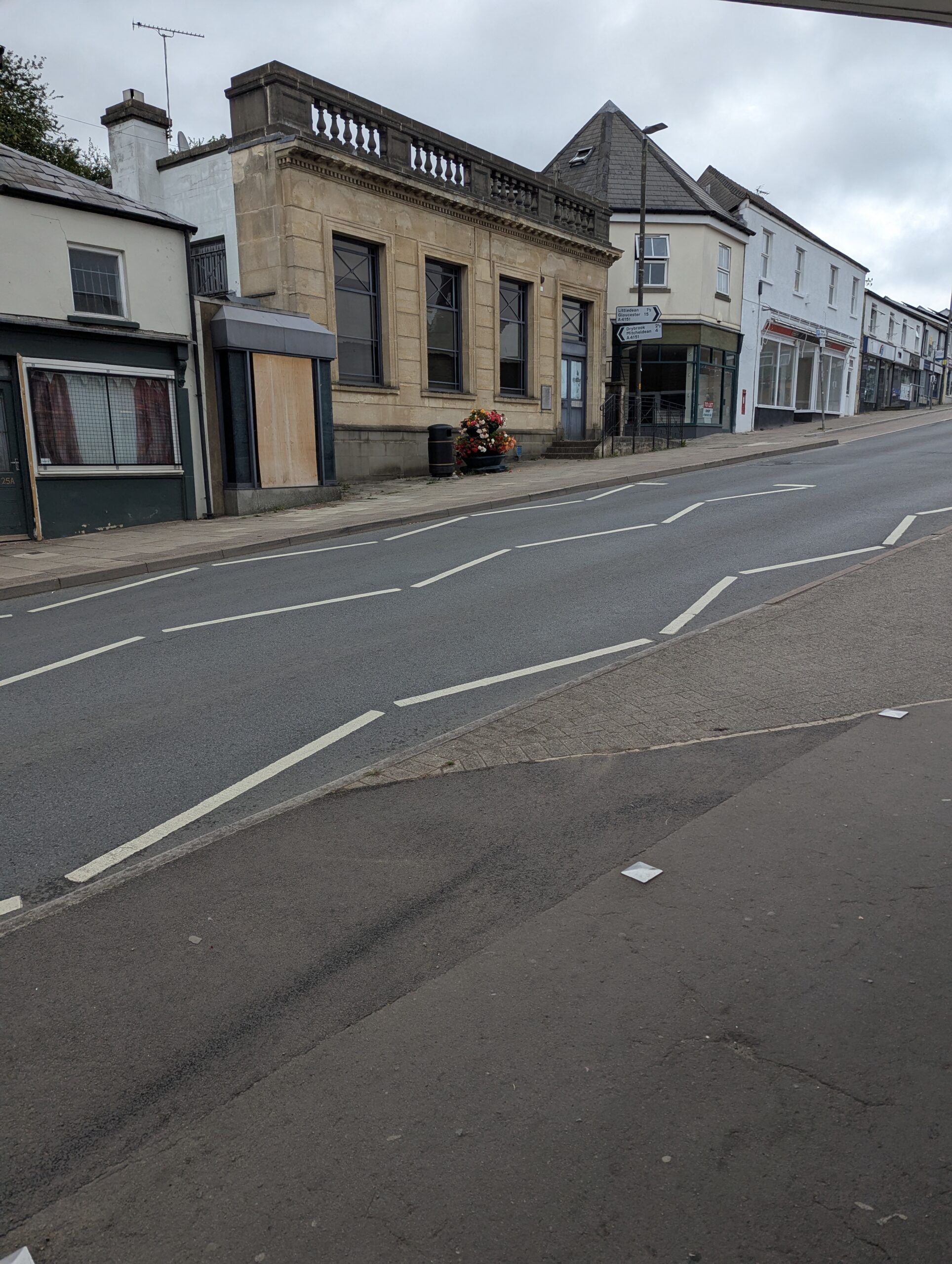
Britain’s high streets are facing another blow after a fresh wave of bank branch closures was confirmed, raising new questions about access to cash, local footfall, small business support and the future of town centres.
Lloyds Banking Group has announced a further 79 closures across Lloyds and Halifax, adding to an already substantial list of planned branch losses across Lloyds, Halifax and Bank of Scotland in 2026 and 2027. NatWest and RBS are also reducing their branch networks, while other banks continue to reshape their estates as more customers move to online and mobile banking.
For the banks, the business case is clear. Fewer customers are using branches, digital banking is now the norm for many people, and maintaining large physical networks is expensive.
For high streets, the picture is more complicated.
A bank is not just another shopfront. It is an anchor service. It gives people a reason to visit a town centre. It supports small businesses that need to deposit cash, speak to someone face to face or resolve banking issues quickly. It helps older and vulnerable customers remain financially independent. It can also make a high street feel more credible, useful and complete.
When the bank goes, the loss is felt beyond the banking sector.
A fresh wave of closures
The latest Lloyds Banking Group announcement means dozens more communities are set to lose local branches over the next year. The closures affect Lloyds and Halifax sites, while Bank of Scotland closures are already part of the wider programme.
NatWest and RBS are also moving ahead with branch reductions in 2026 and 2027. Some banks have promised not to make further closure announcements for a period, while others are continuing to assess their networks.
The overall direction of travel is clear. The traditional banking branch is disappearing from many town centres.
Banks argue that customer behaviour has changed dramatically. Mobile apps, online banking, telephone banking and card payments mean many customers no longer need to visit a branch regularly. For younger customers and many working-age households, the branch is often no longer central to everyday banking.
But that is not the case for everyone.
For older customers, people with disabilities, those without reliable internet access, people who lack confidence using digital services and small businesses dealing with cash, the loss of a local branch can create genuine practical problems.
Why this matters to high streets
The closure of a bank branch can weaken a high street in several ways.
First, it removes a reason to visit. People who go into town to use the bank may also buy a coffee, collect a prescription, visit the market, use the Post Office or shop locally. Remove that trip and the neighbouring businesses lose incidental trade.
Second, it increases vacancy. Empty bank buildings can be large, central and difficult to repurpose. They are often in prime high street locations, but their layout may not easily suit smaller retailers or hospitality businesses without investment.
Third, it changes how a town feels. A high street with banks, chemists, butchers, cafés, post offices and local shops feels like a functioning centre. A high street with boarded-up buildings and declining services feels like a place in retreat.
Fourth, it affects small businesses. Many local traders still need access to cash deposit facilities, change, advice and problem-solving support. Alternatives such as Post Office counters and banking hubs can help, but they do not always provide the full range of services that a traditional bank branch offered.
This is why branch closures are not just a banking story. They are a high street story, a small business story and a local economy story.
Banking hubs are part of the answer, but not all of it
The expansion of banking hubs is intended to soften the impact of branch closures. These shared facilities allow customers from multiple banks to access everyday banking support in one location, often alongside cash deposit and withdrawal services.
The number of recommended banking hubs has grown, and more are expected to open across the country. But the rollout remains under pressure because closures are happening quickly and local need varies significantly.
A banking hub can be useful, especially in towns that would otherwise be left without any face-to-face banking presence. However, hubs are not a perfect replacement. Opening hours, service availability, staffing patterns and the range of support can differ from a full branch.
For some communities, a hub may be enough. For others, it may feel like a partial solution to a bigger problem.
That is why the Government’s independent review into face-to-face banking access is important. It will examine who is most affected by branch closures, whether the current protections are sufficient and whether further intervention is needed.
The review is expected to report later in 2026, meaning this issue is likely to remain politically and economically live throughout the year.
The impact on inflation
The direct impact of bank branch closures on inflation is likely to be limited.
Closing branches may reduce costs for banks, particularly property, staffing, security and maintenance costs. In theory, lower operating costs could support bank profitability and efficiency. However, those savings are unlikely to feed directly into lower prices for consumers in a clear or immediate way.
The more important inflation effect is indirect.
For small businesses, the loss of nearby banking can increase time costs. A shop owner who has to travel further to deposit cash, access change or resolve banking issues loses productive time. If those costs build up across many small businesses, they add friction to the local economy.
This is not the same as an energy price shock or a wage shock. It will not be a major driver of headline inflation. But it can contribute to the wider problem of doing business becoming more expensive and more inconvenient, especially for smaller firms with less administrative capacity.
There is also a cash access angle. If it becomes harder for some consumers to access cash, certain local businesses may lose trade. That can weaken demand in smaller town centres, particularly where older residents and cash-reliant customers remain important.
So the inflation effect is not simple. Branch closures may reduce bank costs, but they can increase costs and inconvenience for some customers and small businesses.
The impact on growth and GDP
The national GDP impact of bank branch closures will not show up as a single obvious line in the economic data. The UK economy is too large for individual branch closures to move GDP materially on their own.
But the cumulative effect matters.
A town centre is an ecosystem. Banks, cafés, shops, pharmacies, markets, professional services and public services all support one another. When one anchor service disappears, the whole ecosystem becomes weaker.
Lower footfall can mean lower takings for local businesses. Lower takings can mean fewer jobs, lower investment, reduced confidence and more empty units. Over time, that can reduce local economic output.
This is particularly important because the UK economy is already struggling with weak productivity, fragile consumer confidence and pressure on small businesses from wages, business rates, energy costs and borrowing costs.
In that environment, the loss of another local service is not helpful.
There is also a regional growth issue. Branch closures do not affect all places equally. Larger cities may be able to absorb them more easily because customers have alternative branches, better transport links and more digital support. Smaller towns, rural areas and deprived communities may feel the loss more sharply.
That means the economic effect is likely to be uneven. Some areas will adapt quickly. Others may see branch closures deepen existing decline.
A sign of structural change
The closure of bank branches is part of a much wider restructuring of the high street.
Retailers have been cutting store numbers for years. Pubs, post offices, pharmacies and other local services are also under pressure. Online shopping, digital banking, higher operating costs and changing consumer habits have all reduced the role of the traditional town centre.
This does not mean high streets are finished. But it does mean they need to change.
Successful high streets in 2026 are increasingly those that offer a mix of services, leisure, hospitality, local retail, health, community uses and housing. They are places people visit because they are useful, pleasant and convenient.
The danger is that bank closures make some places less useful and less convenient at exactly the wrong time.
If a town loses its bank, then loses footfall, then loses shops, then gains empty units, decline can become self-reinforcing. That is the cycle local leaders are trying to avoid.
What should happen next
The immediate priority is practical.
Communities facing closures need clear information about alternatives. Customers should know where they can deposit and withdraw cash, how to access support, whether a banking hub is planned and what services will be available locally.
Small businesses need reliable cash deposit facilities. Older and vulnerable customers need face-to-face help. Local councils and business groups need a say in how banking access is replaced.
The longer-term question is whether the current model is moving quickly enough.
Banking hubs, Post Office banking, community bankers and mobile services can all help. But they need to match the pace and geography of closures. If branches close first and alternatives arrive much later, the damage may already have been done.
The Government review gives ministers an opportunity to decide whether stronger protections are needed. The key test should be simple: does the system protect people and businesses who still genuinely need face-to-face banking?
The bigger economic lesson
The latest bank closures show how digital transformation can improve efficiency while still creating local costs.
For banks, digital channels are cheaper and often better for routine transactions. For many customers, mobile banking is faster and more convenient. But for high streets, the loss of physical banking removes an important part of the local economy.
This is the central tension.
The economy cannot stand still. Banks cannot be expected to maintain large branch networks that customers no longer use. But towns and communities also cannot be expected to absorb repeated service losses without consequence.
The result is a difficult balancing act.
The latest closures will not by themselves determine UK inflation, growth or GDP. But they are part of a larger pattern that matters. They weaken some high streets, add friction for some small businesses, and increase the risk that parts of the country become less connected to essential services.
For 2026, the issue is no longer whether bank branches are closing. They are.
The question is whether the replacements are good enough, fast enough and fair enough to stop high streets losing yet another reason for people to visit.
