Costa Coffee: From London Roastery to Coca-Cola’s Difficult Coffee Bet
A full business analysis and strategic review
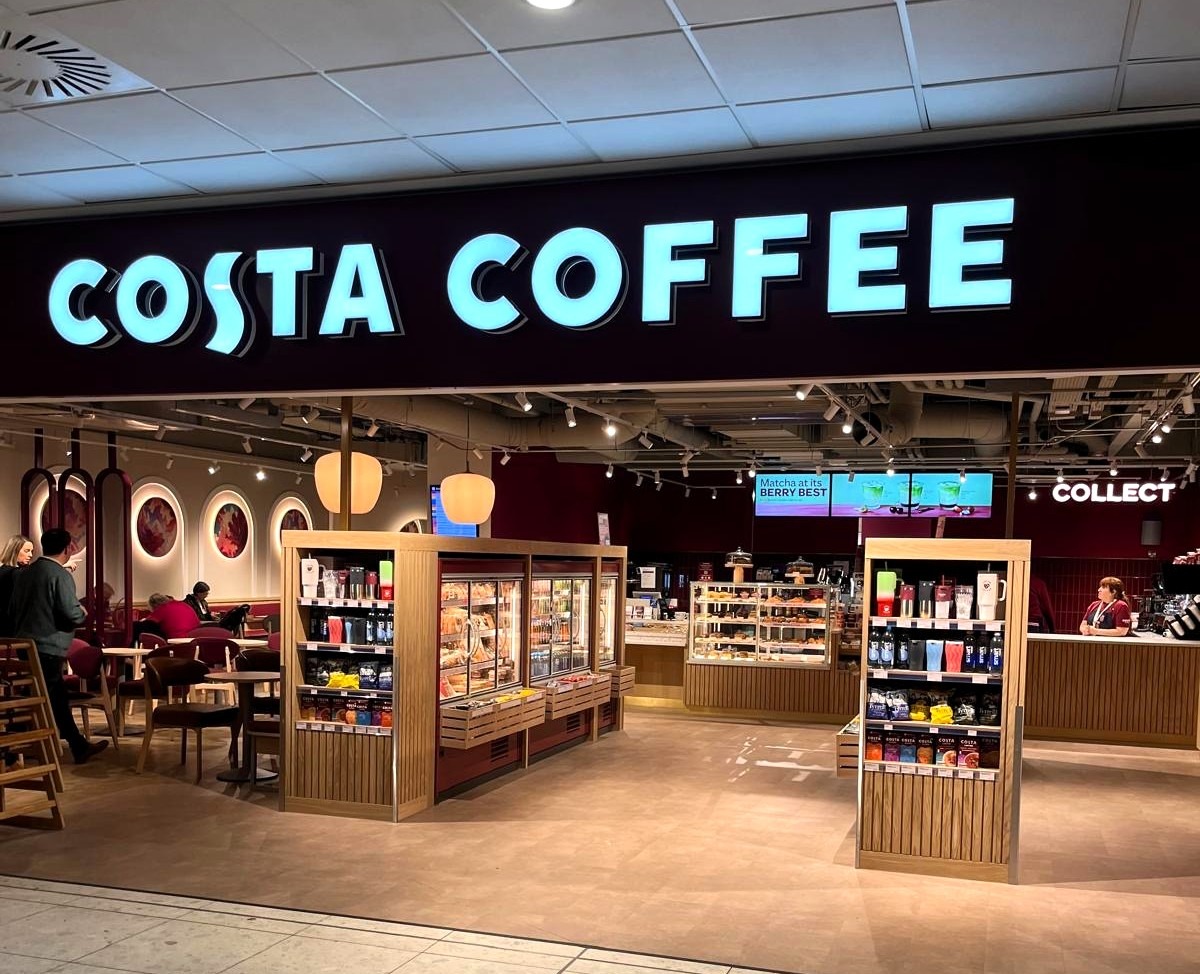
Costa Coffee is one of Britain’s most recognisable consumer brands. For many people, it is the default coffee shop: predictable, familiar, warm, widely available and rarely far away. It is on high streets, retail parks, motorway services, hospitals, railway stations, drive thrus, supermarkets and petrol forecourts. It is also in cans, pods, at home coffee formats and thousands of self service machines.
Yet Costa is not simply a coffee shop chain. It is a case study in brand building, market timing, retail rollout, corporate ownership, consumer behaviour and strategic drift. It began as a specialist London roastery founded by two Italian brothers. It became a national chain under Whitbread. It then became a global coffee platform under The Coca-Cola Company. Today, in 2026, it remains a huge business, but one facing a more complicated future than its brand familiarity might suggest.
Costa’s story is not one of simple decline. It still has scale, strong recognition and valuable routes to market. However, it is now squeezed between value operators such as Greggs and McDonald’s, premium independents and boutique coffee brands, and changing consumer expectations around price, quality, convenience and experience. Coca-Cola’s ownership has given Costa global reach and distribution capability, but it has also exposed a strategic mismatch: running a coffee shop chain is not the same as distributing beverages through a global bottling system.
The central question is therefore not whether Costa Coffee will survive. It almost certainly will. The more interesting question is what Costa Coffee is going to become.
1. The origins: a roastery before it was a coffee chain
Costa Coffee began in London in 1971, when Sergio and Bruno Costa founded a small coffee roastery. The brothers were Italian, and their original business was not a chain of cafés. It was a specialist roasting operation supplying coffee to restaurants, hotels and caterers. Costa’s own history describes how the brothers blind tested 112 blends before settling on what became the company’s signature Mocha Italia blend, which remains central to the brand today.
This origin matters because Costa’s first strategic advantage was product credibility. It was not originally trying to be a lifestyle brand or a mass market café chain. It was trying to make good coffee and supply it reliably. The early Costa proposition was built around craft, consistency and an Italian coffee heritage that felt distinctive in Britain at the time.
In 1978, the business moved to a larger roastery at Old Paradise Street in Lambeth, South London. Costa says the roastery remained there until 2017. The first Costa Coffee shop opened in 1981 on Vauxhall Bridge Road, and Costa describes it as one of the first places in London to serve espresso and crafted cappuccino in porcelain cups.
At that point, Costa was not yet the coffee chain we know today. It was closer to a specialist coffee business that had discovered a direct retail opportunity. That distinction is important. The first phase of Costa was about coffee quality. The second phase would be about retail replication.
Recap
Costa started with a strong product story: Italian founded, London based, built around roasting, blend development and hospitality supply. The first shop was an extension of the roastery, not the other way round.
2. The Whitbread era: turning a specialist brand into a national chain
The major strategic shift came in 1995, when Whitbread acquired Costa. At the time, Costa had only 39 shops, and Whitbread bought the business for £19 million. By the time Whitbread later sold Costa to Coca-Cola, it described the brand as the UK’s favourite and largest coffee shop company.
Whitbread was an important owner because it understood hospitality, site rollout, leases, operations, food service and disciplined replication. It was not merely buying a coffee brand. It was buying a format that could be scaled. Under Whitbread, Costa moved from being a London coffee business to a national chain with a standardised offer, recognisable store environment and broad consumer appeal.
This was the period in which Costa became part of everyday Britain. It expanded into high streets, shopping centres, retail parks, transport locations and later drive thrus. It benefited from several social and economic trends:
The rise of UK coffee culture.
The normalisation of takeaway coffee.
The decline of the traditional pub and the rise of informal daytime meeting places.
More women in work, more flexible working patterns and more out of home food and drink occasions.
A growing willingness to pay for small daily treats.
The brilliance of the Whitbread strategy was that Costa did not need to be the coolest coffee brand. It needed to be consistent, convenient and everywhere. In much of Britain, Costa became the safe choice. That was enough to build huge scale.
But the Whitbread period also created the seeds of Costa’s later challenge. A brand built on ubiquity can become less exciting. The very consistency that supports scale can make a chain feel bland when consumer tastes move towards independent, local or premium experiences.
3. Expansion through acquisition: Coffee Nation and Costa Express
One of Costa’s most important strategic moves was the acquisition of Coffee Nation in 2011. Coffee Nation had been founded in 1991 and focused on self service takeaway coffee. After the acquisition, the business became Costa Express. Costa’s professional division now says Costa Express operates in 20 international markets, with more than 14,200 coffee machines in the UK and more than 1,600 globally.
Costa Express is critical to understanding the business. It gave Costa a second growth engine beyond staffed cafés. It allowed the brand to appear in petrol stations, convenience stores, supermarkets, workplaces and travel locations without the costs and complexity of a full coffee shop.
Strategically, Costa Express solved several problems:
It extended the brand into locations where a full café would not work.
It reached customers in faster, more convenience led occasions.
It improved distribution density without requiring the same labour model.
It created a platform that was potentially very attractive to Coca-Cola.
Costa Express may actually be one of the most strategically valuable parts of Costa. It is scalable, relatively capital efficient, data rich and aligned with convenience retail. It is also easier to connect to Coca-Cola’s distribution mindset than traditional coffee shops are.
This is one reason why Coca-Cola’s acquisition of Costa looked logical on paper. Costa was not just a chain of cafés. It was also a coffee vending, ready to drink, at home and wholesale platform.
4. The Coca-Cola acquisition: strategic logic and awkward reality
In 2018, Coca-Cola agreed to acquire Costa from Whitbread. The transaction was valued at $5.1 billion in Coca-Cola’s announcement and £3.9 billion in Whitbread’s announcement. Coca-Cola said the deal would give it a strong coffee platform across Europe, Asia Pacific, the Middle East and Africa, with nearly 4,000 retail outlets, a vending operation, for home coffee formats and a modern roastery.
The strategic logic was clear.
Coca-Cola wanted to diversify beyond carbonated soft drinks.
Coffee was a large, growing global category.
Costa gave Coca-Cola an immediate branded platform.
Costa Express offered a scalable convenience model.
Ready to drink coffee could be pushed through Coca-Cola’s distribution system.
The acquisition also fitted Coca-Cola’s broader ambition to become a “total beverage company”, not just a fizzy drinks company. In theory, Costa gave Coca-Cola hot coffee, cold coffee, stores, machines, grocery products and international growth potential.
However, the reality proved harder. Coca-Cola is world class at brand marketing, beverage manufacturing, bottler relationships, distribution and portfolio management. A coffee shop chain is a different animal. It involves leases, labour scheduling, property costs, service quality, food waste, queue management, local competition, store refurbishments, franchise relationships and thousands of daily operational details.
That is the core strategic tension: Costa looked like a beverage platform, but much of it was actually a retail and hospitality business.
Coca-Cola later changed how Costa was managed. From 1 January 2025, Costa and innocent Drinks moved to Coca-Cola’s Europe operating unit, with Coca-Cola saying the change was intended to streamline and simplify the structure. Costa remained a stand alone business, while its ready to drink operations outside Europe would report through local operating units.
That restructuring tells us something important. Coca-Cola appears to have recognised that Costa needed to sit closer to the operating units that understand its main markets, rather than being treated as an isolated global venture.
Recap
Coca-Cola bought Costa for a sensible strategic reason: coffee was a gap in its portfolio. The problem was that Costa was not just a beverage brand. It was a complex retail, hospitality and property business.
5. Costa’s current scale and business model
Costa is still a major global brand. Coca-Cola Europacific Partners says Costa is present in 52 countries, with over 4,000 stores, more than 10,000 away from home locations and around 14,500 Alto Express machines.
The business today has several channels:
Company operated coffee shops.
Franchised stores.
Drive thru locations.
Costa Express machines.
Travel, hospital and convenience locations.
Ready to drink chilled coffee.
At home coffee products, including beans, ground coffee and pods.
Food, including its collaboration with M&S Food in the UK.
Business to business coffee solutions.
That spread is both a strength and a weakness.
It is a strength because Costa can reach different customers at different moments. Morning commuters, office workers, motorway drivers, hospital visitors, supermarket shoppers and people buying coffee at home can all interact with the brand.
It is a weakness because each channel has different economics. A high street café, a drive thru, a self service machine, a canned coffee and a supermarket coffee pod are not the same business. They require different capabilities, pricing strategies, operating models and success measures.
The best future version of Costa will probably not treat all these channels equally. It will prioritise the formats where the brand has the strongest right to win.
6. Product range and service expansion
Costa began with roasted coffee, then moved into cafés, then into broader food and drink.
The traditional Costa range was built around espresso based drinks, including cappuccino, latte, Americano, flat white, mocha and seasonal drinks. Over time, the menu expanded into iced drinks, frappés, teas, hot chocolate, pastries, cakes, sandwiches, toasties, breakfast products and lunch items.
The food offer became strategically more important because coffee shops are no longer just about coffee. A customer buying a coffee and sandwich is more valuable than a customer buying coffee alone. Food also allows Costa to compete across breakfast, lunch and snack occasions.
In 2021, Costa announced a major UK collaboration with M&S Food. The range was intended to launch across more than 2,500 Costa stores and drive thru lanes, adding more than 30 M&S Food products and strengthening Costa’s breakfast, lunch and break time offer.
This was a sensible move. M&S has strong food credibility. Costa had scale and locations. Together, the partnership helped Costa improve a part of the proposition where it had sometimes been weaker than specialist food operators.
Costa also moved into ready to drink products. Coca-Cola and Costa launched Costa Coffee ready to drink in 2019, describing it as chilled canned coffee brewed with Costa beans.
The product logic is strong. Many younger consumers drink iced coffee, canned coffee and sweet flavoured coffee drinks. These products work in supermarkets, convenience stores, petrol stations and vending. They also fit Coca-Cola’s distribution strengths much better than cafés do.
The challenge is that Costa’s ready to drink products face strong competition from Starbucks, supermarket own labels, energy drinks, protein drinks, iced coffee brands and impulse soft drinks. Costa has brand trust, but it does not automatically dominate chilled coffee.
7. Market positioning: stuck in the middle, or mass market leader?
Costa’s positioning is fascinating because it has several identities at once.
To some customers, Costa is the familiar national coffee shop.
To others, it is a convenient motorway or retail park option.
To value conscious consumers, it can feel expensive compared with Greggs or McDonald’s.
To speciality coffee drinkers, it can feel mainstream and unexciting.
To Coca-Cola, it is a global coffee platform.
To franchisees and landlords, it is a proven footfall brand.
This creates the risk of being squeezed in the middle.
Greggs has become a serious coffee competitor because it offers good enough coffee at a value price, supported by food strength and a huge store estate. Industry reporting from World Coffee Portal said that Greggs had overtaken Costa as the UK’s largest branded coffee operator in early 2026, with roughly 2,737 Greggs outlets compared with 2,707 Costa stores.
Meanwhile, premium operators such as Caffè Nero, Gail’s, Black Sheep Coffee, WatchHouse and independent cafés compete on quality, atmosphere, identity and experience. Caffè Nero reported strong trading in 2025, with UK like for like sales up 6.2% in its third quarter and group sales growth of 11%.
Costa therefore sits between value and premium. That does not mean it is doomed. Many successful brands occupy the mainstream middle. But it does mean the proposition must be extremely clear.
Costa cannot simply be “a coffee shop”. It needs to be the most convenient, dependable and rewarding mainstream coffee brand in Britain, while using Coca-Cola’s reach to grow in formats beyond stores.
8. Benchmarking against competitors
Costa’s competitive set is wider than it first appears.
Starbucks is the global lifestyle competitor. It has international brand power, strong seasonal drink innovation and a younger consumer appeal in many markets. Costa is stronger in the UK but weaker globally.
Caffè Nero is the premium mainstream competitor. It has a more European coffee house feel, stronger ambience in many locations and a founder led identity. It is less ubiquitous than Costa but often perceived as more authentic.
Greggs is the value and food led challenger. It is not a coffee specialist in the traditional sense, but that may be precisely why it is dangerous. Customers can buy coffee, breakfast and lunch cheaply and quickly.
McDonald’s competes on value, convenience, drive thru access and operational efficiency. McCafé style products do not need to win coffee awards to steal regular purchases.
Pret A Manger competes on food, convenience and urban commuter behaviour, although its pricing and subscription changes have created their own challenges.
Independent cafés and boutique chains compete on quality, local feel, interior design, social media appeal and product trends such as matcha, iced drinks and speciality coffee.
Supermarkets and petrol stations compete through Costa Express, Starbucks machines, own brand coffee and meal deals.
Costa’s challenge is that it competes with different businesses for different occasions. A customer might choose Costa for a meeting, Greggs for breakfast, McDonald’s on a drive, Starbucks for a seasonal iced drink, Caffè Nero for a quieter coffee, and an independent café at the weekend.
That means Costa’s future is less about defeating one rival and more about defending occasions.
9. PESTLE analysis
Political and legal
Costa is affected by employment law, wage rates, employer National Insurance, business rates, planning, food safety, packaging regulation, franchise rules and advertising standards. Labour costs are particularly important because staffed coffee shops depend on front line teams. Costa announced a 5% pay rise for more than 15,000 hourly paid workers from April 2025, with starting pay rising to £12.60 per hour.
The wider UK hospitality sector has also faced higher employment costs from minimum wage and employer National Insurance changes. Reuters reported that UK firms flagged £1.1 billion of additional labour costs from National Insurance and minimum wage changes after the 2024 Budget, with pubs and restaurants among the sectors affected.
Economic
Costa is exposed to consumer spending, commuting patterns, rent, energy, labour, coffee bean prices and food inflation. Coffee can be an affordable treat, but when a latte approaches £4, consumers become more selective. World Coffee Portal reported in 2025 that the UK branded coffee shop market was worth £6.1 billion and had grown 5.2% over the previous 12 months, but also noted intense competition and growing consumer focus on value.
Social
Coffee shops are social spaces, informal workplaces and convenience stops. But behaviour is changing. Hybrid working has reduced some office commuter routines. Younger consumers are more influenced by social media, iced drinks, matcha, customisation and brand personality. Some older customers value familiarity, seating and service. Costa has to serve both groups without becoming bland.
Technological
Costa has opportunities in mobile ordering, loyalty data, personalisation, self service machines, automation, queue management and digital menu optimisation. The Costa Club app gives the company valuable data and a direct customer relationship. Costa’s public app listing describes mobile ordering, reward tracking, store finding and reordering from Costa Express machines.
Environmental
Coffee is exposed to climate risk, commodity volatility and sustainability concerns. In January 2025, Reuters reported arabica coffee futures hitting record highs above $3.60 per pound. In February 2026, JDE Peet’s said unprecedented green coffee price increases had contributed to a $1.9 billion rise in 2025 costs, reflecting wider pressure across the coffee sector.
Costa has also invested in sustainability initiatives, including its Basildon roastery, which it says achieved BREEAM Outstanding accreditation, and food waste reduction through Too Good To Go, with over 3 million surprise bags saved by January 2025.
PESTLE conclusion
Costa operates in a market with strong consumer demand, but difficult economics. It has brand power and scale, but faces pressure from wages, rents, commodity prices, consumer value expectations and changing habits.
10. SWOT analysis
Strengths
Costa has huge brand recognition in the UK, a long history, a broad store estate, a strong drive thru position, extensive Costa Express distribution, a well known signature blend and the backing of Coca-Cola. It is present across cafés, machines, ready to drink, at home and business channels. Coca-Cola Europacific Partners reports Costa in 52 countries with over 4,000 stores and around 14,500 Alto Express machines.
Weaknesses
Costa’s brand can feel mainstream rather than exciting. Its high street stores are exposed to weak footfall and cost inflation. Its scale can make it less agile than boutique chains. Coca-Cola’s ownership has not yet delivered the expected transformation, and the café estate carries operational complexity that does not naturally fit Coca-Cola’s traditional strengths.
Costa’s recent financial performance also shows pressure. The Guardian reported in January 2026 that Costa made revenues of £1.2 billion in its 2024 financial year, only 1% higher than 2023, while operating losses widened to £13.5 million, with challenging conditions, soft footfall and value led competitors cited.
Opportunities
Costa can grow through drive thrus, Costa Express, travel locations, hospitals, retail parks, supermarkets, international franchising, ready to drink products, at home coffee and loyalty led personalisation. It can also use M&S Food to strengthen average transaction value and customer appeal in food led occasions.
Threats
Costa faces value competition from Greggs and McDonald’s, premium competition from independents and boutique chains, cost pressure from wages and coffee prices, weaker high street footfall, changing office work patterns, and possible strategic uncertainty under Coca-Cola.
The greatest threat is not that people stop drinking coffee. It is that they drink someone else’s coffee in more occasions.
11. Porter’s Five Forces
Competitive rivalry: very high
The UK coffee market is crowded and increasingly fragmented. Costa competes with large chains, bakeries, supermarkets, fast food operators, petrol forecourts, vending machines and independents. World Coffee Portal noted that 119 UK based coffee chains increased their footprint in the previous year, while 40 saw net closures, which shows both growth and pressure.
Buyer power: moderate to high
Customers can switch easily. Coffee is habitual, but not locked in. Loyalty schemes help, but they do not remove choice. If Costa is too expensive, too slow or too bland, customers can move elsewhere.
Supplier power: rising
Coffee bean prices, milk, food ingredients, packaging, energy and labour have all become more expensive. The coffee commodity issue is especially significant because Costa’s product credibility depends on maintaining blend quality while protecting margins.
Threat of substitutes: high
Customers can buy coffee at home, in offices, in supermarkets, from machines, from fast food outlets or from independent cafés. Home coffee machines and pods also compete with regular shop visits.
Threat of new entrants: moderate
Opening one coffee shop is relatively easy. Building a national chain is hard. The threat is therefore not thousands of small cafés individually. It is the combined effect of independents, boutique chains and adjacent operators such as Greggs and McDonald’s attacking specific occasions.
Five Forces conclusion
Costa is in an attractive but highly competitive market. Demand is strong, but profitability depends on scale, property discipline, labour efficiency, brand relevance and pricing power.
12. Positioning map: where Costa sits
A simple positioning map would put one axis as price, from value to premium, and the other as experience, from functional convenience to lifestyle or speciality.
Greggs and McDonald’s sit toward value and convenience.
Caffè Nero, Gail’s, WatchHouse and good independents sit toward premium and experience.
Starbucks sits toward lifestyle and premium mainstream, especially with younger consumers and seasonal drinks.
Costa sits in the mainstream middle: more premium than Greggs, less distinctive than boutique cafés, more familiar than Starbucks in the UK, and more widely distributed than most specialist chains.
That position is not automatically bad. The mainstream middle can be very profitable if the brand owns convenience, trust and frequency. But it is dangerous if customers perceive the brand as neither cheap enough nor special enough.
Costa’s strategic task is therefore to make the middle attractive again.
It can do that by being:
Reliable enough for everyday use.
Comfortable enough for meetings and breaks.
Fast enough for commuters.
Good enough on food.
Relevant enough for younger drinkers.
Convenient enough through Express, drive thru and app ordering.
Rewarding enough through loyalty.
13. Pricing analysis: the value problem
Costa’s pricing challenge is delicate.
It cannot simply match Greggs or McDonald’s on price because its estate, labour model and product positioning are different. Nor can it easily price like boutique independents unless the experience and quality justify it.
The 2025 World Coffee Portal report said the average price of a regular latte in the UK branded coffee shop market had risen 5% to £3.64. It also said price consciousness had become the most important consumer trend in the UK branded coffee shop market.
That is a problem for Costa. Its brand was built on habit. Habit works when the price feels acceptable. It weakens when customers begin questioning whether the daily coffee is worth it.
Costa’s loyalty scheme is therefore strategically important. Costa Club says customers earn one bean with every handcrafted drink and receive a free drink after collecting 10 beans.
The loyalty scheme does three useful things. It softens the effective price. It encourages repeat behaviour. It gives Costa customer data.
However, loyalty cannot fix a weak proposition. It can only amplify a strong one. If the drink, food, service or store environment disappoints, rewards become a discount mechanic rather than a reason to love the brand.
Costa should therefore avoid a pure price war. The better strategy is value architecture: entry level deals, coffee and food bundles, app targeted offers, premium seasonal drinks, and clear price ladders. The customer should be able to spend lightly, trade up, or personalise.
14. Ansoff Matrix: growth options
Market penetration
Costa can grow within existing UK markets by improving store standards, increasing loyalty usage, improving speed of service, strengthening food attach rates and defending key routines such as breakfast, commuting and mid afternoon breaks.
This is the most immediate priority. Costa does not need to open endlessly if existing stores underperform. A mature estate needs productivity, not just more sites.
Market development
Costa can expand selectively in international markets, but it should avoid assuming that UK brand strength travels automatically. Coffee culture is local. Starbucks has global lifestyle recognition. Costa has to earn relevance market by market.
Costa Express and franchising are more attractive international routes than heavy company owned café expansion. They allow local partners to carry some operational burden.
Product development
Product development is a major opportunity. Costa should continue growing iced drinks, cold coffee, matcha adjacent products, lower sugar options, protein or functional drinks, seasonal ranges, premium bakery, and better food for breakfast and lunch.
Ready to drink coffee should be a priority because it uses Coca-Cola’s distribution strengths. Costa should also be more ambitious in grocery and at home coffee, where the brand can live beyond stores.
Diversification
Diversification should be cautious. Costa does not need to become a restaurant, bakery chain or lifestyle retailer. Its diversification should stay close to coffee, beverages, food to go and convenience.
The lesson from Coca-Cola ownership is that category logic matters. Costa should expand where its brand gives permission and where its operating model works.
15. BCG-style portfolio view
A BCG style portfolio review helps show where Costa should focus.
Costa Express is likely a star or high potential cash generator. It has scale, convenience, and lower labour intensity than staffed cafés.
Drive thru stores are attractive growth assets. World Coffee Portal reported Costa as the UK drive thru coffee market leader in 2025, with 373 drive thru sites after adding 27 over the previous year.
Core UK high street cafés are mature cash generating assets, but with uneven prospects. Good sites remain valuable. Weaker sites may need closure, franchise conversion or refurbishment.
Travel, retail park and hospital locations are strategically attractive because they serve convenience occasions and may be less dependent on traditional high street browsing.
Ready to drink coffee is a question mark with potentially high upside. It fits Coca-Cola’s system, but competition is strong.
International company owned stores are mixed. Some markets may offer growth, but poorly performing or subscale markets can drain capital and management focus.
The portfolio conclusion is clear: Costa should invest in Express, drive thru, travel, selected retail park locations, food and drink innovation, and data led loyalty. It should be more ruthless with underperforming traditional high street stores.
16. Management mistakes and missed opportunities
Costa’s problems are not the result of one single bad decision. They are the result of several strategic tensions.
1. Coca-Cola may have underestimated café operations
The acquisition made sense from a beverage portfolio perspective, but less so from a retail operations perspective. Coca-Cola bought a platform that included thousands of cafés, staff, leases and franchise relationships. That is very different from selling bottled drinks through existing channels.
This does not make the acquisition irrational. It means the integration challenge was harder than the headline strategy suggested.
2. Costa did not move fast enough on premium experience
Costa became incredibly familiar, but familiarity can turn into blandness. Premium independents and boutique chains have shown that many customers want atmosphere, design, story and product creativity. Costa has improved stores over time, but in many locations it still feels more functional than desirable.
3. The brand became vulnerable to value competitors
Costa’s mainstream pricing left room below it. Greggs, McDonald’s and supermarket cafés have shown that many customers will accept coffee that is good enough if it is cheaper and convenient.
4. International growth appears to have been harder than expected
Coca-Cola bought Costa partly for global expansion. Yet Costa has not become a global coffee shop challenger to Starbucks. Its strongest position remains the UK. The Guardian reported in January 2026 that Coca-Cola had explored a sale and that James Quincey had said Costa had “not quite delivered” from an investment hypothesis point of view.
5. Costa may have been slow to capture younger drink trends
The coffee market has moved towards iced drinks, customisation, matcha, indulgent seasonal beverages, social media friendly products and functional drinks. Costa participates in these areas, but it has not always led the conversation. Starbucks often feels stronger in seasonal excitement. Independents and boutique chains can feel stronger in trend credibility.
6. Estate quality became uneven
Large national estates always contain weak sites. High street footfall has changed, hybrid working has affected commuter patterns, and some town centres have become harder trading environments. The future requires active estate management, not just brand rollout.
Recap
Costa’s issue is not that people dislike the brand. It is that the brand has become too easy to take for granted. In a market full of alternatives, familiarity is useful, but not enough.
17. Coca-Cola ownership: benefit or burden?
Coca-Cola’s ownership gives Costa real advantages.
It brings global distribution capability.
It supports ready to drink expansion.
It offers marketing discipline and brand management expertise.
It gives access to international operating units and bottling partners.
It can help procurement, systems and global governance.
But the ownership also creates problems.
Coca-Cola’s core business is asset light compared with cafés. It is used to concentrates, bottlers, retail distribution and global brands. Costa’s café estate is operationally heavier and more local. This may make Costa less attractive inside Coca-Cola than brands that scale through packaged products.
That tension helps explain why Coca-Cola reportedly explored selling Costa in 2025. Reuters reported in August 2025 that Coca-Cola was exploring options including a sale, while the Guardian reported in January 2026 that Coca-Cola had abandoned the sale process after bids failed to meet expectations.
The reported valuation gap is revealing. Coca-Cola paid £3.9 billion. Reports suggested it later sought around £2 billion, which would have implied a significant loss against the purchase price.
However, abandoning a sale does not necessarily mean Coca-Cola is committed forever. It may simply mean the price was not acceptable. The strategic question remains open: is Costa worth more inside Coca-Cola, or under an owner more focused on retail hospitality?
My judgement is that Costa’s future under Coca-Cola depends on whether Coca-Cola can treat it as two linked businesses:
A retail hospitality business that needs operational excellence.
A branded coffee platform that can scale through Express, ready to drink and grocery.
If Coca-Cola tries to manage Costa mainly as a beverage brand, it will underperform. If it manages the café estate with retail discipline while using Coca-Cola’s system for packaged channels, the ownership can still work.
18. Stakeholder analysis
Customers
Customers want value, speed, quality, comfort and reliability. Different groups want different things. Commuters want speed. Families want seating and food. Younger customers want iced drinks and app offers. Remote workers want a comfortable third place. Costa must avoid designing for an average customer who no longer really exists.
Employees
Baristas are central to service quality. Wage pressure is a cost issue, but staff engagement is also a brand issue. Poor staffing damages queues, cleanliness, upselling and customer experience.
Franchisees
Franchisees need profitable sites, manageable rents, reliable supply chains, strong marketing and clear operational support. If franchise economics weaken, expansion becomes harder.
Landlords
Retail parks, airports, hospitals and service stations want strong brands that drive footfall and pay rent. Costa’s scale helps, but landlords have alternatives.
Coca-Cola
Coca-Cola needs Costa either to justify its place in the portfolio or be saleable at an acceptable valuation. That means improved profitability, strategic clarity and stronger growth outside traditional cafés.
Suppliers
Coffee farmers, roasters, food suppliers, logistics partners and packaging suppliers all affect product consistency and margin.
Regulators and communities
Sustainability, waste, packaging, nutrition, employment practices and responsible sourcing will remain important. Costa’s sustainability work at its Basildon roastery and food waste partnerships helps, but expectations will keep rising.
19. Likely future: where Costa expands
Costa’s future expansion is likely to be selective rather than purely volume driven.
Drive thrus
Drive thrus remain attractive because they serve convenience, commuters, families and car based locations. They also reduce dependence on traditional high street footfall. Costa is already strong in this format.
Costa Express
Costa Express is probably the clearest expansion route. It can grow through petrol stations, supermarkets, workplaces, universities, hospitals, transport hubs and convenience stores. It has lower labour intensity and fits modern convenience retail.
Travel and healthcare locations
Airports, stations, hospitals and motorway services are strong strategic locations because they capture need based demand. People in transit often value reliability more than café ambience.
Retail parks
Retail parks can work well because they combine parking, family visits, shopping trips and food to go. They are often more resilient than weaker town centres.
Ready to drink and grocery
This is where Coca-Cola can add the most. Costa in a can, bottle, pod or retail pack can reach customers without café economics. It also gives Costa relevance with younger cold coffee consumers.
International franchising
Costa should expand internationally through franchising and partnerships, not heavy company owned estates. The brand can travel, but only with local adaptation.
Digital and loyalty
Costa Club should become more than a stamp card. It should support personalised offers, ordering, subscriptions, bundles, frequency rewards, Express integration and customer insight.
20. Future scenarios
Scenario 1: Focused turnaround under Coca-Cola
In this scenario, Coca-Cola keeps Costa, improves store economics, invests in Express and ready to drink, closes or refranchises weaker cafés, and uses the Europe operating unit structure to improve accountability. Costa remains a major UK brand and becomes a stronger multi channel coffee platform.
This is the most likely positive scenario.
Scenario 2: Partial separation
Coca-Cola could keep the parts that fit its system, such as ready to drink and possibly some global coffee rights, while selling or restructuring the café estate. This would be complicated but strategically logical if the cafés continue to drag on performance.
Scenario 3: Sale to private equity or a retail operator
A future sale remains possible if valuation expectations change. A private equity owner might close weaker sites, push franchising, improve procurement, sell property interests, invest in drive thrus and prepare the business for resale. This could improve profitability, but might also risk underinvestment in brand quality.
Scenario 4: Slow middle market erosion
This is the risk scenario. Costa keeps trading, but gradually loses relevance. Value customers drift to Greggs and McDonald’s. Premium customers drift to independents and boutique chains. The brand remains large but less loved, with growth concentrated in machines and convenience formats rather than cafés.
Scenario 5: Brand reinvention
Costa could successfully reposition itself as the UK’s most dependable modern coffee brand: better stores, better food, stronger iced drinks, smarter loyalty, more drive thrus, more Express, and clearer value. This does not require becoming trendy. It requires becoming useful, warm and relevant again.
21. Strategic recommendations
Costa does not need a revolution. It needs sharper choices.
First, it should separate the strategic management of cafés, Express and packaged coffee. They are connected by brand, but their economics are different.
Second, it should protect its mainstream position with better value architecture. Not everything needs to be cheap, but customers need to feel there is a fair reason to choose Costa regularly.
Third, it should make stores feel less generic. Costa does not need every store to look like an independent café, but it does need warmth, cleanliness, comfort and local relevance.
Fourth, it should invest heavily in cold coffee, iced drinks, seasonal products and younger consumer occasions. This is where Starbucks has often been stronger.
Fifth, it should make M&S Food work harder. Food can lift average spend and improve Costa’s relevance at breakfast and lunch.
Sixth, it should accelerate Costa Express and drive thru growth, but not at the expense of quality control.
Seventh, it should use Coca-Cola’s system where Coca-Cola is genuinely strong: distribution, packaged drinks, data, marketing and international partnerships.
Eighth, it should be ruthless with weak high street sites. A smaller estate with better economics may be more valuable than a larger estate with declining returns.
Conclusion: Costa’s future is convenience, not just coffee
Costa Coffee is not a failing brand. It is a large, familiar and still powerful business operating in a market that remains attractive. People are not about to stop buying coffee. The issue is that they have more ways to buy it than ever before.
Costa’s original strength was quality coffee made accessible. Whitbread turned that into national scale. Coca-Cola tried to turn it into a global coffee platform. The next phase has to be about focus.
The future Costa is likely to be less dependent on traditional high street cafés and more focused on convenience formats: drive thrus, Express machines, retail parks, travel locations, hospitals, ready to drink coffee, grocery and loyalty led repeat purchasing.
The café estate will remain important, but it will need to work harder. Stores must justify their rent, labour and refurbishment costs. Weak sites will be vulnerable. Strong sites can still be valuable community and convenience hubs.
Coca-Cola’s ownership remains unresolved strategically. It could still become a strength if Costa is managed as both a hospitality business and a beverage platform. But if Coca-Cola sees Costa mainly as a difficult non core retail asset, a future sale remains plausible.
The most likely future is not dramatic collapse. It is selective reshaping.
Costa will continue in business by becoming more convenient, more data driven, more focused on profitable formats and less reliant on the old assumption that being the biggest coffee chain is enough. Its brand still matters. Its scale still matters. But in the next chapter, Costa has to prove that familiarity can become relevance again.