A long-established UK pizza dough supplier has entered administration after more than three decades in business, in the latest sign of financial pressure across food manufacturing and hospitality supply chains.
Millennium Dough Company Limited, a specialist producer of frozen artisan pizza dough, was founded in 1992 and had traded for more than 34 years. The business supplied restaurants, hotels, caterers and food-service operators, with reports describing its customer base as focused on commercial hospitality rather than direct retail consumers.
Administrators were appointed on 8 June 2026, with Nicholas Simmonds and Chris Newell of Quantuma Advisory Limited taking control of the process. The company’s most recent filed accounts, for the year to 31 October 2024, show it remained an active private company with a long trading history, but press reports say it had built up around £1.5m of creditor debt.
The administration does not automatically mean the business has permanently closed. Administrators will normally assess whether a company can be rescued, sold, restructured or wound down in a way that provides the best outcome for creditors. However, the appointment of administrators underlines the difficulties facing smaller food producers at a time when costs remain high and many hospitality customers are under pressure.
A specialist supplier, not a household pizza chain
Although some reports have described Millennium Dough Company as a “pizza company”, it was not a high-street pizza chain. Its business was in food manufacturing and supply.
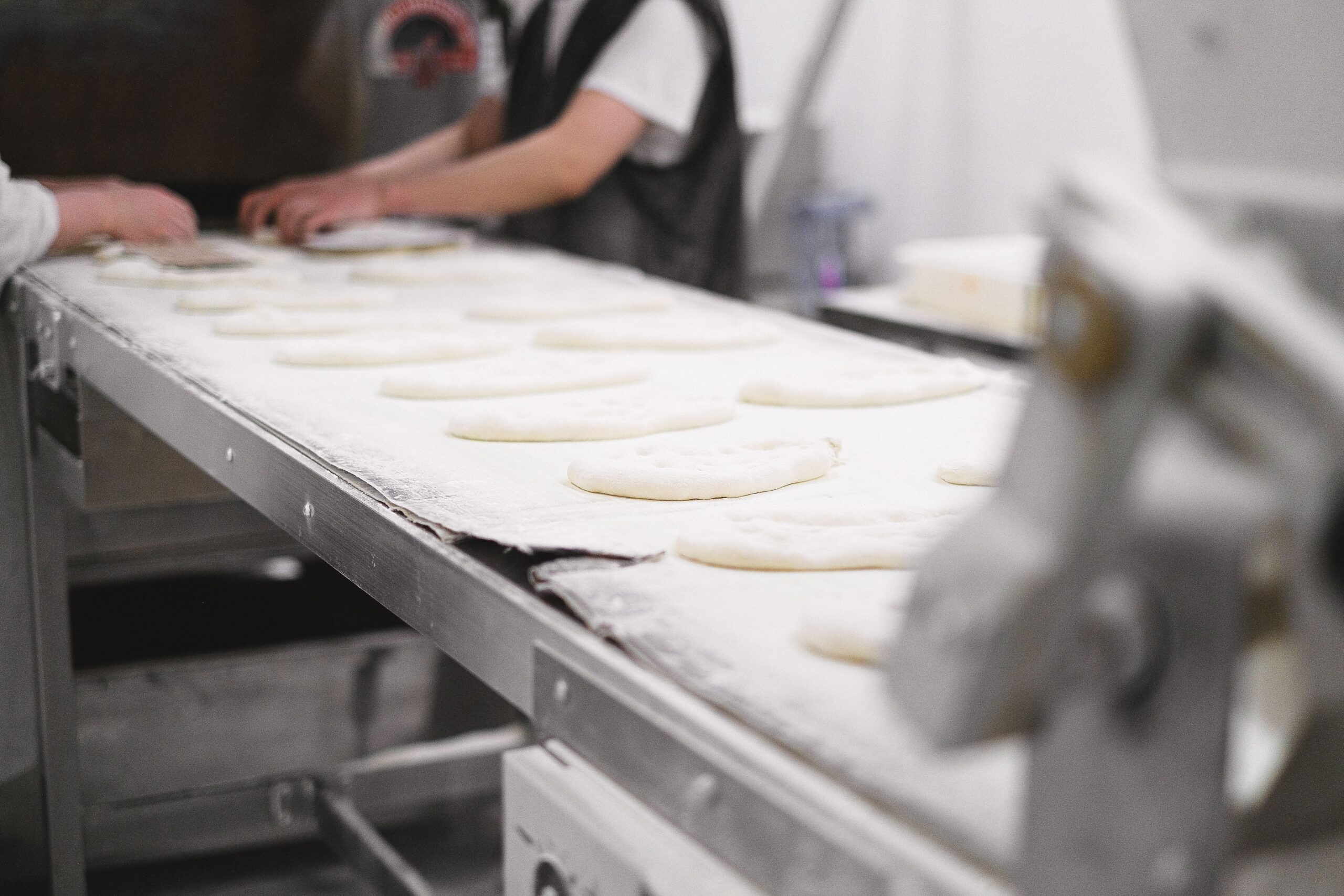
The company produced wholesale pizza dough for hospitality and catering customers. That makes the story less about consumer pizza delivery and more about the less visible businesses that sit behind restaurants, hotels, pubs, caterers and independent food operators.
These suppliers are often exposed to pressure from both sides. Their own costs can rise quickly, including energy, ingredients, labour, rent, transport and packaging. At the same time, their customers may be trying to control costs, reduce orders, renegotiate prices or delay payments.
That can create a difficult cash-flow squeeze. Even a business with loyal customers and a recognisable niche can struggle if working capital becomes stretched or creditor balances build faster than cash coming in.
Creditor pressure appears to have increased
According to reports based on Companies House filings and insolvency notices, Millennium Dough Company owed around £1.5m to creditors, up sharply from the prior year.
The company’s Companies House record confirms that it was incorporated on 21 May 1992 and previously traded as Millennium Food Services Limited before changing its name to Millennium Dough Company Limited in 2022. Its stated business activity is the manufacture of other food products not elsewhere classified.
That history suggests a business that had survived several economic cycles: the early 1990s recession, the financial crisis, austerity, Brexit-related disruption, the pandemic and the inflation shock that followed.
However, the latest period has been particularly difficult for food manufacturers and hospitality suppliers. Many firms emerged from the pandemic with weaker balance sheets, then faced sharp increases in energy, ingredients, wages and finance costs.
For a manufacturer of frozen dough, energy and logistics are especially important. Production, refrigeration, frozen storage and delivery all carry cost exposure. If those costs rise faster than selling prices, margins can narrow quickly.
Wider food manufacturing pressures
Millennium Dough Company’s administration comes at a time when UK manufacturers are warning that energy and input costs remain a major threat.
ONS producer price data for April 2026 showed producer input prices rising by 7.7% over the year, up from 5.3% in March. Factory gate prices rose by 4.0%, meaning manufacturers were still facing a significant gap between cost increases and the prices they could charge customers.
For food manufacturers, this matters because cost rises often arrive before they can be recovered through customer pricing. Businesses may have supply agreements, fixed price lists, competitive pressure or customers unwilling to accept increases. The result can be a squeeze on gross margin and working capital.
Food and non-alcoholic beverage inflation for consumers was lower, at 3.0% in the 12 months to April 2026. That may sound more manageable, but it does not mean costs have returned to normal. Food prices have already risen substantially since the start of the cost-of-living crisis, and many businesses are still operating from a higher cost base.
The Food and Drink Federation has warned that renewed cost pressures, including energy and global supply shocks, could feed into higher food inflation later in 2026. That creates uncertainty for both suppliers and customers.
Hospitality customers are also under strain
The difficulties are not limited to food producers. Many of the businesses served by companies such as Millennium Dough Company are themselves facing pressure.
Hospitality operators have been hit by higher wages, employer National Insurance costs, business rates, energy bills, rents, food costs and cautious consumer spending. Restaurants and takeaways are also exposed to changing consumer habits, especially when households cut back on discretionary spending.
The Insolvency Service reported 2,085 registered company insolvencies in England and Wales in April 2026, 2% higher than March and 3% higher than April 2025. That does not prove a single cause for Millennium Dough Company’s administration, but it does show that insolvency levels remain elevated.
Hospitality-linked businesses can be particularly vulnerable because margins are often thin and costs are fixed. A restaurant may cut menu items, reduce opening hours or negotiate with suppliers. A supplier may then see lower order volumes or slower payments, even where the end customer remains open.
This creates a chain reaction. Pressure on consumer-facing businesses can move upstream into food manufacturing, wholesale and logistics.
Pizza market faces its own challenges
The wider pizza market is also undergoing change.
Large pizza operators have been reviewing estates, closing underperforming stores and rethinking ownership models. Papa Johns previously announced closures of underperforming UK sites, while Pizza Hut’s global operations have been subject to strategic change as its parent company reviews the brand’s future.
The reasons vary by company, but the themes are familiar: cost inflation, competition, delivery economics, changing consumer habits and pressure on franchise profitability.
That does not mean demand for pizza has disappeared. Pizza remains one of the UK’s most popular casual dining and takeaway categories. But the economics of the market have become harder. Delivery platforms, discounting, wage costs, rent, utilities and ingredient prices all affect profitability.
For suppliers, this can create a more unpredictable customer base. Some buyers may seek cheaper alternatives. Others may reduce stockholding, simplify menus or demand more flexible supply arrangements. Premium artisan suppliers may find that quality remains valued, but customers are more cautious about price.
Administration may still allow options
Administration is designed to provide a company with protection from creditor action while administrators assess its position. The aim may be to rescue the company as a going concern, achieve a better result for creditors than liquidation, or realise assets.
In practical terms, the administrators will consider whether there is value in the brand, customer relationships, production equipment, recipes, contracts, stock, intellectual property or goodwill. A sale of some or all of the business could still be possible if a buyer sees commercial value.
Specialist food businesses can sometimes attract interest from competitors, larger suppliers, management teams or investors who believe the underlying product has a viable market but needs a different cost structure or balance sheet.
However, administration also creates uncertainty for employees, customers and suppliers. Customers may need to seek alternative sources of supply, while creditors will be waiting to understand potential recoveries.
A warning for smaller suppliers
The case is a reminder that long trading history does not guarantee resilience.
Smaller and specialist suppliers can be strong in product quality and customer relationships, but still vulnerable to cash-flow pressure. A business can be popular with customers and still fail if margins, debt and working capital move against it.
For food manufacturers, several lessons stand out.
Pricing must keep pace with input costs wherever possible. Customer concentration needs to be monitored. Credit control is critical. Stock, energy use and logistics must be tightly managed. Management teams also need timely financial information, particularly around cash flow and creditor exposure.
The challenge is that many smaller companies do not have the same flexibility as larger groups. They may lack the purchasing power to secure better ingredient prices, the cash reserves to absorb shocks, or the scale to automate production.
That makes cost volatility especially dangerous.
The wider business picture
Millennium Dough Company’s administration is not just a story about one pizza dough supplier. It reflects a wider issue for the UK economy.
Many small and medium-sized businesses are still dealing with the after-effects of several overlapping shocks: pandemic disruption, higher debt, inflation, energy price volatility, wage increases and weak consumer confidence.
Food manufacturing and hospitality supply chains are exposed because they sit between global commodity markets and price-sensitive consumers. When costs rise, every part of the chain tries to protect its margin. But not every business has the market power to pass those costs on.
That is why some businesses fail even when demand has not disappeared.
For the sector, the key question is whether cost pressures now ease enough to stabilise margins, or whether more suppliers will be pushed into restructuring.
A fragile recovery
The administration of a business that had traded since 1992 highlights the uneven nature of the recovery facing UK SMEs.
Some consumer and hospitality businesses are seeing demand return. Some food suppliers remain profitable. Some operators have adapted through automation, product innovation, price changes and tighter cost control.
But others remain vulnerable. The combination of creditor pressure, elevated input costs and cautious customer behaviour can quickly become unsustainable.
For Millennium Dough Company, the next stage will depend on the administrators’ assessment and whether a buyer or restructuring option can be found.
For the wider market, the message is clear. The hospitality economy relies on a network of suppliers that are often less visible than the restaurants, pubs and takeaways they serve. When those suppliers struggle, the effects can ripple through menus, prices, supply reliability and customer choice.
The collapse of a specialist pizza dough supplier may look like a narrow story. In reality, it is another sign of how cost pressure continues to reshape the businesses behind Britain’s food and hospitality sector.